

ACUHO-I Marketing Awards
Ohio University's marketing award submissions for 2026
ACUHO-I Marketing Award Submissions
Please note, to be fully accessible, we, Ohio University, are not permitted to upload PDF or word files to our website. All submission details will be shown via photo or video.
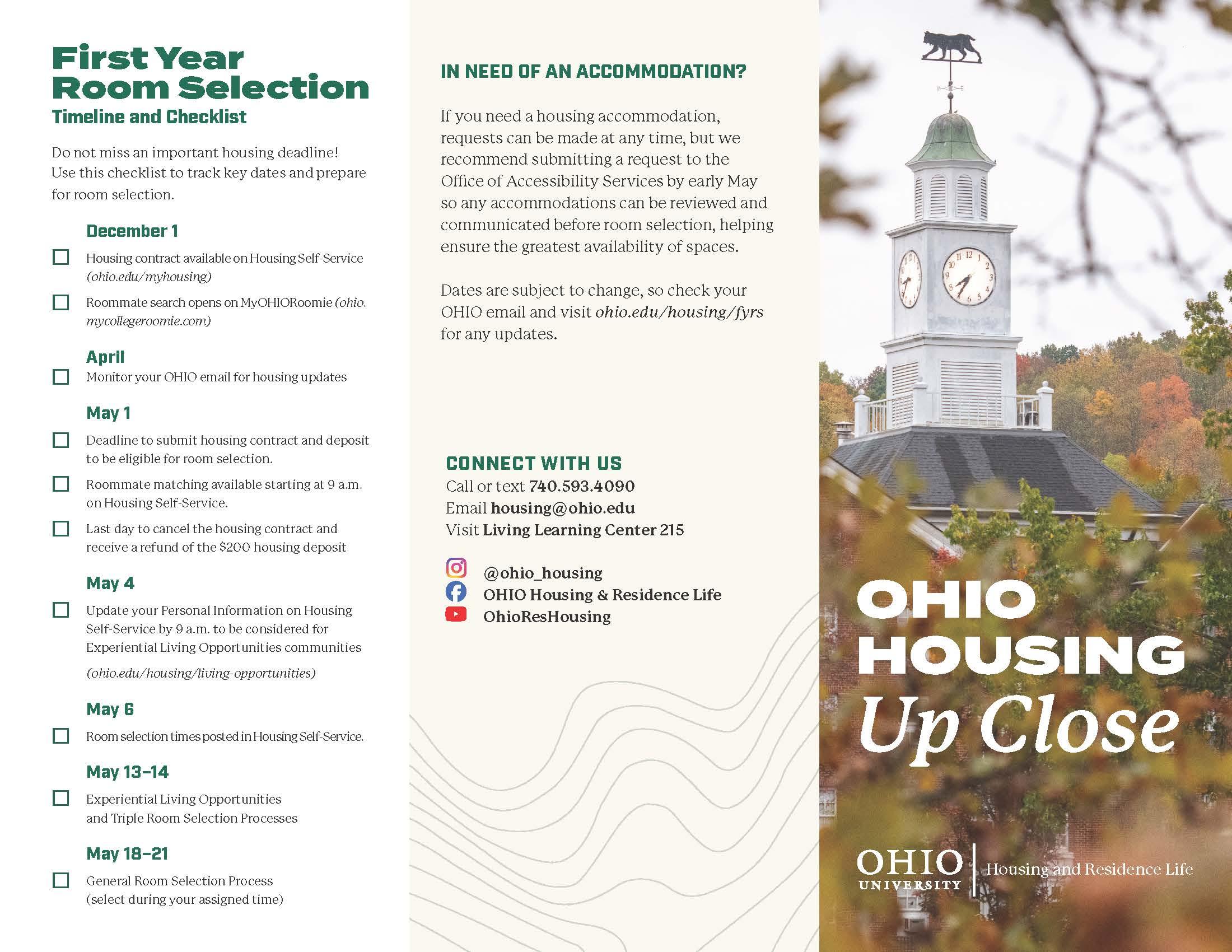
Brochure/Booklet: OHIO UpClose Pamphlet
Timeframe
Spring 2026
Overview/Outcome
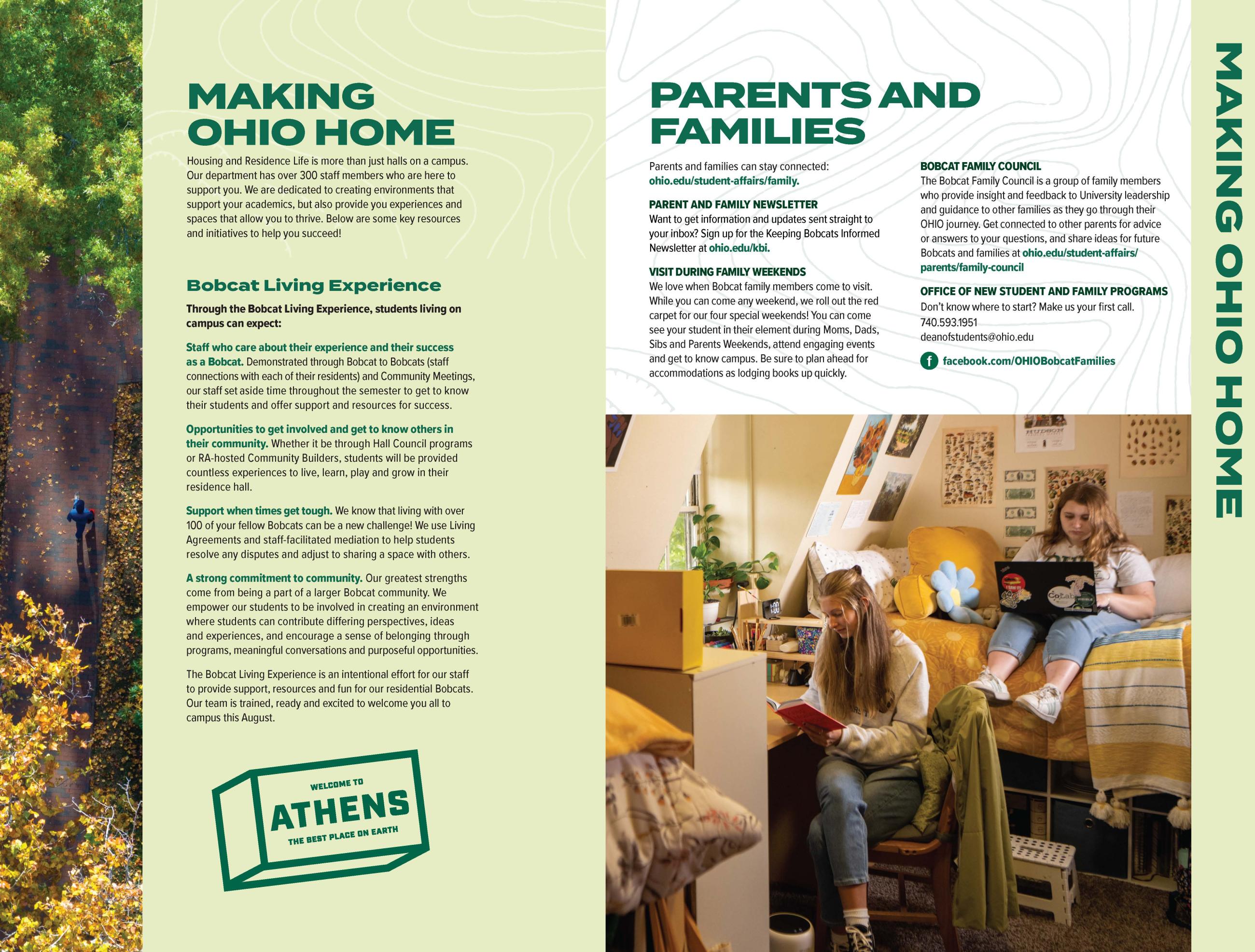
The OHIO UpClose tri-fold pamphlet was created for admitted student recruitment events hosted by Undergraduate Admissions, where Housing and Residence Life shares key information with students and families preparing for their first year on campus. In previous years, this information was presented in a larger printed booklet, but due to university-wide cost reductions and a need to be more financially mindful, I reimagined the piece into a more efficient tri-fold format.
The goal was to still give admitted students everything they needed to know about housing in a clear, visually appealing way, while significantly reducing print costs and improving flexibility for event attendance. By shifting from 1,500 booklets to 2,500 tri-fold pamphlets, we achieved a savings of $3,645.42 while also increasing the number of available copies by 1,000, which helped us better meet demand as event attendance grew throughout the season.
Even with the smaller format, the pamphlet still packaged essential housing information in a clean and easy-to-digest way for students and families making important enrollment decisions. Every copy was used during the recruitment season, reinforcing both the need for the piece and its effectiveness in a high-traffic, high-impact environment.
.
Brochure/Booklet: BSO Welcome Guide
Timeframe
Begin Using: May 27, 2026
Overview/Outcome
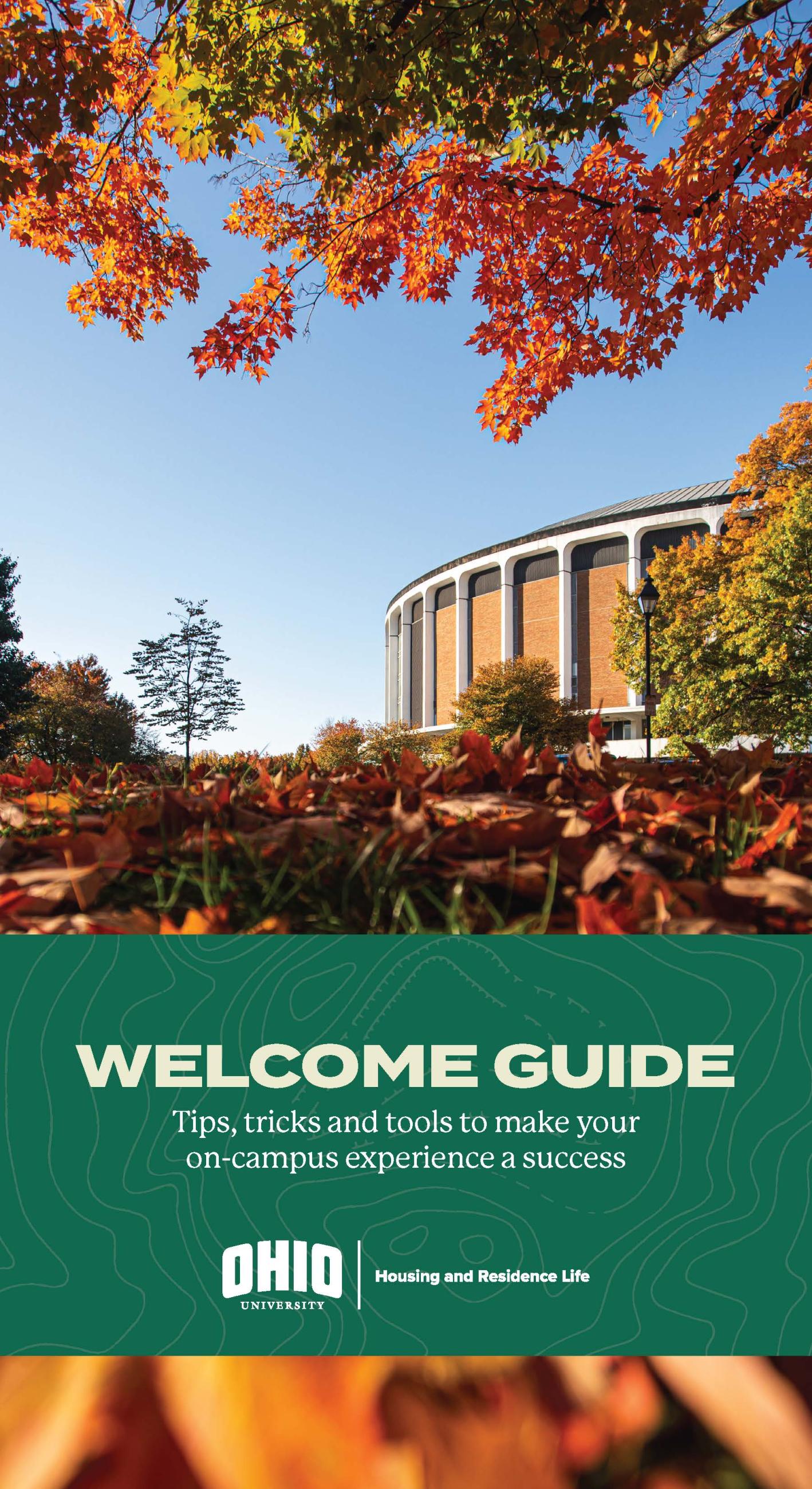
Over the past few years, the BSO Welcome Guide was created to streamline and improve the student experience at Bobcat Student Orientation by consolidating 10 to 15 separate Housing handouts into one cohesive resource for the Resource Fair. While the booklet was well received, I knew it could still use some improvement and an overhaul.
To improve usability, I redesigned the guide into a “chapter book” style booklet with clearly defined sections and tabs. Each section focused on a key part of the Housing experience, including move-in preparation, move-in day details, and broader on-campus living information. This structure was intentional, helping students and families immediately understand that the booklet was not just a one-time handout, but a resource they could return to throughout the year.
Along with reorganizing the content, I updated, refined, and in some cases removed information to ensure each section was relevant, clear, and easy to navigate. The result was a more user-friendly and approachable guide that supported students in both the moment and long after orientation ended.
Overall, the new format helped reduce confusion, improved information retention, and created a stronger sense of continuity between orientation and the student’s transition into on-campus living.
.




Email Marketing: Alumni Newsletters
Timeframe
June 2025-April 2026
Overview/Outcome
The Housing and Residence Life Alumni Newsletter campaign was developed as part of the department’s ongoing commitment to strengthening relationships and increasing engagement with its alumni community. The campaign was designed to maintain meaningful connections with former student staff members, graduates, and professional staff who made lasting contributions to the department, regardless of whether they earned a degree from Ohio University. The purpose of the email marketing campaign was to foster a continued sense of belonging, keep alumni informed about departmental initiatives and achievements, and encourage participation in engagement opportunities and events.
Recognizing that many alumni credit Housing and Residence Life with shaping their leadership development, career paths, and college experiences, the newsletters were intentionally crafted to reinforce community, highlight departmental impact, and celebrate the lasting legacy of residential life involvement. Distributed three to four times annually, the newsletters served as a targeted communication tool aimed at maintaining consistent outreach with a clearly defined audience while strengthening long-term alumni affinity for the department and the university.
Each newsletter was strategically designed to balance storytelling, departmental updates, and calls to action in a visually engaging and easily accessible format. Content regularly included alumni spotlights, departmental accomplishments, student success stories, staff updates, upcoming events, volunteer and mentorship opportunities, reunion information, and ways for alumni to reconnect with current students and staff. Messaging focused on building brand awareness for Housing and Residence Life as not only a student service department, but also a lifelong community and professional network.
The campaign utilized consistent branding, digital design elements, and audience-centered messaging to create a recognizable and professional communication experience across all editions. By maintaining regular contact and providing meaningful opportunities for involvement, the alumni newsletter campaign successfully increased engagement, strengthened departmental relationships, and reinforced the lasting impact of the Housing and Residence Life experience well beyond graduation or end of employment.
Email Marketing: Room Selection Newsletters
Timeframe
February- March 2026
Overview/Outcome
The Returning Student Room Selection newsletter campaign was developed to improve communication, increase student engagement, and provide timely support throughout the Housing and Residence Life room selection process. The purpose of the campaign was to move beyond traditional text-only emails by creating visually engaging, resource-focused newsletters that would better capture student attention, simplify complex processes, and encourage students to utilize the online tools, resources, and events available to support their housing selection experience.
The newsletters incorporated engaging graphics, branded design elements, clear calls to action, direct links to housing resources, FAQs, instructional content, and promotion of in-person and virtual support events. By consolidating important information into visually dynamic communications, the campaign successfully increased visibility for departmental resources and encouraged students to take action throughout the process.
The overall campaign helped modernize the department’s communication strategy by transforming routine process emails into engaging digital experiences that were more likely to be opened, read, and utilized by students. Through strategic timing, audience-focused design, and consistent messaging, the Returning Student Room Selection newsletter campaign improved student access to information, increased engagement with support opportunities, and enhanced the overall room selection experience.
Overall Campaign: Expert in Residence
Timeframe
February-April 2026
Overview/Outcome
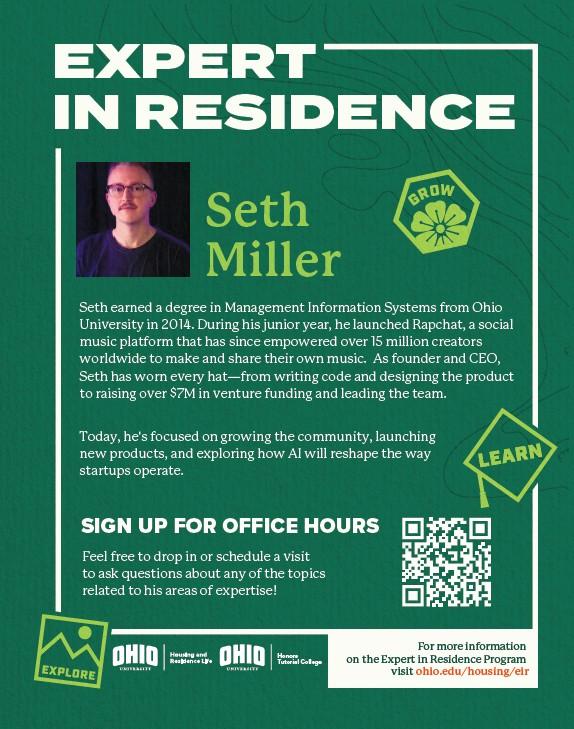
The Expert in Residence (EIR) campaign was developed to support the inaugural launch of a collaborative initiative between Ohio University Housing and Residence Life and the Honors Tutorial College (academic unit) designed to connect students with accomplished alumni, executives, entrepreneurs, and industry leaders through immersive educational experiences. The purpose of the campaign was to establish awareness and credibility for a brand-new program while creating excitement, increasing student participation, and reinforcing the university’s commitment to experiential learning, career readiness, and student engagement beyond the classroom.
Because the program was entirely new, the campaign required the creation of a cohesive visual identity and communication strategy from the ground up. Marketing efforts were intentionally designed to reach students in both residential and academic environments, ensuring visibility across multiple touchpoints throughout campus life. The campaign emphasized the unique opportunity for students to engage directly with professionals through hands-on experiences, mentorship, networking opportunities, and career-focused conversations tailored to each expert’s background and expertise.
To execute the campaign, a comprehensive suite of print and digital marketing materials was developed to support every stage of the student experience, from awareness and nomination through event participation and post-event engagement. Campaign components included:
- A dedicated Expert in Residence website serving as the central hub for program information, schedules, expert biographies, and event listings
- An online nomination form to encourage campus community involvement in identifying future Experts in Residence
- Student newsletters distributed the week prior to each expert’s arrival to build anticipation and highlight opportunities for engagement
- Professionally designed flyers displayed in residence halls and academic buildings to maximize campus-wide visibility
- Quarter-sheet handouts distributed during programs to provide students with event details and take-away information
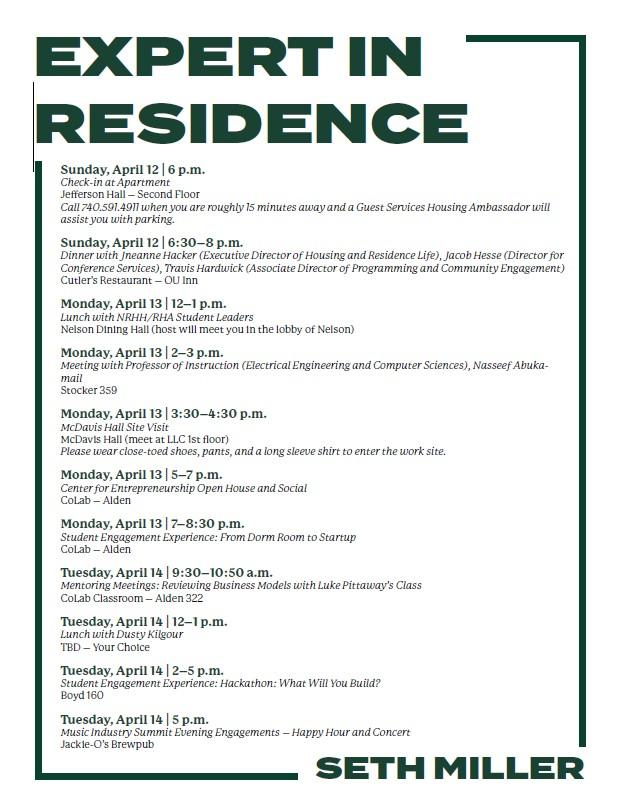
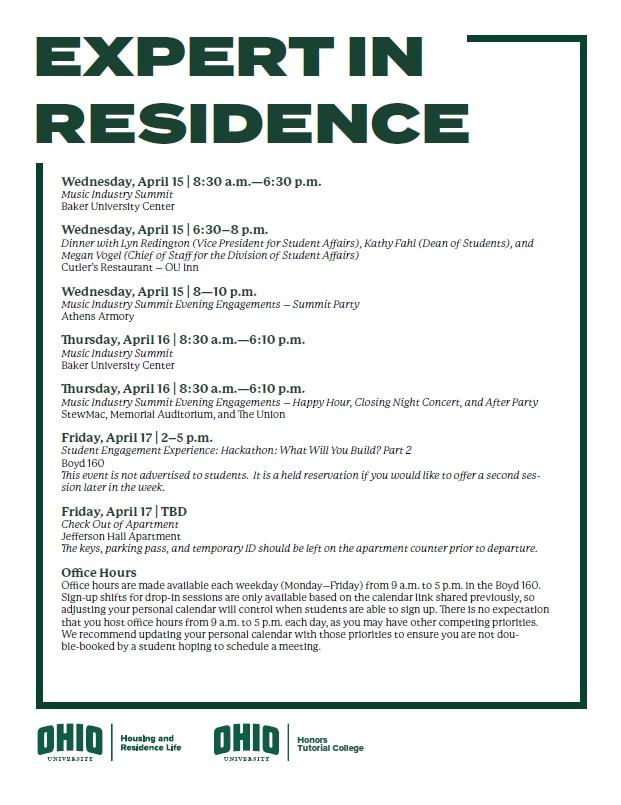
- Custom schedules for each Expert in Residence upon their arrival
- Digital screen graphics displayed throughout campus residential facilities
- Social media graphics and promotional content to expand reach and increase student awareness online
- Calendar of University Event (CUE) submissions to ensure inclusion in the institution’s centralized event system and bi-weekly university newsletter
- Communication templates and emails for residence hall staff to distribute directly to their student communities
- Temporary office sign with information on how to sign up for one-on-one meetings
The campaign strategy focused on consistency, accessibility, and repeated engagement across platforms. By integrating digital communication, in-person promotion, campus partnerships, and residential outreach, the campaign successfully introduced a new signature initiative to the Ohio University community and positioned the Expert in Residence program as an innovative bridge between academic learning and professional development. The result was a highly visible and unified campaign that strengthened collaboration between departments, enhanced student access to industry leaders, and laid the foundation for the long-term growth and sustainability of the program.
Links to Examples
Example of the event in the University newsletter
Digital Screen
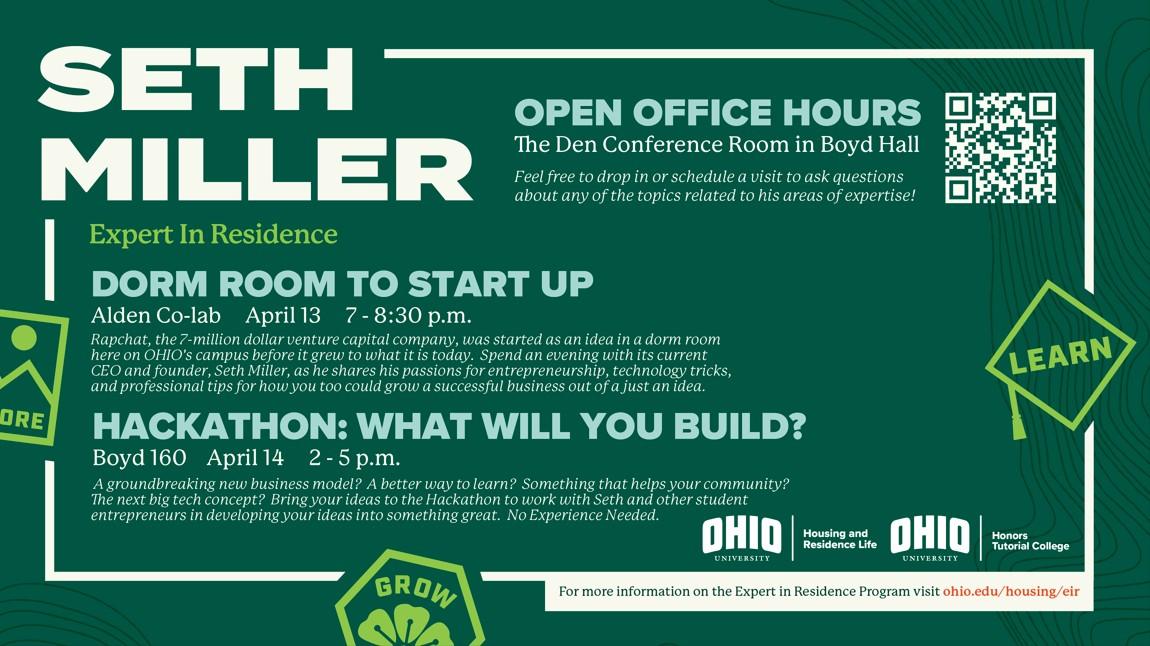
Event Flyer
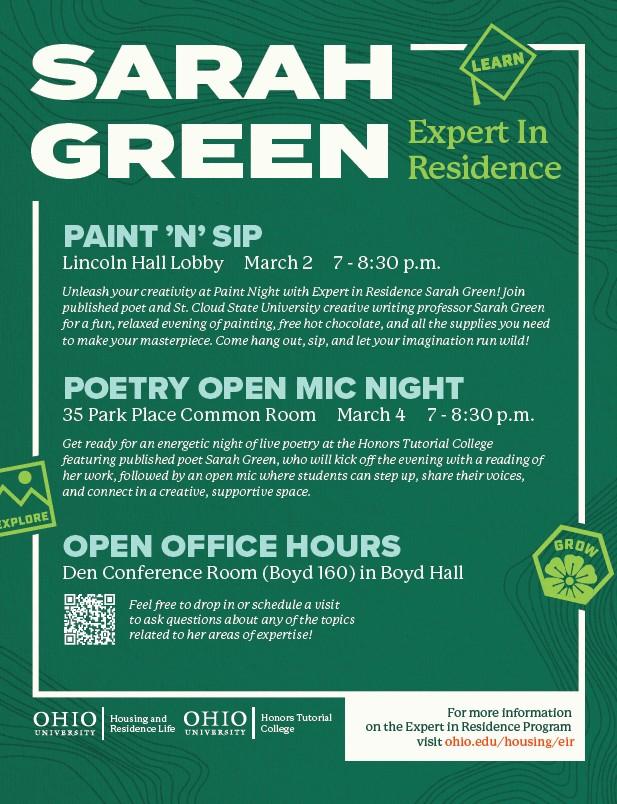
CUE and Social Media Graphic
*Details of event in the caption sections of these posts.
Quarter Sheet Handout and Office Door Sign
Schedule
Poster: Where to Find Housing at BSO
Timeframe
Beginning May 2026
Overview/Outcome
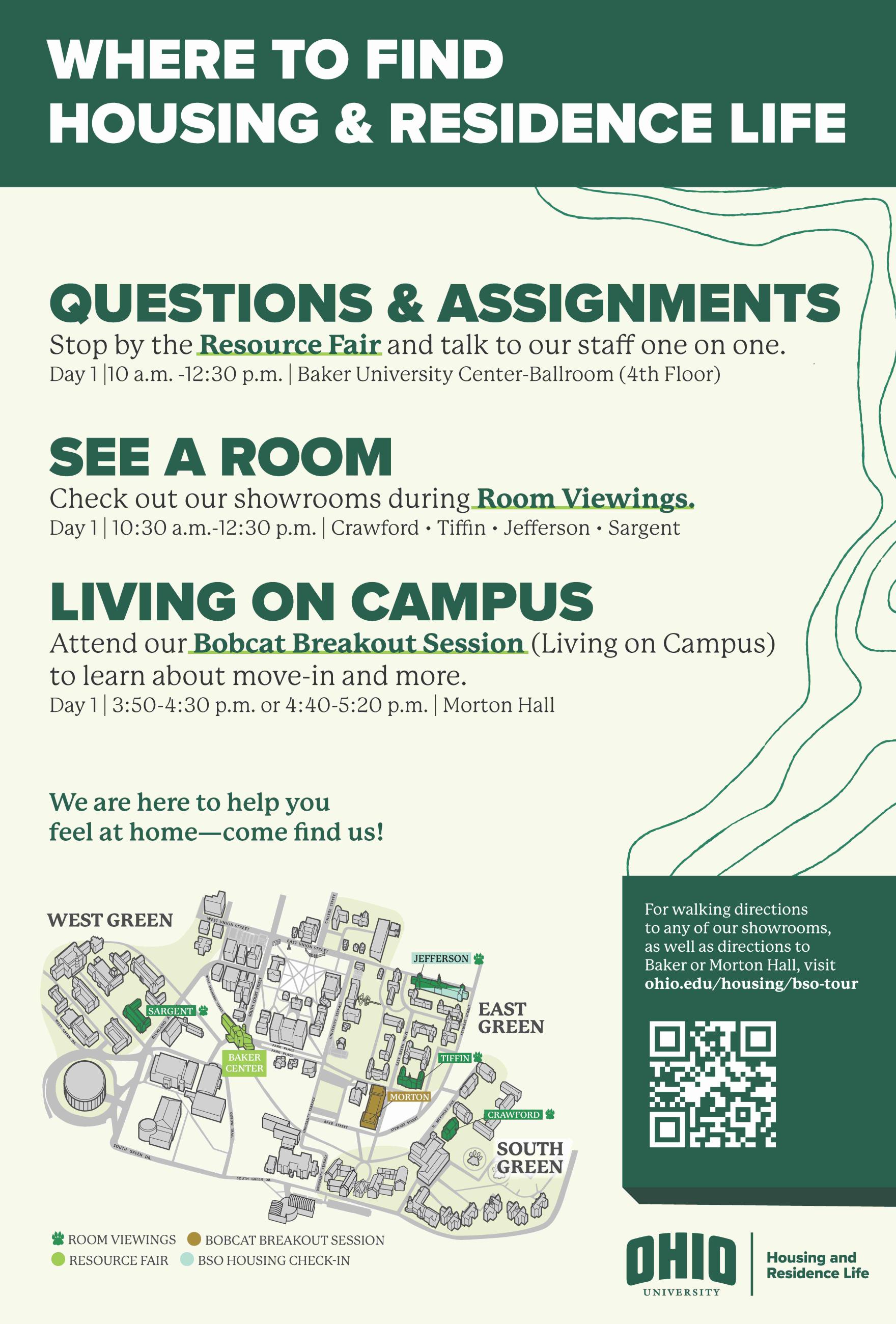
The Bobcat Student Orientation (BSO) 'Where to Find Housing at BSO' poster was created to support Ohio University’s orientation overnight experience by providing clear and visible communication for incoming students and their families during check-in. Beginning May 27, 2026, the poster served as a resource to help participants quickly identify where Housing and Residence Life staff were located and how they could assist throughout the orientation process.
Because the orientation schedules are fast-paced and often include overlapping sessions, the poster was designed to reduce confusion and create a more seamless experience for students, supporters of students, and families navigating campus for the first time. The design utilized bold visuals, concise messaging, and recognizable OHIO branding to ensure information was easy to locate and understand in high-traffic areas.
The poster was also handed out as 1/4 sheets for people who did not want to take pictures of it, so they could have a physical copy too.
Promotional Item: Luggage Tag
Timeframe
August 2025
Overview/Outcome
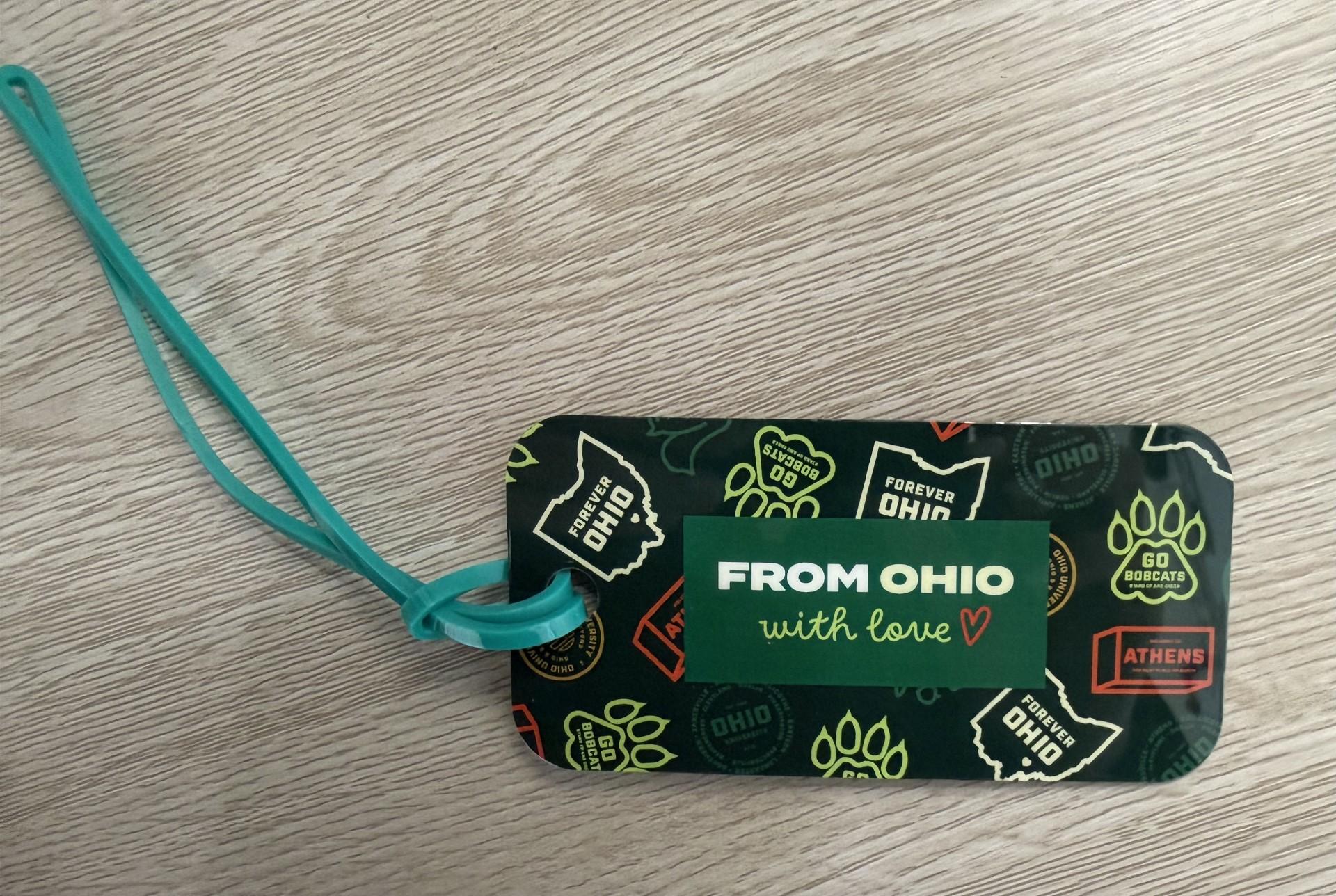
The Ohio University Housing and Residence Life luggage tags were created as a move-in giveaway that connected students to the idea of OHIO as their home away from home. While Ohio University is not traditionally a “suitcase school,” we know many of our students travel throughout the year, whether they are international students, out-of-state students, or students simply heading home during breaks and weekends.
Because luggage tags are tied to travel and returning home, the item naturally connected to the residential experience and the feeling of belonging students build while living on campus. The tags were practical, easy to use, and something students could continue using long after move-in. They also became great giveaways at alumni and engagement events throughout the year.
One of the things we loved most about this item was that even after graduation, a luggage tag could still serve as a small reminder of a student’s time at OHIO and the community that once felt like home.

Promotional Item: Friendship Bracelet
Timeframe
August 2025
Overview/Outcome
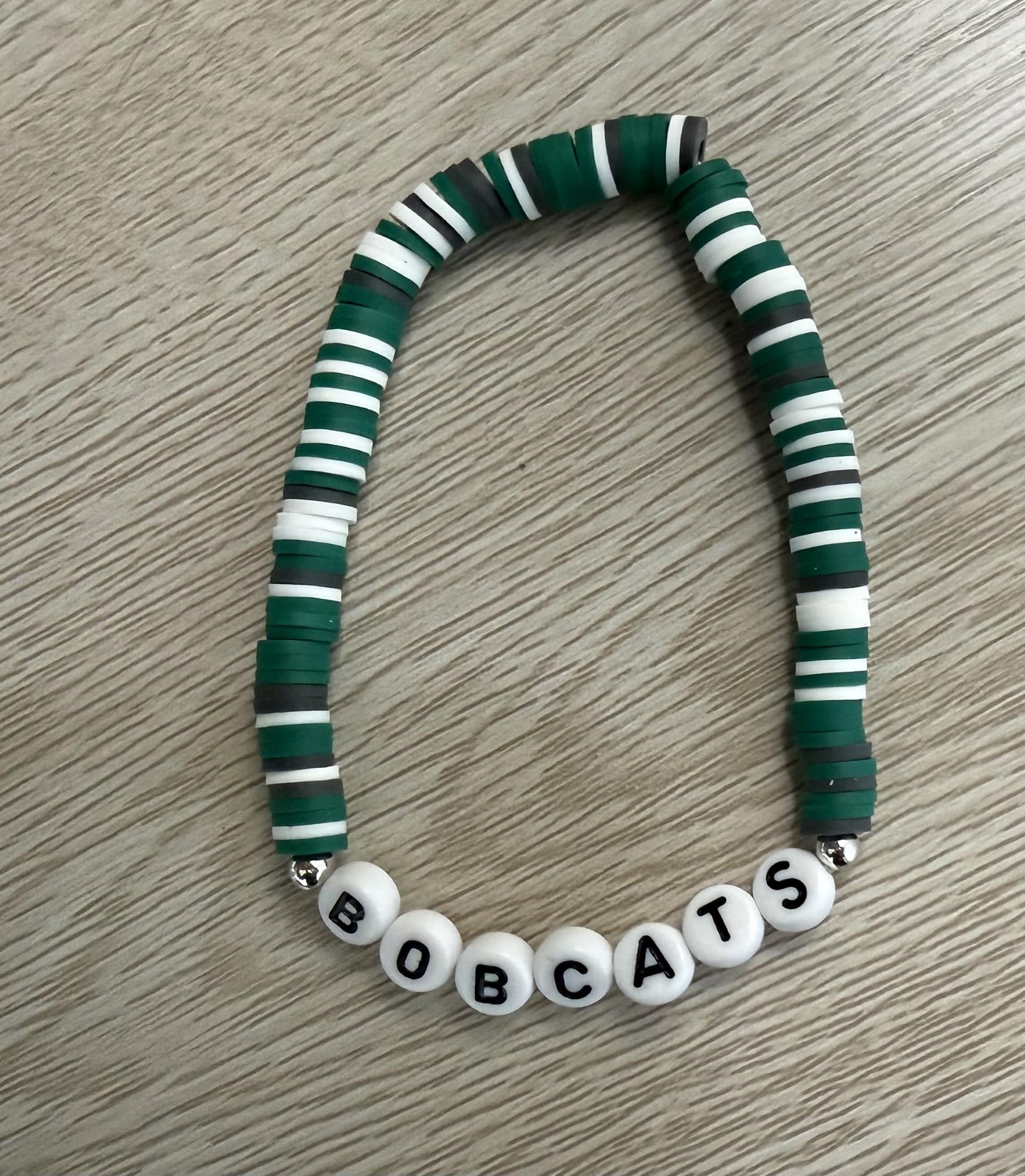
The friendship bracelets were created as a fun and trendy promotional item designed to build excitement and school spirit. Inspired by the popularity of friendship bracelets in pop culture and social media, we wanted to create something that felt current, interactive, and very “OHIO.”
As the person who oversees our small Housing marketing and communications team, I knew I had to bring a little Swiftie energy into our giveaways. We designed the bracelets in OHIO colors and, because of production limitations, chose the single word “Bobcats” to represent the entire community.
The response was bigger than we ever expected. Students loved them immediately, but so did parents, siblings, alumni, and campus visitors. People were asking for extras and wearing them throughout events and programs.
What made the bracelets successful was how simple and fun they were. They created instant connection points and turned a small giveaway item into something people genuinely wanted to keep and wear.
Social Media: Room Selection Live Mythbusting and Support
Timeframe
March 2026
Overview/Outcome
The Returning Student Room Selection social media campaign was created to help students and families during the room selection process with accurate, easy-to-understand information during what can often feel like a stressful and overwhelming time. While our housing software included a live inventory of available spaces, viewable by students at any time, we quickly realized that misinformation and rumors were still spreading rapidly online, especially within the dreaded unofficial parent Facebook groups.
To help address this in real time, Housing and Residence Life launched a daily social media campaign during room selection. Each day, we worked closely with our frontline support staff to identify the most common questions, concerns, and misconceptions students and families were contacting us about. We then turned those topics into quick and clear social media posts that answered questions, corrected misinformation, and shared updates about what room types and spaces were still available for upcoming selection times.
The goal was to meet students and families where they already were, on social media, with information that felt timely, transparent, and easy to share.
The response exceeded expectations. Parents regularly screenshotted and shared our posts within unofficial Facebook groups as responses to questions and rumors, helping accurate information spread much faster than we could through traditional communication methods alone. The campaign also helped students get answers quickly in a format they were already checking daily, which likely reduced confusion and additional service calls during one of our busiest times of year.
***These are a carousel of images
Specialty/Other: McDavis Sidewalk Design
Timeframe
Designed: September 2025
Voted on: November 2025
Installation Planned for: April 2026
Overview/Outcome
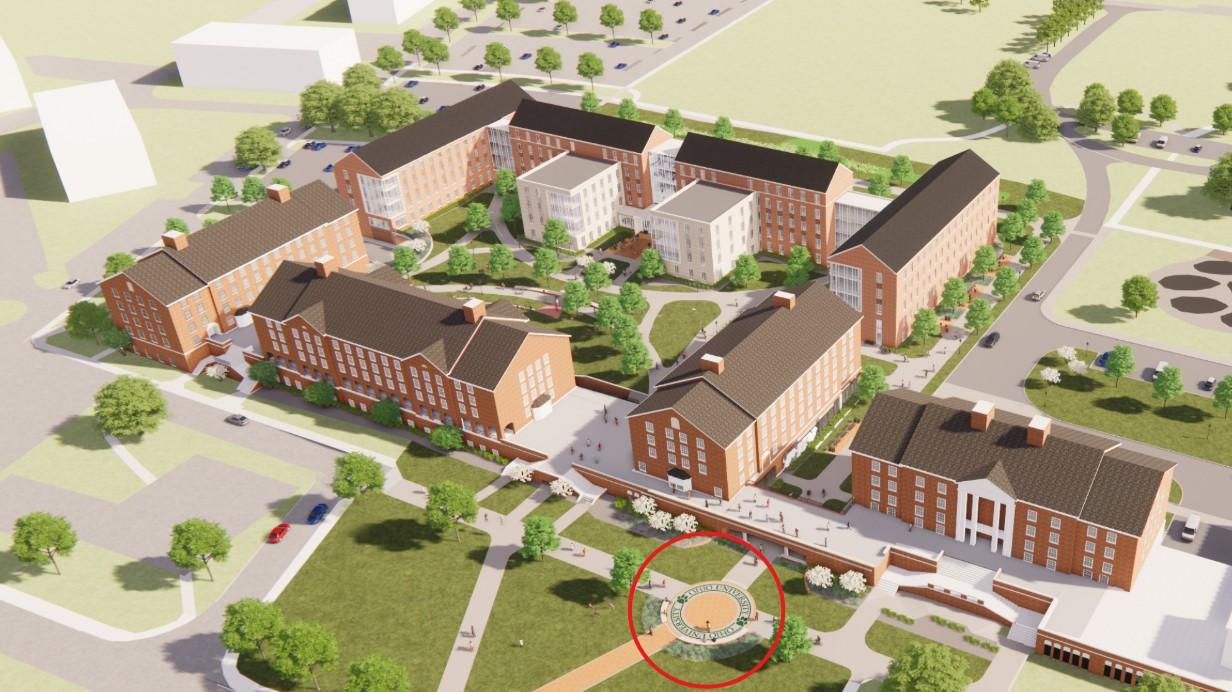
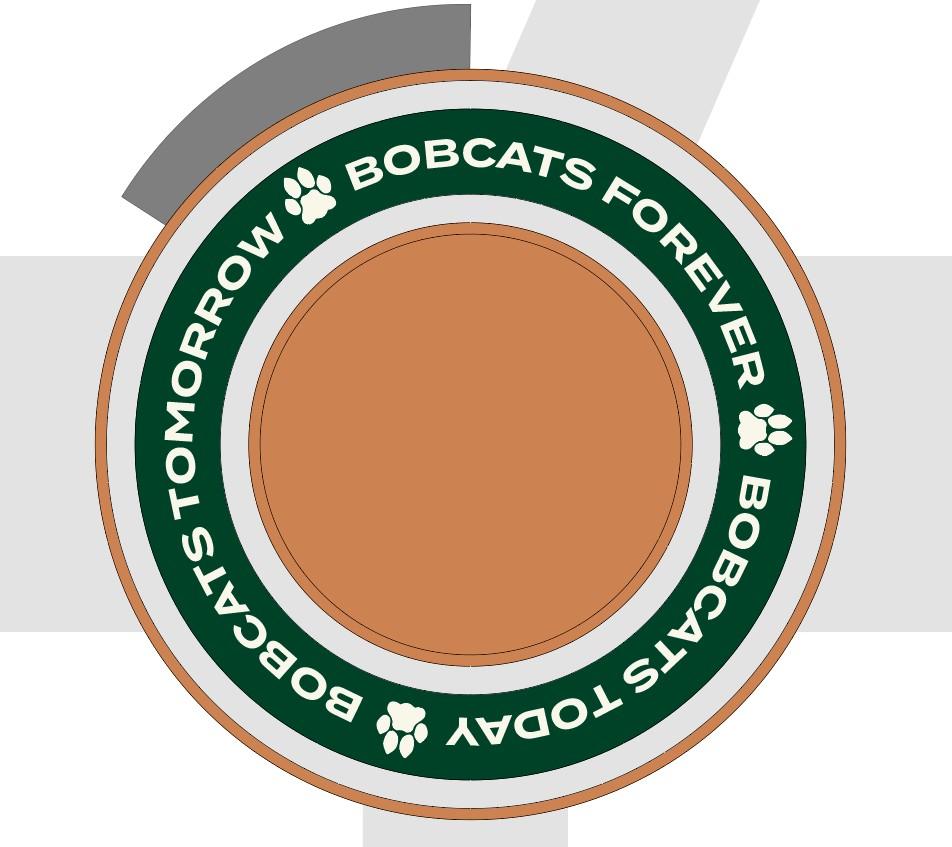
The McDavis Hall sidewalk design project was created as a unique environmental branding initiative intended to celebrate the opening of Ohio University’s newest residence hall. Designed for installation in spring 2026 as major construction concluded on McDavis Hall, the project aimed to transform a circular sidewalk space into an artistic and recognizable representation of the Ohio University.
Although the final installation was ultimately unable to move forward due to long-term structural concerns with the sidewalk cement’s ability to support the thermoplastic application, the design itself represented an exceptional example of student creativity, institutional branding, and collaborative engagement. Because of the strength of the concept and the overwhelmingly positive response it received from stakeholders, the project remains worthy of recognition within the Specialty/Other category.
The project presented several creative and technical challenges from the outset. The design space was limited to a circular format with specific dimensional restrictions, requiring the artwork to function cohesively within a nontraditional layout while remaining visually clear and impactful from multiple viewing angles. In addition, the design needed to align with university branding standards while also maintaining a timeless quality that could endure through future institutional brand evolutions.
The student graphic designer successfully developed a concept that met each of these goals by creating a design deeply rooted in the identity, culture, and spirit of Ohio University. Rather than relying heavily on temporary trends or overly specific campaign branding, the final concept reflected visual elements and themes that were intrinsically “OHIO,” allowing the design to feel authentic, recognizable, and enduring. The piece balanced institutional pride with artistic creativity in a way that resonated across audiences.
To further involve the university community, the design concepts were shared with alumni, prospective students, and current students through a voting process that encouraged participation and feedback. The selected design emerged as the clear favorite among audiences, demonstrating its broad appeal and emotional connection to the Ohio University experience.
While unforeseen installation limitations prevented the project from becoming a permanent physical feature, the McDavis Hall sidewalk design remains a meaningful example of innovative environmental branding and student-centered design. The project highlighted the talent of student creators, fostered community engagement, and successfully captured the voice and identity of Ohio University in a way that was both visually compelling and institutionally significant.
Instagram Post for Community Voting
McDavis Rendering and Sidewalk Design Placement
Winning HRL Student Designer Design
Specialty/Other: Reservation Postcard
Timeframe
Fall 2025 (for Spring 2026 and beyond reservations)
Overview/Outcome
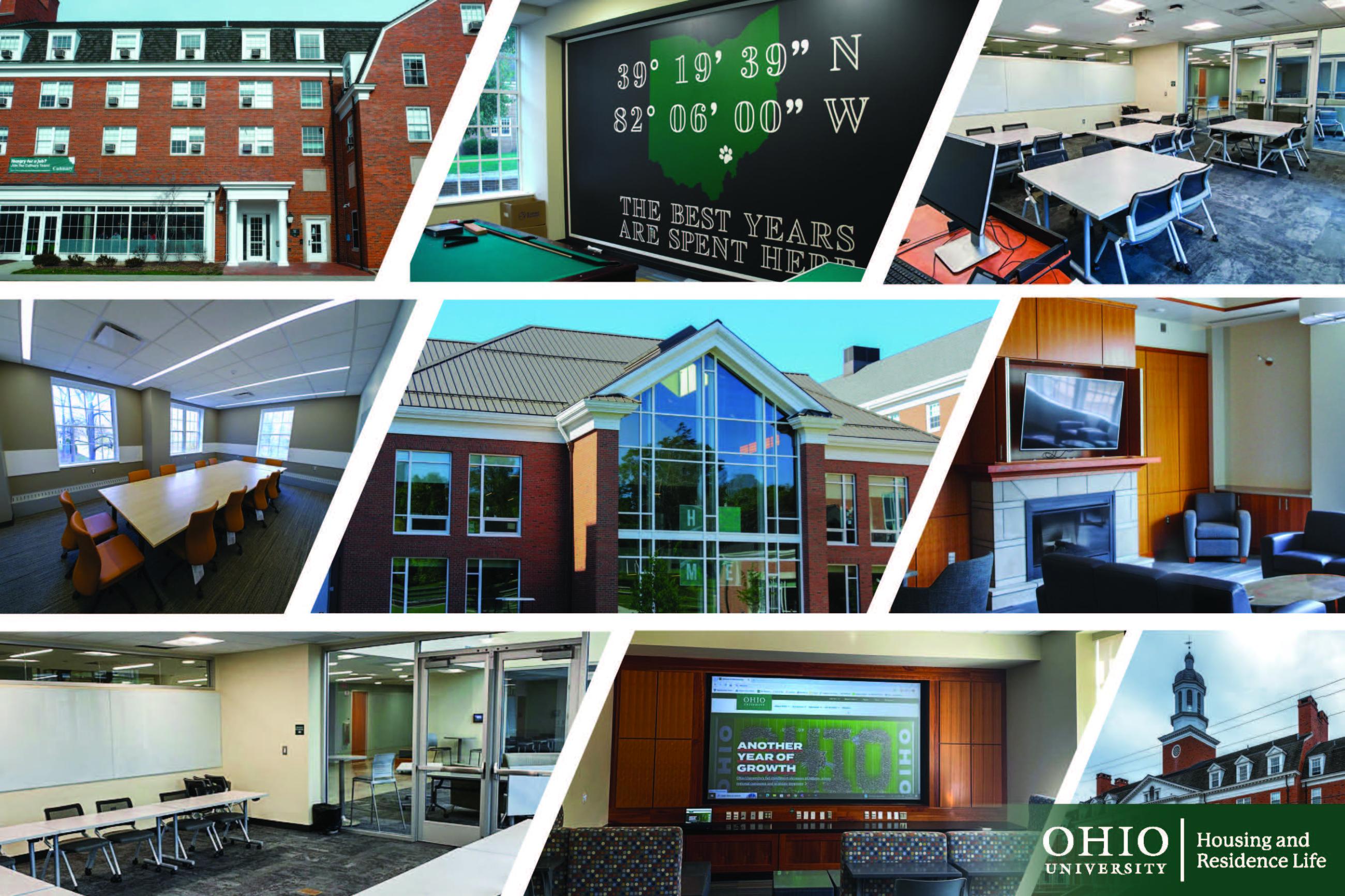
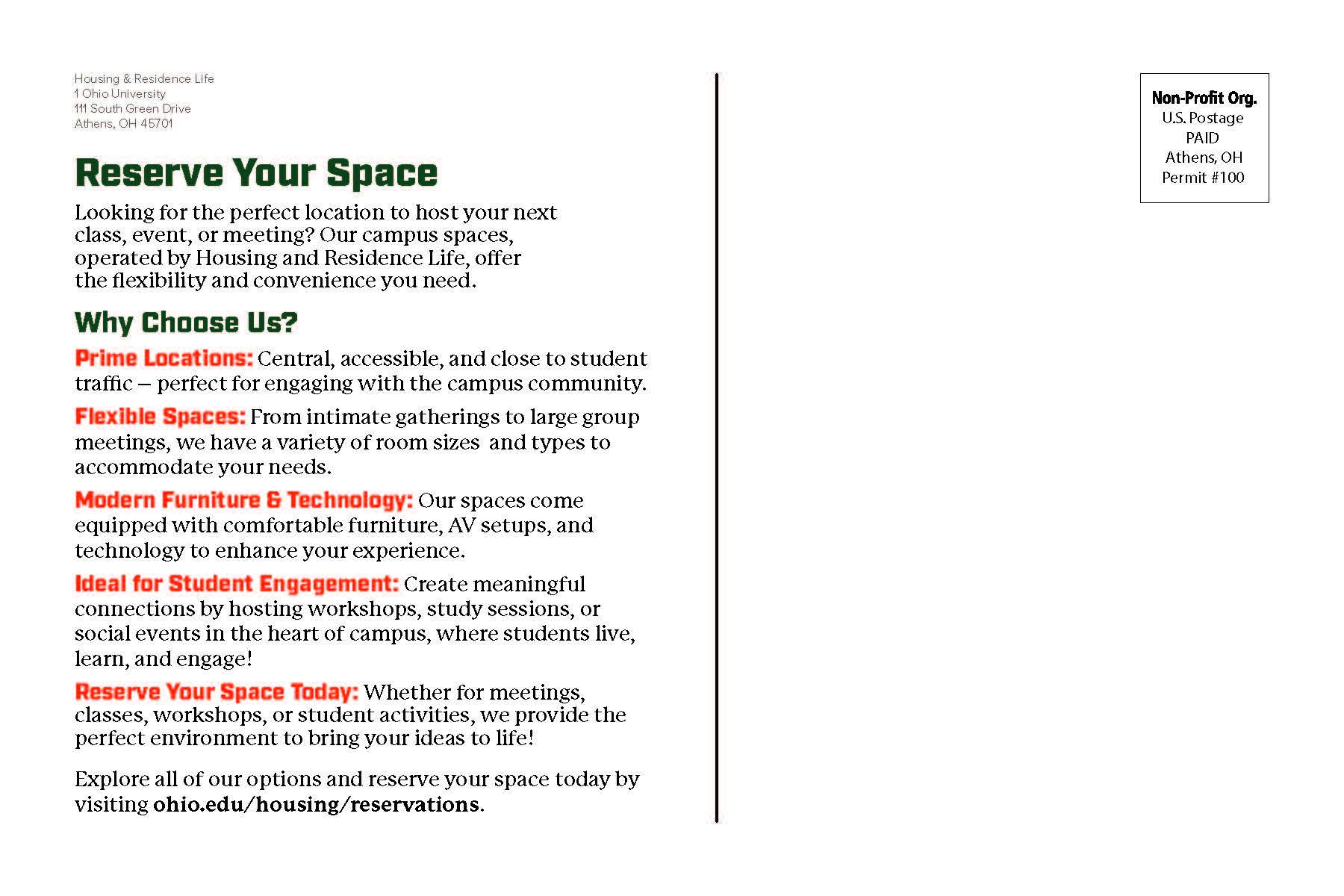
The Housing and Residence Life reservation postcard was created to support the expansion of reservable campus spaces and to increase awareness among faculty and staff about new opportunities to use residential and community spaces for meetings, events, and classroom needs. With a growing agreement alongside the Registrar to prioritize many of these spaces as classroom options first, it became important to clearly communicate what was available and how to access it.
To reach audiences who may not rely heavily on email, the postcard was designed as a direct mail and in-office communication tool that could be delivered through campus mailboxes. The goal was to make it simple for faculty and staff to quickly understand what spaces were available, view layouts, and access the reservation form through a clear call to action to Housing's reservation site.
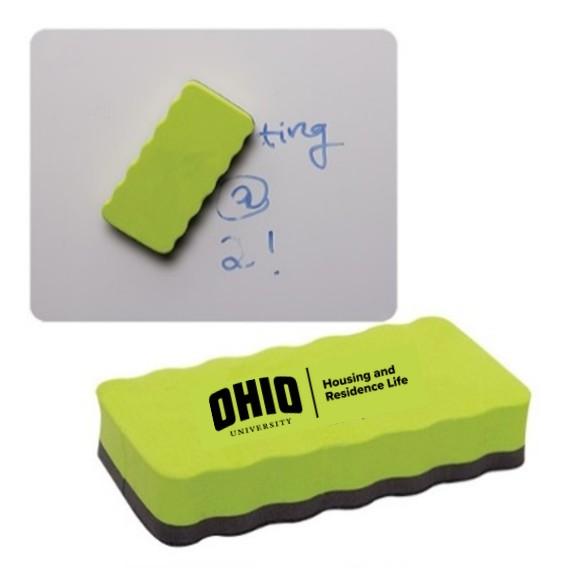
To increase engagement and visibility, the postcard was also paired with a small magnetic dry erase board as a practical giveaway item, helping ensure the message stayed visible in offices after the initial distribution. This combination of a useful physical item and a quick-reference postcard helped reinforce the message beyond a single interaction.
Because many faculty and staff are not primarily email-driven in their communication habits, this approach was intentionally designed to meet them where they already are. The result was a more personal, visible, and accessible way to promote reservable spaces while supporting broader campus utilization efforts.
.
Student Work: Battle of the Greens
Timeframe
November 2025
Overview/Outcome
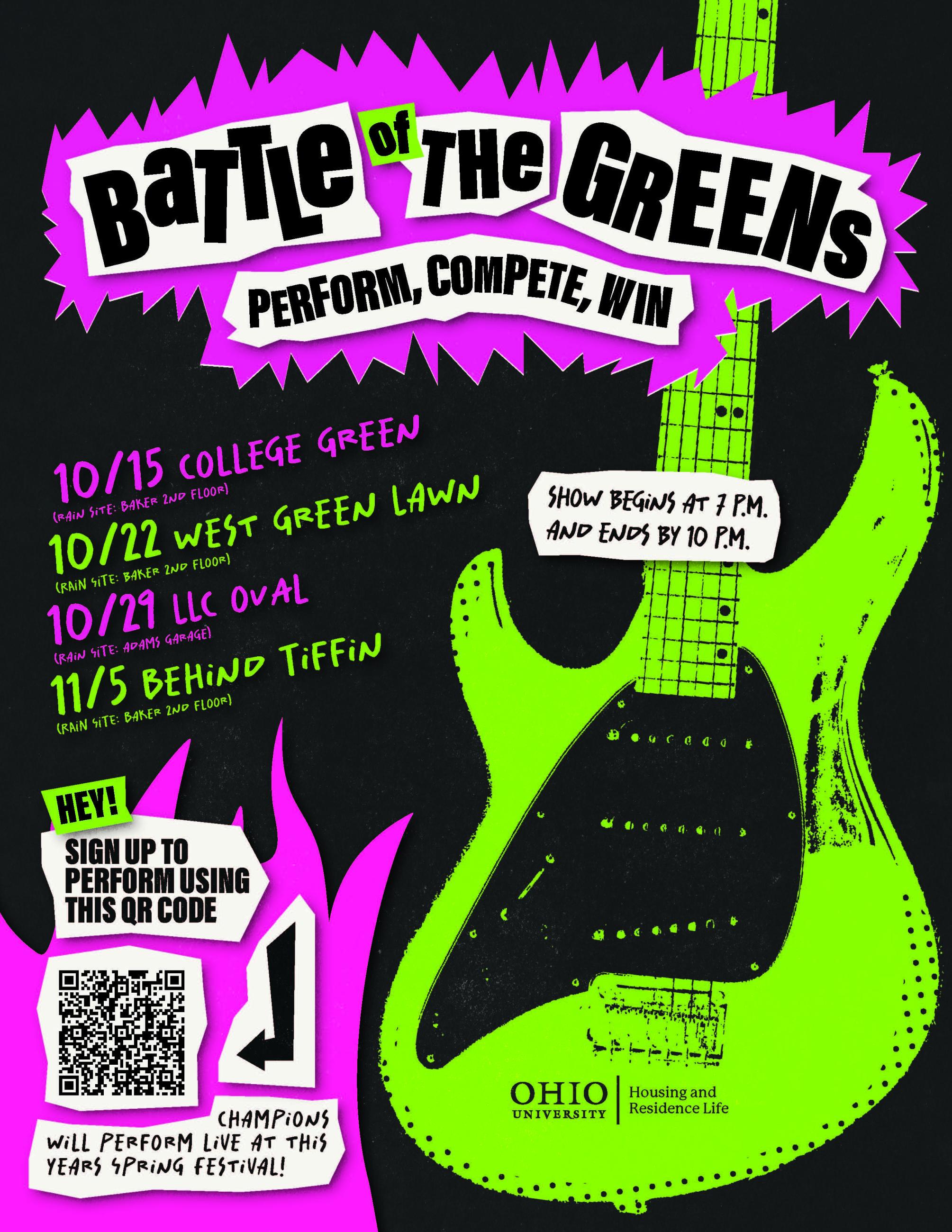
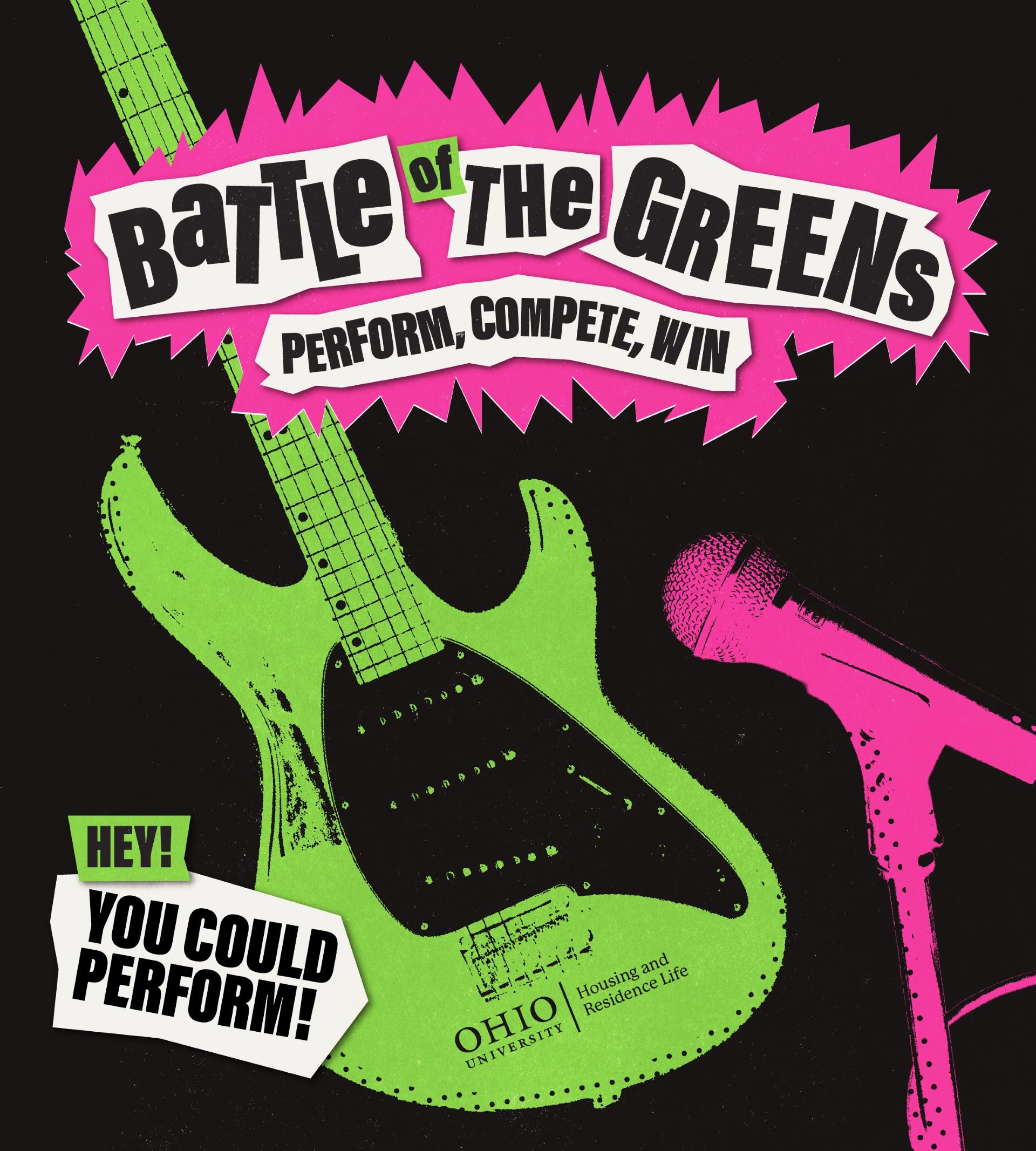
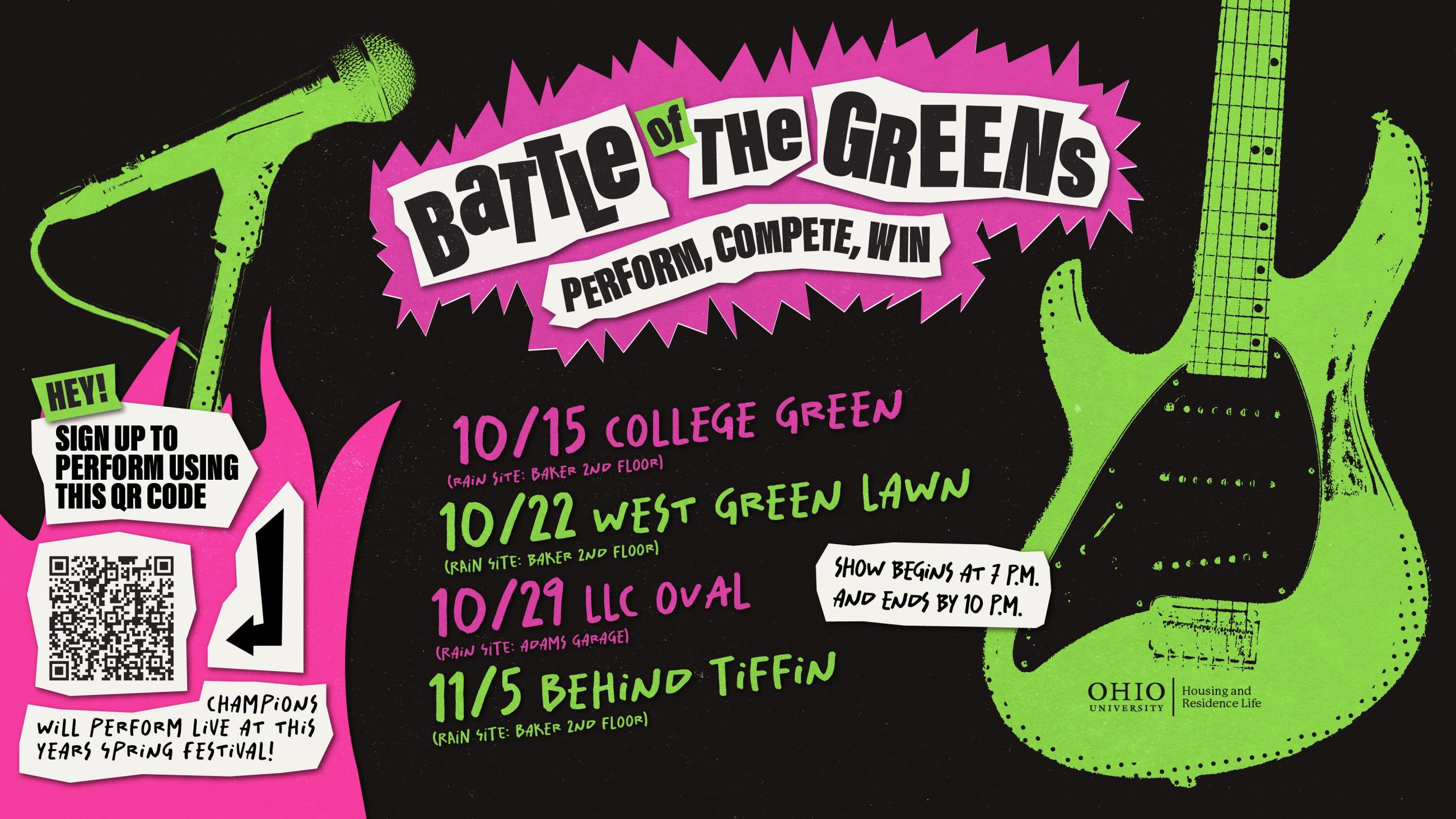
Battle of the Greens was a student-driven event designed to bring residents together for a live band competition and community celebration. Student designer Aidan Gerke led the creative development for the marketing campaign, producing a cohesive set of materials including a flyer, social media graphics, a Calendar of University Events (CUE) listing, and digital screen displays for campus televisions.
The goal of the campaign was to capture the energy and excitement of the event while encouraging residential students to come out, support their peers, and engage with their community. The design needed to feel fun, bold, and approachable, reflecting both the competitive nature of the band showdown and the social atmosphere of the residential experience.
Aidan’s work successfully created a consistent visual identity across multiple platforms, helping the event stand out in a busy campus environment. The materials were widely used throughout Housing and Residence Life channels and contributed to strong awareness and attendance for the event.
Flyer
Social Media/Calendar of University Events Graphic
Digital Screen
.
Student Work: All Hallows East
Timeframe
October 2025
Overview/Outcome
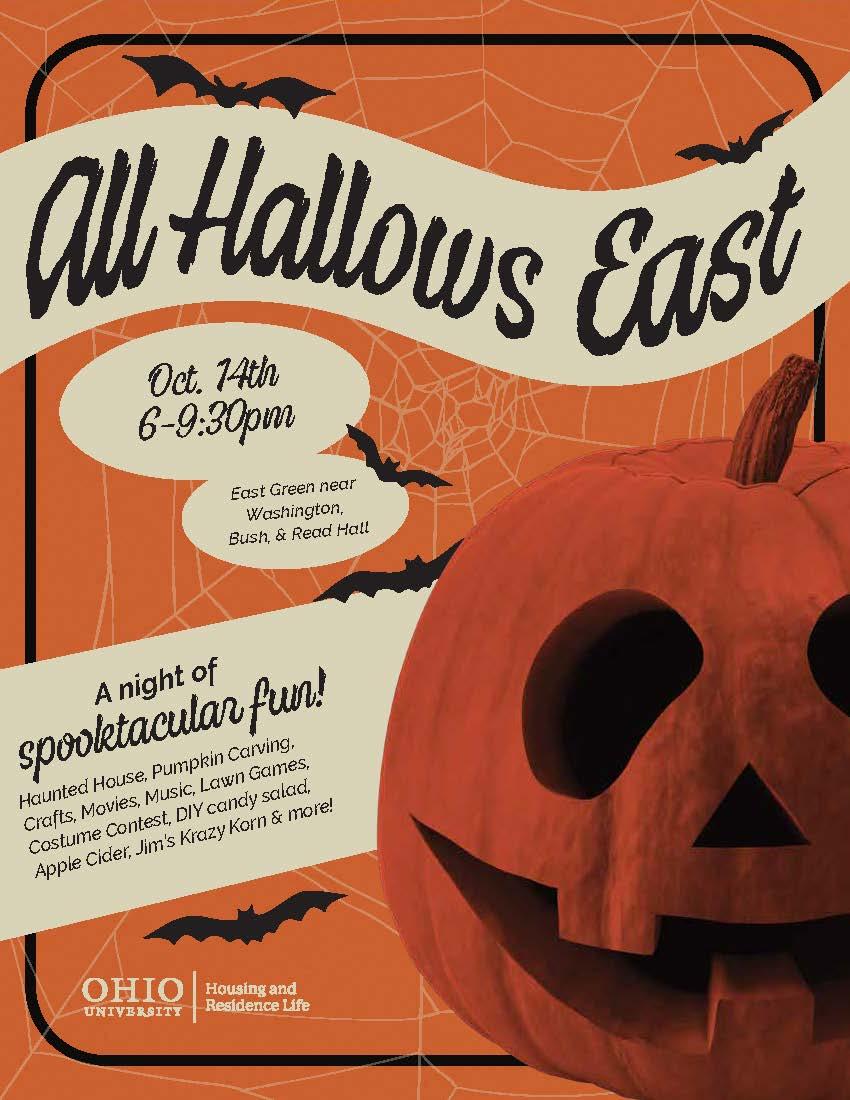
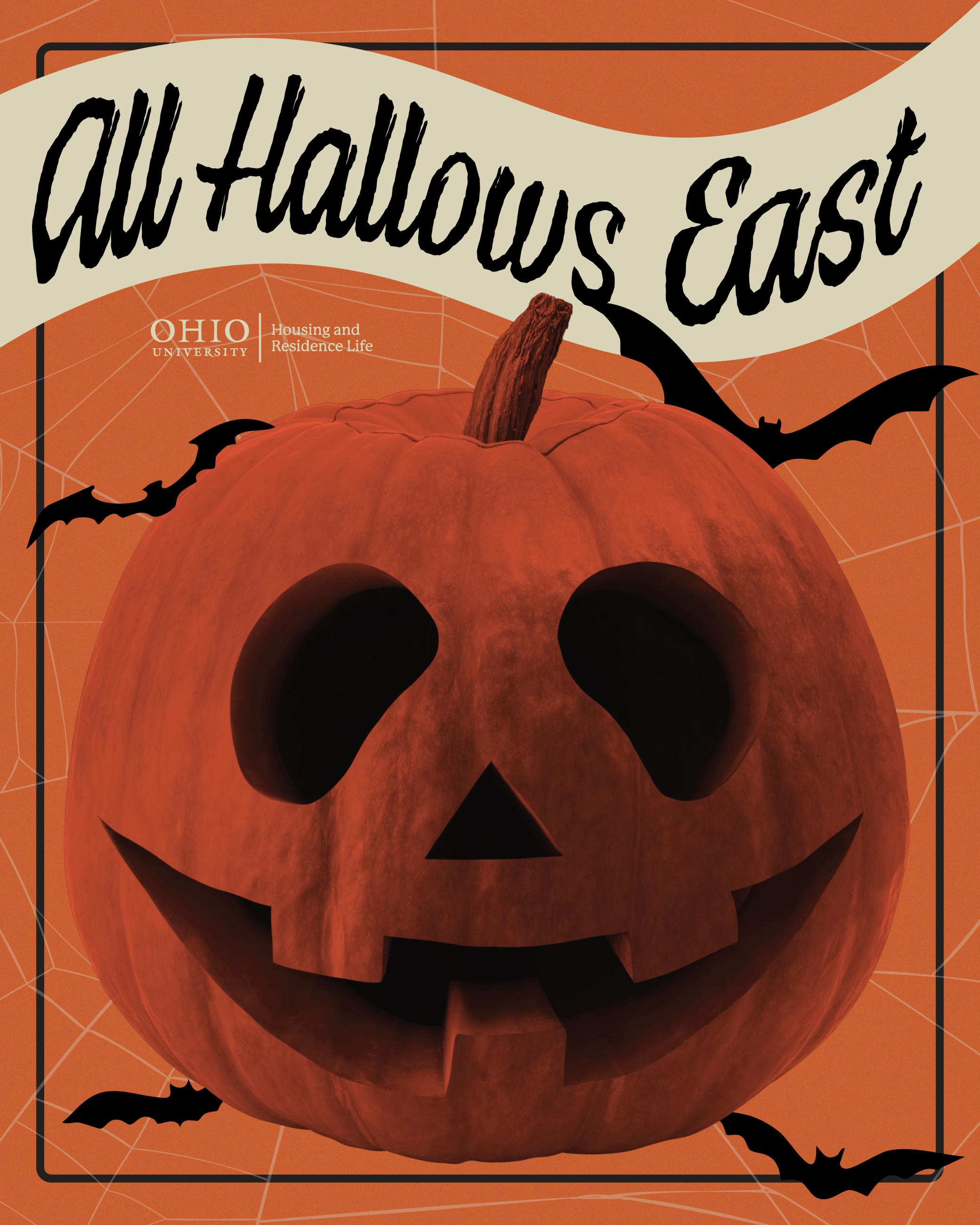
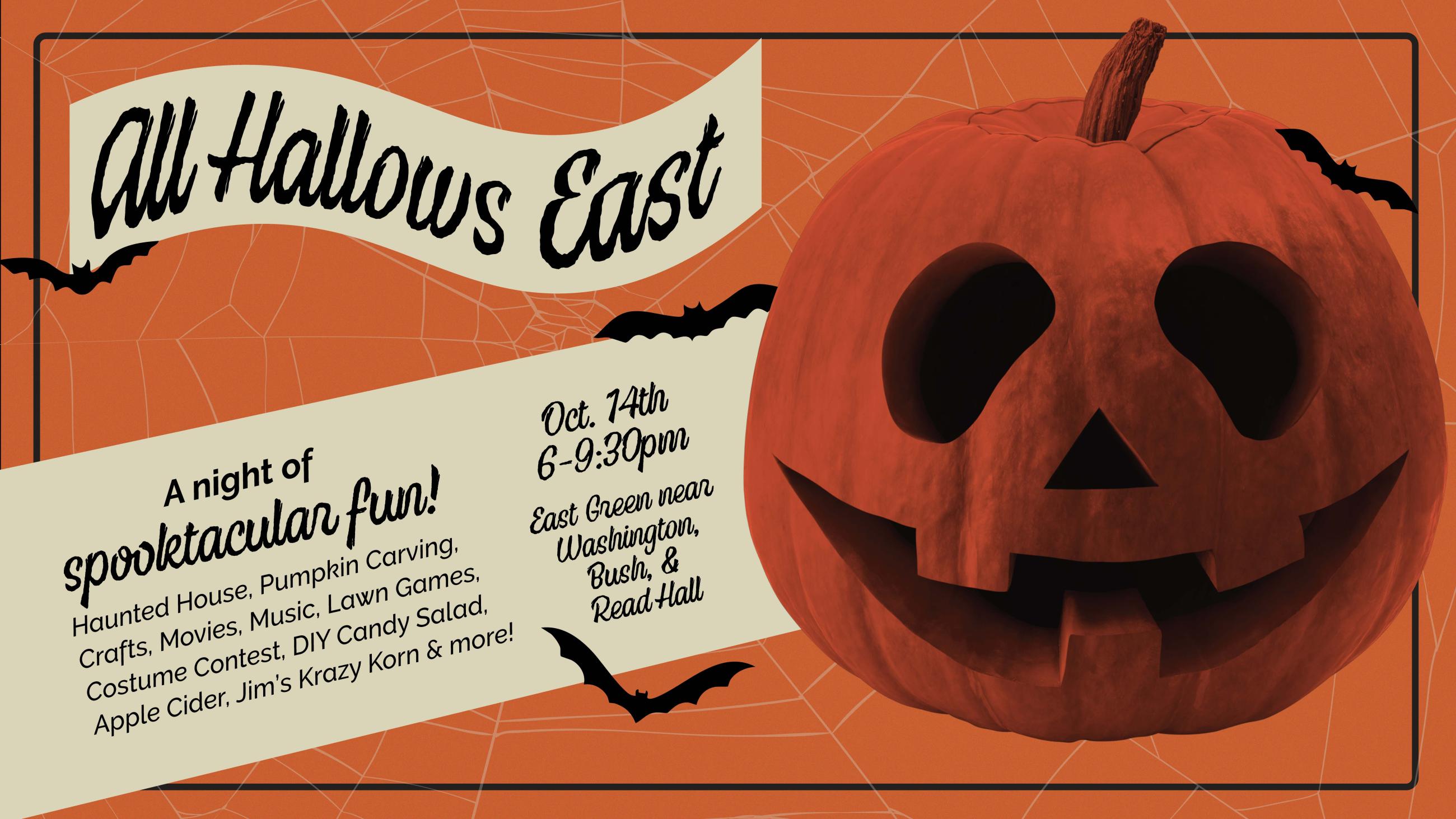
All Hallows East was a residential community event hosted on East Green, designed as a Halloween-inspired block party for students living in the area. Student designer Gwyn Shoemaker created a full suite of promotional materials including a flyer, social media graphics, a Calendar of University Events (CUE) listing, and digital screen displays across campus.
The creative direction for the campaign leaned into the seasonal theme while also tying back to the identity of East Green, using the name “All Hallows East” to blend Halloween spirit with a strong sense of place-based branding. The goal was to create excitement, build community engagement, and encourage residents to participate in a fun, inclusive event within their neighborhood.
Gwyn’s design work helped bring the event to life visually and ensured consistency across all marketing platforms. The materials were eye-catching, on-theme, and widely distributed, playing a key role in promoting the event and strengthening community participation within East Green.
Flyer
Social Media/Calendar of University Events Graphic
Digital Screen
.
Tour Room: McDavis Info Board
Timeframe
March 2026
Overview/Outcome
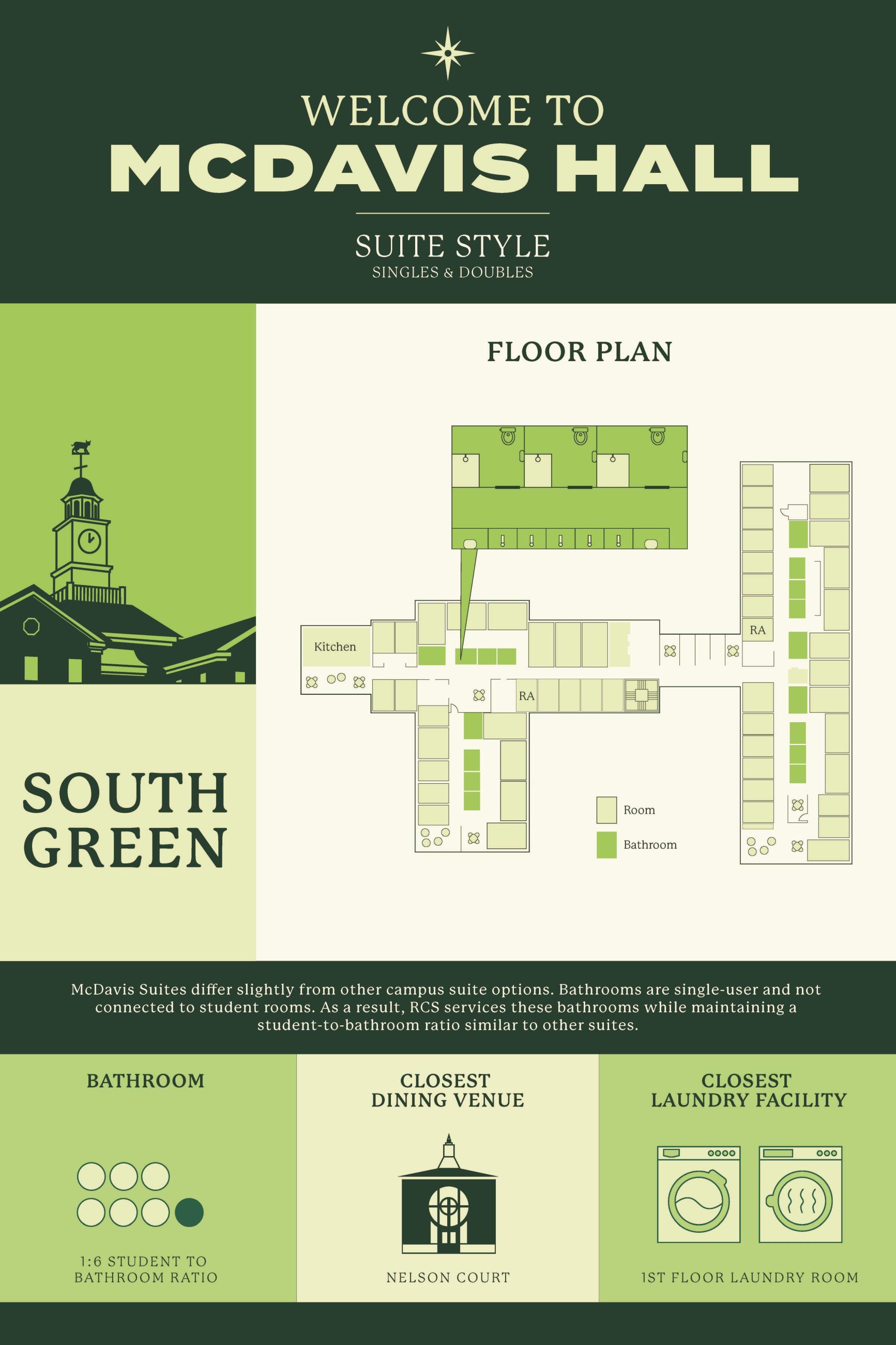
The McDavis Hall Tour Room display was created to support the 2026–27 room selection process while McDavis Hall was still under construction ahead of its August 2026 opening. Even though students could select spaces in the new building in March 2026, there was no physical room available to tour, which made it harder for students to understand what they were choosing.
To help bridge that gap, we created a visual display for the Housing Office lobby during our annual room selection open house. The display gave students a clear visual of McDavis Hall’s layout and key features, paired with straightforward “need to know” information about what the building would offer. It helped students better understand the space even without being able to physically tour it, and gave our staff a tool to walk them through questions and decision-making in the moment.
Placed right alongside staff support during open house, the display helped make McDavis feel tangible.
.
Website: RA Recruitment
Timeframe
Fall 2025 (for 2026-27 staff)
Overview/Outcome
The Resident Advisor website started because our student staff selection and recruitment committee really didn’t have the level of support it needed from a marketing standpoint. Most of the information was being shared through emails and a few flyers, and it felt like students were having to dig to understand what the RA role actually was and how to apply.
I saw an opportunity to make it easier for students and families, so I put together a draft website and shared it with the team. Once they saw it, they were immediately on board, and it turned into a much more collaborative project from there. I worked with the student staff selection and recruitment committee to pull in real testimonials from current RAs, links to the virtual sessions, tighten up the information, and make the page feel more like a real window into the experience instead of just instructions.
One of the biggest wins was adding a live events feed from the Calendar of University Events so students could see info sessions in real time and even add them straight to their Outlook calendars. That small feature ended up making a big difference during recruitment season. Please note that since the events have passed, they are no longer visible on the page now.
We used the website everywhere, in emails, newsletters, and even parent communications. It became a go-to resource for anyone trying to understand the process, and honestly it ended up being even more helpful for parents who wanted to better support their student through the decision.
Website: Room Viewings
Timeframe
Fall 2025: OHIO Discovery Days
Spring 2026: OHIO UpClose
Overview/Outcome
The Admission Tour website was created to replace printed handouts used during Ohio University’s recruitment events, including OHIO Discovery Days for prospective sophomores and juniors and OHIO UpClose for admitted students. During these large-scale visit programs hosted by Undergraduate Admissions, Housing and Residence Life provides room viewings across multiple residence halls, often serving over 1,000 guests per event and multiple events per semester.
With rising printing costs and a need for more sustainable solutions, I proposed and built a digital alternative that would reduce waste while improving the guest experience. The website provides clear, easy-to-use information including direct Google Maps and Apple Maps walking directions to each showcase residence hall, as well as directions to Baker University Center where many admission events are held.
Instead of distributing printed 1/4 sheets that often became outdated or ran out mid-event, we shifted to a QR code-based system displayed at check-in. This allowed us to update hall information in real time without reprinting materials and ensured guests always had accurate directions. A small number of printed copies were still available for guests who preferred them, but over 99.9 percent of visitors used the website, which significantly improved navigation and reduced confusion across campus.
The result was a more sustainable, cost-effective, and user-friendly solution that improved the overall visitor experience while modernizing how we support large-scale admission events.