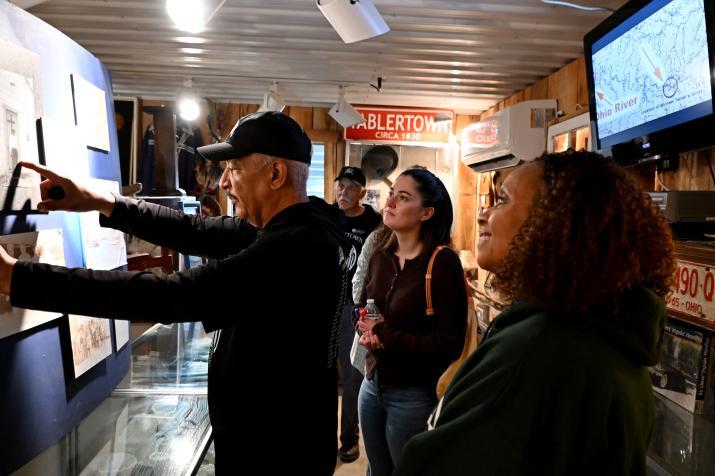
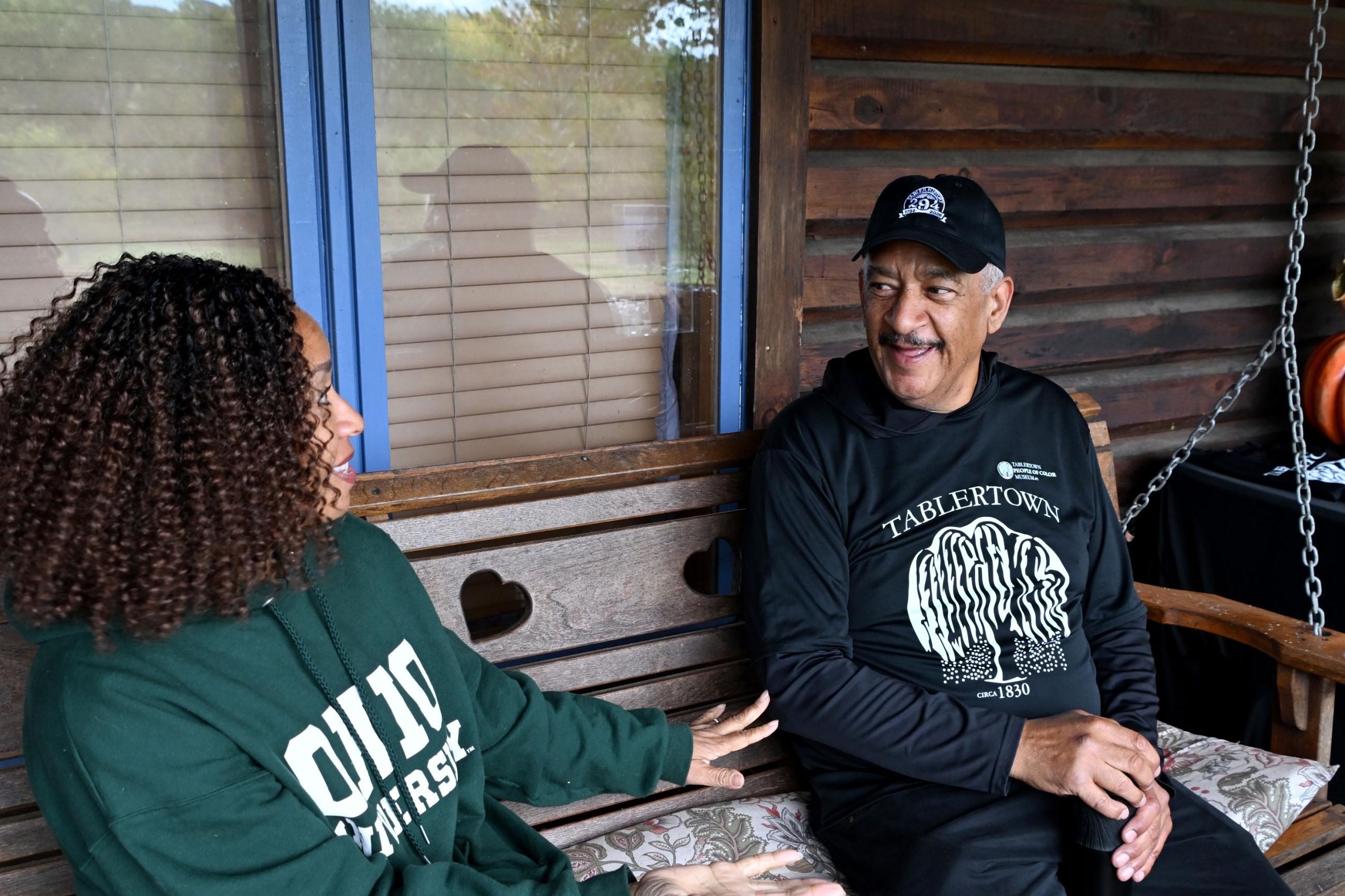
Students in the Rural and Urban Scholars Pathways (RUSP) program were recently invited to a Saturday visit to the People of Color Museum, an experience that offered a unique look at Appalachian history, community heritage and the importance of preserving local stories.
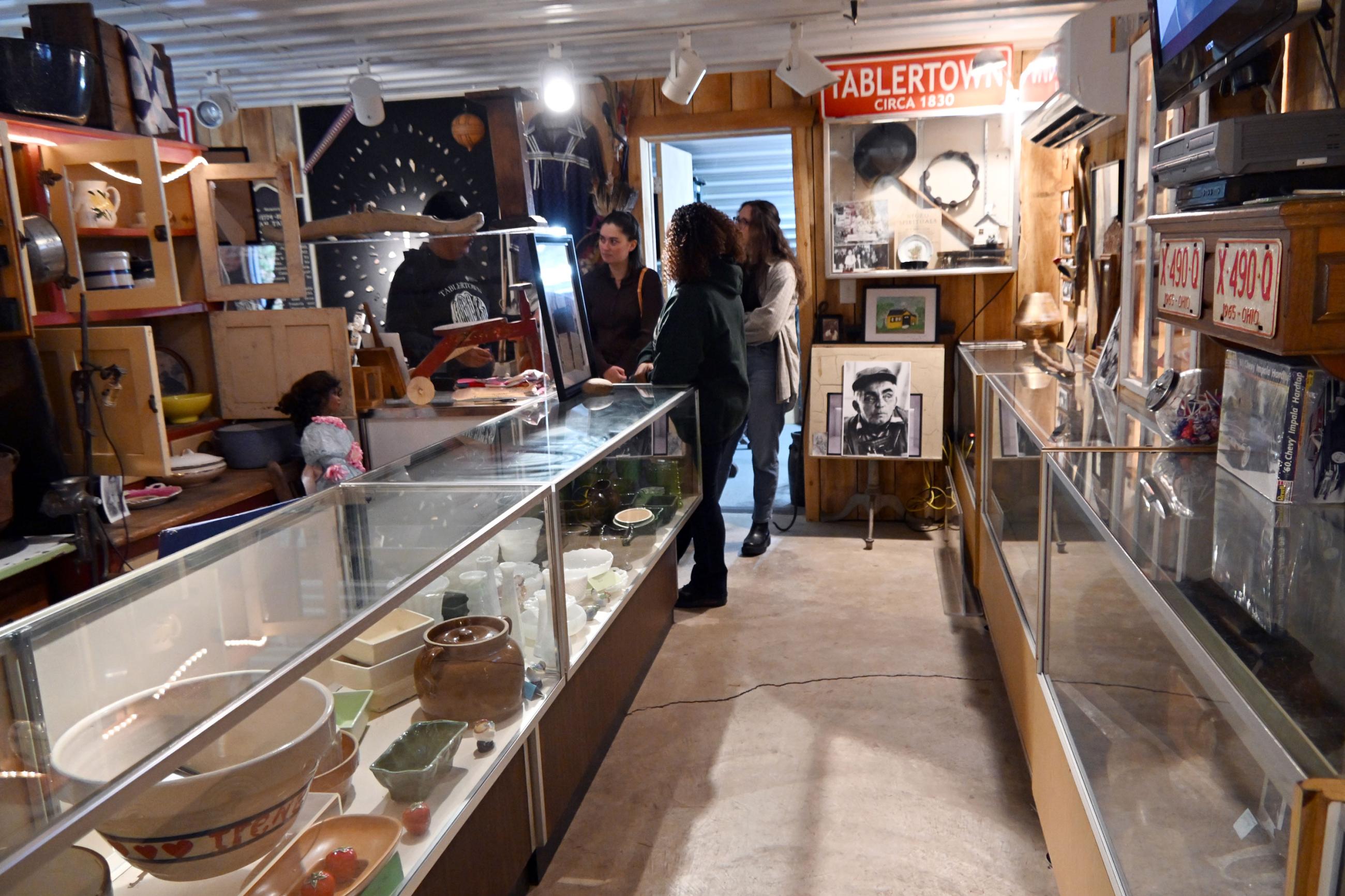
Organized by Robin Newburn, D.O., associate clinical professor and associate director of the Office of Rural and Underserved Programs at the Heritage College of Osteopathic Medicine, the visit highlighted the work of museum founder David Butcher. The museum features artifacts and exhibits that tell the story of Butcher's family legacy, the history of Appalachia and the history of Tablertown, now known as Kilvert, where some of his formerly enslaved ancestors settled.
Newburn said she came across Butcher's work while doing independent research on free people of color in Ohio.
“I was immediately interested in going to see the museum he has created. I decided to open it up to RUSP students, because they might be interested in this little-known piece of history of a 200-year-old rural Ohio community, how it has developed over the centuries and the ways in which marginalized people were able to thrive at a time when the odds were truly against them,” said Newburn.
Currently housed in a pole barn on Butcher’s property near Stewart, Ohio, the museum is preparing for the future opening of a permanent facility, which is currently under construction.
“After visiting the People of Color Museum, my biggest takeaway is how one person really can make a difference,” she said. “With passion, dedication and vision, David Butcher has been able to enthusiastically preserve his family's history and educate his community, and beyond, about how the town in which they live came into existence, and why these narratives are so important in our understanding of the history of places and spaces.”
Newburn encourages others to experience the museum for themselves.
“You will learn a lot and leave inspired to preserve and tell your own family's story for future generations,” she said.