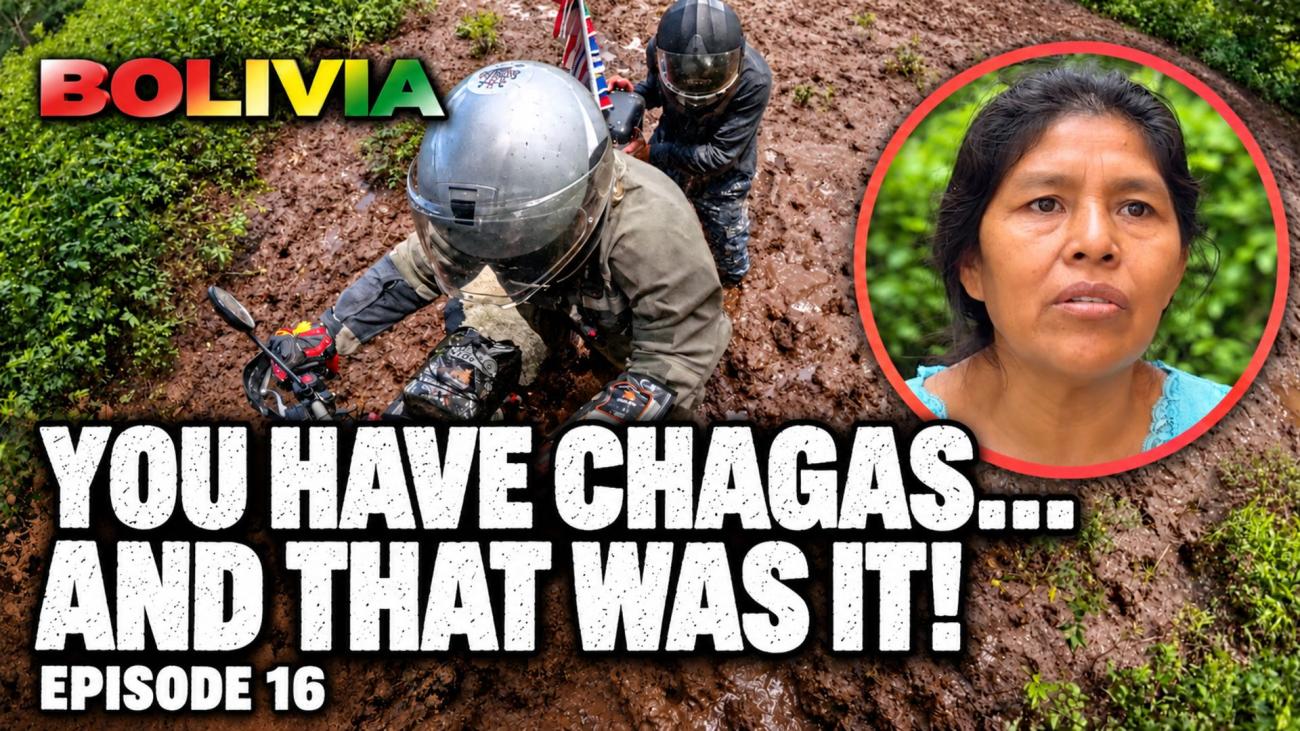
You Have Chagas: They Told Me, and That Was It
In this episode, we travel through the Guaraní communities of Itanambicua and El Rodeo in the Bolivian Chaco to hear the story of Alicia, a local leader who discovered her diagnosis while trying to donate blood but was left without guidance, facing heart problems and a lack of doctors in her community today. Riding across slippery clay and muddy roads aboard "La Tigrilla," this journey highlights the urgent need to ensure that every diagnosis is accompanied by information, free treatment, and comprehensive follow-up care.
Learning Guide: Episode 16
1. Learning Objectives
- Explain how poor housing conditions and the presence of triatomine bugs contributed to Chagas disease transmission in the community of Itanamiku.
- Identify the difficulties people face in accessing information, diagnosis, and treatment after receiving a positive Chagas test result.
- Recognize the importance of medical follow-up for people with chronic Chagas disease and the need for stable healthcare services in rural communities.
2. Key Messages from the Episode
- Homes built with materials such as mud bricks and thatch can provide shelter for triatomine bugs and favor Chagas disease transmission.
- In Itanamiku, some people received a positive diagnosis but did not receive clear information about the next steps or guidance on how to access treatment.
- The lack of permanent doctors and medications limits healthcare in the community.
- People with chronic Chagas disease need medical follow-up to address possible complications.
- Improving housing conditions is an important measure for reducing the presence of triatomine bugs.
3. Key Content Explained (Simple Language)
In Itanamiku, the second-in-command of the Guaraní community explains that healthcare conditions have improved with the opening of a small hospital. However, challenges remain because of shortages of medications and permanent medical staff. At certain times of the year, the community has no doctor. She also recalls that, when she was a child, many families lived in homes built with mud bricks and thatch, where triatomine bugs were common. Several members of her family became infected with Chagas disease. These insects can transmit the parasite Trypanosoma cruzi, which can affect the heart and digestive system.
The interviewee explains that some people discover they have Chagas disease when they undergo blood tests for other reasons, but they do not receive enough information about what to do after diagnosis. She recounts that when she tried to donate blood in Santa Cruz, she was told she had Chagas disease, but no one guided her on where to go or how to receive treatment. Later, she had difficulty undergoing gallbladder surgery because of a heart rhythm problem that her doctor linked to the disease. Her experience highlights the importance of supporting people after diagnosis and providing clear information about available care and treatment options.
The episode also introduces Alicia, who did not receive treatment in time and now lives with the consequences of the damage caused by Trypanosoma cruzi to her heart. People with chronic Chagas disease need close follow-up from the healthcare system, but this support is not always available. The interviewee recommends improving homes, especially those built with deteriorating materials, by repairing and plastering walls to reduce the spaces where triatomine bugs can hide. The episode emphasizes that addressing Chagas disease requires both better housing conditions and accessible, continuous healthcare services.
4. Reflection Questions
Basic Level
What materials were used to build some of the homes where the interviewee lived during her childhood?
What difficulties do people face after receiving a positive Chagas test result in Itanamiku?
Why is improving housing conditions important for Chagas disease prevention?
Intermediate Level
How can the lack of permanent doctors and medications affect healthcare for people with Chagas disease?
Why is it important for people to receive guidance and follow-up after a positive diagnosis?
What consequences can chronic Chagas disease have when appropriate medical follow-up is unavailable?
Advanced Level
What measures could ensure that people diagnosed with Chagas disease receive timely information, treatment, and follow-up?
How could authorities and communities work together to improve housing and reduce the presence of triatomine bugs?
What changes should be implemented to ensure stable and accessible healthcare services in rural communities?
5. Vocabulary
Mud brick: A building material used to construct walls, mentioned in the episode as part of traditional homes in the community.
Wall plastering: Applying a layer of material to cover and smooth the surface of walls.
Diagnosis: The identification of a disease through medical evaluations or tests.
Chronic Chagas disease: A stage of the disease that can develop years after infection and cause complications, especially involving the heart.
Medical follow-up: Ongoing healthcare and checkups after a diagnosis to monitor the disease and guide treatment.
Triatomine bug: An insect that can transmit the parasite that causes Chagas disease.