
Chagas in the Chaco, a Fight That Cannot Stop
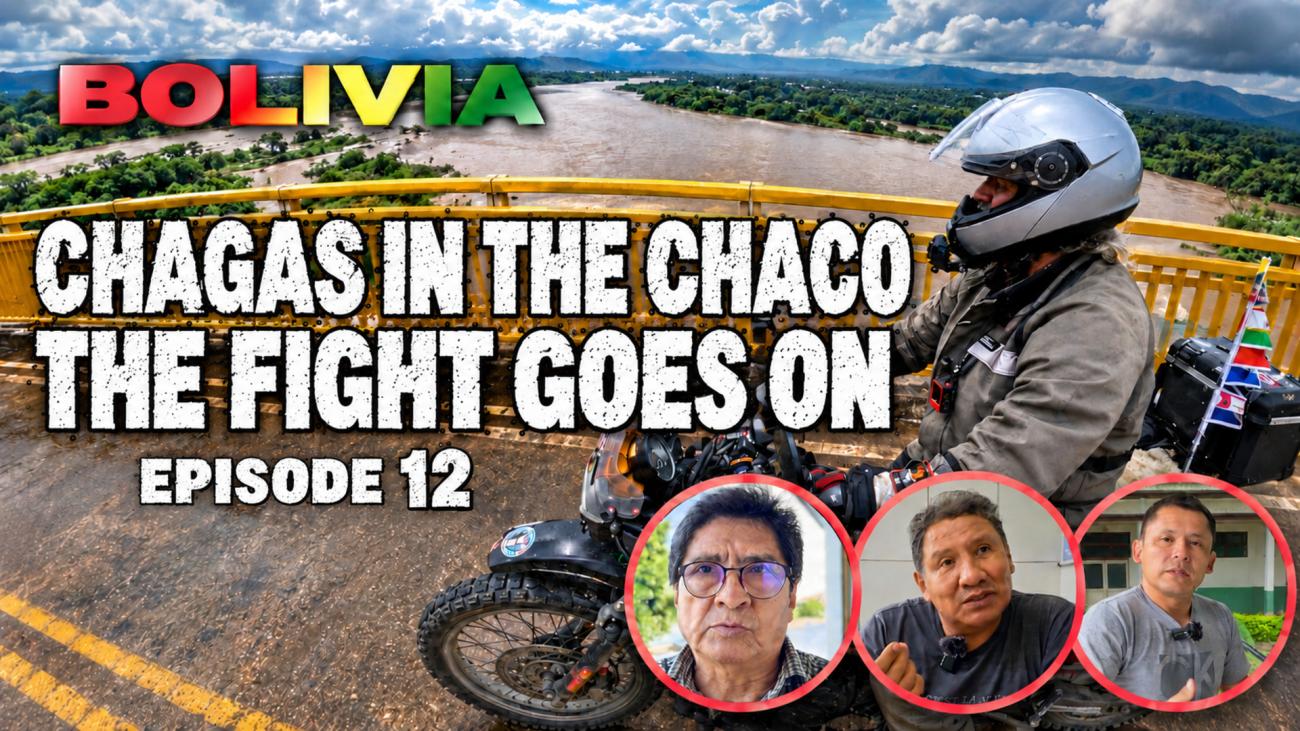
In this episode, we travel through Yacuiba, Caiza, and Villa Montes in the Bolivian Chaco alongside the SANIT–ISGlobal Cayac Forza-Chaco-Bol project team. We visit the Rubén Zelaya Hospital and cross the impressive Pilcomayo River to learn about the daily work of healthcare personnel: from delivering educational materials to remote areas to overcoming the barriers that hinder access to diagnosis and treatment. A journey that proves community commitment is vital, but sustained public investment is the key to winning the battle against Chagas.
Learning Guide: Episode 12
1. Learning Objectives
- Describe the barriers to Chagas treatment experienced by a physician in the Bolivian Chaco, including the lack of available health professionals and treatment.
- Interpret the differences in Chagas seroprevalence reported among age groups in the Caraparí region and what they reveal about the continuing burden of the disease.
- Explain how health education and coordinated cardiac care can help patients and families manage Chagas-related complications in the Bolivian Chaco.
2. Key Messages from the Episode
- Even a physician diagnosed with Chagas experienced significant difficulties finding appropriate treatment.
- The lack of available health professionals, treatment, and continuity of care can create major barriers for people living with Chagas in rural areas.
- Reported seroprevalence in Caraparí was substantially higher among older adults than among younger age groups, showing the long-term presence of Chagas in the region.
- A local Chagas program was established in Caraparí to improve access to diagnosis and treatment, although challenges remain.
- The Centro Integral de Cardiología del Gran Chaco connects hospitals and health centers across Yacuiba, Caraparí, and Villamontes to improve access to cardiac care.
- Fear of complications such as heart failure and digestive problems can make people hesitant to seek or accept care.
- Health education for patients and families is presented as an essential part of treatment.
- Educational materials and community outreach can help people understand Chagas and encourage them to seek diagnosis and treatment.
3. Key Content Explained (Simple Language)
The episode takes place in Caraparí, in the Bolivian Chaco, where health professionals are working to bring Chagas diagnosis, treatment, and information closer to local communities. The team presents educational materials to health workers and community members and discusses ways to encourage people to seek diagnosis and treatment.
A central story in the episode is that of a physician who was diagnosed with Chagas while studying in Salta, Argentina. At first, he did not consider the diagnosis very important. After moving to Bolivia, however, he began experiencing symptoms and sought treatment. He visited different places but sometimes found that there was no medical professional available, no treatment available, or that the person responsible for treatment was absent. He eventually had to find a way to obtain treatment himself. His experience led him to reflect on how much harder it could be for someone without medical training to navigate the health system.
The episode also presents seroprevalence data from the region. The doctor reports that approximately 68–72% of adults over 45 had detectable evidence of infection, compared with approximately 30–32% among people aged 20–45 and around 11–12% among younger people. The episode presents these differences as evidence of the significant burden of Chagas in the region and describes efforts to establish and maintain a local program in Caraparí.
Another focus is the regional system for cardiac care. The Centro Integral de Cardiología del Gran Chaco coordinates referrals between three second-level hospitals and 67 primary health centers in Yacuiba, Caraparí, and Villamontes. Its goal is to bring cardiac care closer to people throughout the region, particularly those experiencing complications associated with Chagas.
The episode also shows why education is important alongside treatment. A health professional explains that some people fear a Chagas diagnosis because they associate it with heart failure and intestinal problems. Health workers therefore provide information to patients and families about treatment and nutrition, helping them understand that treatment is available and encouraging them to follow through with care.
4. Reflection Questions
Basic Level
What difficulties did the physician experience when he tried to obtain Chagas treatment?
What differences in seroprevalence were reported between older and younger age groups in Caraparí?
What is the role of the Centro Integral de Cardiología del Gran Chaco?
Intermediate Level
Why is the physician's experience especially important when considering access to treatment for people without medical training?
What might explain the much higher reported seroprevalence among older adults than among younger people in the region?
Why does the episode emphasize bringing diagnosis and treatment closer to local communities?
How can education help patients and families feel more prepared to undergo treatment?
Advanced Level
What can the differences in reported seroprevalence between age groups tell us about the history and continuing burden of Chagas in the region?
How can coordination between primary health centers and specialized cardiac services improve care for people with Chagas complications?
Why might fear of cardiac and digestive complications influence a person's willingness to seek diagnosis or treatment?
What additional approaches could help ensure that people diagnosed with Chagas are able to complete treatment and receive appropriate follow-up?
5. Vocabulary
Seroprevalence: The proportion of a population with detectable antibodies associated with an infection.
Referral: The process of sending a patient from one health service to another for specialized care.
Cardiology: The medical specialty focused on the heart and cardiovascular system.
Continuity of care: Ongoing health care that allows patients to receive appropriate follow-up over time.
Community outreach: Activities that bring health information or services directly to people in their communities.
Congenital Chagas: Chagas disease transmitted from a mother to her child during pregnancy or childbirth.