
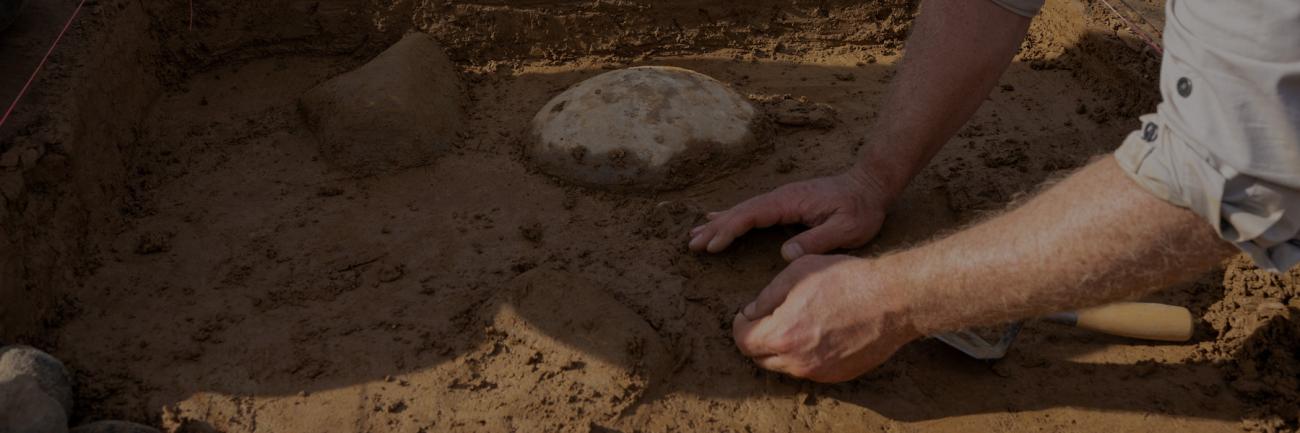
Unearth new pieces of the puzzle, from the Bronze Age to Alexander the Great.
Classics & Religious Studies Department
Classics & Religious Studies Department
In Classics and Religious Studies, you'll explore the languages, texts, traditions, and artifacts of cultures extending from the Mediterranean to Central, South, and East Asia — regions in which the civilizations of ancient Greece and Rome and major world religions such as Judaism, Christianity, Islam, Hinduism, and Buddhism took shape.
Along the way, you'll develop critical thinking, analytical writing, and cross-cultural communication skills that prepare you for careers in education, law, public service, journalism, museum and archival work, nonprofit leadership, and more. Come explore with us!
5
Major Religions emerged from the Mediterranean to Central, South and East Asia: Judaism, Christianity, Islam, Buddhism, and Hinduism
Big
Questions about human cultures and religions have complex answers.
Evidence
Sometimes we only have fragments of surviving evidence to put a puzzle back together.
Controversy
We all learn much about our own preconceptions, which then allows us to see outside ourselves.
Discovering the Roots of Human Beliefs and Cultures
We deal with human beliefs, emotions and interactions — and how to study these objectively. These are big questions about human existence:
- What does it mean to be human in different places and times?
- What are the root factors behind the differences that characterize various cultures?
- How do religious beliefs shape cultural choices?
- How do different classes of people interact within a culture and why?
It's all about the evidence! We examine what people wrote, the cities in which they lived, their objects of daily life, and even inscriptions on their tombstones. Sometimes we only have fragments of surviving evidence, so the challenge (and the fun) is to figure out how to put a partial puzzle back together to create an overall understanding of the culture.
Classics & Religious Studies Student Experiences — Here and Abroad
At a local archaeological site. Around the World. Just a few places you might get hands-on experience.
-
Uncover a Once-Thriving Civil War-Era African American Settlement in OhioAll that’s left of Payne’s Crossing, an African American settlement dating back to the 1800s, is remnants of the cemetery? Actually, there’s a lot more to discover about this once-thriving settlement founded by formerly enslaved people that likely served as a stop on the Underground Railroad.
-
Exploring Eternal Rome with a View to Piety and PowerStudents can take advantage of opportunities to discover the rich religious and political history of medieval Rome over spring break, exploring dozens of archeological sites, museums, and churches in Rome and its vicinity, all with the guidance of a professor with expert knowledge and extensive familiarity of Rome.
-
Experience OHIOThis searchable tool showcases dozens of ways Bobcats are rolling up their sleeves to gain real-world skills and stand out as emerging professionals. Sort by industry, academic college, or experience type — or simply use the search bar to discover unique opportunities that are totally you.
Research Areas We Focus On
-
Why Study the Classics?
Because questions of democracy, justice, power and empire remain unanswered, even today.
-
Why Study Classical Greek?
Their bodies are dead, but their voices live on—for those who long to hear them.
-
Why Study Hindi?
To understand a place as complicated as South Asia, one must understand its languages.
-
Why Study Latin?
Romance, the Renaissance and Rome still resonate today, from comic books to science.
Neil Bernstein Brings Classics to Life
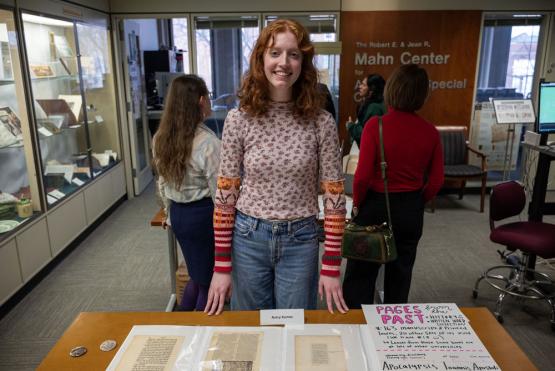
He regularly brings his students to the archives to study ancient texts, including a 13th-century illuminated Latin manuscript Bible.
Popular Course Provides a Global Look at the Supernatural
Dr. Brian Collins' course covers the mystical, magical and marginal elements of religious life.
CARS Faculty: New Fellowships, Books, Archaeological Digs & More
Creating new knowledge about government in early Rome, Corinthian pottery, Latin literature, Palestinian refugees, science and religion, and more
Fred Drogula Wins National Award for Teaching Excellence
He has dramatically enhanced student engagement with the ancient world by creating new courses and a new club focused on monster literature.
Loren Lybarger Named Presidential Research Scholar
His research focuses on how religion, nationalism, war, mass displacement, and state violence shape identities and demands for justice across generations.
-
Alumni Engagement & Giving Opportunities
Alumni involvement drives innovation and impact in the Classics & Religious Studies Department for both students and faculty. Explore the areas of highest need for our department, including supporting students, experiential learning and investing in faculty.

Classics & Religious Studies Events
250 Years: The Promises and Legacy of the Declaration of Independence
Thursday, September 10
All Day Until 7:00 PM
Baker University Center
250 Years: The Promises and Legacy of the Declaration of Independence
Friday, September 11
9:00 AM — 6:15 PM
Baker University Center
250 Years: The Promises and Legacy of the Declaration of Independence
Saturday, September 12
9:00 AM — 5:40 PM
Baker University Center