
The Leadership and Innovation in Digital Media area of study coves strategic leadership, digital transformation practices, and fostering innovation within organizations.

Media Transformation and Innovation
Master of Arts
Media Transformation and Innovation Master's Degree
The Media Transformation & Innovation Master of Arts degree prepares students for leadership in a media landscape reshaped by digital disruption, emerging technologies, and shifting audience expectations. Blending foundational media expertise with cutting-edge digital innovation, the program develops professionals equipped to navigate and shape complex, fast-moving media environments, and to do so with a clear understanding of the ethical responsibilities that role carries.
Students can pursue either a research route, culminating in a thesis, or a production route, culminating in a professional capstone project. Full-time students can complete the degree in three semesters (fall, spring, summer).
Choose an Area of Study
Students tailor the program to their interests through one of three areas of study.
-
Leadership and Innovation in Digital Media
-
Data Analytics, AI, and Visual Data Storytelling
The Data Analytics, AI, and Visual Data Storytelling area of study ranges through data-driven research and storytelling for analytically focused theses or professional projects.
-
Media Production and Digital Content Creation
The Media Production and Digital Content Creation area of study focuses on hands-on audio-visual production and digital content creation across platforms.
Careers with a Media Transformation and Innovation Master's Degree

Admissions Requirements
- Bachelor’s degree with GPA of 3.0 or higher
- Three letters of recommendation with at least one from an individual who has mentored or taught the applicant.
- Personal statement of purpose
- English Proficiency: Please review information about Ohio University's minimum English Language Proficiency requirements for graduate study.
View More About Media Arts Graduate Admissions
International Students
This program permits full-time enrollment in residence at Ohio University, and an I-20 may be issued based on admission to this program.
-
Tuition & Fees
Tuition and fees are assessed based on the number of credit hours of enrollment, Ohio residency and program.
-
Financial Aid & Scholarships
Financial aid for graduate study is available in the form of student loans. To begin the loan application process, you need to complete and submit a FAFSA (Free Application for Federal Student Aid). The school code for Ohio University is 003100.
To learn more about loans, scholarships and grants, visit Ohio University's Office of Financial Aid & Scholarships. Another good resource is The College Board.
-
Media Arts Graduate Assistantships
Graduate Assistantships are competitively awarded based on academic record, professional experience, recommendations and current needs of the School of Media Arts and Studies. All GAs are required to work 15 hours in exchange for a stipend and full tuition waiver and may be assigned as teaching assistants, research assistants, or instructors. Stipend levels are reviewed annually; for the 2020-21 academic year, doctoral students received $15,000 and master's students received $12,000.
Media Transformation and Innovation M.A. Courses & Degree Requirements
View Courses & Requirements in the Academic Catalog
The M.A. program of study includes a minimum of 32 credit hours, including 12 hours of foundation courses plus 16 hours of electives selected with the student's advisor and approved by their committee.
The elective area may include graduate certificate options:
- Digital Media Transformation & Innovation Graduate Certificate
- Media Tools for Professional Communication Graduate Certificate
Master's Advisory Committee
During the first semester of study, master's students select a School of Media Arts & Studies (MDIA) faculty member to serve as their advisor and committee chair. The Program Committee includes a minimum of two additional members with credentials appropriate to the student's area of study, at least one of whom must be an MDIA faculty member. The committee guides course selection, approves the program of study, and plays a central role in the culminating experience, whether approving the capstone proposal, administering and evaluating the thesis defense, or approving the final draft.
Program Highlights
-
32 Credit Hours
The curriculum is structured so that each requirement contributes directly to professional readiness, without extraneous coursework.
-
Built for AI and Emerging Media
Coursework engages AI-driven content creation, social data analytics, and immersive media production, addressing the technologies currently reshaping how media is produced, distributed, and evaluated. These competencies form the foundation of the degree rather than an optional area of study.
-
Integrated Graduate Certificate Options
A student leaves with the M.A. degree plus a Scripps College certificate at no extra credit hours.
-
Capstone Project or Thesis
Students complete the degree with either a professional capstone project or a master's thesis. The professional project produces portfolio-ready work for industry careers, while the thesis supports students preparing for doctoral study or research-oriented positions.
Trung Nguyen: From Fulbright to Media Arts & Studies
Trung Nguyen is a 2024–2026 Fulbright Foreign Student Program grantee who graduated with a Master of Arts in Media Arts & Studies. At OHIO, he was an active researcher in the SMART Lab.
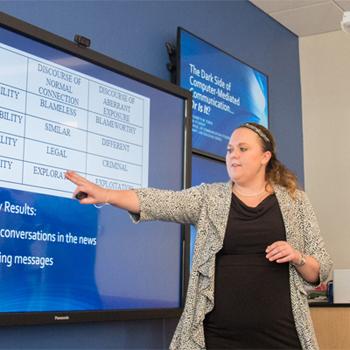
The SMART Lab
Media Arts & Studies Graduate Programs

Meet the Director
-
Contact Us
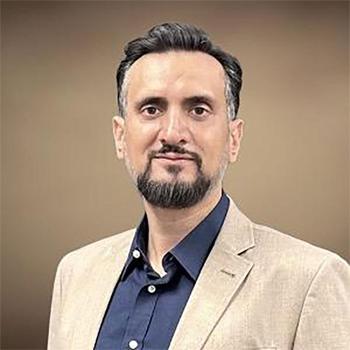
For more information about the Media Transformation and Innovation M.A., contact the program director, Dr. Laeeq Khan, at khanm1@ohio.edu.
Related Programs
-
Mass Communication Ph.D.The Mass Communication Ph.D. is a joint program with the E.W. Scripps School of Journalism and the School of Media Arts and Studies, and our doctoral graduates hold key positions at universities around the world.
-
Communication Media Arts M.F.A.The M.F.A. is designed for seasoned media professionals. Our program integrates advanced production skills and contextual knowledge with state-of-the-art facilities, preparing you to navigate and lead in the evolving media landscape.
-
Communication and Development Studies M.A.The Communication & Development Studies M.A., offered with the Center for International Studies, focuses on using communication to promote social change, emphasizing topics related to communication for development, strategic communications, and participatory research methods.