
Comfortable being uncomfortable
October 16, 2026
My Experience with The PACE Program
When I first joined the PACE Program at Ohio University, I saw it as an opportunity to gain experience in my field, strengthen my résumé, and have something meaningful to talk about in future interviews. I didn't know much about industrial control systems at the time, but the opportunity to work with the technology behind critical infrastructure was something I was interested in exploring.
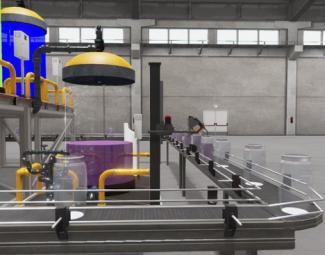
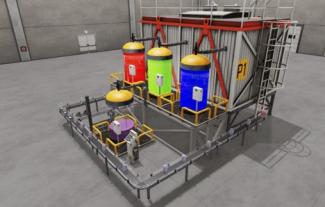
Since then, I've spent a lot of time learning how these systems work using Machine Simulator 4 and EasyPLC. My main project is a simulated pharmaceutical sorting plant. Conveyor belts move bottles of liquid medicine through the facility, where SCARA robotic arms sort them based on their weight and color. I'm working from an existing template and expanding it into something more complex as time goes on. Next semester, I'll begin developing Python-based cyberattacks against the system I’ve built and exploring what happens when the technology controlling an industrial process is compromised. I've found this to be a fascinating area to work in, especially as I've started to realize how much the world depends on systems like these.
|
| 
| 
|
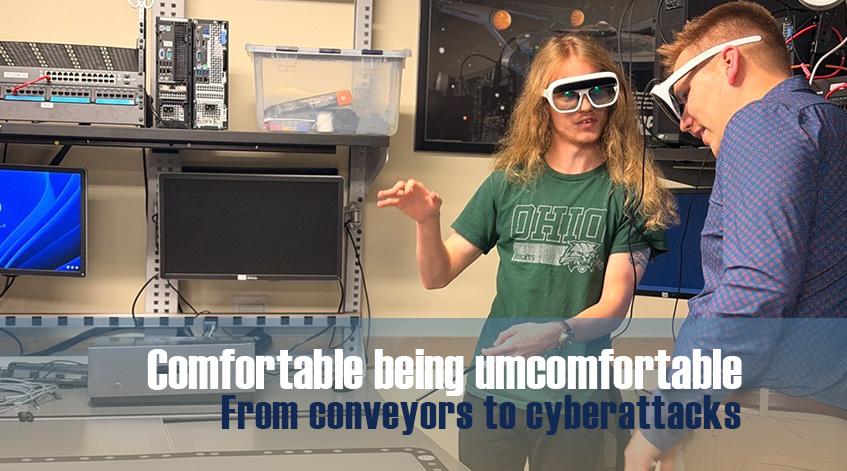
The project has also given me the chance to work with virtual reality equipment in ways I hadn't experienced before. Users can explore the simulated factory from above or step into a first-person perspective and move objects around the environment. I find it’s a great way to demonstrate what I've built and give people a better understanding of how everything functions. Rather than just describing an industrial process or explaining what might happen during an attack, I can let someone explore and experience it for themselves.
I think my favorite part of the PACE Program though has been the freedom to work independently in the ECT labs. I have my own space to experiment, access to tools that let me tinker and learn from mistakes, and regular meetings with Dr. Das to discuss progress and ask any questions I may have. Almost all my time on the project, outside of meetings, is spent creating and troubleshooting. I think anyone who enjoys technology or figuring out how things work would have a lot of fun and learn quite a bit through an opportunity like this.
Recently, I had the opportunity to present some of my work to Ohio State Senator Chavez and the ECT faculty. It was the first time I'd presented any of my work to someone outside a typical academic setting. Over the years, I've watched plenty of other people present their ideas and projects, so it was nice to have the chance to take that role myself. Explaining something I'd spent so many hours learning about and building gave me some much-needed confidence that I'm on the right track. I left that day feeling like I was stepping into a bigger pair of shoes, maybe a few sizes too big, But I've found that if you want to accomplish anything, you must get comfortable being uncomfortable. Opportunities like this have helped reassure me that the long nights and hard work have been worth it.
Looking back, the PACE Program has become more than just a way to gain experience for my résumé. It's allowed me to work closely with professors I greatly respect and learn in a completely different manner than I ever have before. Alongside all of that, it’s given me more confidence not only in the work that I do, but in myself in general. I look forward to continuing my work through the PACE program and enjoying every opportunity it has given me.
The McClure School of Emerging Communication Technologies strives to offer the best academic programs in the IT (Information Technology), cybersecurity, the game development and the Virtual Reality/Augmented Reality (VR/AR) industries. Our programs and certificates cover numerous aspects of the rapidly changing industries of information networking, cybersecurity operations, data privacy, game development, digital animation and the academic side of esports.