
Communities of Practice
Find Your Community: Connect, Learn, and Collaborate
Some of the most meaningful learning happens when people from different disciplines come together around a shared interest. CHSP’s Communities of Practice offer welcoming spaces for faculty, staff, students, and community partners to exchange ideas, learn from one another, and turn shared interests into collaborative opportunities.
Whether you want to explore an emerging topic, strengthen your teaching or professional practice, contribute to research or service, or simply connect with colleagues and students beyond your discipline, there is a place for you in a Community of Practice.
Explore Our 2026–2027 Communities of Practice
Each of our Communities of Practice welcomes new participants. Explore the opportunities below and find the community that connects with your interests, goals, or curiosity.
The Longevity Lab
This fall, the Longevity Lab will host a community book club centered on Being Mortal by Atul Gawande. Gawande spent part of his childhood in Athens and is a nationally recognized surgeon, writer, and public health leader. Being Mortal explores how medicine approaches aging, serious illness, and end-of-life care, emphasizing dignity, autonomy, and what matters most to individuals. Those interested in joining should complete this form to request a copy of the book by September 4th. Email Kim Ephlin with any questions ephlin@ohio.edu. Dates for book club meetings: to be announced.
Healthcare Interprofessional Technology (HIT) Community of Practice
Upcoming Fall Events
Join the Healthcare Interprofessional Technology (HIT) Community of Practice for a series of engaging faculty development opportunities focused on artificial intelligence, immersive technology, simulation, and innovative approaches to healthcare education.
September 25 | 9:30–10:15 a.m. | Grover E234
AI as Your Teaching Assistant
Explore practical ways artificial intelligence can support teaching and learning. This session will highlight strategies for using AI to assist with:
- Developing case studies and learning activities
- Creating competency-based assessments
- Building effective rubrics
- Supporting grading and feedback
October 21 | 12:00–1:00 p.m. | Grover E303
Cine-VR: Step Into the Patient Experience
Step into an immersive healthcare experience using Cine-VR. Participants will experience a short virtual scenario followed by discussion about potential applications for teaching, learning, clinical reasoning, and healthcare education.
November 6 | 12:00–1:00 p.m. | Microsoft Teams
Build a Simulation in 60 Minutes
Can you build a healthcare simulation in just one hour? Join us for an interactive virtual session where participants will work together to develop a simple healthcare simulation scenario from beginning to end.
HIT Community of Practice Teams Meetings
Faculty, students, staff, and community partners interested in emerging technologies, simulation, virtual reality, artificial intelligence, and innovation in healthcare education are invited to join our HIT Community of Practice. Our upcoming meetings will be held on Teams on the following dates/times:
September 22 | 12:00–1:00 p.m.
October 20 | 3:00–4:00 p.m.
December 3 | 12:00–1:00 p.m.
October 20 | 3:00–4:00 p.m.
December 3 | 12:00–1:00 p.m.
All interested faculty are welcome. Join us to connect, share ideas, explore emerging technologies, and identify opportunities for interdisciplinary collaboration.
The Pediatric and Climate and Health Communities of Practice will announce their upcoming meeting dates and activities soon. For more information about any of these CoPs, please contact Kim Ephlin ephlin@ohio.edu. Updates will also be posted on the CHSP Community of Practice webpage.
What is a Community of Practice?
What Is a Community of Practice?
A Community of Practice (CoP) is a group of people who share an interest, challenge, or passion and deepen their knowledge through ongoing interaction (Wenger et al., 2002). Within CHSP, our CoPs bring people together across disciplines to build relationships, share expertise and resources, and support professional and personal growth.
You do not need to be an expert to participate. Curiosity, an interest in learning, and a willingness to contribute are all you need to get involved.
What Brings a CoP Together?
Each Community of Practice is built around three interconnected elements:
Domain: A shared topic, interest, or area of inquiry that gives the community its focus.
Community: The relationships that develop through regular interaction, shared activities, and collaborative learning.
Practice: The ideas, experiences, frameworks, tools, stories, strategies, resources, and best practices members develop and share (Wenger et al., 2002; Wenger et al., 2015).
Our Purpose
CHSP’s Communities of Practice support interprofessional learning, collaboration, communication, and connection. Each CoP establishes goals and activities that reflect its members’ interests and the needs of its community. Depending on the group, opportunities may include discussions, workshops, guest speakers, collaborative projects, research, service, or other shared learning experiences.
Interprofessional Foundation
Our Communities of Practice are informed by the Interprofessional Education Collaborative Core Competencies: values and ethics, roles and responsibilities, communication, and teams and teamwork (Interprofessional Education Collaborative [IPEC], 2023). These competencies help participants learn with, from, and about one another while developing relationships and skills that support effective interprofessional collaboration.
References:
Interprofessional Education Collaborative (2023). IPEC core competencies for interprofessional collaborative practice: Version 3. IPEC Core Competencies for Interprofessional Collaborative Practice: Version 3 (ipecollaborative.org)
Wenger, E., McDermott, R., & Snyder, W. (2002). Cultivating communities of practice: A guide to managing knowledge. Harvard Business School Press.
Wenger, E. (2015, June). Introduction to communities of practice: A brief overview of the concept and its uses. https://www.wenger-trayner.com/introduction-to-communities-of-practice/#:~:text=This%20brief%20and%20general%20introduction%20examines
Community of Practice Descriptions and Contact Information
Pediatrics
The CHSP Pediatrics CoP is established and designed to engage individuals with shared expertise and passion for pediatrics. The Community is committed to fostering engagement both within the College/University and with the external community around pediatric interests, health, and education. We welcome participants from faculty, staff, and students to engage in meaningful activities that support teaching, clinical practice, scholarship, and/or service efforts.
Climate & Health
The Climate and Health CoP will explore the connections between current and projected climate change impacts and health outcomes. We welcome participants from all disciplines to engage in meaningful conversation and activities that have the potential to enhance teaching, research, and practice.
Healthcare Interprofessional Technologies (HIT)
The Healthcare Interprofessional Technology (HIT) Community of Practice (CoP). This dynamic and inclusive community is designed for faculty, staff, community members, and students who are passionate about harnessing cutting-edge technology to enhance student learning and pioneer innovative research. By exploring innovative tools such as simulation, podcasting, virtual reality, and artificial intelligence, we are transforming educational practices and fostering breakthroughs in health sciences.
Aligned with CHSP’s experiential and interdisciplinary philosophy, our community empowers diverse learners and practitioners, fostering innovative solutions that serve communities, solve critical health challenges, and prepare tomorrow’s healthcare leaders. It also embodies Ohio University’s pillars of Learn, Discover, Engage, and Work, reflecting our commitment to teaching excellence, groundbreaking research, and meaningful community engagement.
The Longevity Lab
The Longevity Lab at Ohio University is an emerging Community of Practice bringing together passionate individuals to explore the multifaceted journey of living longer, healthier, and more fulfilling lives. With a flexible and evolving mission, the group fosters dynamic discussions on themes like innovative technologies, health equity, and societal perspectives related to later life. By connecting researchers, clinicians, and thought leaders through engaging forums and guest speaker events, The Longevity Lab aims to inspire collaboration and spark fresh ideas. Looking ahead, the group envisions offering workshops and resources that benefit the Athens, Ohio community and beyond, creating a vibrant space for learning and connection.
How to Join:
For individuals interested in the Pediatric CoP email: Dr. Carol Schaumleffel, schaumle@ohio.edu, Dr. Nicole Pennington, penningj@ohio.edu, or Dr. Molly Johnson, johnsom4@ohio.edu.
For individuals interested in the Climate & Health CoP, please contact Char Miller millerc3@ohio.edu or Angie Hillman hillman@ohio.edu
For individuals interested in the Interprofessional Healthcare Technologies (IHT) CoP, please contact Sherleena Buchman at buchmans@ohio.edu
For individuals interested in The Longevity Lab, please contact Brooke Vaughan at vaughanb@ohio.edu.
If you are interested in developing a Community of Practice for the academic year 2025/2026 or general questions or concerns, please contact Kimberly Ephlin at ephlin@ohio.edu.
2025-2026
2025-2026 Activities
Throughout the 2025–2026 academic year, the Communities of Practice offered several opportunities for faculty, staff, and students to connect, learn, and collaborate.
- Longevity Lab: Biweekly meetings were held from December through May to discuss many topics about healthy aging. Brooke Vaughan served as the lead for this CoP.
- Climate and Health CoP: The group began meeting in late January and hosted several educational events. Activities included Angie Hillman’s presentation on how heat exposure affects the body and a March screening of Cooked: Survival by Zip Code, followed by a discussion about climate, public health, social inequity, and community resilience.
- Earth Day Activities: In April, the Climate and Health CoP partnered with Athens ReThink Plastics to offer reusable bag-making workshops in recognition of the Earth Day theme, “Planet vs. Plastics.”
- Health Information Technology Event: In April, participants visited the Grover Center podcast studio for “Curious About Podcasting,” an introductory opportunity to explore podcasting technology and its potential applications.
- Pediatric CoP: Participated in the Athens Community Baby Shower and met during the spring semester to develop IPE programming for the 26-27 academic year.
Climate & Health
Climate and Health Community of Practice Presentation: Heat and Human Health
On Thursday, March 5, the Climate and Health Community of Practice hosted a presentation by Angela Hillman, PhD, from the Department of Exercise Physiology, titled Heat and Human Health. The session was held from 2:00–3:00 PM in Grover Center and brought together faculty, staff, and students interested in the intersection of climate and health.
During the presentation, Dr. Hillman discussed the physiological effects of heat exposure on the human body. Topics included human thermoregulation, the role of evaporative heat loss in temperature regulation, the strain that heat stress places on the cardiovascular system, and environmental and physiological factors that influence the body’s ability to dissipate heat.
As extreme heat events continue to become more frequent and intense, understanding how heat impacts human health is increasingly important across healthcare and public health disciplines. Dr. Hillman’s presentation provided valuable insight into the mechanisms behind heat stress and the factors that affect the body’s ability to maintain safe internal temperatures.
A recording of the presentation is available below for those who were unable to attend or who would like to revisit the discussion.
Pediatric Community of Practice: Fall Semester
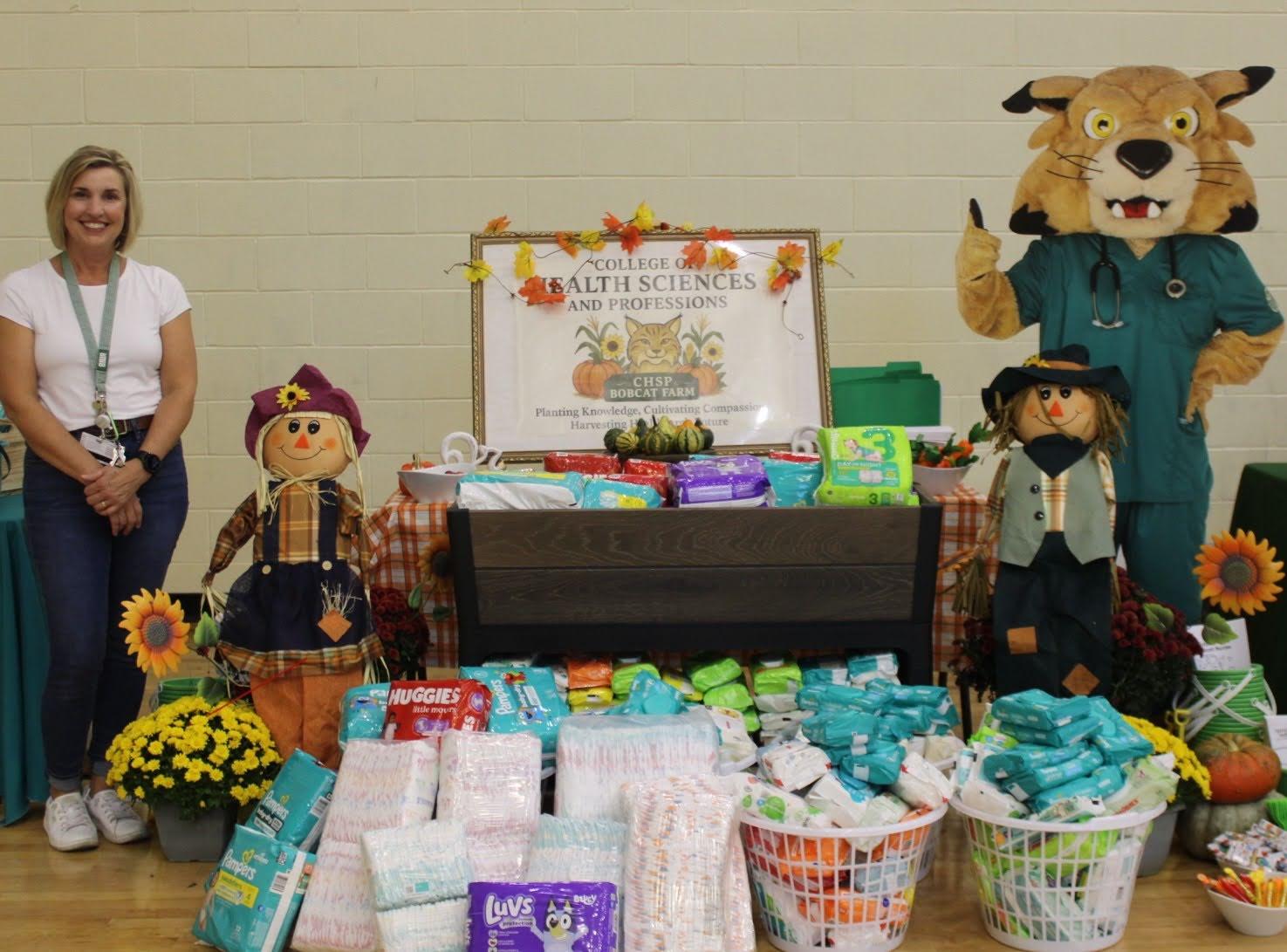
The Dean's Office would like to extend our heartfelt thanks to the Pediatric Community of Practice and everyone who participated in and supported the 3rd Annual Athens Community Baby Shower held on October 11th from 10:00 a.m. – 1:00 p.m. at the Ping Center. This wonderful community event was a tremendous success thanks to your dedication, collaboration, and generosity!
A special thank you goes to Molly Johnson for leading our efforts and sharing this reflection:
“It was a fun and worthwhile event. I would highly suggest we do it again next year (but we might need more booth space!)”
Molly also shared her appreciation for all who helped make the day possible. The Student Nurses Associations from the Athens and Regional Campuses played a major role by collecting and donating an incredible number of diapers and wipes. We want to especially thank Kara Dutton and Cammie Starner for coordinating the donations and preparing everything for transport the morning of the event.
A big thank you also goes to Carol Schaumleffel, Christy Vickers, and Char Miller for assisting with booth setup, running the booth throughout the event, and helping with clean-up. Also, thank you to Kara Dutton for helping collect donations.
Together, we:
- Distributed approximately 100 packages of diapers and about 300 packages of wipes
- Provided 40 small laundry baskets, which were gone within the first hour!
- Gave out 40 colorful sand buckets with shovels filled with bubbles, stickers, farming tools, and educational handouts — a big hit with siblings!
- Donated two raffle baskets — one from the Dean’s Office staff and one filled with children’s activities, including books, crayons, construction paper, and sidewalk chalk
Your collective efforts brought smiles, support, and a sense of community to countless families in our region.
💜 Thank you all for helping make this year’s Athens Community Baby Shower such a meaningful and memorable event! We look forward to building on this success next year.
Health Information Technology
September 10, 2025: Kick Off Event
Event Highlights:
• VR Experience: Engage with a NARCAN simulation using VR headsets
• Safety Simulation: Participate in an interactive scenario where you’ll identify safety concerns upon entering the room.
• Interactive Mannequin Session: Explore patient assessment techniques using a mid/high fidelity mannequin and stethoscopes.
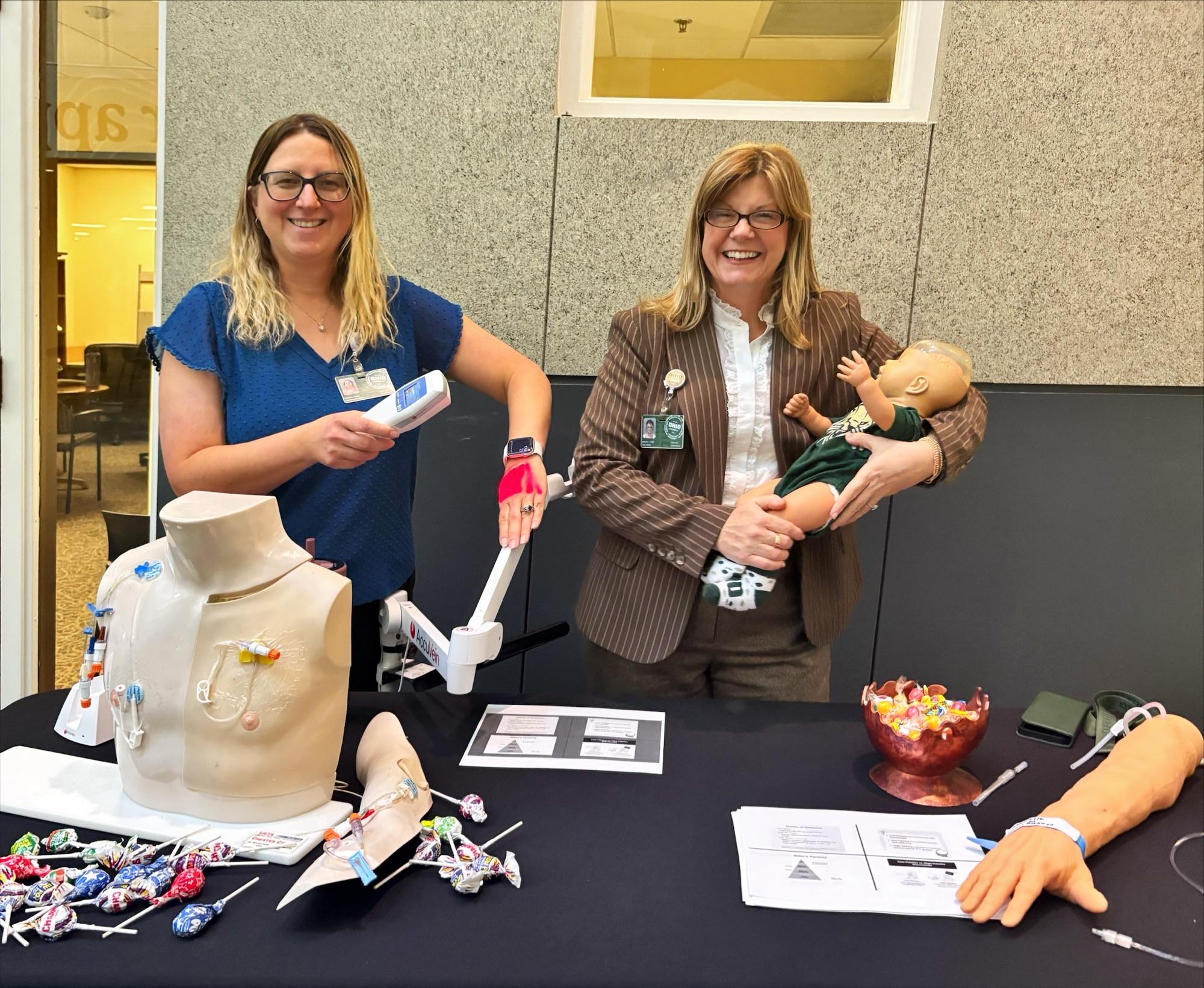
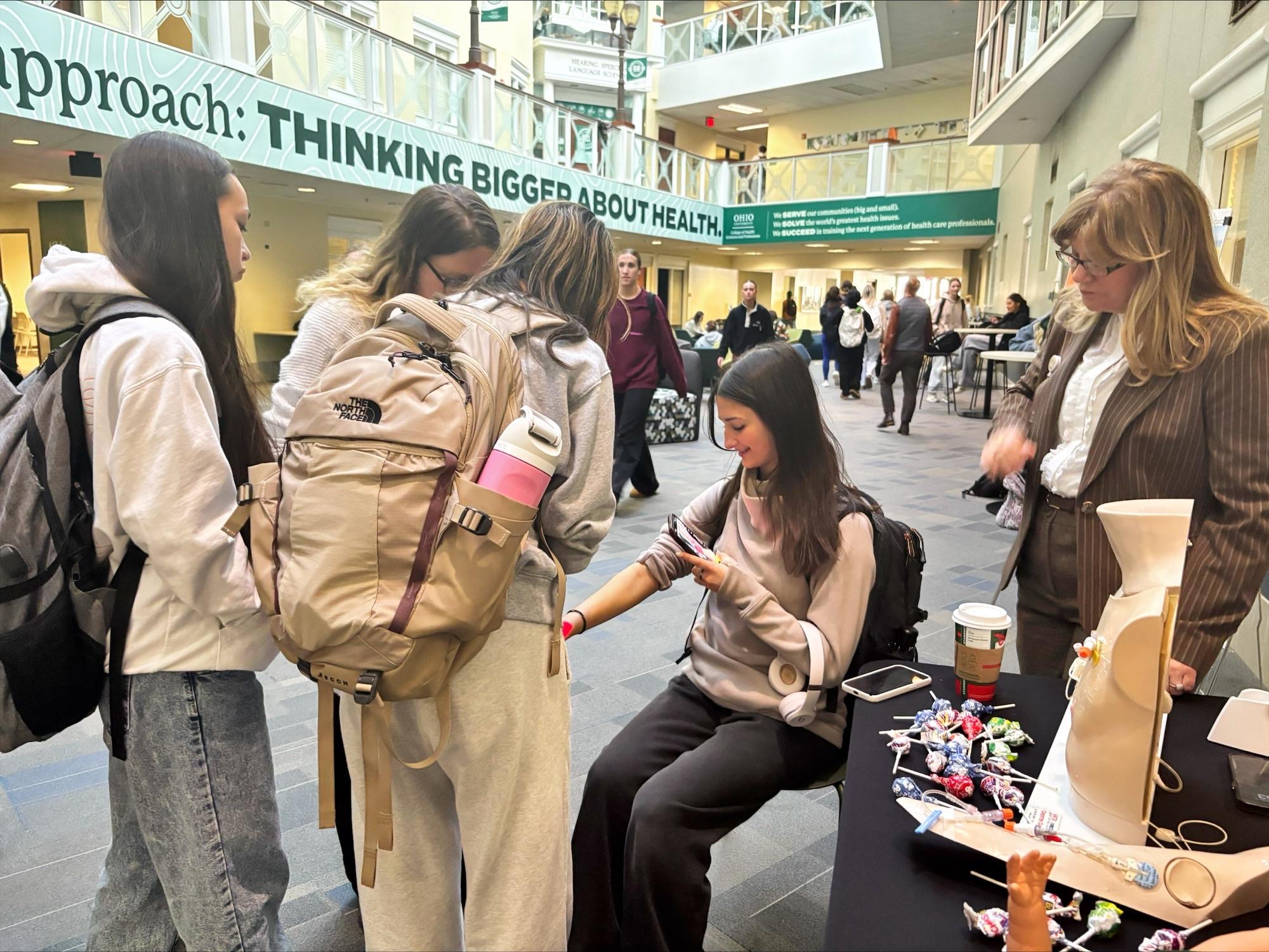
November 13, 2025: HIT CoP Mid-Fidelity Simulation Demonstrations
1-230pm
2024-2025
2024-2025 Community of Practice-Pediatric CoP
Pediatric Workshop I
As part of our commitment to meaningful learning and professional development, the Pediatrics CoP is launching a series of workshops titled What Every Healthcare Professional Should Know About Pediatrics. These workshops aim to provide valuable insights into essential pediatric topics relevant to teaching, clinical practice, and interdisciplinary collaboration.
Our first installment in this series is a video presentation on Maternal Health: Perinatal Delivery. This educational resource explores critical aspects of maternal and fetal health during the perinatal period, offering healthcare professionals foundational knowledge to enhance patient care. The content is designed to be informative for faculty, staff, students, and practitioners dedicated to improving maternal and infant outcomes. See video link below.
Pediatric Workshop II
The second video presentation is titled: Child Abuse Identification, Management, and Reporting. We had three wonderful speakers for this workshop. Dr. Jenny Shadik from Social Work, Professor Amber Sheeks from Nutrition, and Dr. Christy Watson from Nursing. They presented a PowerPoint presentation followed by a Q&A.
The workshop began with an overview of what is considered child abuse and neglect, who are required reporters, and how to report by Dr. Shadik. Then Dr. Watson walked through a case study and gave examples of how the interdisciplinary team works through a case from a nursing perspective. Then Professor Sheeks described through the lens of nutrition, a case study which highlights how abuse and/or neglect may not be easily recognized. Each speaker spoke for approximately 15 minutes with 15 minutes for Q&A from the in-person and online guests at the end.