
Search within:
Brain and computer
Teaching and Learning with GenAI

Teaching and Learning with Gen AI

2026-27 Human-first AI Initiative Faculty Fellows

College of Arts and Sciences

Paul Shovlin, Co-director, Human-first Initiative

Assistant Professor, Department of English

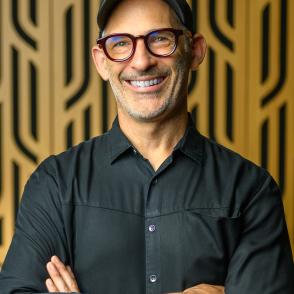
Paul Shovlin is assistant professor of English. He serves as the lead GenAI in teaching and learning faculty fellow. Shovlin has been leading and facilitating faculty development programming on generative artificial intelligence and teaching and learning for the center since fall 2022.

Shovlin co-chaired President Lori Stewart Gonzalez's Dynamic Strategy Learn Committee and participated in Provost Elizabeth Sayrs' AI Think Tank, leading the ethics group. In addition to facilitating three successful CTLA faculty learning communities on GenAI in higher education, Shovlin has opened the conversation university-wide, hosting AI Coffees with his FLC co-facilitator, and he has shared his work on GenAI in workshops and panels. 

Scripps College of Communication

Josh Antonuccio

Director and Associate Professor, School of Media Arts and Studies

My interest in AI didn't start in a classroom. It began unexpectedly in 2016, at an interactive IBM demonstration that completely floored me. I left that session understanding not only that this powerful technology was coming, but that it would profoundly transform the world. I just didn't think it would happen this fast.

From that time, I've followed the space closely as AI developed largely beyond public view. Once public-facing generative tools became accessible, I began integrating several AI processes into my professional workflow and testing various AI platforms. In that time, I've engaged with researchers, creatives, and industry leaders in artificial intelligence across national conferences and speaking sessions.

My research focus has been on how AI is impacting the creative industries, particularly the music industry, and the ways that processes and tools are changing the landscape for students and professionals alike. My research on AI's impact on the music industry has taken me into national media conversations, onto industry panels, and in front of audiences who are living this disruption in real time.

I have strived to prepare my students for the impact of AI in the media and communications space, leading to the development of an AI workshop class and several AI-centered projects in my courses. These projects and assignments are built around the same real-world fluency I look for in my own research: hands-on use of generative tools paired with questions about their limitations, biases, and consequences.

My instruction on AI's disruption of creativity and copyright isn't an abstraction; it's about helping students navigate the real-time changes in the industries they are eager to enter. My central focus is how to best prepare the next generation of leaders to think critically and apply this technology with intentionality and awareness.

Patton College of Education

Sandy Chen

Professor in the Department of Recreation, Sport Pedagogy, and Consumer Sciences (RSPCS)

My interest in artificial intelligence in teaching and learning centers on how generative AI can enhance student learning while preserving the critical thinking, creativity, interpersonal interaction, and human connection that are fundamental to higher education. 
 
My participation in Ohio University’s CTLA AI Asynchronous Institute provided a foundation for exploring generative AI in both teaching and research. During the 2025–2026 academic year, I applied AI-supported strategies across undergraduate and graduate courses in hospitality marketing, tourism, food and culture, hotel operations, and research methods.
 
My approach is to position AI as a learning assistant rather than a replacement for learning. In my courses, I have explored how students can use AI to generate and refine ideas, improve writing, support research, and receive individualized learning assistance. I have observed that appropriate AI use can reduce students’ anxiety about writing, increase confidence in developing ideas, and provide additional support for students with diverse academic backgrounds. 
 
At the same time, these experiences have highlighted an important concern: students may become overly dependent on AI and allow it to “learn for them” rather than using it to strengthen their own thinking and skills.
 
This tension has become a major focus of my interest. I am particularly interested in developing pedagogical approaches that promote AI literacy, critical thinking, creativity, ethical decision-making, and responsible AI use. As a hospitality and tourism educator, I am also interested in ensuring that technological advancement does not diminish the importance of emotional intelligence, interpersonal communication, cultural understanding, and experiential learning. 
 
Ultimately, I hope to contribute to a human-first approach to AI in which technology expands learning opportunities while human judgment, relationships, and meaningful learning remain at the center of the educational experience.
College of Arts and Sciences

Jared DeForest

Professor and Chair, Environmental and Plant Biology

My current interest in generative AI focuses on developing Greenish Prompting, a Human-First approach to AI literacy that places human judgment before AI use. Rather than beginning with “What can AI do?”, Greenish Prompting asks: What am I trying to accomplish? Is AI appropriate for this task? What level of AI is sufficient? And does the benefit justify the resources being used?
 
Generative AI has real environmental costs through the energy, water, and computing resources required to operate these systems, and those costs vary considerably depending on how AI is used. Greenish Prompting does not advocate avoiding GenAI. Instead, it encourages intentional and proportionate use: thinking before prompting, choosing an appropriate tool or model, providing useful constraints, critically evaluating the result, and refining only when additional interaction provides meaningful benefit. Sometimes the best decision may be not to use AI at all.
 
I see this approach as part of a broader conception of AI literacy. My AI Literacy Spectrum describes a progression from simply using AI to provide answers toward critically evaluating its outputs, strategically integrating it into one's thinking, and ultimately becoming a reflective designer who sets boundaries and anticipates consequences. The goal is not greater AI use, but better human judgment about AI use.
 
As a Human-First AI Faculty Fellow, I hope to develop Greenish Prompting into practical resources and use cases for students and faculty that connect AI literacy, learning, and environmental responsibility. Ultimately, I want to help our community ask a more consequential question than “Can AI do this?”: When does AI meaningfully support human learning and work, and when are we better off without it?
Patton College of Education

Jennifer Lisy

In December 2022 I discovered a new world of possibilities when Open AI widely released ChatGPT 3 to the masses. Immediately, I began exploring the affordances and limitations of these new tools: creating multiple-choice questions, creating case studies to apply new concepts to real world situations, and writing drafts of documents. As a former classroom teacher and now teacher educator, I have always been an early adopter of new technologies. 

My research on digital writing showed that typing slowed second-grade students' composing speed but improved their spelling. As a teacher educator, I embed technology throughout my courses using tools my undergraduate students will use in their future classrooms and tools to enhance engagement and learning. Last spring one of my undergraduates and I presented how we use AI to enhance our teaching at the Ohio Educational Technology Conference.

As educators we have a responsibility to prepare our students for this ever-shifting technological landscape. Artificial intelligence is utilized in many of the apps and programs we use daily, from the map software that helps you navigate to a new part of town to Grammarly helping you improve your writing. 

As an assistant professor of instruction for teacher educators at Ohio University Zanesville, I am deeply committed to preparing our students with the best Ohio University has to offer. Our students on the regional campuses often include nontraditional students that may enter our classrooms with less technology experience. While we may think of our students as digital natives, we must continue to build critical digital literacy skills that will allow them to understand the affordances, limitations, and ethical use of these tools. 

As an AI Faculty Fellow, I look forward to continuing the work that I began as a member of the AI Think Tank and in the AI Faculty Learning community last spring. I am excited that Ohio University continues to be a leader in the nation and across the region preparing our students for this new reality. 

College of Fine Arts

Basil Masri Zada

As a Faculty in the Digital Art + Technology area, I have been experimenting, researching, and creating creative practices with my own work and my students’ work with unique and different AI models within many collaborative projects.

Since the recent advancements in AI tools, I have been integrating AI into studio art practices and research as part of my teaching philosophy. It starts from understanding the concerns and issues of Generative AI tools in art around authenticity, legality, ethicality, creativity, ownership, free vs. commercial use, who owns the creative rights and work, and whether it is cheating, imitation, or creation.

The main concern for artists, students, and creative minds is based on the fear that AI companies would use their work without crediting them or permission, especially with image-image-based generations. I address these teaching problems by creating a safe, private, unique, and intellectually protected experience in many projects to allow the students to learn how to use AI as a tool, not as a purpose to create with it, be creative, own the work, in a safe, private environment that I have been researching and creating rather than them rejecting it.

AI is here to stay, and our students need to explore, adapt, and learn how they can utilize it or at least understand it so their work is still unique and relevant rather than ignoring it and becoming disconnected from the technological revolution in Art and Technology. In Digital Art and Technology, we explore text-based, image-based, video-based, and sound/music-based AI tools.  

College of Business

Ashley Metcalf

Associate Professor of Operations Management

My interest in artificial intelligence in teaching and learning centers on this question: How do we prepare students to work effectively with AI tools without outsourcing the very thinking skills that higher education is intended to develop?
 
As a faculty member in the College of Business, I see AI rapidly transforming how organizations analyze information, solve problems, make decisions, and manage increasingly complex systems. Our students need to graduate prepared to use these tools confidently and responsibly. But AI fluency alone is not enough. The more capable AI becomes, the more important distinctly human skills, including critical thinking, judgment, creativity, communication, collaboration, and ethical decision-making, become.
 
My teaching explores this intersection. I am particularly interested in designing learning experiences in which students use AI as a thinking partner rather than a thinking replacement. This means teaching students not only how to prompt AI effectively, but how to question its assumptions, evaluate the quality of its outputs, recognize uncertainty and bias, integrate business knowledge, and ultimately exercise their own judgment.
 
I am also interested in how AI can support faculty. I have experimented extensively with generative AI for developing cases, creating teaching materials, providing formative feedback, designing assessments, and supporting course development. I see significant opportunities to use AI to reduce routine faculty workload while preserving, and ideally expanding, the time available for meaningful interaction with students.
 
As a Human-First AI Faculty Fellow, I hope to explore and share approaches that help faculty move beyond the question of whether students should use AI toward the more important question: How can we design classes so that AI helps our students become more capable and thoughtful professionals?
Heritage College of Medicine

Devora Shapiro

Associate Professor of Medical Ethics, Department of Social Medicine
As a philosopher of medicine and clinical medical ethicist, I have a long-standing interest in Artificial Intelligence (AI)/Language Learning Models (LLMs), particularly as these technologies intersect with clinical medical practice and the production of medical knowledge. 
 
In my scholarly work I have previously explored the benefit of repositioning the epistemology of diagnosis and treatment as embodied and multi-dimensional, noting the dangers of an over-reliance on randomized controlled trials and meta-analyses when combined with a demotion of the experiential knowledge and expertise held by practicing physicians. 
 
From here, I began exploring the implications of these concerns for medicine and medical practice, given the swift implementation of AI into healthcare. In particular, my focus has expanded to include the ethical and epistemological implications of escalating AI integration in regular healthcare operations and the mistake of believing that generative AI (genAI chatbots, etc.) can be empathetic or supplant our need for the patient-physician relationship that a good doctor can provide.
 
Such topics are integrated into my educational and teaching interests, as I look to translate these theoretical concerns into innovative, productive, and ethically sound AI practices in medical education and clinical practice.  
 
As an AI Faculty Fellow, I look forward to collaborating with CTLA on developing ethical and successful, human-centered AI use, while engaging with educators, university scholars, and medical students. In particular, I am excited for the opportunity to collaborate with HCOM students and faculty on refining strategies for identifying when and how AI can be of use in the classroom and in the clinic, and in building use-cases in medical education and clinical medical practice that provide context for recommendations regarding the mitigation or elevation of AI integration.
Russ College of Engineering and Technology

Ziyang Song

Assistant Professor, School of Electrical Engineering and Computer Science

Dr. Ziyang Song is an Assistant Professor of Electrical Engineering and Computer Science at Ohio University. My research focuses on trustworthy and translational AI for healthcare, including reliable large language models and multi-agent systems, foundation models for longitudinal health data, and interpretable AI for biomedical applications. 

This research background also informs how I approach generative AI in teaching and learning. I see AI as a valuable educational tool that can support and enrich students’ learning while preserving the critical thinking, problem-solving, and independent reasoning that are essential to their education.

In my computer science courses, I see generative AI as especially useful for helping students understand unfamiliar concepts by providing explanations and supporting deeper exploration of technical topics. At the same time, students still need to understand the algorithms they use, explain their design choices, evaluate whether AI-generated answers are correct, and distinguish reliable information from unreliable information. 

Without these abilities, overreliance on AI can weaken students’ understanding, reduce opportunities for independent reasoning, and ultimately undermine the learning process.

Through the Human-first AI Initiative, I am interested in developing practical ways to incorporate AI into teaching and learning across disciplines, with an emphasis on effective, responsible, and human-centered use of AI. I also hope to develop examples and course practices that help students build essential AI skills and use AI more effectively to support their learning.

CTLA Position Statement on Teaching with GenAI

The Center for Teaching, Learning, and Assessment supports the principled implementation and integration of Generative Artificial Intelligence (GenAI) in higher education when and where it promotes

  • student achievement of stated learning outcomes in a course or across a curriculum;
  • support for faculty by increasing effectiveness and efficiency in the performance of instructional and administrative tasks;
  • our collective ability to leverage technology-rich contexts to build community and human connection; and
  • the facilitation of personalized learning, tutoring and other customized assistance for teaching and learning tasks.

This position is grounded on the following eight principles that evolve as the technology does:

AI is here to stay.

Far from being merely a gimmick or a flash-in-the-pan, AI has increasingly infiltrated professional work and many people’s daily lives. We believe that these technologies present fundamental changes to writing, multimodal creating, and professional workflows. Students graduating with understanding of and competence in disciplinary application of AI will be better prepared for future professional and personal aspirations.

Like any technology, AI has affordances and limitations.

Because we see AI as transformative for and increasingly a fundamental aspect of education and work, it is our goal to maximize the affordances and mitigate its limitations. We are committed to nurturing conversations and offering resources to aid you in that endeavor.

AI will require us as educators to update our approaches inside and outside the classroom.

We believe that now more than ever, ongoing pedagogical development is necessary. Many concerns educators have regarding the implications of AI, and particularly students’ use of it, relate to pedagogical approaches that predate AI. Good pedagogical practice accounts for the broader context in which teaching occurs. If the context has changed because of AI tools, then we need to continue to reflect on and develop our pedagogy and practices in light of those changes.

Healthy GenAI initiatives should include room for skeptics, the cautious, and those opposed to the technology.

We believe that critical thinking is the hallmark of higher education and support for opposing viewpoints is essential to the advancement of knowledge. While some learning outcomes related to GenAI, such as prompt-engineering or bot programming, may make this challenging, we believe that a measured approach to the radically evolving technology of AI necessitates options for different kinds of engagement, to the extent that it is possible. This could mean allowing students who object to the carbon footprint of AI technology to use a less resource-intensive model or providing an alternative means for them to demonstrate their learning. This principle supports expanding options related to GenAI assignments and activities to incorporate the active engagement of teachers, researchers, and learners who are more cautious than enthusiastic about the technology and/or its industrial impact.

Sound, evidence-based Scholarship of Teaching and Learning (SoTL) can be adapted to and supportive of sound pedagogical practice with AI.

While the rising influence of AI on professional and academic contexts may require us to update our pedagogical practices, we recognize that SoTL can provide valuable resources for evidence-based research that may inform our responses to AI tools. CTLA is dedicated to familiarizing you with the best research and scholarship related to teaching and learning in the context of AI.

Empowering AI literacy includes: effective practices, ethical considerations, rhetorical awareness, and subject matter knowledge.

We recognize that practitioners (faculty, staff, students, and others) need to know best practices (how to engineer prompts, select particular AI applications, understand the affordances and limitations of different platforms, and so forth). However, real agency with AI requires that we understand the ethical contexts both narrowly, in terms of our ethical practices with AI, and broadly, in terms of larger ethical concerns, such as inherent biases embedded in programming or training, exploitation of human trainers of LLMs, and power consumption of servers. Further, AI literacy must include rhetorical awareness, an understanding of audience expectations and how GenAI use may be effective or counterproductive to the success of our communication. Finally, AI literacy must be understood as necessarily incorporating specific subject matter knowledge into any use of AI.

AI detection is a flawed technology and often indicates a problematic subject position.

We recognize that AI tools can give false positives; false negatives; may misclassify the work of non-native English speakers, neurodivergent writers, and others with learning differences as AI-generated; and that there are ethical concerns regarding privacy and student ownership of texts that may be processed by third-party apps without their consent. We further understand that as third-party applications, AI-detectors often operate as “black boxes,” providing little insight or transparency as to how they arrive at their conclusions. We encourage faculty and programs to think carefully before utilizing these systems, which can often result in removing humans from the loop of negotiating what academic integrity means.

A one-size-fits-all approach to AI in higher education is counter-productive.

We recognize that faculty, staff, and students are concerned about the implications of AI for higher education, and that everyone wants to ensure they are doing the right thing regarding these tools. These concerns may provoke a desire for an institutional response that clearly defines how and when AI should be used at the university. However, we believe positions regarding AI use are better developed within specific contexts by the stakeholders most closely engaged with those domains.

Just as what constitutes “good writing” varies from discipline to discipline, what constitutes “good AI use” may vary as well. Our mission is to provide you with training and resources for pedagogical development to support you in the process of developing effective policies, course design, and pedagogical implementations. However, as the expert in your context, you will be central in adapting your practices and materials to respond effectively to innovative technologies such as AI tools.

GenAI Teaching Resources for OHIO Faculty

  • Faculty who are new to GenAI and teaching and learning, may want to begin with advice on how to conceptualize their use.
  • The CTLA offers a GenAI in Teaching and Learning asynchronous institute with a carousel of modules that allow faculty to develop their course policy and a series of pedagogical approaches that leverage or mitigate AI use.
  • These curated syllabus statements developed by OHIO instructors as part of their course redesigns offer diverse examples of highly effective methods for guiding student ethical use of and learning about AI tools.

Featured in the Media

In The New York Times

CTLA fellow Paul Shovlin on human connections

The value that we add as instructors is the feedback that we’re able to give students. It’s the human connections that we forge with students as human beings who are reading their words and who are being impacted by them.

In “The Professors Are Using ChatGPT, and Some Students Aren’t Happy About It,” the CTLA position statement is provided as a way to assist faculty in determining how to leverage the technology while maintaining a human connection. 

NPR's Fresh Air

CTLA's Position Statement

In this National Public Radio Fresh Air interview, Times journalist Kashmir Hill refers to Ohio University and the CTLA faculty fellows for their investigation into how to effectively deploy AI in teaching and learning. (Forward to the 11-minute mark.)

Ohio Supercomputer Center

CTLA fellow Basil Masri Zada on experiential learning and AI

It’s important for students to understand how technology can enhance their artistic practice. This project is giving them a real-world application of how art and technology can intersect in a professional setting.

In The New York Times

CTLA fellow Jared DeForest on custom chatbots

In “Welcome to Campus. Here’s Your ChatGPT,” Professor Jared DeForest, GenAI fellow and chair of Environmental and Plant Biology, is featured as he “created his own tutoring bot, called SoilSage, which can answer students’ questions based on his published research papers and science knowledge. Limiting the chatbot to trusted information sources has improved its accuracy."

Faculty Fellows and the CTLA in the News

  • Coffey, L. (Aug. 22, 2025). More schools are considering education-focused AI tools. What’s the best way to use them? EdSurge. Paul Shovlin on K-12 adoption and other AI topics.
  • Eslich, Laynee. (Jan. 28, 2026). Ohio House Bill 96 to require AI in education policies. The Post. Jen Lisy on CTLA position statement application in OHIO classrooms.
  • Hsu, T. (2026, August 17). Sick of A.I. slop? So are tech giants. The New York Times. https://www.nytimes.com/2026/08/17/technology/ai-slop.html. Paul Shovlin on AI slop.
  • Ohio Supercomputer Center. (May 1, 2026). Ohio University students return to OSC for AI-driven digital art showcase. Visit focused on Faculty Fellow Basil Masri Zada's students work using high performance computing environment.
  • Shah, A. (Aug. 19, 2025). AI in the classroom is important for real-world skills, college professors say. Computer World. Paul Shovlin on student use of AI and the importance of ethical considerations, rhetorical awareness, and transparency.
  • Thomas, A. (Sept. 23, 2025) AI poses questions for the future of digital literacy. The Post. AI efforts at OHIO.
  • Widman Neese, A. (2026, August 7). Why the Ohio State Fair AI poster struck a nerve. Axios. https://www.axios.com/local/columbus/2026/08/07/ohio-state-fair-ai-poster-backlash. Paul Shovlin on audience expectations for AI use.

Sharing What We've Learned

CTLA fellows and staff have shared scholarly teaching approaches and scholarship locally, regionally and nationally. The following summarizes recent activities.

  • DeForest, J. (October 2024). Mitigating generative AI inaccuracies in soil biology. Soil Biology and Biochemistry (197).
  • Lisy, J.G., & King, C. (February 13-15, 2024). AI Advantage: Perspectives from a Teacher Educator and Pre-Service Teacher [Conference session]. Ohio Educational Technology Conference, Columbus, Ohio.
  • Lisy, J.G., & Masri Zada, B. (2025, November 20). Ethical GenAI Integration: Building Faculty Capacity in Higher Education Today [Conference session]. Original Lilly Conference on College Teaching, Oxford, Ohio.
  • Lisy, J.G., & Masri Zada, B. (February 14, 2025). AI in Education, A future? Navigating Ethical and Innovative Applications [Conference session]. Ohio Educational Technology Conference, Columbus, Ohio.
  • Lisy, J.G. (October 15, 2024). AI Tools for Better Assessment: Creating Questions and Improving Learning [Conference session]. Ohio Council for the Social Studies, Lewis Center, Ohio.
  • Lisy, J.G. (2025, October 9). AI as Co-Intelligence: Course Redesign and the Science of Learning [Conference session]. Ohio Confederation of Teacher Education Organizations, Columbus, OH. 
  • Masri Zada, B., & Lisy, J.G. (January, 2025). Revamping Curriculum: Artificial Intelligence Integration in Higher Education, Case Study [Conference Session]. Lilly Conferences: International Teaching Learning Cooperative, San Diego, California.
  • Rhodes-DiSalvo, M. (Sept. 11, 2025). Developing a university-wide position statement on GenAI in teaching and learning. AAC&U Institute on AI, Pedagogy, and the Curriculum. Online to national audience.
  • Rhodes-DiSalvo, M., and Shovlin, P. (May 29, 2025). Teaching and assessing AI-enhanced courses: An institutional initiative. Teaching & Learning with AI Conference, Orlando, FL.
  • Rhodes-DiSalvo, M. (Nov. 18, 2025). The pedagogical partner: Using AI to support student learning. Panelist. Student Success US 2025, Atlanta Ga.
  • Rhodes-DiSalvo, M. (Sept. 11, 2025). Creating a university-wide position statement on GenAI in Teaching and Learning. Presentation as part of the 2025 Institute on AI, Pedagogy, and Curriculum Kickoff. American Association of Colleges & Universities. Online.
  • Shovlin, P., Lisy, J.G., Masri Zada, B., Shepard, M., Durado, A., & DeForest, J. (2025, March 20). Generative AI in Higher Education from Transactional to Transformational. We-Note at Spotlight on Learning Conference, Center for Teaching, Learning, and Assessment, Ohio University, Athens.