

OHIO All Ways
OHIO All Ways
OHIO All Ways is an event hosted by the Ohio University Alumni Association that brings Bobcats together for meaningful conversation, connection, and collaboration. Each gathering creates space for alumni to share their experiences, offer feedback, and help shape the future of OHIO’s alumni programming and community engagement. Designed as both a networking opportunity and an open dialogue, the roundtable invites participants to discuss what it means to stay connected to OHIO and how the University can continue supporting its alumni in every region.
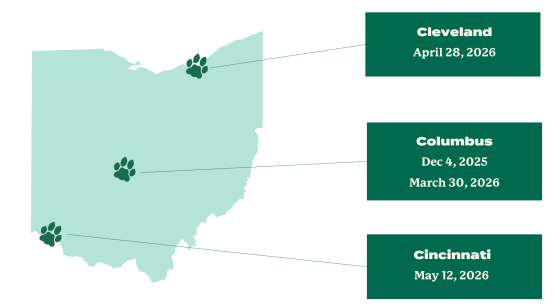
Roundtable Locations
The OUAA's roundtable conversations have taken place in Columbus, Cleveland, and Cincinnati. Often called the "Three Cs", these are the state of Ohio's three largest metro areas and economic hubs. They're also where you'll find greatest concentration of Bobcats. In fact, more than 95,000 OHIO grads live in these metro areas (that's about 33 percent of all living alumni!).
Belonging Insights Report
This report outlines key observations from the Ohio University Alumni Association’s OHIO All Ways Roundtable discussions and identifies themes and opportunities for fostering belonging, connection, and value across identities, geographies, life stages, and levels of engagement. This fourth iteration incorporates insights that emphasize
intergenerational and family belonging, access and affordability, mentorship and student connection, regional and virtual reach, and the importance of personal invitations and clear pathways to participate.
This report is intentionally iterative. Additional Roundtables will continue to inform refinement.
Themes
Common Themes - What alumni said
Connection
- Alumni feel most connected through:
- Affinity-based communities and interpersonal connections (e.g., Greek life, Ebony Bobcat Network, Marching 110, shared residence halls, etc.).
- Signature moments and shared traditions (e.g., Homecoming, Black Alumni Reunion, regional gatherings, etc.).
- Giving back (mentoring and connecting with current students, serving on boards, recruiting students, speaking to classes, offering internships, supporting scholarships).
- Every day “connection in the wild” — recognizing fellow alumni, exchanging greetings, and discovering shared identity through professional and social connection channels (e.g. LinkedIn).
- Emotional drivers include belonging, pride, nostalgia, and shared traditions and experiences.
- Home emerged as a defining concept.
- Connection often deepens years or decades after graduation.
- Connection often depends on personal invitation and relational entry points.
- Early exposure (student and recent grad connections) and family engagement strengthen long-term alumni engagement.
- The phrase Recruit, Retain, Return offers a useful lifecycle lens: alumni were recruited to come, retained to graduate, and now seek an intentional path to return.
Value
Alumni value:
- Engaging with purpose, giving back, and adding value (alumni want to give value, not just receive perks).
- Multiple pathways to connection, a diversity of event formats, a variety of program types (especially when there’s visible effort to reach alumni locally), and when programming feels human, relevant, and responsive.
- Programming that respects their time, feels intentional, and offers clear takeaways (learning, impact, relationships, and pride).
- When experiences feel “easy to say yes to” with clear logistics, low planning burden, and a straightforward path from invitation to attendance.
- Programming that emphasizes enjoyment, energy, and memorable/ distinctive experiences.
- Opportunities for learning and insight that help alumni understand why OHIO matters today, reinforcing pride, advocacy, and belonging.
- Evidence that alumni are valued beyond fundraising – including opportunities that celebrate, support, or engage alumni in non-financial ways.
- Networking and relationship-building. While alumni may no longer need networking in a traditional sense, they want context, understanding, pride, and meaningful ways to contribute.
- Direct, clear, personalized invitations that inspire trust; peer-to-peer outreach, particularly when time/effort is required.
- Alumni stories of success and inspiration, beyond traditions and nostalgia
Inclusion
Alumni feel welcomed when:
- Invitations are genuine, personal, and clearly inclusive; and personalized outreach (gap: over-reliance on email and fundraising calls).
- Programming is accessible and affordable (barriers to access are addressed).
- They’re included in the planning – contributing expertise, ideas, access, and community insight so that programming resonates with more audiences and authentically reflects lived experience.
- They can see themselves represented before arriving – in the invite language, imagery, and framing of expectations.
- When programming resonates and signals intentionality – from planning to execution to follow up.
- Events are facilitated intentionally (hosts, greeters, prompts, etc.).
- There’s an effort to reduce social barriers, like meet-and-greet moments and connection points for first-time or solo attendees.
- Regional programming and events celebrate the diverse alumni population.
- Professional, personal, and life experiences are validated.
- Humanized engagement taps alumni talents.
- There’s space for cultural exchange and inclusion.
- They’re seen and valued through personal invitations and leadership presence.
- Alumni whose OHIO experience was shaped by transfer, commuter, regional-campus, military, or nontraditional pathways may need distinct on-ramps to belonging.
- As alumni move through life stages, they want both targeted entry points that serve as a doorway back in, and broader shared experiences that sustain engagement over time; openness and flexibility matter.
- Offerings across neighborhoods and suburbs, varied timing, family-friendly formats, and multiple types of programs.
- “Belonging is often won or lost at the first step—especially for alumni who don’t know anyone attending.”
- Belonging increases when participation feels doable. Clear expectations, simple steps to participate, and reduced logistical friction (travel burden, time burden, registration burden) shape who can show up—and who feels included.
- Representation matters. alumni want to see themselves reflected in Ohio Today, university marketing, alumni programming, and the broader OHIO narrative.
- Transparency also matters. alumni want the university to communicate clearly and credibly about changes affecting inclusion, belonging, and support for historically marginalized communities.
Key Observations
- Belonging is driven by purpose, recognition, and shared meaning (not just attendance) alumni want to be known, remembered, and invited into impact.
- Belonging as both purposeful and personal: a shared identity thread that shows up in everyday life and that can be nurtured through visible connection pathways.
- Engagement thrives on emotional connection, shared experience, and trust.
- Belonging is activated through being personally asked to contribute and add value in ways that matter.
- Ease is a belonging strategy: when engagement feels simple to navigate and low effort to join, alumni are more likely to participate.
- Alumni want to return with purpose – to support students, share expertise, mentor, volunteer, celebrate one another, and help shape the future of the community.
- One of the clearest pathways to alumni re-engagement is meaningful connection to current students.
- Belonging is a nonlinear, lifecycle experience; alumni often disengage and re-engage at different life stages, requiring intentional and varied re-entry points.
- Intergenerational and family pathways are emerging as durable belonging strategies, supporting long-term engagement across generations.
- Awareness gaps persist – even among engaged alumni – and are better understood as navigation, coordination, and trust gaps.
- Trust builds through consistency, follow-through, and visibility.
- Targeted and affinity-based programming remain essential. At the same time, alumni want stronger shared spaces that create a larger Bobcat identity across differences.
- Access shapes belonging – cost, transportation/logistics, and virtual options influence who can participate and who feels included.
- Diversity, inclusion, and representation are critical, and programming should reflect the full range of voices, identities, and alumni experiences.
- Inclusion is increasingly experienced through design choices: representation, planning, venue, timing, story, transparency, and cultural resonance all shape whether alumni feel welcomed and valued
Opportunities and Focus Areas
- Purpose-Based Engagement – Clearly articulate why alumni are invited and how they matter; offer clear ways for alumni to contribute through mentoring, recruiting, advising, volunteering, and story-sharing.
- Early and delayed bridges to engagement (students and recent grads, regional and online grads, early- and mid-career, intergenerational and family programs).
- Create intentional re-entry points for alumni at different life stages.
- Treat family-inclusive programming and next-generation connection as a strategic driver of long-term engagement.
- Recruit, Retain, Return – Develop clear and intentional alumni return pathways.
- Open + Flexible Programming – Fewer silos, more shared experiences.
- Build trust through consistent regional programming and communication; peer-to-peer outreach; and transparency.
- Regional outreach and virtual engagement for distant alumni as a belonging tool for geographically dispersed or differently engaged grads.
- One Big Space – Build stronger unity and shared Bobcat identity across programs, colleges, networks, and alumni communities while preserving affinity-based and culturally resonant pathways for engagement.
- Representation + Inclusive Storytelling – Diversify stories, imagery, publications, and marketing in which alumni can see themselves
- Belonging Infrastructure – Design the alumni experience intentionally so belonging is built into invitations, facilitation, pathways, and follow-up.
- Train hosts and volunteers as belonging facilitators.
- Design invitations through a belonging lens.
- Normalize varied alumni identities and timelines of engagement.
- Co-Created Programming – Invite alumni to help shape and design programming so offerings resonate more deeply and reflect multiple lived experiences.
- Personalized reactivation – direct, people-centered outreach that reconnects alumni through trusted relationships, affinity groups, and leadership invitations (connecting the connectors).
- Reduced friction + better navigation – simplify calendars and sign-ups, reduce social barriers, and make participation feel “easy to say yes to” through clear logistics, fewer steps, and visible on-ramps by interest, life stage, and geography
- Trust + transparency – be more explicit, timely, and credible in communication about changes affecting belonging, inclusion, and support for historically marginalized communities.
Programmatic Ideas to Explore
- Portfolio of Signature Experiences – Preserve Homecoming’s importance as a powerful, flagship experience, while strengthening and building other pathways for connection and return.
- Pilot and build upon innovative ideas with signature “can’t-miss” events with strong/compelling marketing
- Curate alternative return moments – alumni game/weekend concepts; intentional milestone-year emphasis; class-year or residence-hall reunions.
- Inclusive cultural events
- Cross-Alumni Network service and collaboration
- Sports-based programming
- Bobcat Marketplace and spotlights on alumni businesses and success.
- Year-long cohort programming/bundled or themed programming
- Subscription-based programming for sustained engagement
- Make everyday identity moments easier to share (simple prompts, story capture, professional network spotlights) to turn spontaneous pride into sustained connection.
- Solo-attendee inclusion design (structured meet-and-greet moments; designated connection points/tables; optional pre-event connection).
- Learning as Engagement – Faculty access, institutional insight, impact narratives.
- Position alumni programming as purposeful engagement, not just entertainment.
- Everyday Bobcat pride activation (story prompts and campaigns that highlight alumni identity in everyday life and professional contexts)
Next Steps
- Future Engagement – Host Bobcats All Ways Roundtable in Cincinnati in May 2026.
- Belonging Insights Report – Continue to refine insights report with findings from future Roundtables, with ongoing attention to themes, opportunities, and focus areas for programming and communication.
- Belonging Framework – Draft guiding principles—a “Belonging Lens”—to apply across all alumni engagement efforts.
Closing Reflection:
Belonging emerges when alumni feel known, invited, and able to return with purpose. These conversations continue to show that alumni care deeply about OHIO; not only as a place they once attended, but also as a community they still want to shape. Alumni describe belonging as pride, comfort, and connection—as something that shows up in return trips and in everyday life when another Bobcat recognizes you. Across all four roundtables, alumni described belonging as relational, joyful, purposeful, and deeply tied to shared identity. They also made clear that belonging requires design: outreach, story, space, access, representation, and trust all matter. The opportunity ahead is not simply to invite alumni to events, but to build clearer pathways for them to return, contribute, and belong.
This work is ongoing. The insights will continue to evolve as the Bobcat community speaks.
Comments and observations from participants:
“There are no strangers among Bobcats!”
“There’s a universal thread among OHIO grads — almost like a secret that Bobcats share with one another.”
“People are most connected to the people you shared the experiences with – not the university at large.”
“We love OU, but we feel like OU doesn’t always love us back.”
“I don’t need another event. I want to know where I can help and why it matters.”
“Belonging often starts when someone personally invites you back in.”
“I want to understand why OHIO matters today – that’s what makes me proud to stay connected.”