
Success in Action: The Value of an Online MPA in the Real World
February 10, 2026
Ellen E. French, MPA
Class of 2022
What is your academic and professional background? What do you currently do?
French: Following high school, I enlisted in the United States Marine Corps, inspired by my experience as the commanding officer of my high school’s Navy JROTC unit. That early leadership experience and the example set by my parents’ public service careers instilled in me a lifelong commitment to serving others and contributing to the greater good.
After completing my enlistment, I transitioned into the private sector where I discovered a passion for human resources, a field that allowed me to combine strategic leadership with service. This motivated me to pursue formal education in business and human resources. I earned my Associate of Applied Science in Business Administration from Columbus State Community College, followed by a Bachelor of Science in Human Resources Management from Franklin University. I later continued my education with a Master of Public Administration from Ohio University, which strengthened my understanding of public policy, leadership and organizational management.
My professional career in public service began with the City of Grove City, my hometown, which made the experience especially meaningful as I was able to give back to the community that raised me. After earning my bachelor’s degree, I joined the Franklin County Board of Commissioners’ Department of Human Resources, where I gained broad experience across multiple facets of public sector HR.
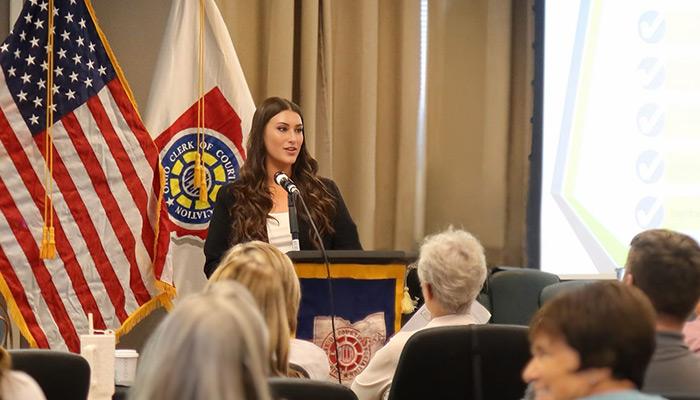
Since 2022, I have served as the Director of Human Resources and Training for the Franklin County Clerk of Courts, where I lead the HR strategy, oversee workforce development initiatives and support a culture of engagement and excellence across the organization. This role has been both challenging and rewarding, allowing me to align organizational goals of serving the public with supporting and fostering employee growth — core values that reflect the very essence of public administration.
What does a career in local government human resources look like, and how did you get started?
French: My experience in the United States Marine Corps laid a strong foundation for my career in public sector human resources. The Marines teach you how to “do more with less,” a mindset that translates seamlessly into local government where every dollar represents public trust and must be used wisely. In the private sector, there might be dedicated budgets for initiatives like employee engagement, but we often need to be creative, which means finding meaningful, resourceful ways to show appreciation for our teams while remaining fiscally responsible.
What truly sets public sector work apart is the sense of purpose. The people I’ve worked with in local government careers understand that their efforts directly impact their own communities. We aren’t driven by shareholder value — we’re driven by service. Public employees give their time, energy and talent to make their communities stronger, and it’s an honor to help support and develop them through my role in HR.
Throughout my career, I’ve had the opportunity to work with three different labor unions and have participated in multiple contract negotiations on the management side. Building strong, collaborative relationships with union partners is essential, because both management and labor share a common goal: fostering a fair, respectful and supportive workplace for all employees.
Working in public sector HR requires familiarity with legal and regulatory frameworks such as the Ohio Revised Code, Ohio Administrative Code and reporting processes to agencies like the State Employment Relations Board (SERB) and the State Personnel Board of Review (SPBR). It’s a field that blends compliance, communication and compassion in equal measures.
One of the aspects I value most about local government HR is the sense of community. The network of professionals across counties and municipalities is incredibly supportive; everyone is willing to share ideas and best practices. My time in Ohio University’s EMPA program expanded that network even further, connecting me with peers across the state who share the same passion for public service and continuous improvement.
How did earning an MPA degree online help advance your career in public administration?
French: The flexibility of Ohio University’s hybrid Executive Master of Public Administration program was essential for me as an adult learner. When I began the program, I worked full time for Franklin County, was raising two young children and was managing all the responsibilities that come with a busy family life. Attending a traditional, in-person program simply wasn’t feasible, but the online MPA program fit seamlessly into my schedule without compromising academic rigor or engagement.
What stood out to me most was how immediately applicable the coursework was to my day-to-day responsibilities. Each class provided new insights and tools that I could translate directly into my role. I remember a conversation during my statistics course where we were analyzing employee survey data at work; I was able to apply what I’d learned about adjusting for sample size and data representation to help refine the analysis and strengthen our decision-making process. Those kinds of practical connections made the experience deeply valuable.
Earning my MPA also gave me a new level of professional credibility. It wasn’t just about adding a degree to my resume; it demonstrated that I could think strategically, lead effectively and contribute at a higher level within my organization. I truly believe that my MPA played a pivotal role in my advancement to a director-level position, providing both the confidence and the competence to take that next step in my public service career.

What skills do you need to succeed in public sector management and leadership?
French: Success in public sector management begins with a highly ethical mindset. Every decision you make as a public servant must be guided by integrity, accountability and a deep concern for preventing fiscal fraud, waste and abuse. One of the lessons from my time at Ohio University that has stayed with me is the importance of asking two fundamental questions when developing policy: Is this policy good? And who is it good for? Those questions remind me that while I may be leading a team, we are all ultimately working for the public, and that responsibility must remain at the center of every action and decision.
Unlike the private sector, the public doesn’t have the option to “take their business elsewhere.” We have both an ethical and legal obligation to provide essential services effectively and equitably. The quality of the public’s experience depends directly on how well we uphold that duty.
Strong financial stewardship is also critical. Public budgeting and the strategic use of grants are essential tools for extending limited resources and achieving impact with transparency. Navigating bureaucracy is another key skill that is often misunderstood but vital to good governance. I remember an Ohio University professor explaining that while bureaucracy can seem slow, it is intentionally deliberate. Every process, regulation and approval exists to ensure that public funds and taxpayer dollars are used responsibly and that every decision is thoughtful and far-reaching.
Ultimately, leadership in the public sector requires patience, ethical clarity, fiscal discipline and a profound respect for the systems and people that sustain public trust.
Advance in Public Administration
What's the difference between working in public administration versus private sector HR?
French: Working in public administration differs from the private sector in several meaningful ways, particularly in structure, compliance and culture. The public sector operates within a highly regulated framework designed to ensure transparency, fairness and accountability to the community. In my experience, that structure also creates a more employee-centered environment, one that emphasizes equity and due process.
My work with Franklin County Clerk of Courts has been especially rewarding because it’s a union-forward organization, which aligns closely with my personal values. That commitment to organized labor and employee advocacy reflects leadership that truly “walks the talk” when it comes to doing what’s best for its people. As an HR professional in the public sector, it’s essential to understand key distinctions such as classified versus unclassified employees, bargaining versus non-bargaining units, and exempt versus non-exempt positions — all of which shape how policies are applied and how employees are supported.
Another important difference is creativity. Unlike in the private sector where budgets may exist for employee engagement programs, public sector HR professionals often need to find innovative ways to recognize and engage staff within tight fiscal constraints. Sometimes that means rallying senior staff to volunteer their time, organizing grassroots initiatives or even fundraising to make an idea a reality.
At its core, public sector HR is about balancing compliance with compassion; ensuring that the organization fulfills its legal and ethical obligations while still fostering a workplace where employees feel valued, heard and connected to the mission of public service.
How do you approach training and professional development in local government?
French: My approach to training and professional development combines compliance, prevention and continuous learning. In local government, compliance-based training is essential; programs such as Auditor of State fraud reporting, anti-discrimination and anti-harassment, ethics, and legal advice versus legal information form the foundation of a well-informed and accountable workforce. However, I also believe strongly in proactive, growth-oriented development that equips employees and leaders to thrive, not just comply.
Personally, I’m passionate about leadership development. I love reading leadership books and, alongside a colleague, created a “Leadership Library” where staff can borrow books on a range of topics we’ve personally read and recommend. Many of my coaching conversations naturally lead to book suggestions and discussions that inspire self-reflection and growth.
That same colleague and I also designed and implemented a six-course Supervisor Bootcamp, which we deliver to all supervisors and managers. The program is now required for all newly promoted or hired leaders and focuses on essential management skills, communication and accountability in the public sector.
To stay current, I maintain active membership in several professional organizations and participate in a Franklin County HR peer group that meets monthly to discuss emerging issues and best practices. For me, professional development is a lifelong process rooted in curiosity, collaboration and the commitment to share what I learn with others. I’ve found that staying curious and continually engaging with peers not only strengthens my own skill set but also allows me to pay it forward by helping my organization grow and adapt.
What are the biggest challenges in public sector human resources today?
French: One of the greatest challenges facing public sector human resources today is the rapidly evolving regulatory environment. Federal-level changes often cascade down to local governments, requiring constant vigilance and adaptability to ensure compliance while continuing to support employees effectively. It’s a delicate balance ensuring that our language, programs and policies remain inclusive and supportive of all employees, while also aligning with funding requirements and regulatory expectations.
Another ongoing challenge is inspiring the next generation to see public service as the rewarding, honorable career it truly is. The work we do in government has a direct and meaningful impact on people’s daily lives, and I believe there’s no greater calling than serving one’s community. It’s important to help potential employees understand that, beyond salary alone, the total compensation package in the public sector, including retirement benefits, stability and purpose, is incredibly competitive and fulfilling.
Finally, employee engagement remains both a challenge and an opportunity. In an age defined by immediacy and constant stimulation, public sector leaders must find new, creative ways to keep employees connected to the mission and proud of the difference they make. When employees understand how their roles contribute to something larger than themselves, that sense of purpose becomes the strongest engagement tool we have.
What career paths can you pursue with a Master of Public Administration degree?
French: Earning a Master of Public Administration opens the door to an impressive range of career opportunities. Whether you’re well established in your profession or just beginning your public service journey, Ohio University’s MPA program equips you with the knowledge, perspective and leadership skills to elevate your career to the next level.
The degree is remarkably versatile; graduates pursue leadership roles across nearly every area of government and the nonprofit sector, serving as department directors, city or county administrators, finance and budget managers, policy analysts, chiefs of police, IT leaders and even elected officials.
As someone who reviews applications for public sector roles, I can say that candidates with an MPA immediately stand out. They demonstrate a deep understanding of the complexities, responsibilities and ethical considerations inherent in public administration, giving me confidence that they are prepared to lead and make a meaningful impact.
In my view, the MPA is one of the most valuable and universally applicable degrees for public employees, providing a foundation for effective, purpose-driven leadership in any career path.
How does public policy analysis factor into day-to-day government operations?
French: In government, leaders serve as the critical bridge between public policy and the staff responsible for executing it. Translating legislation, policy directives or administrative orders into actionable practices is a significant responsibility. Leaders must first ensure they fully understand the intent and requirements of a policy, then communicate the relevant elements clearly to their teams so that government operations continue to function efficiently and effectively, like a finely tuned machine.
It’s important not to hesitate to leverage available resources, such as legal counsel, compliance partners and subject matter experts, to ensure policies are implemented correctly and consistently. In my experience, organizations rise to the level of the expectations set for them and fall to the strength of the systems supporting them. Effective public policy analysis ensures that those systems are robust, allowing staff to carry out their work with clarity, confidence and accountability.
What advice would you give someone considering a career transition into public service?
French: If you care about your community and often ask yourself how you can make a difference, public service offers a unique opportunity to turn that question into action. I believe in the principle: think globally, act locally. The local level is where the flywheel of change is turning; small, consistent efforts at the community level accumulate over time and create meaningful, lasting impact.
Personally, I would choose public service every time. It resonates deeply with my values and speaks to my sense of purpose. Unlike working solely for shareholder profit or a CEO’s directives, public service allows you to work for the people. Every day, my colleagues and I share a mission, vision and set of values focused on serving our community. That shared commitment not only strengthens our organizations but also makes our communities better places to live, work and thrive.
How do you balance governance, policy implementation and employee development in your role?
French: Successfully leading in the public sector requires harmonizing organizational oversight, policy execution and the growth of staff. In my position, I translate policies, directives and legislative guidance into practical actions for my team, ensuring operations run smoothly and in compliance with applicable laws. I regularly consult with legal advisors, compliance partners and colleagues across Franklin County and the state to interpret guidance accurately and maintain alignment with regulatory requirements.
Supporting professional development is equally critical. Programs I’ve helped design, such as a multi-course Supervisor Bootcamp and a shared leadership library, encourage employees to strengthen skills, expand knowledge and build confidence. Coaching and mentoring are woven into daily interactions, creating opportunities for continuous learning and empowering staff to take ownership of their roles.
Guiding these efforts requires a strong ethical framework and clear decision-making principles. I continually ask: Is this policy good, and who is it good for? This mindset ensures staff and the public alike are treated fairly and resources are used responsibly.
Balancing these responsibilities is challenging yet deeply fulfilling. It allows me to nurture talent, maintain organizational integrity and deliver meaningful outcomes for the community, all while fostering a culture of accountability, growth and public service.
If you're interested in pursuing the Executive MPA degree at OHIO, reach out to discover more . Our Executive MPA program is nationally ranked in 12 categories and offers a hybrid learning experience with courses both online and on campus.1 As a student of the Voinovich School of Leadership and Public Service, you’ll receive the opportunity to work with an expert coach on professional development topics of your choice. Learn more today.
Related Resources
- How Ohio University Supports Veterans in the Executive MPA and Beyond
- How Real-World Experience Enhances Your MPA Education
- Top Careers in Public Administration
- Success in Action: Applying OHIO's Executive MPA Skills Worldwide
Military-Affiliated Student Disclaimer
Disclaimer: It is not the intent of Ohio University to imply an endorsement by any service branch of the U.S. Armed Forces. Credit transfer and graduation requirements may vary by college/program. GI Bill® is a registered trademark of the U.S. Department of Veterans Affairs (VA). More information about education benefits offered by the VA is available at the official U.S. government website.
Source
- U.S. News & World Report. Ohio University. Retrieved from https://www.usnews.com/education/online-education/ohio-university-main-campus-204857/rankings.
Your Future Starts Here
Call Us
740.924.5725
to speak with a knowledgeable Student Engagement Specialist.