Image


If you’ve been on social media or the internet in the past year, you’ve likely encountered “AI slop.” Three AI-focused OHIO faculty experts explain the phenomenon and its impact on our media landscape.
Alex Semancik | July 9, 2026
Share:
If you’re unfamiliar with “AI slop,” at this point, you’re likely one of the few. As artificial intelligence and large language model platforms continue to improve and adapt, social media sites and other online communities have been flooded with AI-generated content. Some of this content is downright baffling, strange, unhelpful and can even be misleading. This barrage of listless, unremarkable GenAI content is known as slop.
Digital content is often characterized as AI slop when it is of low quality, low effort, high volume and, of course, created by artificial intelligence. The growing amount of AI slop on our browsers and feeds has further polarized skeptics and demonstrated what some view as AI at its worst, but at the end of the day GenAI is merely a tool—a reflection of the humans who use it.
Our Ohio University Faculty Experts previously defined and discussed AI slop focusing on its origin and slop vs. responsible GenAI use. You can read more about that and gain a basic understanding of AI slop here: https://www.ohio.edu/news/2026/05/what-ai-slop-ohio-ai-faculty-experts-explain.
Continuing this conversation, three AI faculty experts will address the impact of AI slop on our media channels, the potential for AI misinformation and the importance of AI and digital literacy.

Assistant Professor Paul Shovlin, Ph.D.

Assistant Professor Chad Mourning, Ph.D.
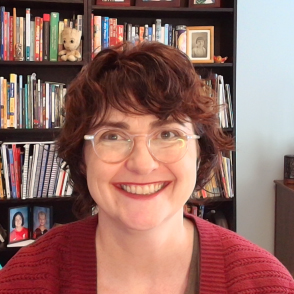
Assistant Professor Jennifer Garrette Lisy, Ph.D.
Content that is classified as AI slop based on the above definition is flooding the internet. According to a 2025 article from Forbes, 34 million AI-generated images are created daily using one of over 2,000 AI image generation tools available online—this number has likely grown exponentially since that article was published. Of course, not all of those images and videos created by GenAI are necessarily “slop,” but a significant portion likely are.
AI slop lives anywhere any other digital content is found—on social media feeds, newsfeeds, websites, browser searches and every other corner of the internet. Ohio University Zanesville assistant professor of elementary education Jennifer Garrette Lisy has experienced this phenomenon firsthand on Pinterest, a social media platform where users can share information and create via digital pinboards.
“AI slop can be generated in an instant and shared on dozens of social media sites immediately,” said Lisy. “Previously, Pinterest was a place where you could go for ideas for your garden or home improvement. Now, Pinterest acknowledges that as much as 57% of its content is AI content.”
Assistant Professor of AI and Digital Rhetoric Paul Shovlin, Ph.D., said that if nothing else, AI slop is certainly an example of content that can capture attention.
“Platforms want to keep people's attention and engagement,” said Shovlin. “They want people glued to their screens. Massive amounts of content are a necessity for that. Slop outrages people, which catches their attention, which drives engagement with social media platforms.”
Ohio University Assistant Professor of Computer Science Chad Mourning, Ph.D., has similar views about GenAI being effective at generating the large amount of content required to feed social media platforms, however he questions its effectiveness at garnering engagement and attention.
“In the attention economy platforms need content, which slop can provide, but they also need engaging content,” said Mourning. “If I must swipe through four videos to find something interesting on one platform, but another serves me what I want directly, I’ll probably spend my minutes there instead.”

In this way, Mourning believes platforms are likely going to be incentivized to filter out poorly performing content for users. Lisy agrees with Mourning on this. Her predication is that companies will respond if the user experience becomes less desirable.
“Instagram, X and Facebook want eyes and clicks,” Lisy said. “If people are turned off by the prevalence of AI Slop; they will find ways to limit its reach.”
Lisy has already seen this prediction come true in real time with Pinterest.
“Pinterest has responded to the widespread AI Slop with a setting that allows you to decrease the amount of AI content through its settings,” she explained. “I believe that more social media tools will begin providing these types of customizable settings to improve the user experience and to keep users on their platforms.”
With the speed that AI slop can be generated, there is reasonable concern that the unproductive content may be clogging our media channels. Mourning says that the way AI slop crowds our media landscape is damaging, at least to some degree.
What Mourning believes is more important is the agency that people take in consuming content.
“If people choose not to consume edifying content, I’m not sure I blame the existence of slop,” he said. “There’s always been as much pablum as vegetables when it comes to media consumption; for every ‘Metropolis’ there is a ‘Great Train Robbery.’”
Shovlin largely agrees with Mourning and says the amount of AI slop in our media ecosystem isn’t too much of a concern so long as people continue to be mindful of the content they consume.
Shovlin, Mourning and Lisy don’t think that AI slop is crowding the media landscape, in terms of volume, to the point of preventing people from getting important news and information. All three faculty members are much more concerned about irresponsible and nefarious GenAI usage.
The internet has been a hotbed of false and misleading information for the past couple of decades. We’ve all witnessed a fake story get gobbled up and spread across our media landscape only to discover that it was extremely exaggerated or completely false.
Misinformation and disinformation are two words frequently thrown around in the news and media landscape to describe misleading, false or inaccurate information, however, there is one main difference. Misinformation is false or inaccurate information—getting the facts wrong by mistake without any intent to deceive. Disinformation is false information that is deliberately intended to mislead—intentionally or purposefully misstating the facts. Both can be harmful, and both can potentially be made a whole lot worse with GenAI.
“AI makes it easier than ever to create false or deceptive content quickly,” said Lisy. “I do have concerns about disinformation, especially around elections, public health and politics, which is why I am so passionate about teaching my university students how to be critically digitally literate with an emphasis on how AI changes the game.”

Shovlin echoes Lisy’s opinion and said that as media consumers we need to be mindful of the content that we consume if we really want to make an impact and see less slop on our feeds.
“It's not necessarily a problem that [AI slop] is crowding our media channels, the problem is individual use cases meant to confuse or disinform people on these sites,” emphasized Shovlin. “Still, it wouldn't be prolific on social media sites if it didn't draw attention. Consumers need to think about what they click on and how they spend their time if they care about the proliferation of slop.”
Mourning adds that fighting and countering misinformation is an even greater task.
“Brandolini's Law says, ‘The amount of energy needed to refute nonsense is an order of magnitude bigger than to produce it,’” he said. “So, if you make it 10 times easier for both the good guys and the bad guys, it still benefits the nonsense generators.”
The best way to counter the negative impacts of GenAI and AI slop is education. This is also something extremely important to Lisy, Mourning, Shovlin and the rest of the OHIO faculty who work in the realm of artificial intelligence and beyond.
Lisy sees critical AI skills as a key component of education going forward. She also believes that digital and GenAI literacy are essential for the future—for faculty, staff, students and everyone.
“The benefits of GenAI outweigh the slopification of social media and the internet,” said Lisy. “However, the prevalence of slop requires more savvy media consumers. Like when the internet became widely available, we taught school-age children to determine whether an internet source is valid and reliable; these critical evaluation skills are even more important in the age of AI-generated content.”
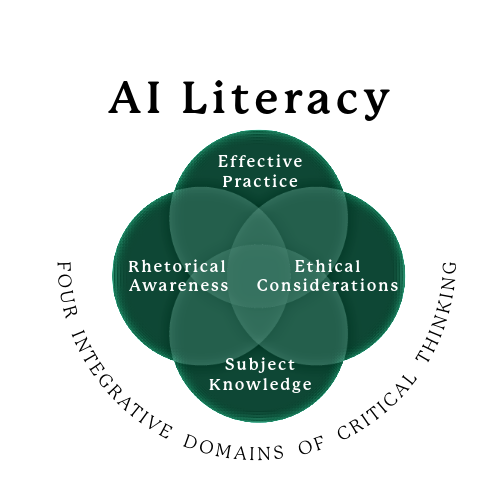
Shovlin agrees that AI literacy is essential going forward.
“AI literacy can help folks understand that AI slop isn't just fun and games or harmless,” he said. “That if they are worried about the environmental impact of AI, but also consider AI a potentially useful tool, it means that they develop some guidelines for using it wisely.”
Mourning also adds that an essential component of literacy means using the correct terminology when discussing AI and GenAI.
“As an AI instructor, I am begging people not to say AI when they mean GenAI,” he explained. “When you play Mario Kart against the computer, that’s an AI. The technology we’re using to discover new drugs is AI. The technology I use to keep planes from crashing is AI. There’s more good AI out there than bad, it’s just not necessarily in the spaces you visit.”
Ohio University’s Center for Teaching, Learning and Assessment (CTLA) serves as a central destination for all things artificial intelligence. CTLA supports OHIO’s commitment to student transformation through the learning experience and serves as a hub connecting University-wide resources, information and support related to teaching, learning and assessment, and AI is no exception.
Ohio University sets itself apart by its acknowledgement and support of faculty to share their expertise across the university. OHIO’s AI Faculty Fellows include faculty across the University and it’s the regional campuses from the sciences, arts, English, and education. The faculty fellows design AI-related professional development for faculty to support their students’ use of AI, design course materials, chatbots and more.

OHIO’s CTLA also has a position statement regarding the use of Gen AI.
CTLA supports the principled implementation and integration of Generative Artificial Intelligence in higher education when and where it promotes:
“CTLA's position statement rearticulates its mission to support student learning and faculty teaching,” said Shovlin. “We believe AI is not going to go away and that people's agency, power or control over their lives, is connected to their ability to understand and negotiate this new technology."
Lisy said that something that truly sets Ohio University apart in this space is the acknowledgement that there is not one AI policy that works across all courses.
“A valid use of GenAI in one field may be considered plagiarism in another,” she explained. “By having transparent policies and continuing open conversations about the ethical use of GenAI, we support our students' use of AI. To be prepared for their future careers, our students need to understand the appropriate GenAI uses in their fields.”
Mourning is not officially an AI faculty fellow but says he agrees with everything in CTLA’s position statement, particularly that AI is here to stay.
“Students will be at a disadvantage, in the classroom and workplace, if they completely abstain from using it,” Mourning said. “Also, I agree that educators need to update their approaches.”
Mourning’s fellow faculty members Professor of Biomedical Engineering Jundong Liu and Professor of Electrical Engineering and Avionics David Juedes are working to update his department’s approach.
“The School of Electrical Engineering and Computer Science recently submitted a course request to teach an ‘AI 1000’ course to cover AI literacy and ethical use for any major and are currently gauging interest outside of Russ College,” Mourning said.