Human Services Technology; Studio Art B.A.
What drew you to Ohio University Southern, and what inspired you to choose your major?
At the time, I was still pretty young. I had some events going on in my life that were causing a little bit of instability. And I knew that I needed to take a step that was going to ground me in something solid, give me some solid skills, give me a place to start building something in my life. I originally started out in Human Services Technology, which was a two year program. I was really excited about that, went through the program with so many wonderful professors who gave me so much amazing insight, not just into the academic nature of that field, but also the real world, nitty gritty. I loved that Ohio University Southern pulled people who were actually out working in the field, people like Brett Looney, Mary Virgin, and Kelly Hall, who were out doing the work. It gave me incredible insight into not just what it was like from a textbook, but what it was like to actually be there. I did complete that program and then took a left turn into studio art.
What is your favorite memory from your time at OUS?
One of my favorite experiences was getting to work in our art gallery as a student worker. I got to work with professional artists who were working at some of the top levels in our area, really amazing people doing incredible things. That was an opportunity I don't know I could have gotten anywhere else locally. In doing that, I was able to develop a real sense of confidence. I knew what I was doing, I could answer questions, I was able to make decisions. That was probably one of the first times I felt that sense of pride, like, "yes, I know what I'm doing." And that continued to be a feeling that I chased.
How did your education prepare you for your career or life path?
My studio art degree doesn't necessarily line up on paper with what I do right now. I came in out of left field, is what I often say. However, that does not mean my time in the studio art program is irrelevant. That program taught me how to think critically about problems, how to approach old problems in new ways. It also taught me the importance of being thorough in the work that I do, making sure that the quality of my work was up to par. It's not just about doing the work, it's about how we do the work. To me, that translates just as easily from a piece of art into providing a fully rounded, well thought out, well-researched treatment for someone. Professors like Dennis Stewart and Tom Suter asked those important questions and provided valuable insight into issues I am working with every day now. Even working with gender based violence was an avenue I explored as an artist here on campus, so I already knew what was important to me when it was time to look for a job.
Who at OUS made a meaningful impact on your journey, and how did they influence you?
I had a class with Christina Carpenter, it was a women and writing course, and that one always sticks out to me. I so admired the way she conducted that class. There was a really broad range of students, and to introduce really complex topics and then lead them all, at whatever level they were at, through that in a critical way and in a way that is safe but challenging, I really admired that. She had a wonderful way of meeting people where they were at and helping them find whatever they needed out of that. Even in my work right now, I try to take that same approach when I'm talking with community members about abuse prevention and consent. I try to meet them where they're at and help them find what they need.
What challenges did you overcome during your time at OUS, and what did you learn from them?
I actually have experience at a couple of different institutions. I started out at a really huge school down in Florida, 40,000 students, it could take an hour to get across campus. I felt lost almost immediately. When I stepped foot on the campus of Ohio University Southern, I knew this was somewhere I could thrive. I could immediately learn the campus, learn where I needed to go. But more importantly, I knew the professors were right there. Our class sizes were small. I could always reach out, always have a few minutes after class. And all of them understood that most students coming here are already living life. There are already multiple commitments, overlapping needs, and they were always willing to work around those. They were always willing to provide grace. And that was absolutely profound.
Looking back, what does being an OUS graduate mean to you?
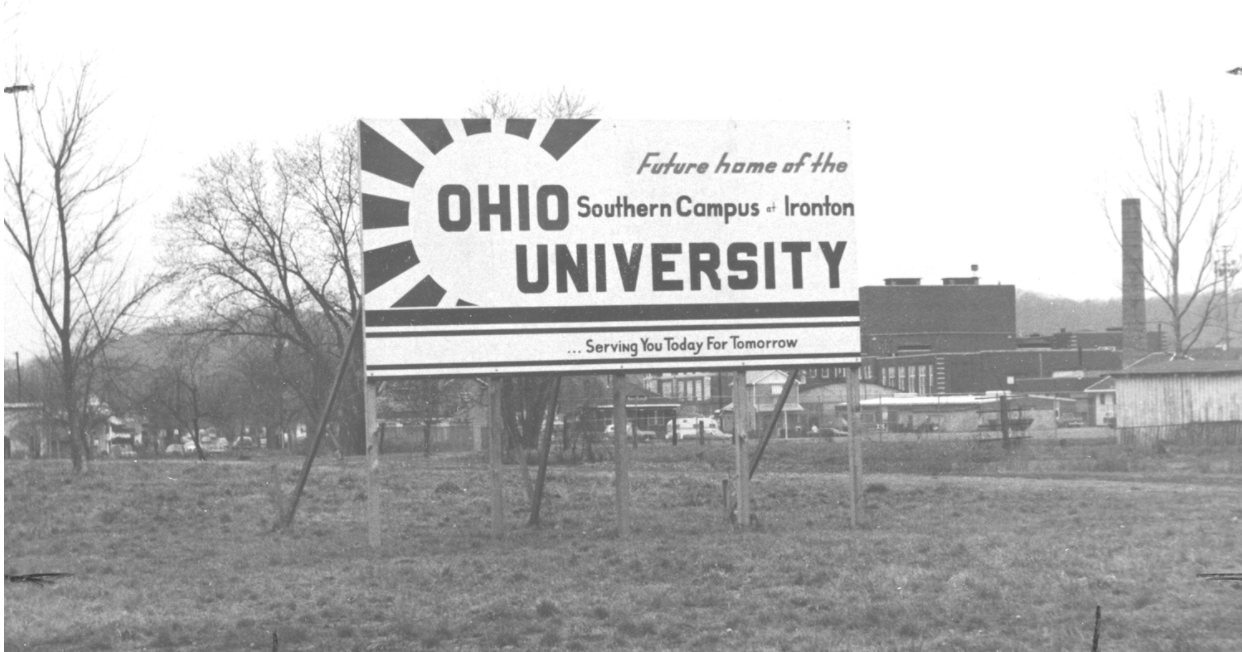
I couldn't be where I am, doing what I'm doing, without the experiences and the education I received at Ohio University Southern. I have such tremendous love for this community. Ohio University Southern is absolutely rooted in that history, it is not only the history, but it's going to be the future. Training our young people, our nontraditional students – when people need opportunities, they're going to come here. And that's incredibly uplifting.
How have you stayed connected to OUS or your community since graduation?
I love getting to come back, I'm not that far away over in Ashland, and talk about what I do with the people here at Ohio University Southern, like at the Mental Health Awareness Conference. The second that I was ready to reengage, there was a lot of acceptance and a lot of wanting to know what I was doing. There is a whole new life here, a whole new way to give back to this community and return some of the favor that was done for me in the beginning. I absolutely love any opportunity to come back and speak with young people about what their options are and what my experience has really been like working out in the real world.
What advice would you give to current or future OUS students?
Take the time to take a personal inventory. Figure out what's important to you, what your values are. Not just what do you want to do or how do you want to make money. When we can take that inventory of what's important to us and what we're ready to stand behind, that's going to help us make decisions about where we want to go and what is going to be the most fulfilling and therefore the most sustainable in the long term. Burnout is real in every single field, every single day. But if you can find something that feeds you and feeds those values that are important to you, you're going to be able to stay in it a lot longer. And stay flexible, be open to possibilities. I got an art degree and ended up somewhere over here, and yet the two aren't as far apart as they might seem. Be open to taking opportunities as they arise, even if they're scary, even if they seem different than what you thought they were going to be. Be willing to jump in and try something new.