
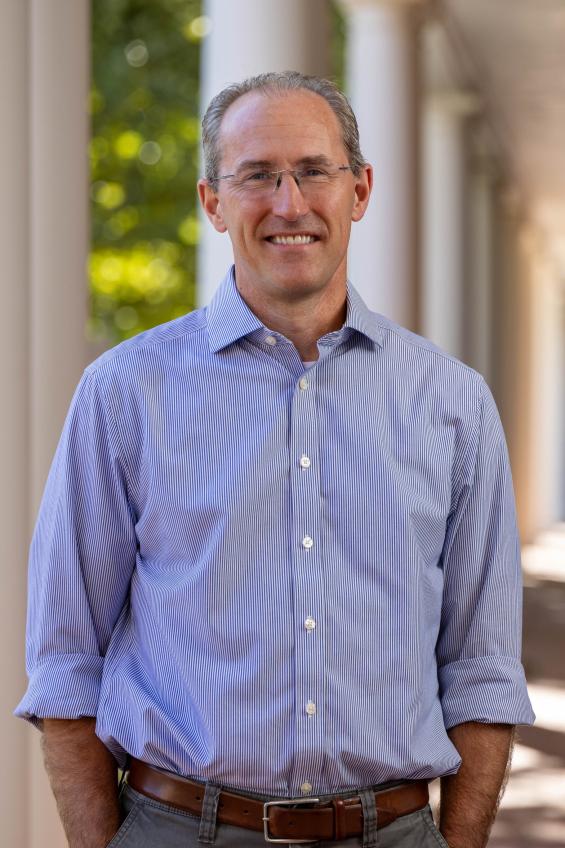
Brian Clark, Ph.D.
- Executive Director, Ohio Musculoskeletal and Neurological Institute
- Osteopathic Heritage Foundation Harold E. Clybourne, D.O., Endowed Research Chair
- Professor of Physiology
- Distinguished Professor
Areas of Expertise
- Age-Related Loss of Mobility
- Age-Related Muscle Weakness
- Sarcopenia and Dynapenia
- Frailty and Healthy Aging
- Neuromuscular Aging
- Exercise, Rehabilitation, and Function-Promoting Therapies
- Musculoskeletal Pain and Low Back Pain
- Osteoporosis and Fracture Risk
- Skeletal Health Diagnostics
Expert Bio
Dr. Brian C. Clark is an internationally recognized scientist whose research focuses on preserving strength, mobility, and independence in aging, disability, and musculoskeletal disease. He is a Distinguished Professor of Physiology and Neuroscience in the Department of Biomedical Sciences at Ohio University, Executive Director of the Ohio Musculoskeletal and Neurological Institute, and holder of the Osteopathic Heritage Foundation Harold E. Clybourne, D.O., Endowed Research Chair. In 2026, he was named an Ohio University Distinguished Professor, the university’s highest permanent recognition for faculty scholarly and creative accomplishment.
Dr. Clark’s work addresses a major public health challenge: why people lose strength, mobility, and skeletal resilience with aging, illness, pain, injury, and disuse, and how those losses can be prevented, detected earlier, or reversed. His research spans human physiology, neuroscience, rehabilitation science, biomechanics, clinical investigation, skeletal health diagnostics, and medical technology development. Much of his work has focused on age-related weakness, sarcopenia, mobility decline, musculoskeletal pain, low back pain, osteoporosis, and fracture risk.
A central theme of Dr. Clark’s research is that loss of physical function is not simply a problem of muscle size. His laboratory has helped advance the field toward a more integrated understanding of weakness as a problem involving muscle, motor neurons, neural excitability, and the aging motor system. This work has implications for exercise, rehabilitation, drug development, fall prevention, and interventions designed to help older adults remain mobile and independent.
Dr. Clark also works at the interface of science, medicine, and technology commercialization. He is co-founder and Chief Science Officer of OsteoDx, Inc., an Ohio University-based medical technology company developing Cortical Bone Mechanics Technology, or CBMT, a noninvasive approach for assessing the mechanical properties of bone. This work reflects his broader interest in translating scientific discoveries into practical tools that can improve diagnosis, guide intervention, and reduce disability.
Dr. Clark has maintained continuous research funding for more than two decades. He has secured more than $47 million in sponsored research support, including approximately $32 million as principal investigator, with the majority of that support coming from the National Institutes of Health. He has authored more than 200 scientific articles and chapters, and his work has been cited more than 18,000 times. He has also served on more than 60 federal grant review panels, contributed to national and international expert groups in aging and sarcopenia, and held editorial roles for multiple scientific journals.
The Ohio Musculoskeletal and Neurological Institute, which Dr. Clark directs, conducts basic, clinical, and translational research related to musculoskeletal and neurological health. Its major areas of emphasis include aging systems, injury, pain, rehabilitation, and healthy aging. Through OMNI, Dr. Clark has helped build a collaborative research environment focused on understanding the biological mechanisms of functional decline and developing strategies to preserve mobility, autonomy, and quality of life.
Expertise at a Glance
Dr. Clark studies age-related muscle weakness, mobility decline and neuromuscular aging. His research explores how muscles, bones and the nervous system affect function, and how exercise and rehabilitation can preserve strength and independence.
Media Placements
The New York Times
The Los Angeles Times
The Atlantic
Scientific American
Outside Magazine
Consumer Reports
Reader's Digest
U.S. News and World Report
Prevention
CBS
NHK / PBS Japan
The Globe and Mail
New York Magazine
The Philadelphia Inquirer
Real Simple
WBZ News Radio Boston
The Cleveland Plain Dealer
WKYC TV Cleveland