
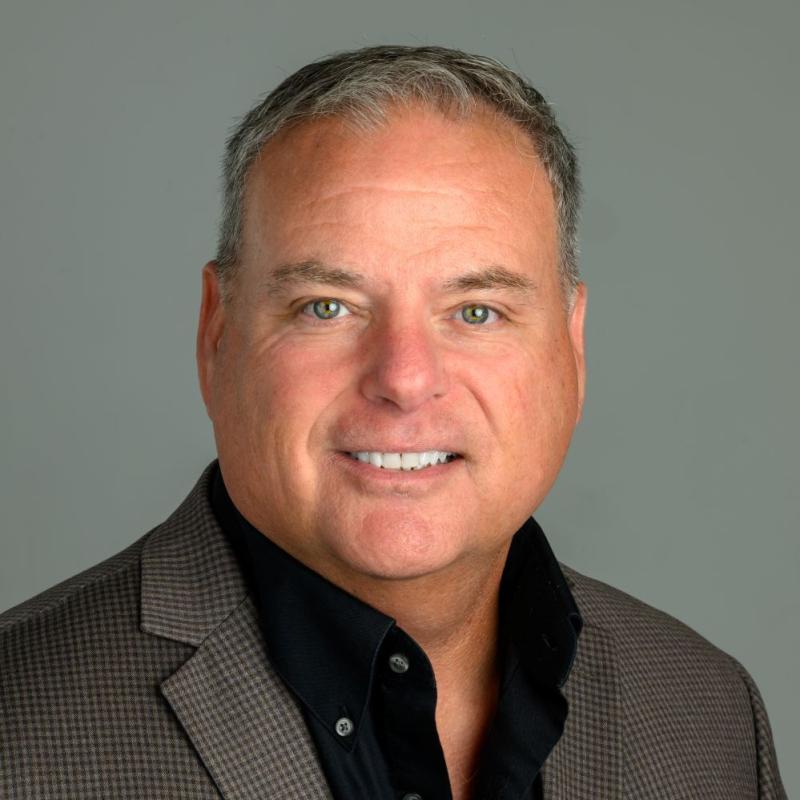
Jerry L. Miller
Education
- Ph.D. The University of Oklahoma - Communication
Areas of Expertise
- Political Communication
- Political Advertising
- Political Debates
- Place-based Research and Pedagogy
Courses Taught
- Argumentative Analysis and Advocacy
- Communication and Campaigns
- Communication Theory
- Gender and Communication
- Introduction to Political Communication
- Political Communication Research
- Political Communication Seminar
- Public Advocacy
- Qualitative Research Methods
The Ohio University Experts Directory is a searchable listing of faculty members who are knowledgeable in specific topical areas. These experts have provided their contact information and this directory serves to provide a way to learn about the broad range of expertise at Ohio University and also to connect with an expert about any particular topic of interest.
View Expert DirectoryBiography
I am a first-generation college graduate who grew up on my family's farm in southwest Kansas. Opportunities through 4-H and high school speech and debate opened doors I never expected—leading to a college education and a career in education. Along the way, I've experienced higher education from nearly every angle: as a student at a community college (Garden City Community College), a small private four-year institution (Bethel), a regional public university (Pittsburg State), and a Research I institution (Oklahoma).
Professional Experience
Professor, School of Communication Studies, Ohio University (2015–present); Associate Professor (2002–2015); Interim Director (2011–2013). Previously: Cassese Director of Forensics, Ohio University (2002–2005); Director of Forensics and Assistant Professor, School of Interpersonal Communication, Ohio University (1996–2002). Earlier positions include director of forensics roles at The University of Oklahoma and Pittsburg State University, as well as graduate teaching appointments in communication at multiple institutions. Founding member (2018) and Board President (2024–2026), Ohio Debate Association.
Publications
Miller, J. L. 2026. "Political Rhetoric Syllabus." In Teaching Communication: Volume IV: Instructional Resources, edited by B. N. Frisby, R. Kaufman, D. D. Sellnow, and M. G. Strawser, 852–78. San Diego, CA: Cognella.
Miller, J. L. 2025. "Teaching Political Communication." In Teaching Communication: Volume II: Communication Studies, edited by J. P. Mazer, D. D. Sellnow, and M. G. Strawser, 253–71. San Diego, CA: Cognella.
Miller, J. L. 2018. "The Oratory of Senator Robert Dole: Pragmatic Conservatism." In Republican Orators, edited by A. Crines and S. Hatzisavvido. London: Palgrave Macmillan.
Miller, J. L. 2015. "Videostyle in American Campaigns." In Praeger Handbook of Political Campaigning in the United States, edited by W. Benoit. Santa Barbara, CA: Praeger.
Miller, J. L. 2011. "Can You Hear Me Now? Identifying the Audience in 2008 Primary and General Election Presidential Political Advertisements." In Communication in the 2008 U.S. Election: Digital Natives Elect a President, edited by M. McKinney and M. M. Banwart, 143–64. New York: Peter Lang.
Recent Awards
- 2023 Outstanding Learning Community (Instructor)
- 2018-2019 Bruning Academy Participant
- 2017-2018 Top OHIO Faculty Newsmaker, presented by University Communications and Marketing & Office of the Executive Vice President and Provost.
- 2016- 2017 Top OHIO Faculty Newsmaker, presented by University Communications and Marketing & Office of the Executive Vice President and Provost.
- 2015 – Outstanding Advocate Award, University College, Ohio University
- 2012 - Karlyn Kohrs Campbell Top Rhetoric Paper, Central States Communication Association
Research Interests
Much of my research focuses on political communication, advertising, debates, public deliberations, and related topics. Within that context, I have recently been exploring how diverse influences—environmental, cultural, economic, and historical—shape our understanding of place. My work examines how we both construct and are constructed by the communities we inhabit, visit, or encounter through others' stories. The focus of this study is within political contexts--how political figures and institutions. This perspective informs not only my scholarship but also my commitment to communication as a tool for navigating our interpersonal and public lives. What we choose to say, and what we leave unsaid, profoundly matters.