Community Health Workers bridge gaps in care across Ohio
Community Health Workers are emerging as vital connectors between healthcare systems and Ohio’s diverse communities, addressing barriers like transportation, language access and trust that shape health outcomes. Through Ohio University’s expanding CHW training program, hundreds of graduates are using lived experience and cultural understanding to reduce health disparities and strengthen care across the state.
Samantha Pelham Kunz | February 5, 2026
Share:
In communities across Ohio, from Appalachian counties to urban neighborhoods, health outcomes are shaped by more than just doctor’s visits. Transportation, language access, trust, housing stability and cultural understanding all play critical roles. Community Health Workers, or CHWs, operate at the center of those realities, serving as trusted frontline professionals who help bridge the gap between healthcare systems and the people they serve.
“I see Community Health Workers as the connective tissue across systems,” said Kerri Shaw, associate professor of Instruction and director of Community Health Workforce Development in the College of Health Sciences and Professions. “They help people with things like transportation, access to primary care, health education and understanding how their health impacts their lives.”
Although the role is still emerging in Ohio, Shaw said CHWs have long been embedded in communities around the world.
“Community Health Workers are an emerging workforce here, but internationally, they’ve been doing this work for hundreds of years,” she said. “Ohio now has a more formalized role that’s related to case management, but it’s more holistic.”
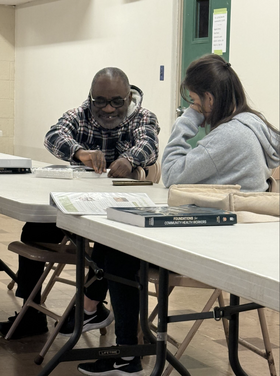
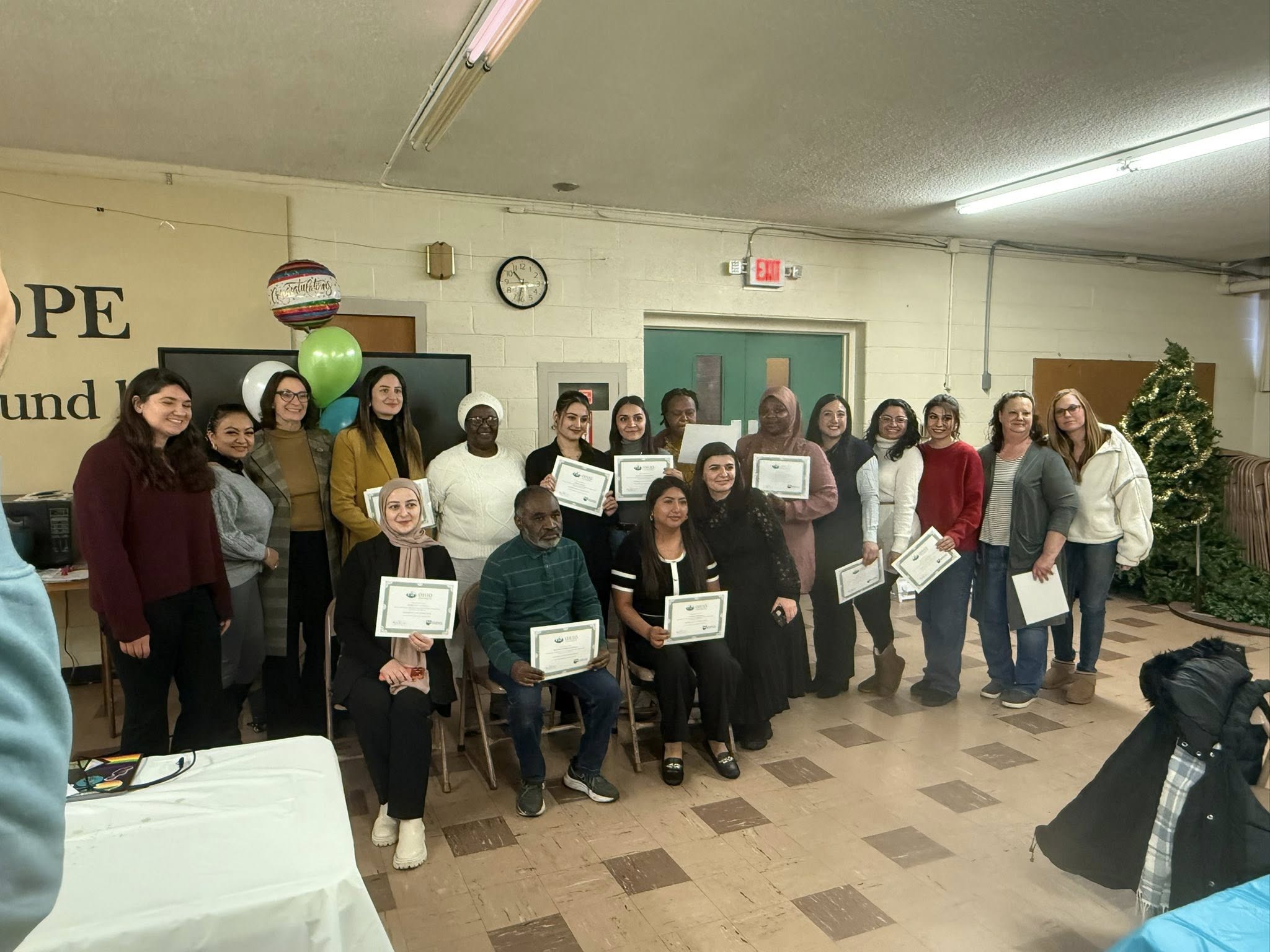
Recently, OHIO, in partnership with Cross Over Community Development (COCD), graduated a new cohort of CHWs through a training program in Dayton designed to meet regional workforce needs and reduce barriers to care. The program placed a special emphasis on supporting participants for whom English is a second language, equipping them with healthcare training while strengthening language skills so they can better serve communities that reflect their own cultural backgrounds.
The cohort represented the region’s growing cultural and linguistic diversity, with participants from Burundi, Colombia, Ecuador, Mexico, Russia, Rwanda, Türkiye and the United States. Many were graduates of COCD’s Six-Month Intensive English for Healthcare Program, which supports internationally trained doctors, nurses, pharmacists and public health professionals.
“Many of our participants are people looking to change careers, enter the workforce, or earn a credential while already working in social services or behavioral health,” Shaw said. “We also have people who bring lived experience, folks who have navigated systems like SNAP or housing insecurity themselves and want to help others do the same.”
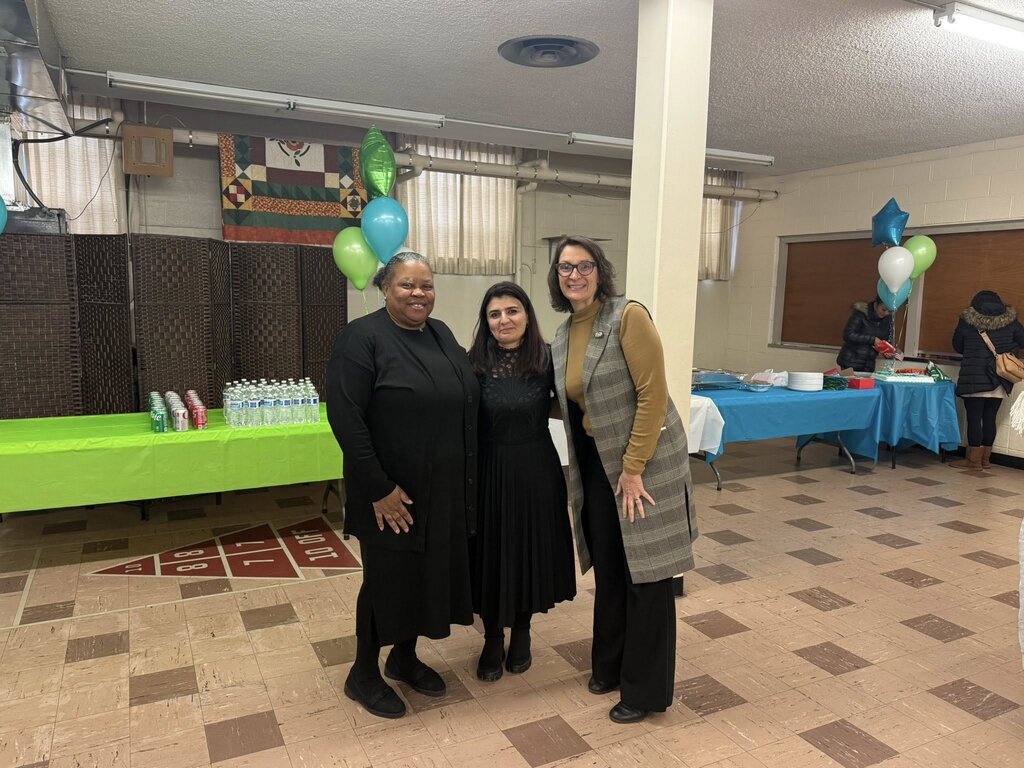
Michelle Gorman was one of those participants. Licensed as a Community Health Worker in 2022, Gorman enrolled in the program after deciding she was ready for a new career path. Her interest in public health grew during the COVID-19 pandemic, influenced in part by her parents’ work in social service careers. She completed the program as part of the 2021 cohort, when much of the training was held virtually, and completed practicums with Buckeye Hills Regional Council and Rising Suns Non-Profit Pharmacy.
“Those experiential opportunities really helped me understand how a CHW is an essential part of any care team,” said Gorman, who now serves as the Campus Community Health Worker at Ohio University.
Before joining OHIO, Gorman worked as a CHW with OhioHealth Physician Group OB/GYN in Athens, where she supported pregnant and postpartum patients by connecting them to resources, services and referrals.
“The CHW training and practicums prepared me for how to best support patients, especially related to unique challenges influenced by their social determinants of health,” she said. “The program featured a variety of speakers and covered many relevant topics, and the field placements provided real-world experiences to apply that knowledge.”
Shaw said it is this ability to meet people where they are, often grounded in shared experience, that makes CHWs uniquely effective.
“They look and talk like the people they’re serving, which helps build trust,” Shaw said. “Time is precious and being able to spend time with someone and really understand the challenges they face is a big part of helping people become healthier.”
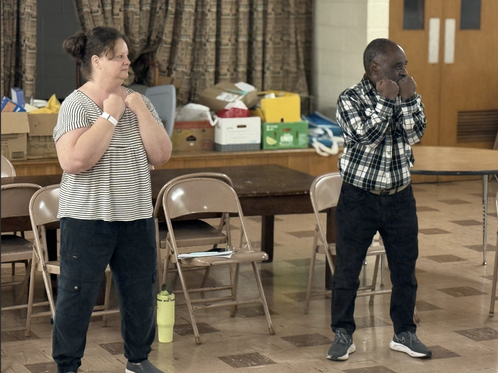
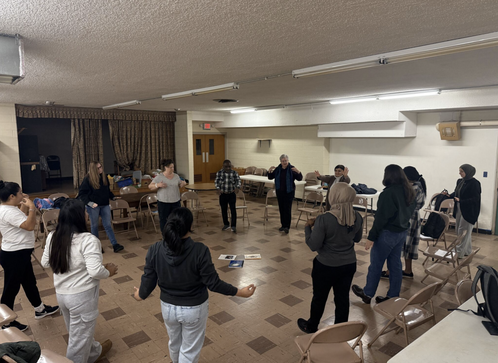
For Wren Hankins, a recent graduate, lived experience navigating mental health challenges was the reason she was drawn to the field.
“I’ve always been passionate about community care and social justice,” Hankins said. “Life has a funny way of giving you what you need, when you least expect it, and for me that was the Community Health Worker Training Program. I was presented with the opportunity, I took it, and coincidentally I found exactly where I fit.”
Hankins completed her CHW training in spring 2025 and accepted her first position with NAMI Athens that fall. Originally a social work student who left college due to personal circumstances, she said the program provided clarity and confidence at a pivotal moment in her life.
“In an under-resourced Appalachian county, I get to utilize that lived experience combined with my training as a Community Health Worker,” Hankins said. “I feel so lucky to help educate people about mental health, reduce stigma and shame, connect people to resources and help develop programs that bring people together at no cost to them.”
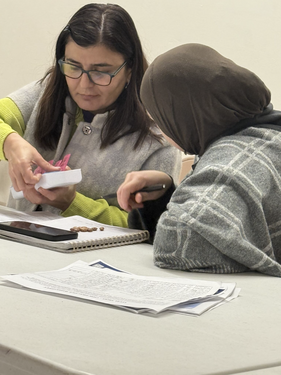
Through the program, Hankins and her peers received training in anatomy, basic life support, trauma-informed care, communication strategies, motivational interviewing and how to take vitals, which has actually helped several students identify high blood pressure in themselves.
We have a close understanding of what makes our communities tick, and a deep compassion for the people around us. In underserved areas, CHWs are a bridge between community members and the systems of care around them.
Ohio University’s CHW training program has grown from a small pilot into a regional workforce pipeline addressing health disparities across central and southeast Ohio. What began with a single grant in 2015 and a first cohort of just three students became certified by the Ohio Board of Nursing in 2017 and has since trained more than 500 participants.
“We offer the training on a rotating basis across campuses because we want to reach people in all of our communities and make it as accessible as possible,” Shaw said, noting the program now offers multiple cohorts each semester, often with waiting lists.
“There are real workforce gaps and health disparities in this region,” she added. “Community Health Workers help mitigate those challenges, especially in rural areas where it’s hard to attract healthcare providers.”
Courses are delivered in a hybrid format, with about 80 percent of instruction offered online synchronously and three full-day, in-person sessions held on rotating campuses. Recent cohorts have taken place in Chillicothe, Zanesville, Dayton and Ironton, with upcoming sessions planned for Dublin and Athens. Currently, the program is being taught on the Lancaster and Southern campuses.
The program is also collaborating with a national organization called Strive Health and training CHWs across the country, including in New Jersey and Colorado.
Shaw emphasized the return on investment CHWs bring to healthcare systems, citing reduced emergency room visits, improved medication adherence and better understanding of when primary care is appropriate.
“Our instructors do this work themselves and love their communities,” she said. “That passion really shows in the classroom.”
Beyond certification, Ohio University continues to expand long-term career pathways through partnerships, apprenticeships and academic options. A grant-funded apprenticeship allows some graduates to complete a year-long placement with additional University support, while a new pathway enables certified CHWs to waive five courses toward an Associate's degree in Human Services Technology. After completing the program, students can continue on into the Social Work program to pursue a bachelor's degree.
“For some people, this is their long-term career, and for others it’s a stepping stone,” Shaw said. “When they grow, their communities grow with them.”