Search within:
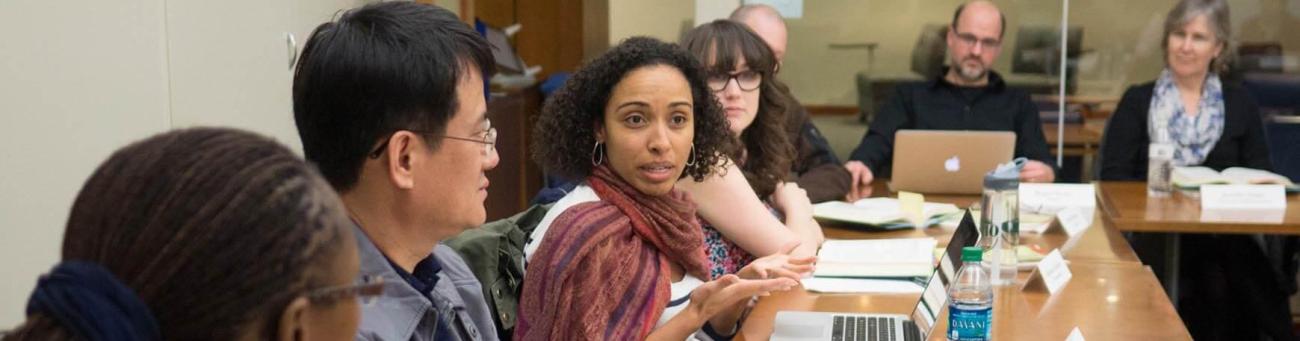
Faculty have a discussion during a Bruning Teaching Academy meeting
Bruning Teaching Academy

Bruning Teaching Academy

The Bruning Teaching Academy (BTA) provides a developmental, peer-to-peer approach for continuous improvement and implementation of evidence-based best practices. The program seeks faculty who have demonstrated teaching excellence and considers overall years of teaching experience as well as years at OHIO. Participants come together throughout the academic year to discuss instructional strategies, provide constructive feedback and work toward one common goal — improving teaching.

BTA participants set goals they hope to accomplish each semester, following a backward design model for instruction that emphasizes the importance of planning the desired outcomes before deciding the teaching and assessment methods to use.

Bruning Teaching Academy Goals

  1. Write clear learning goals that are student-centered, use active verbs, and are measurable.
  2. Align learning activities with the learning goals.
  3. Create assessment tools that are aligned with the learning activities and accurately assess achievement of the learning goal.
  4. Employ techniques that encourage student participation in the learning activities and engagement with the learning goals.
  5. Share ideas and garner feedback related to teaching and learning with a network of colleagues across campus.
  6. Observe a colleague teach, review their materials, and provide feedback that would help improve their teaching.

Apply to the Bruning Academy

Applications are accepted annually, with announcements of deadlines in the spring semester. Those applying submit the following:

  1. Letter of application indicating why you would like to be involved in this project and what undergraduate course you teach fall semester that you would like to improve.
  2. Brief statement of teaching philosophy (500 words maximum).
    Syllabus for the undergraduate course you would like to focus on fall semester.
  3. Teaching evaluations for that course when last taught.
  4. Brief email from your department chair indicating they give you permission to participate if selected. We need your department chair’s permission to pay you a stipend.

Please address any questions to Linda Rice

Access the Application

2026-27 Bruning Academy Faculty

Academy Leader
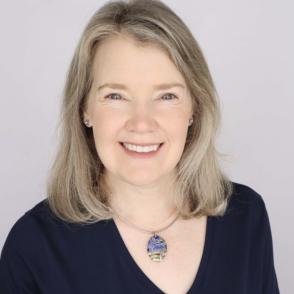
Linda J. Rice

It’s been exciting to see the CTLA gain prominence and be part of some of its endeavors from workshops and focus groups to leading the development of the Peer Teaching Observation Program (PTOP) and facilitating the Bruning Teaching Academy which has served over 100 OHIO faculty since its inception in 2015.

I’m the James S. Reid/Standard Products Company Distinguished Teaching Professor in the Charles J. Ping Institute for the Teaching of the Humanities, Professor of English, and Director of the Master of Arts in English (MAE) Online program. 

As a teacher of teachers, curriculum development and course design are my passion because they are multifaceted endeavors that involve content mastery, organization, presentation, creativity and pedagogical know-how. I enjoy the challenge of figuring out how to put the various pieces together in a way that resonates well with students and steps instruction so that students can accomplish big tasks without being overwhelmed.

I’ve found that students respond well to and ultimately perform at higher levels when they have routine accountability. Students are savvy and figure out early in the term which professors will hold them accountable for completing course readings and assignments and which ones won’t. Class meetings are always better when students come prepared, and I want to be on the receiving end of that, so I employ multiple means to help ensure students come ready to learn and participate.

It’s also important to provide students with a balance of recognition for what they’ve done well and a continued push to help them achieve at higher levels. Clear and detailed assignments, models, and rubrics help students to succeed and support students’ value of consistency and transparency. I aim for my classroom to be like my home and relationships – where we each do our part, accept responsibility, develop trust over time, demonstrate mutual respect, fairness, and kindness, and have fun as we journey together. 
College of Health Sciences and Professions
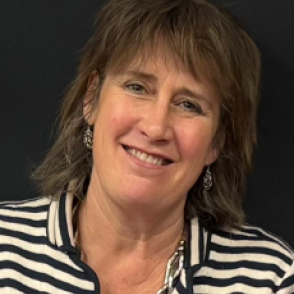
Angie Bohyer

My professional experience in healthcare provided both a robust knowledge of clinical practice and an intricate knowledge of educating others. As a Registered Dietitian, my teaching journey began educating individuals to make the best dietary choices to improve health outcomes. Through this work, I developed the ability to interpret body language, comprehend language signaling, and adapt instructional modalities to meet diverse learner needs.   

These experiences sparked my interest in higher education, particularly in identifying effective strategies for communicating complicated subject matter to university students. I began to critically examine instructional approaches – questioning whether traditional lecture-based delivery or active learning strategies produced deeper understanding. Through this reflective practice, and a few years of assimilating student feedback, I found that student learning is most effective when I serve as a facilitator. I guide them to engage in critical thinking and apply evidence-based information.

My teaching approach is grounded in a systematic framework that begins by activating prior learned (important) knowledge and building on this foundation. I intentionally incorporate schema theory, recognizing that domain – specific knowledge structures enable students to link foundational concepts with new information. This structured application approach promoted cognitive organization and enhanced retention. 

I strive to create a classroom environment that fosters inquiry, interaction, and higher-order thinking. Students are challenged not only to recall prior knowledge, but also to reinterpret and apply it within clinical nutrition contexts. Through this process, and the use of case study scenarios, learners develop the analytical skills necessary to translate theory into practice.  

College of Arts and Sciences
Alicia Castro

My teaching is grounded in student needs and meaningful interaction. As a social work instructor, I am committed to educating and shaping future social workers who will be working with diverse and often vulnerable populations. As a result of this responsibility, I strive to teach my students not only essential content, but to help them make connections between what they learn in the classroom and real life. 

I am continually finding ways for students to have engaging experiences. One of my biggest goals in the classroom is to foster an open and inclusive environment where student needs are being met and they feel safe asking questions and making mistakes. 

Some of my past professors in the sociology department at Ohio University have influenced how I teach. Their passion in the material was evident, which strengthened my own. Specifically, my former undergraduate instructor, Michelle Brown, helped me to see the value in experiential learning and the value of connecting what is learned in the classroom to real-world practice. 

My goal is to get students excited about social work and confident in their knowledge. Some ways I do this is through anecdotal stories, documentaries, and students completing volunteer hours in the communities Southeastern Ohio. 

Beyond the classroom, I mentor students and help guide them their journey in the social work program. I believe it is important to honor each student’s unique journey and collaborate with them in ways to help them succeed. 

Patton College of Education
Rebecca Choi

My past experiences have strongly influenced who I am as a hospitality educator. Growing up, I lived in four different countries, and those experiences, interacting with people from different cultural backgrounds and visiting new places, naturally led me to the field of hospitality and tourism.

As a faculty member in the Restaurant, Hotel and Tourism (RHT) program at Ohio University, I see teaching as closely connected to what is happening beyond the classroom. 

Because RHT is such an industry-related discipline, three ideas have gradually come to guide how I approach my teaching: community engagement, applicability of learning, and relationships in a globalized society (CAR). Over time, I have also come to think of “CAR” as a reminder to stay proactive and intentional in how I meet my responsibilities as a teacher and scholar.

I do not want my expertise to remain limited to academic settings; I believe it should also connect to real industry contexts and the communities we serve. I make an effort to incorporate community engagement and real-world examples into my teaching along with my scholarship.

These connections help students better understand how course concepts apply in practice. I also believe strongly that a multicultural perspective is essential in this field. Bringing global events and current industry developments into the classroom helps students better understand hospitality from multiple viewpoints. 

My goal is to support students in becoming thoughtful professionals who can make informed decisions and carry practical, transferable skills with them throughout their careers.

College of Arts and Sciences
Tijana Cupic

Expressing yourself in another language is a vulnerable space, which is why creating a safe and comfortable environment in my classroom is crucial for my students to experiment with various linguistic, literary and cultural practices. I strive to teach my students that a classroom is part of everyday life rather than an artificial space, and that skills like critical thinking, defending their arguments and creativity are needed both inside and outside our classroom walls.

I strongly value good quality feedback and a personal connection to the material. In my literature courses, my students and I see fiction as a way of understanding life, which always prompts us to search for connections between the text and our own lives and meanings. While doing so, I believe in high-quality feedback, both on content and form, as one of the most valuable tools for helping our students grow.

In my teaching practice, I foster a student-centered approach, with an emphasis on community engagement and technology. I like experimenting with creative assessments rather than test-based ones, such as conducting community interviews, organizing literary events and bridging the gap between the classroom and the world around us. 

Apart from that, I emphasize working with social media as both a student-centered and a technological practice, as it allows students to learn on their own terms and in an environment that feels close to them. 

College of Arts and Sciences
Federico Correa Pose

As an educator, one of my primary objectives is to cultivate a sense of community in the classroom and to create a space where students feel supported, seen and empowered to express themselves. 

Additionally, I strive to place students at the center of the learning process, not only to enhance linguistic competency but also to promote critical thinking, dialogue and collaboration. Inspired by Paulo Freire’s Pedagogia do oprimido, I aim to foster a dialogical and participatory classroom environment in which knowledge is constructed collectively and students are the protagonists of their own learning. 

Beyond specific pedagogical strategies, I place a strong emphasis on fostering cultural understanding and inclusivity in my classroom. While community may exist as a given, cultivating a genuine sense of belonging requires ongoing effort. 

Finally, I see myself as a teacher engaged in a process of constant learning in which my students and colleagues play a central role. This is why I am especially enthusiastic about participating in the Bruning Teaching Academy, where I look forward to continuing to learn and grow professionally alongside my peers.

College of Health Sciences and Professions
Ann Feltis

I identify as a clinical educator—intentionally emphasizing “educator” rather than “supervisor.” Language shapes learning environments, and this distinction reflects my commitment to active teaching, mentorship, and growth. I serve in the Department of Hearing, Speech, and Language Sciences as a Speech-Language Pathologist dedicated to preparing the next generation of clinicians.

My work spans classroom and clinical settings. I teach in our on-site clinic and in courses such as Clinical Methods, Fluency Disorders and Medical Speech-Language Pathology, while also coordinating offsite placements to support both students and preceptors. Across these roles, my guiding principle is consistent: meet students where they are and walk alongside them as they develop into skilled, thoughtful clinicians.

My approach to mentorship is grounded in experience. As a graduate student, I was challenged by a supervisor who paired high expectations with genuine investment in my growth. That experience shaped my belief that effective mentorship is not softness, but sustained, honest engagement. I strive to create environments where students feel both supported and stretched.

My teaching emphasizes reflection and metacognition. I encourage students to analyze what they notice, what surprises them, and how they would respond differently. My goal is to develop clinicians who think critically and adapt when protocols fall short.

Supporting students as they become clinicians is the most meaningful part of my work.

College of Arts and Sciences
Ben Gallati

My teaching philosophy is built around the reality that students will spend 15 weeks in my classroom, and a lifetime outside of it. The challenge is, then, to use those 15 weeks we have together to connect lessons to students’ interests in exciting ways while firmly rooting material in theory and social fact in the interest of developing life-long critical thinking skills.  

I set three goals for my courses. The first is to challenge students to leave their comfort zone and explore ideas they have not been exposed to. The second is to have students read, write and think critically, using a sociological lens. The third is to provide students with the skills to apply perspectives learned in the classroom to their own media consumption. 

These goals are aimed at getting students to apply a sociological lens outside the classroom while they are enrolled in the course, forming a habit that ideally continues as they matriculate towards graduation and ultimately enter the social world. 

I use convergent teaching (Pallas and Neuman 2019) – a practice that emphasizes the interaction between core course knowledge and students’ prior academic and personal knowledge – to introduce sociological theory to students in a way that allows them to use the sociological imagination to reevaluate familiar popular media and current events in light of the insights gleaned from social science research.  

Heritage College of Osteopathic Medicine
Emily Hill Guseman

My primary goal as a teacher is to help students move beyond understanding concepts to applying them in meaningful ways, while also building excitement for their chosen field of study. In exercise physiology, that means being able to use their knowledge to make decisions in clinical or professional settings and seeing direct application to patient care and an individual’s quality of life.

I design my courses to create structured opportunities for application through problem-solving activities and real-world scenarios. These experiences help students build confidence while also identifying where they need additional support.

I also emphasize clear and alignment between learning objectives, in-class activities, and assessments so that students understand what is expected and how to succeed. At the same time, I strive to create a supportive learning environment where students feel comfortable engaging with challenging material and complex decision-making.

My teaching is informed by my background in cardiac rehabilitation and pediatric obesity management, which allows me to connect course concepts to real-world practice. I also regularly use student feedback to refine my courses, particularly in large-enrollment settings where it is important to balance meaningful engagement with sustainable course design.

Scripps College of Communication
Ana Mojica-Myers

As an instructor, I view myself as an adviser, a collaborator and a lifelong learner who believes that students' diverse learning styles demand a stimulating, challenging environment. 

I strive to create student-centered spaces grounded in the ethical use of generative intelligence, where every student feels they have the potential to master information design and data visualization. My approach is based on the conviction that learning occurs when students are invited to share ideas, ask questions and let their curiosity guide the problem-solving process.

My pedagogy is rooted in hands-on activities where students apply complex theoretical concepts to real-world challenges. I approach my lectures as a conversation, coupling concepts with personal experiences, errors and successes. I am deeply committed to achieving a balance between content, application and artistry, ensuring that visualizations are both compelling and data-rigorous.

I am inspired by the belief that creating visualizations and motion graphics is a collective process where everyone, including me, is continuously learning. I strive to be an instructor who pushes students to leave their comfort zones and identify their strengths through innovative projects. 

By providing a safe environment free of stereotypes, I aim to help students acquire new skills and find their own voices in visual storytelling. For me, teaching is not just work; it is the joy of sharing my love for creating and managing visual data.

College of Arts and Sciences
Nitya Pandey

I teach writing. My pedagogy operates at the intersection of three core beliefs that nourish my teaching: care, technology and transfer. To begin with, care in my teaching materializes through a dialogic intellectual partnership between different members of a classroom community, i.e. the students and the instructor. 

The dialogues happen through classroom lectures, student presentations and written work, as well as the instructor’s feedback on those projects along with students’ peer feedback to one another. Caring pedagogy helps achieve a collaborative classroom that instructors and students are equally accountable towards. 

Similarly, technology is at the heart of my teaching because writing is not simply words generated with pen and paper. Writing is a process of composing texts that enable multimodal delivery of ideas through various mediums. An example is an Instagram post on stopping animal abuse intended for an audience of animal lovers and advocates. Notably, while composing these multimodal texts, my students are trained to be mindful of their genres and contexts to ensure their effectiveness. 

Finally, I believe that academia and society should be in continual conversation and collaboration with one another. The knowledge that is created, shared and practiced within a curated educational environment is incomplete without its real-world application. Likewise, acquisition of academic training enriches successful knowledge building behaviors in daily life. 

Therefore, it is my priority as an educator to bridge these two diverse contexts. Resultantly, my students work on those writing and research projects that are compatible with their professional interests, goals and identities. 

Scripps College of Communication
Cat Penrod

I see my role as a teacher as both a guide and a catalyst, someone who creates the conditions for students to think critically, take risks, and grow into confident communicators and designers. 

My teaching is grounded in the belief that learning should be active, applied and deeply connected to the real-world students will enter after graduation. I strive to design experiences that move beyond theory, encouraging students to engage in problem-solving, collaboration, and reflection.

I am especially drawn to experiential and project-based learning, where students can practice skills in authentic contexts and develop a sense of ownership over their work. In my classroom, iteration is essential, students are encouraged to test ideas, receive feedback and refine their thinking. I also prioritize helping students articulate their decisions, because being able to explain why something works is just as important as creating it.

Ultimately, I aim to help students leave my classroom not only with stronger skills, but with the confidence and mindset to continue learning, adapting, and contributing long after the course ends.

Patton College of Education
Ryan Pigman

My goal as an instructor is to create learning experiences that feel meaningful, engaging, and directly connected to the work my students will do as educators. I view learning as an active process, so my courses are built around discussion, case studies and applied activities that ask students to think, participate, reflect and make connections to real classroom practice. 

I take a student-centered approach and intentionally design much of my teaching to model the practices I want students to use in their own classrooms. Using principles of backward design, I create clear, aligned learning experiences in which course goals, activities and assessments work together purposefully. I also incorporate elements of Universal Design for Learning to prioritize flexibility and access, offering multiple ways for students to engage and demonstrate understanding. 

Because I teach in special education, I emphasize both skill development and purpose. I want students to leave not only with practical, evidence-based tools, but also with a commitment to equity, inclusion, and advocating for all learners. Supporting preservice and in-service teachers is central to my work, and I value opportunities to mentor students as they develop into reflective, collaborative educators. 

Ultimately, I aim to create an environment where students feel supported, challenged, and confident in their ability to apply what they’ve learned beyond the university classroom.

College of Health Sciences and Professions
Cheryl Prusinski

Cheryl Prusinski is a white deaf woman and an associate professor of instruction in Hearing, Speech, and Language Sciences. She teaches Advanced American Sign Language and Introduction to Deaf Culture.

She holds an MA in Teaching American Sign Language from the University of Northern Colorado and an MS in Educational Leadership from the University of Dayton. Prusinski is an advocate for the rights of Deaf individuals and people with disabilities and has served in multiple leadership roles.

She co-founded Deaf World Against Violence Everywhere (DWAVE) to address service gaps for Deaf survivors of domestic and sexual violence. Prusinski is committed to inclusivity, self-reflection around implicit bias, and community collaboration. She currently serves as Board Chairperson for the Deaf Service Center of Ohio.

College of Business
B. David Ridpath

Consistent with my personal teaching philosophy, the way I teach and who I am as a teacher can be summed up as I want to impart as much knowledge, wisdom and practical examples to my students that will help them be a success in the sports industry. 

I am not a traditionally trained pedagogist; I am industry trained, but I have been successful in the classroom. However, I am at a crossroads with my teaching, and I wonder if I am I doing as good as I used to and if I am keeping up the changing student and adapting the way I teach in this new environment of the post-covid student and emerging AI.

Using my philosophy, I do have course delivery methods beneficial to students with regard to critical thinking, problem solving, and decision making as they move into the sports business profession. My focus remains teaching the skills that will benefit my students the most in the future, but maybe I need to find out how to do that better.

I want to add that I was inspired by my former professor Dr. Ann Gill at Colorado State, who is no longer with us, but she taught me how to think for myself and fight for what I believe in. She taught in a way that benefits us in the future. She pushed skills like reading, writing, critical thinking and challenging the status quo and groupthink – skills that still are needed even in a world of technology. I have adapted many things from her in my own teachings and day to day life. I only hope I am a tenth of the teacher she was. She continues to inspire me daily.

College of Arts and Sciences
Manisha Sinha

I am an assistant professor of instruction in the Department of English, teaching First-Year Composition. My work centers on a persistent question: Why do capable students underperform in writing spaces? 

Academic underachievement, I argue, is rarely about ability; it reflects a misalignment between student's potential and the learning environment.

My pedagogy adopts a wellness-informed framework that treats emotional safety as central to intellectual work. Confidence, risk-taking and revision are conditions for rigorous writing. 

This approach informs my Scholarship of Teaching and Learning, where I examine how psychologically safe classroom structures shape writing development, particularly for multilingual and first-generation students.

College of Arts and Sciences
Yogesh Sinha

I am an assistant professor of instruction teaching rhetoric and composition in the Department of English at Ohio University. My teaching is grounded in a central question: Do students feel they belong in the act of writing?

I build classrooms where students are positioned to participate, where risk is not punished and where revision is not just correction but exploration. I approach the classroom as a collaborative space, where learning emerges through dialogue among students, peers and instructor. I use backward design to clarify outcomes, but I pair it with reflective writing, peer interaction and alternative assessment to create conditions for deeper engagement.

My Scholarship of Teaching and Learning grows from this focus on belonging. I examine how a sense of belonging shapes engagement, revision practices and writing development over time. What I find is that when students feel they belong, they take more intellectual risks, and those risks lead to more meaningful writing.

College of Arts and Sciences
Rachel Terman

I am a community-engaged scholar and educator in Southeast Ohio. I work as an associate professor of Sociology at Ohio University and as an affiliate faculty member of the Appalachian Studies Program and Women’s, Gender, and Sexuality Studies Program. In my teaching I specialize in the sociology of Appalachia, the rural U.S., intersecting identities, inequalities and people’s relationship to place. 

My approach to teaching is grounded in feminist pedagogy and community-engaged, experiential learning. I use these approaches for three reasons. First, the teachers and mentors who influenced me the most employed these pedagogical tools. Early on in my teaching, in the absence of formal training, I sought to emulate these teaching practices. 

Second, feminist approaches to teaching and community-engagement overlap with my research expertise and focus. 

Finally, and perhaps most importantly, I continue to find them useful in effectiveness for student learning and gratifying for my own experience as an instructor. 

My publications about teaching include “Wealth and Poverty in the Little Cities of Black Diamonds: Navigating Community-University Partnerships in Southeast Ohio,” which I wrote with my co-authors Diana Marvel, Robert Frank and John Winnenberg, published in Engaging Appalachia: A Guidebook for Building Capacity and Sustainability, edited by Rebecca A. Fletcher, Rebecca Eli Long, & William Schumann.

College of Arts and Sciences
Pavel Vasiliev

I am an experienced and versatile teacher whose pedagogy is built on interdisciplinary foundations, infused with current criminological scholarship, and incorporates international-comparative perspective. 

I have taught small classes at liberal arts colleges and large classes in R1 universities. I adapt to the needs of the students and class format and deliver the best experience. Given the classes I teach currently I err on the side of being a lecturer, to amplify knowledge transmission, since I am an area expert. And I help students to model the thought process of a professional in my high-level classes. 

But I do not necessarily like this “unipolar” dynamic, so I facilitate student engagement by requiring a collaborative, group presentation or project in every class. So, my classes sort of “fan out” from unipolar me lecturing early in the semester to a “multipolar” community of scholars as students are engaged in collective work and produce a public display of competence, learn from each other and do peer evaluation and grading. 

In some of my classes, I incorporate elements of experiential learning – encouraging students to do a “court observation” exercise, for example, or asking students to use AI to summarize recent court cases – to get them to read the Supreme Court opinions, as a first step towards deeper engagement with the primary sources. 

My pedagogy is strongly influenced by Dr. David Dickens, my mentor, who was an excellent example of “wizard on the stage” model, so in many ways I model his strengths and weaknesses. 

Bruning Teaching Academy Alumni

  • Emilia Alonso-Sameno
  • Stan Alost
  • Cynthia Anderson
  • Matt Anderson
  • Mick Andzulis
  • Rebecca Barlag
  • Joann Benigno
  • Roger Braun
  • Jenny Chabot
  • Brian Collins
  • Tawna Cooksey-James
  • Kevin Cordi
  • Gary Coombs
  • Matthew Cornish
  • Cory Cronin
  • Tom Dancer
  • Geoff Dabelko
  • Travis Davidson
  • Craig Davis
  • Alexei Davydov
  • Shelly Delaney
  • Adonis Durado
  • Haley Duschinski
  • Glenn Dutcher
  • Ryan Fogt
  • Jessica Ford
  • Alexa Fox
  • Katie Franklin
  • Raymond Frost
  • Theda Gibbs
  • Sam Girton
  • Sinan Gokkaya
  • Moumita Gyomlai
  • Daniel Harper
  • Lisa Harrison
  • Lynn Harter
  • Michael Hess
  • Jennifer Hines
  • Angela Hosek
  • Seonghee Hong
  • Terri Hood-Brown
  • Deanna House
  • Jana Houser
  • Akil Houston
  • Jana Hovland
  • Jennifer Howell
  • Mary Kate Hurley
  • Bayyinah Jeffries
  • Sarah E. Jones
  • Joan Jurich
  • Yeong-Hyum Kim
  • Youngsun Kim
  • Yeji Kim
  • Sam Kizer
  • Ian Klein
  • Michael Kopish
  • Greg Kremer
  • Zaki Kuruppalil
  • Chao-Yang Lee
  • Bethany Lemont
  • Amy Lynch
  • Lori Marchese
  • Vic Matta
  • Jaclyn Maxwell
  • Kalyn McDonald
  • Lauren McMills
  • Shawnee C. Meek
  • Hans Meyer
  • Deborah Murray
  • Charlie Morgan
  • Becky Munhall
  • Julia Paxton
  • Tom Padron
  • Harold Perkins
  • Brittany Peterson
  • James Petrik
  • Michael Pfahl
  • Andrew Pueschel
  • Talinn Phillips
  • Chorong Oh
  • Sarah Rist
  • Herta Rodina
  • Mark Rowe
  • Jeff Russell
  • Nukhet Sandal
  • Kristin Schuller
  • Tamanna Shah
  • Ryan Shepherd
  • Spencer Smith
  • Tom Smucker
  • Benjamin Sperry
  • Jennifer Shadik
  • Thom Stevenson
  • Frances Ann Stott
  • Michelle Surerus
  • Barry Tadlock
  • Soichi Tanda
  • Elizabeth Thompson
  • Deborah Thorne
  • Stephanie Tikkanen
  • Art Trese
  • Thomas Vander Ven
  • Edna Wangui
  • Nilesh J. Washing
  • Julie White
  • Aaron Wilson
  • Lori Woods
  • Min Lun (Alan) Wu
  • Brian Wymbs
  • Animesh Yadav
  • Linda Zionkowski