From local sidelines to the World Cup: How Ohio University is investing in the future of soccer coaching
The world's biggest soccer tournament isn't just a showcase for players, it's also a masterclass in coaching. As fans tune in to the World Cup, faculty explain what really happens on the sidelines and how OHIO's online Master of Soccer Coaching Education program is preparing the next generation of coaches.
Samantha Pelham Kunz | July 8, 2026
Share:
The world calls it football. In the United States, it's soccer, but whatever the name, there's no denying the World Cup is one of the biggest sporting events across the globe.
As the United States hosts the 2026 FIFA World Cup, the tournament represents more than just a global competition. It marks a pivotal moment for a sport that continues to gain momentum across the country, bringing new fans, growing youth participation and increased investment in player and coach development.
This investment is crucial in continuing to grow the sport, as is the need for educators and coaches who can help develop future generations of players. While fans gather for watch parties, one of the most important figures in the game rarely has their name on the back of a jersey. Instead, they're standing on the sideline, constantly processing information, reading momentum and making decisions that can change the course of a game in an instant.
To help prepare those coaches for success at every level of the game, Ohio University offers an online Master of Soccer Coaching Education that equips students with the leadership, teaching and technical skills needed to develop athletes and build successful programs.
For Ashley Allanson, assistant professor of instruction in Sports Coaching Education and director of the program, the World Cup represents an opportunity to build excitement around the sport while preparing the next generation of coaches who will shape its future.
"Soccer is growing," Allanson said. "When the World Cup was announced here, it provided an opportunity for the game to continue to grow in the United States. The last time the U.S. hosted, there was an increase of interest in the sport that was sustained, so my hope is that we can continue to build on that momentum over the next 30 years."
Looking back to the 1994 tournament, Allanson said the sport has transformed dramatically.
"The biggest evolution I've seen is simply access," he said. "People have so many more opportunities now to watch soccer at the highest level, and with the World Cup being hosted here, even more people will be able to watch, enjoy and connect with the sport. If we can raise the floor for young players, we raise the ceiling for the entire game. That's why developing coaches is so important. Better coaches create better athletes, and ultimately the entire soccer community benefits."
Investing in the game
Allanson's own path reflects the international nature of the sport.
A former professional soccer player in England, Allanson transitioned into coaching after his playing career ended. He spent several years coaching at Hull City Tigers FC Academy before joining Ohio University, where he also served as coach of the women's soccer program from 2021-2023, helping lead the Bobcats to a Mid-American Conference championship.
"When I came to OHIO, I recognized we have a real hotbed for soccer in this community," Allanson said. "Since coming here and being in this professor role as a coach educator, I'm also passionate about continuing to be involved in coaching."
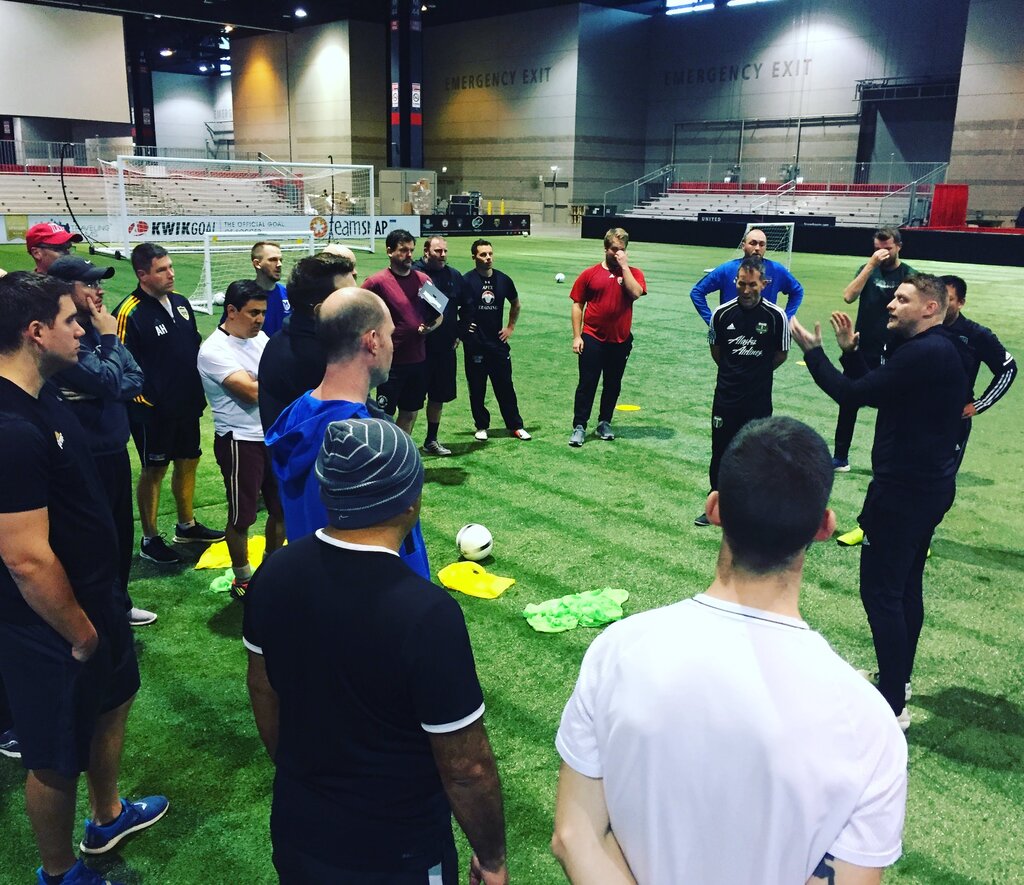
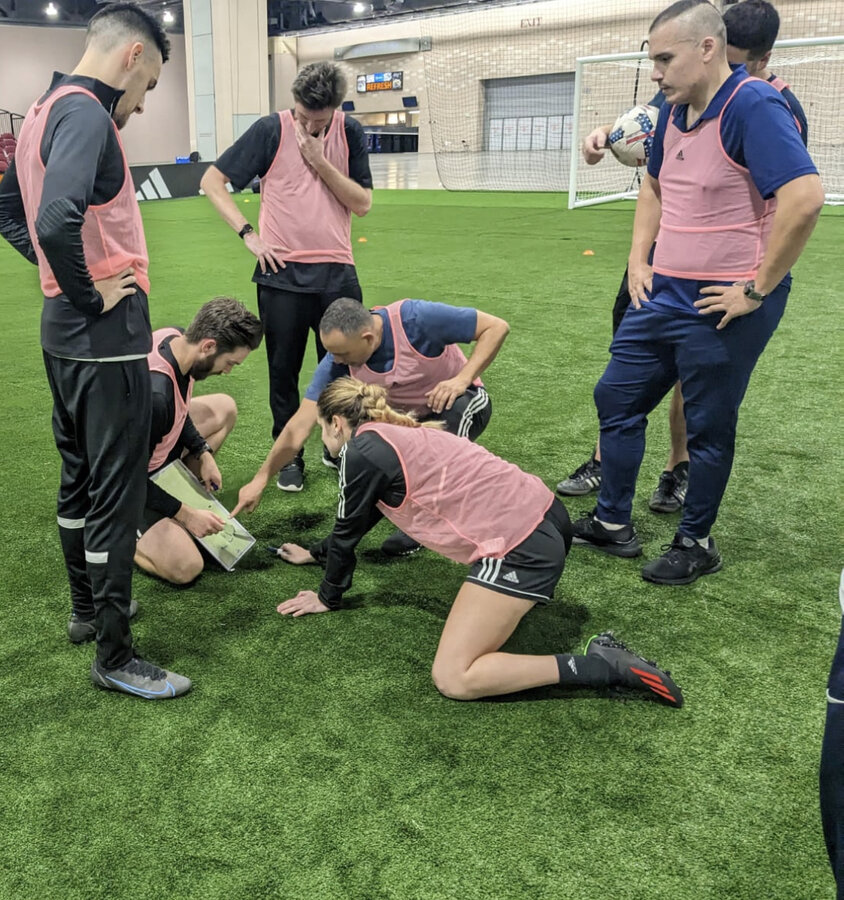
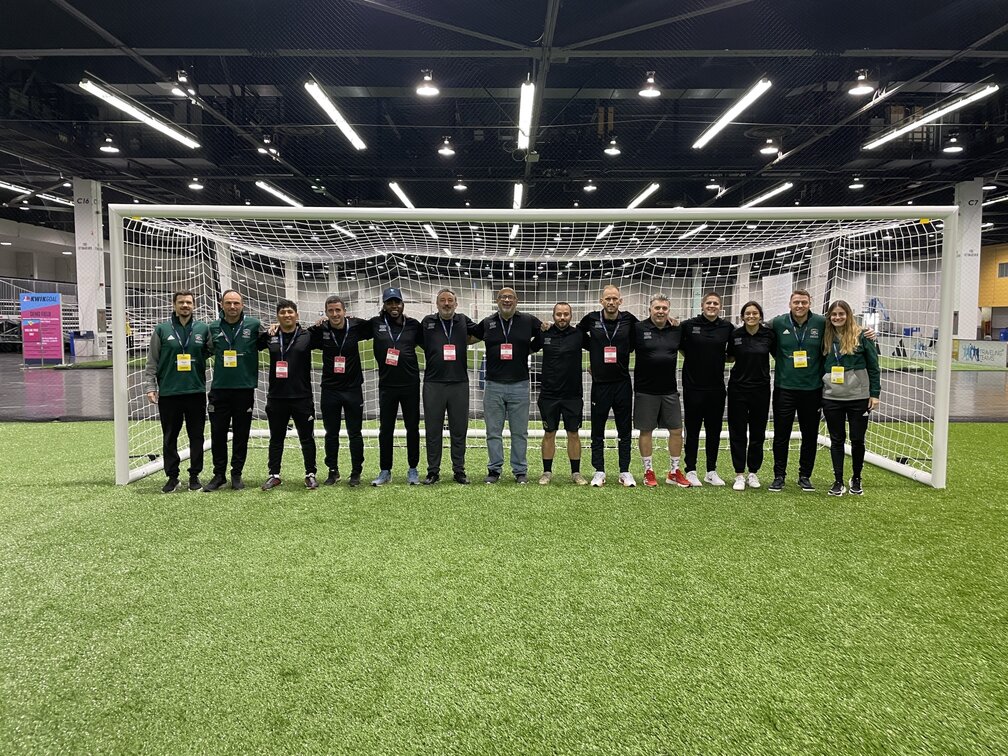
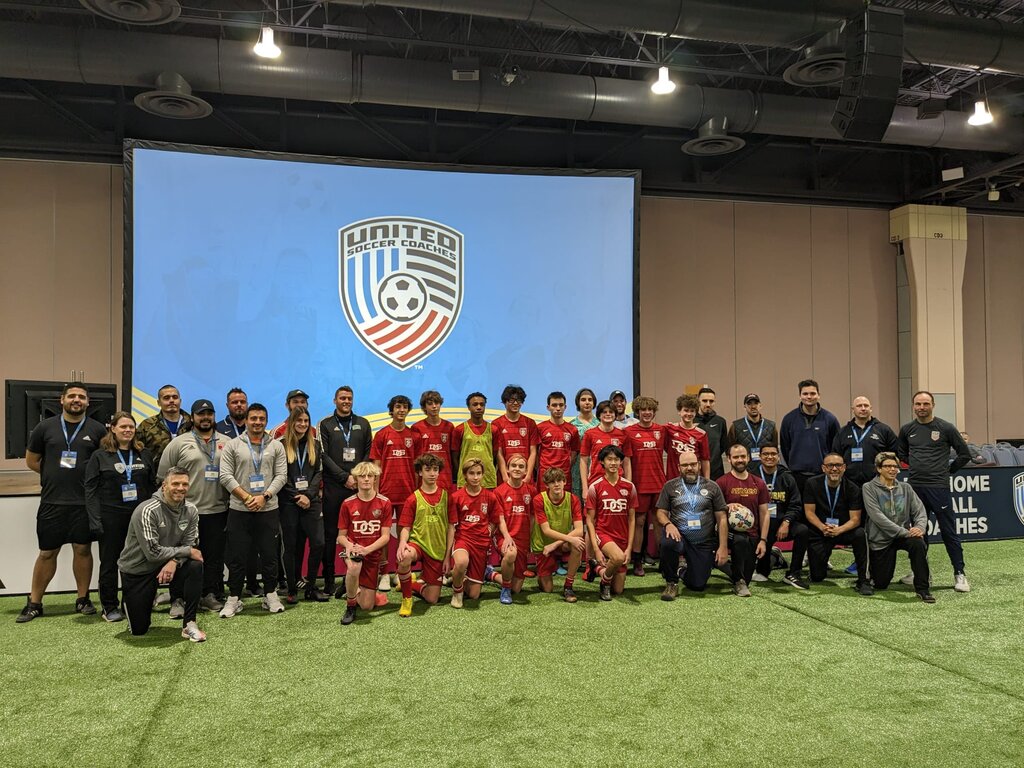
Today, Ohio University's fully online Soccer Coaching master's program combines academic coursework with applied learning designed for working coaches. Through a partnership with United Soccer Coaches Association, the nation's largest soccer coaches organization, students attend annual coaching conventions, learn from experienced professionals and build networks with coaches from across the country.
"We've built partnerships with United Soccer Coaches and recruit students from across the country," Allanson said. "They get a great experience coaching, but also learning from other coaches as well."
One aspect of the program Allanson finds especially rewarding is that nearly every student is actively coaching while completing the degree.
"We have people who've been coaching for 25 years alongside people who are just getting started," he said. "When we introduce a concept in class, they can go out the next day and try it with their own teams."
Students then return to class to discuss what worked, what didn't and receive feedback from faculty and classmates. They also record themselves coaching so instructors can evaluate their communication and leadership in real-world settings.
"It's real-time application of theory," Allanson said. "They're constantly trying new ideas, reflecting on them and getting feedback. It's not just talking about coaching; we actually get to see them coach and help them improve."
While soccer has long been the world's most popular sport, Allanson believes the United States is entering a period of opportunity.
According to Allanson, unlike many countries where soccer dominates the sporting landscape, American soccer continues to compete with football, basketball and baseball for attention. But recent developments, including the arrival of international stars in Major League Soccer, the success of clubs like Columbus Crew and FC Cincinnati and continued investment in youth soccer, suggest the sport is continuing to grow.
He also points to the rapid growth of the women's game as another sign of the sport's expanding reach, noting that increased investment and continued success by the U.S. Women's National Team have elevated opportunities for players and coaches alike.
What does a coach really do?
As participation grows, Allanson believes developing knowledgeable coaches will be just as important as developing talented players.
"The biggest thing across all levels, from novice to professional, is how you communicate, lead and manage your players," Allanson said. "You have to communicate effectively so your players buy into what you're trying to do while also understanding their individual needs and adapting your approach."
For Stephen Harvey, professor of coaching education at Ohio University, that broader understanding of a coach’s role is integral for people to understand the success of a team and players.
“The biggest misconception is that coaching is mainly about giving instructions. At the highest level, coaching is really about helping athletes make better decisions, managing people and creating environments where performance can thrive.”
While the tactical demands vary depending on the age and skill level of the athletes, Allanson said the underlying coaching principles remain remarkably consistent.
"No matter what level you're coaching, you're taking the content we're delivering and applying it to the players you're working with," he said. "The communication and leadership strategies are very similar. What changes is the tactical knowledge and the level of detail."
For younger players, coaches may simplify concepts and focus on foundational skills. At the elite level, those same ideas become significantly more detailed.
"If you're working with elite players, you might be talking about building out from the goalkeeper, positional relationships and where the pivot needs to be," Allanson said. "The detail changes, but it's really about how you communicate those ideas effectively."
To many fans, coaching may look like choosing a lineup, making substitutions and shouting instructions from the sideline. However, Harvey said the reality is far more complex.
A coach stands on the sideline while assistants relay information that may already be outdated. Every possession presents new variables and decisions. Should the team stick with the original game plan or adjust? Is a tactical problem temporary or the beginning of a larger shift in momentum? Is it time to make a substitution, or trust the players to solve the problem themselves?
According to Harvey, these are the moments where championships and careers can be shaped.
He has reflected on elite matches, including UEFA Champions League finals decided by penalty kicks, noting that even the decisions fans consider obvious rarely feel obvious in real time. Looking back, he said there were players he would not have selected for penalty kicks despite hindsight proving just how unpredictable those moments can be.
At the World Cup, those decisions become even more challenging.
Harvey explained that international tournaments compress preparation into only a few days, unlike club competitions that allow months of planning. National team coaches inherit talented players from clubs around the world and must quickly build chemistry, prepare for opponents and create a shared identity.
“The World Cup showcases coaching under extreme pressure,” he added. “Coaches can learn a great deal about leadership, decision-making, communication and building team cohesion in a short time.”
The science behind coaching
Those high-pressure moments are the focus of Harvey's research.
For years, he has studied how coaches make decisions during both training and competition, examining not only the choices they make but the thought processes behind them. Harvey has collaborated on exploring coach communication during matches, finding that decision-making is rarely the work of one individual. Instead, it is often shared among coaching staffs, influenced by emotion and negotiated in real time.
According to Harvey, some coaching decisions are planned well before the game, including tactical systems, set-piece routines and substitution strategies, while others emerge unexpectedly, forcing coaches to react with incomplete information and limited time.
“Elite coaches rely on experience, preparation and pattern recognition. What looks like instinct is often the rapid application of years of knowledge and past experiences to a familiar situation,” he explained. “Preparation comes first. Instinct is usually what preparation looks like when it has been developed through years of experience. The best coaches prepare extensively and then adapt when unexpected situations arise.”
That experience allows coaches to recognize subtle changes long before they become obvious to everyone else.
“Great coaches notice patterns before they become obvious,” Harvey said. “They recognize small changes in momentum, behavior, or performance that may eventually influence the outcome of a game.”
Teaching coaches to think under pressure
These ideas are just some of the teachings integrated into OHIO's coaching curriculum, where students study cognitive decision-making models, communication under pressure, coach-athlete interactions and leadership in high-performance environments.
“Effective coaching helps athletes learn, adapt and make decisions under pressure,” Harvey said. “The best methods create realistic learning experiences that mirror the demands of competition.”
Coaches must also learn when to act and when to let the game unfold.
“Coaches tend to intervene when something important crosses a threshold of concern, whether that’s a tactical problem, a loss of momentum, a drop in effort or an opportunity to exploit a weakness in the opposition. But effective coaching is also about recognizing when intervention can genuinely improve the situation and when it is better to step back and allow players to solve problems themselves. Sometimes the most effective coaching decision is not to intervene,” Harvey said.
The World Cup itself also becomes part of that learning process.
As the tournament unfolds, Allanson plans to use matches as case studies for his students, asking them to analyze coaching decisions, tactical adjustments and leadership styles before discussing how those lessons can be applied to their own teams.
"All of our students will be watching the World Cup because they're passionate about the sport," Allanson said. "What's interesting is that when a team has success on the world's biggest stage, coaches everywhere want to emulate what that team created."
He said World Cups have historically shaped coaching trends around the world.
"There was a time when everyone wanted to replicate the Brazilian style and creativity they played with," Allanson said. "More recently, we've seen the influence of the English Premier League with a more direct, physical style of play. Every four years, the successful teams help set the trends that coaches will study over the next World Cup cycle."
With the tournament expanding to 48 teams for the first time, Allanson expects an even wider range of tactical approaches.
"This is the biggest World Cup ever, and from a tactical standpoint there are so many different approaches on display," he said. "Coaches will be watching closely to see what's successful and thinking about how they can apply those ideas with their own teams."
Harvey will also be watching many of the same matches through the lens of coaching behavior.
"I will be watching how coaches use data and performance analysis, manage player wellbeing and recovery and balance careful preparation with the flexibility needed to adapt during matches," he said.


From the World Cup to local communities
Although the World Cup showcases the sport at its highest level, both Allanson and Harvey believe its greatest impact may be felt long after the final game.
For Allanson, the tournament is an opportunity to inspire more people to become involved in the game while creating momentum that strengthens coaching education, player development and the sport's future in the United States.
"When a team has success on the world's biggest stage, coaches everywhere want to emulate what that team created," Allanson said. "The World Cup inspires people to learn, whether they're players, coaches or fans, and that's how the game continues to grow."
As interest in soccer continues to rise, both educators say developing knowledgeable coaches will be just as important as developing talented athletes. Every national team player was once coached on a local field, and every great coach began learning how to communicate, teach and lead.
For Harvey, that's what makes coaching education so important.
"The best coaches are not simply reacting to events," Harvey said. "They are drawing on years of preparation and experience to make good decisions when the stakes are highest."
For more information on OHIO's Master of Soccer Coaching Education program, visit https://www.ohio.edu/education/recreation-sport-pedagogy-consumer-sciences/online-master-soccer-coaching.