Justice Labs shape, develop students’ skills and values
Through the Center for Law, Justice & Culture, pre-law students can participate in the International Justice Lab and Rural Justice Lab, gaining hands-on legal experience.
Emma Snyder-Lovera, BSC, BSJ ’26 | May 14, 2026
Share:
There are countless experiential learning opportunities for Ohio University Bobcats. The Center for Law, Justice & Culture (CLJC) recently developed two more: justice labs to teach students in real-world environments.
The International Justice Lab and Rural Justice Lab offer OHIO students real legal experience. In these labs, students do tangible work that shifts and develops their idea of justice, spanning both global human rights work and local access-to-justice issues.
“The labs matter because they bridge theory and practice in ways that are both rigorous and thoughtful,” Larry Hayman, director of legal engagement and pre-law programs in the CLJC, said. “They prepare students to be able to engage in complex justice issues with humility, skill and accountability while delivering real value to the communities that they serve beyond the university.”
Global stories at the forefront
The International Justice Lab began in the fall of 2025 as a partnership between the CLJC, David Crane, BGS '72, MA '73, and the Global Accountability Network (GAN), which he founded. The GAN is a non-profit organization working to bring justice to global communities affected by atrocity crimes. In some instances, the work of the GAN projects has garnered international attention. This shows the widespread effect of the work being done by OHIO students in the International Justice Lab. Crane said students feel the impact of the work they do in the lab every day.
“It's not just academic,” Crane said. “They're actually doing something directly in seeking justice for victims of atrocities around the world. Everybody is doing something very specifically to advance justice for victims of atrocity. All the students know that. We tell them that. We show them that.”
This collaboration with the GAN comes on the heels of the CLJC's established global justice learning experiences, such as the study abroad programs in Northern Ireland and South Africa .
“The International Justice Lab emerged sort of organically out of longstanding commitments that CLJC has had to global justice,” Hayman said. “The International Justice Lab gives students, especially those students who have done those programs, an opportunity to engage in further study and further experiential learning without necessarily having to leave Athens.”
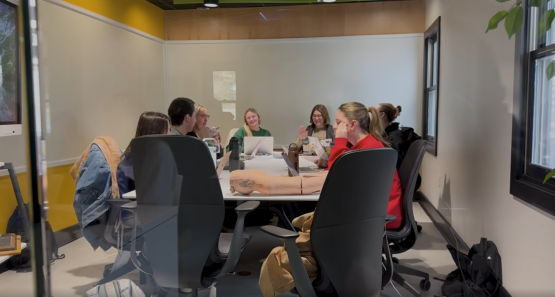
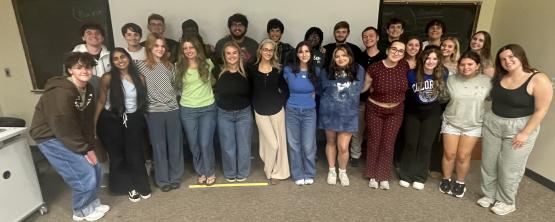
Students began the fall 2025 semester with a seven-week course taught by Crane, advising them about international law and human rights violations. They were then split into four groups working on different accountability projects: the Pacific Rim Accountability Project, the Syrian Accountability Project, the Ukrainian Accountability Project and the Caribbean Accountability Project. Students in the lab also work with faculty and students from law schools on these projects.
Loren Breslin, a junior majoring in sociology pre-law and psychology, participated in the trip to South Africa last year and wanted to continue her experiential learning in the International Justice Lab. She is currently working on the Syrian Accountability Project, writing a book chapter about the Syrian conflict. She said the lab is important for keeping the stories of global atrocities at the forefront of people’s minds.
“It takes people like us students … everybody else who's participating in this project, to do the research so that way, these atrocities don't go down as a blip in the radar,” Breslin said. “They are important. People were hurt greatly, and their stories deserve to be told.”
Sydney Roseberry, a senior majoring in environmental pre-law, is part of the Pacific Rim cohort. She said the International Justice Lab has begun to shape her future.
“I was very unfamiliar with international law, international human rights law and international human rights in general before participating in the International Justice Lab,” Roseberry said, “After that experience, that is my main interest as of now. It has shaped who I want to be when I'm older, and not only what career aspirations I want to work towards, but the values that I want to keep while pursuing those career aspirations.”
Justice in a legal desert
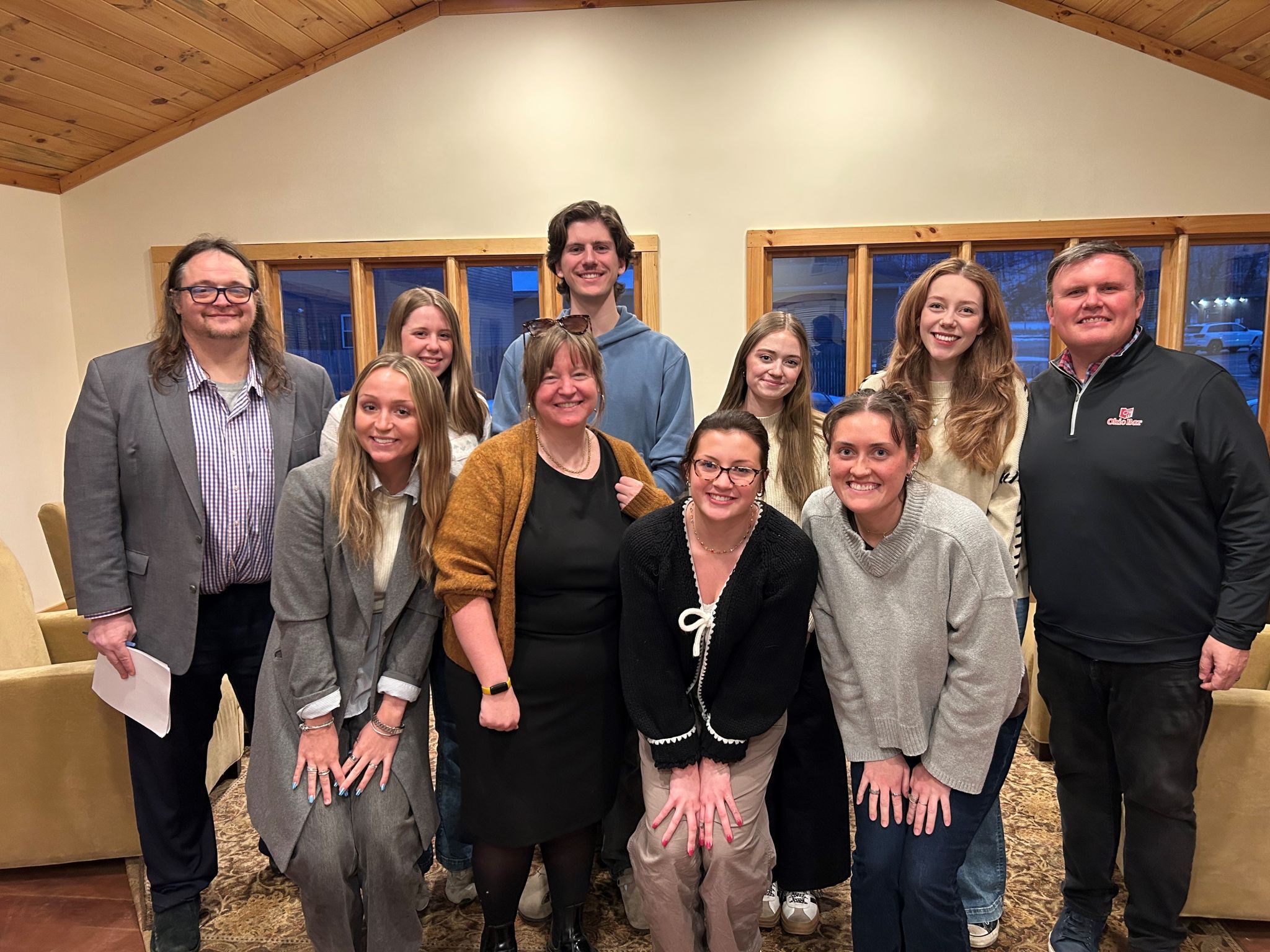
Roseberry and Breslin are also participants in the Rural Justice Lab, which began in January 2026 as a partnership with CLJC, Legal Aid of Southeast and Central Ohio (LASCO) and the Athens County Bar Association. OHIO students have been placed in internships with LASCO for over a decade, and the Rural Justice Lab continues this collaboration.
“Athens is … rural, Appalachia and an extreme legal desert, meaning there's less than one attorney per 700 people, which is crazy to think about,” Roseberry said.
Students in the Rural Justice Lab work with residents in Athens County who are below the 200% poverty level and are dealing with civil cases. Clients are given an intake form to determine their income level, number of assets, ongoing expenses and overall eligibility to receive LASCO’s legal help. Eligible clients do not have to pay for these legal services. There are volunteer lawyers who offer their time to help clients and work with students.
“Even though it’s kind of a grassroots level and it’s something operating on a local scale, it definitely contributes to the national lawyer shortage, which is extremely important,” Roseberry said. “Even if we’re only helping about 70 people, which is still a great amount, the word of mouth and the inspiration these lawyers provide us students travels beyond these clinics.”
The work Breslin and other students do in the Rural Justice Lab not only serves their own aspirations, but also the well-being of the greater community outside of OHIO.
“(Clients) come from all different places in society, and a lot of them come in distressed, emotional,” Breslin said. “It’s a very emotional thing, a lot of the justice concerns that they come with, but just being able to interact with them is my favorite part. I like to see somebody become less stressed … after they are given legal advice.”