
Spring 2026 Edition
Alumni & Friends Magazine
Deep Roots, New Growth
Ohio University students and faculty continue to make truly ground-breaking discoveries in their research.
Mary Reed, BSJ ’90, MA ’93 | April 28, 2026
Share:
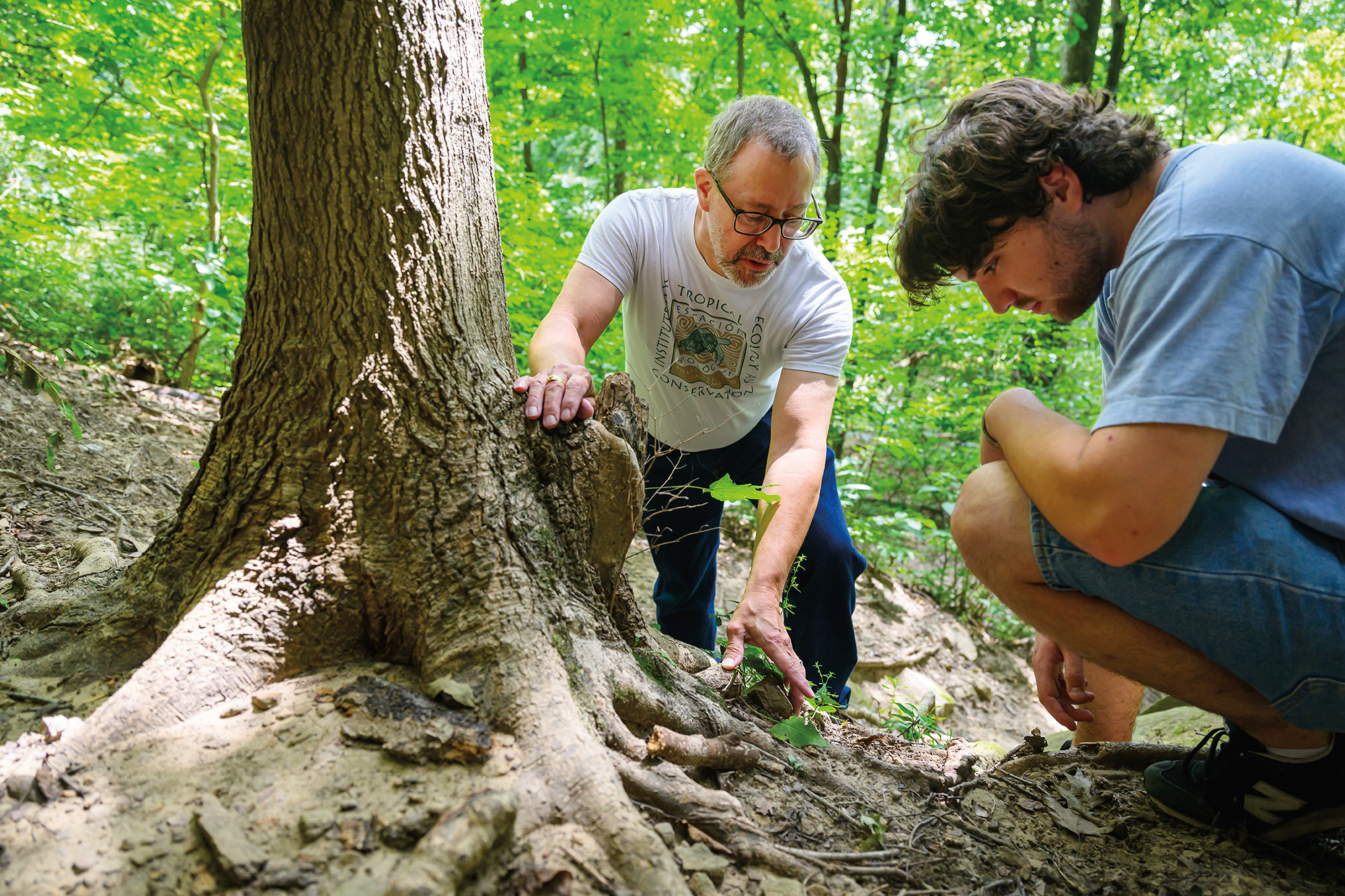
In summer 2025, Professor of Environmental and Plant Biology Harvey Ballard and his student research assistant, senior Collin Thacker, were conducting field research in Shenandoah National Park. After dinner at Big Meadows Lodge, where they were staying, they decided to botanize right outside.
“It was actually dusk; I had a little flashlight,” Ballard recalls. “We got on our hands and knees and people were kind of looking [at us], trying to figure out what we were doing.” It turns out, what the two were doing was finding a violet species that had not yet been described to science—one that grows in a range smaller than the size of Ohio University’s Athens campus.
It was one of four new species they identified during their six-week research expedition. They verified their findings by comparing the size, leaf shape, seed patterns and other factors to known species. Ballard created a “common garden” for violets on campus to make sure the different characteristics weren’t simply a response to environmental factors, and he and Thacker confirmed that the species were not already collected in any herbarium, where dried plants are systematically arranged and identified.
Finally, for a species to be officially described to science, the information must appear in an academic journal. Ballard and Thacker described their four new violet species to science from that 2025 research. As the discoverers of the species, they get to select their names. The pair agreed on the name of the violet found near the lodge in Shenandoah National Park: Viola shenandoah.
Ballard estimates there are still 21 violet species in North America that he has yet to formally describe to science. While a few species of one type of flower may seem like a small part of the global ecosystem, Ballard says the work is vital to large-scale conservation efforts.
“We need to understand the biological diversity,” Ballard says. “It’s really easy to grossly underestimate our impact on the planet if we don’t know how many [species] have gone extinct because of our actions.”
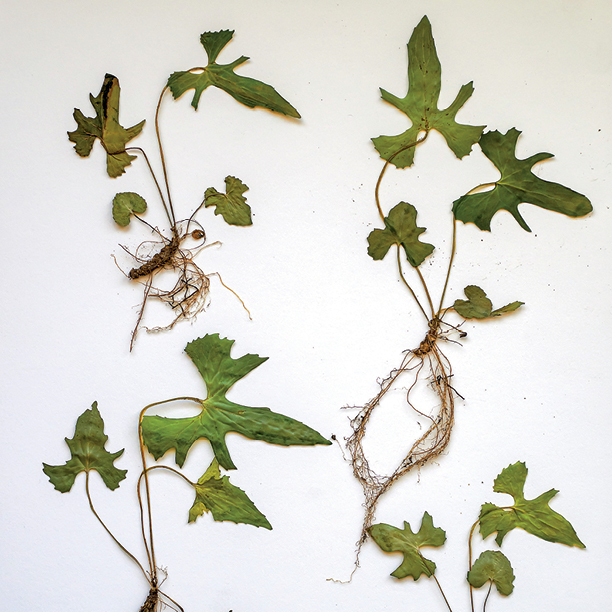
A dried specimen of Viola shenandoah, the species of violet discovered by Ballard and Thacker during their 2025 research. Photo by Ben Wirtz Siegel, BSVC ’02
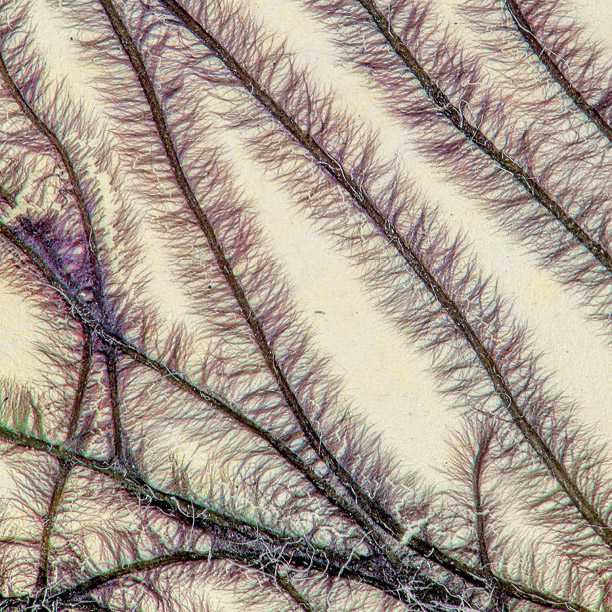
A photo of Thorea kokosinga-pueschelii, which was discovered by Professor Morgan Vis and her student, Emily Johnston, and is named after the Kokosing River in Ohio. Photo by Ben Wirtz Siegel, BSVC ’02
A pattern of discovery
Remarkably, Ballard is not the only faculty member in the College of Arts and Sciences’ Department of Environmental and Plant Biology—known as PBIO—to be the first to describe a new species.
Professor Morgan Vis is associate dean for research, faculty and graduate studies in the College of Arts and Sciences and a phycologist, or someone who studies algae. Vis specializes in freshwater red algae and, along with colleagues and students, she has described more than 30 red algae species to science.
But Vis has a distinction that goes a step further: She has had a species of algae named after her. When former students, who went on to become accomplished researchers themselves, described to science a red alga from the depths of Lake Huron in a scientific journal article, they dubbed it Anagnostidinema visiae.
“It really came as a surprise to me,” Vis says. The attribution for visiae in the paper reads, “named in honor of Morgan L. Vis, an American phycologist and mentor to two of the authors.”
And as if that were not enough, when Vis coauthored the definitive text “Freshwater Red Algea: Phylogeny, Taxonomy and Biogeography” with Orlando Necchi Jr., Necchi named an entire genus—Visia—after her.
“I was really honored that he did that. Again, it came as a surprise,” she says. “He realized that there were a whole bunch of species in this one genus that was actually two genera, so he then named that after me for basically all of the work that I’ve done on freshwater red algae.”
Like Ballard, much of Vis’ research is conducted outside of the lab and academic journals. As one example, Vis has contributed to the Appalachian Watershed Research Group at Ohio University’s Voinovich School of Leadership and Public Service. The group has studied the effects of certain interventions on local streams’ water quality. When a local watershed group sought to remediate acid mine drainage in Carbondale Creek in Athens County by “dosing” it with material that has a basic (versus acidic) pH value, Vis and her students were able to look for the presence of red algae—which thrives in higher-quality water—to see if the intervention had positive effects.
“Further down the stream, the water quality is much better,” Vis reports from that experiment, and she points to similar promising results from other experiments. “There’s been some really good success stories on how many miles of stream have been reclaimed in the state.”
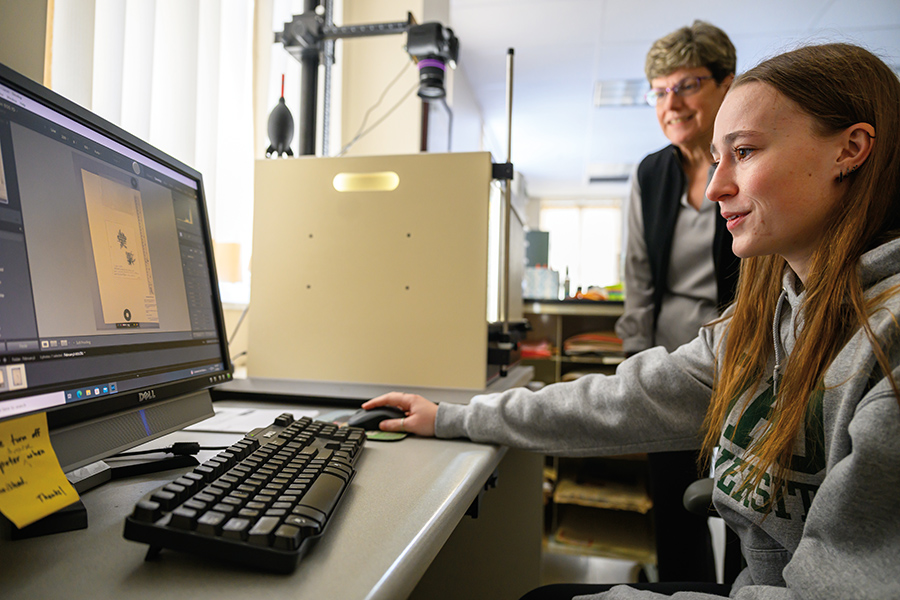
Professor Morgan Vis is a mentor to plant biology students conducting research at OHIO. Photo by Ben Wirtz Siegel, BSVC ’02
Planting the seeds of the next generation
Such faculty-student relationships are an embodiment of PBIO’s culture—rooted in mentorship, nourished by curiosity. And it hardly ends with these examples. Distinguished Professor Sarah Wyatt has sent six experiments to the International Space Station to study how plants perceive gravity. Remarkably, her students’ research has gone into space as well.
“I truly believe in engaging undergrads,” says Wyatt, who has won OHIO’s Presidential Teaching award more than once. She characterizes the ISS research as “fundamental biology—fundamental knowledge on how plants respond to environmental pressures.”
All PBIO students complete internships or research. Those who work on ISS-bound research with Wyatt get to accompany her to Kennedy Space Center in Florida to watch the launch of the experiment.
“There is nothing like seeing your research go up,” Wyatt says. “I go for every launch.”
Much of Wyatt’s research is funded by NASA; she looks elsewhere for funding to support launch trips and to take her students to conferences so they can see their competition and meet potential mentors.
“Being in the community of researchers gives them another step into that professional life,” she adds.
One floor down in Porter Hall from Wyatt, Associate Professor John Schenk researches the abundant variety in the 350,000 flowering plants known to science. There is much that science already knows, of course, but what’s known can also lead to surprising discovery.
Those roses you buy at the store? They only have five true petals. The rest of the “petals” are actually staminodes—sterile versions of the pollen-producing organ, or stamen. In the case of cultivated roses, this is a human selection to create a more full, showy flower.
But wildflowers produce staminodes without human intervention. Schenk and a team of undergraduate and graduate students traveled to Utah to study them in Mentzelia integra, a yellow perennial desert wildflower.
They conducted a “pair choice” experiment in which they removed staminodes on some of the flowers and left them intact on others, finding that pollinators were more attracted to the showier, staminode-laden flowers.
What’s more, the study also showed that having fewer pollen-producing stamens was compensated for by attracting more pollinators, mitigating the effects of evolution selecting for flowers with more staminodes and fewer stamens.
“The pollination of plants by insect visitors is crucial for maintaining plant biodiversity and ensuring food security,” Schenk says. “By studying the evolution and integration of traits associated with attracting pollinators, we have the potential to better understand concerns about a shrinking number of pollinators.”
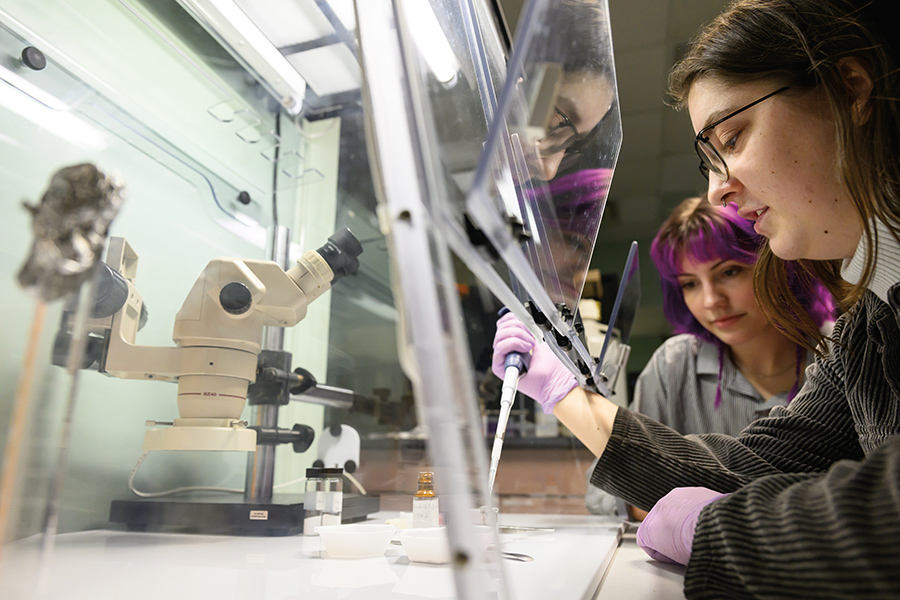
Undergraduate researchers Cat Gavin (back) and Lara Fogwell (front) designed the winning project for Student Spaceflight Experiment Program (SSEP) Mission 19, which was selected to fly aboard the International Space Station and will launch May 12 from Kennedy Space Center. Photo by Ben Wirtz Siegel, BSVC ’02
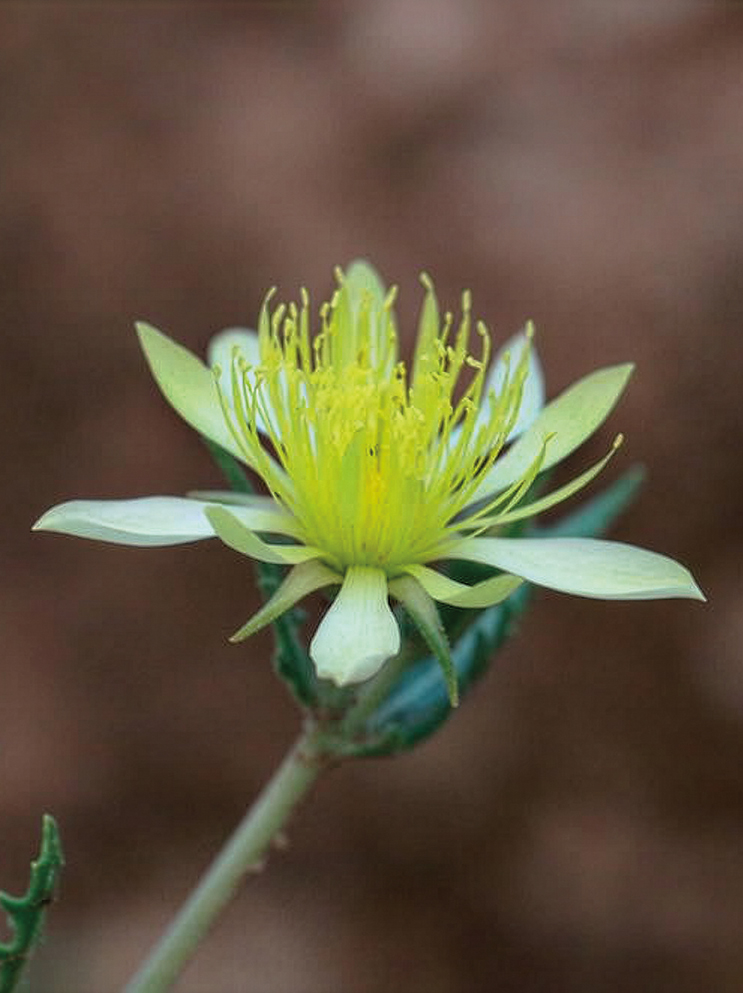
Mentzelia integra provides valuable insight about how plant pollinators can affect biodiversity and food security. Photo courtesy of John Schenk
Cultivating a stronger future
Professor Jared DeForest, chair of the Environmental and Plant Biology Department, thinks a lot about the future of the PBIO program—and, like his colleagues, he thinks about the future of Earth itself. As he puts it, he wants to “put the ‘E’ into ‘environmental and plant biology.’”
He and Associate Professor Rebecca Snell are tackling this goal in part through a longitudinal research project focused on soil quality. For the last 17 years, DeForest has been taking students to three forested sites within 50 miles of Athens to study how forests respond to soil nutrient changes, both natural and those induced by the researchers.
“The core question is how forest ecosystems respond to environmental stressors, particularly nutrient imbalance and soil chemistry change,” DeForest says. “That knowledge directly informs how foresters and land managers think about forest resilience, regeneration and adaptation under climate stress.”
Such projects are a perfect fit for the “Discover” pillar of OHIO’s Dynamic Strategy, which includes a goal to focus on energy and the environment. This goal aims to help achieve a low-carbon future to mitigate the economic, ecological and social impacts of global environmental change.
A new faculty position was created to support this goal: Assistant Professor Burcu Alptekin investigates the mechanisms by which plants sense, respond to and survive in stressful environments, with emphasis on important commodity crops like wheat and barley. Her lab’s goal is to engineer plants that can withstand the environmental extremes as Earth’s climate changes, and—like her colleague, Wyatt—to develop the biological foundations for growing plants in a potential space habitat.
To support all of this research, PBIO faculty secured $2.82 million in external funding between 2020 and 2024. For a department of its size, this represents remarkable research productivity.
In addition to space-based plant growth, these grants fuel research ranging from ecological modeling and wetland biodiversity to forest ecosystem changes. While the grants, including funds from the National Science Foundation, averaged $500,000 to $800,000 per investigator, smaller grants fuel research as well. And sometimes a very small grant or even a donation (see “Nurture the Next Generation,” article) can mean the difference between a student presenting their research to the scientific community at a conference or letting it languish in the dark.
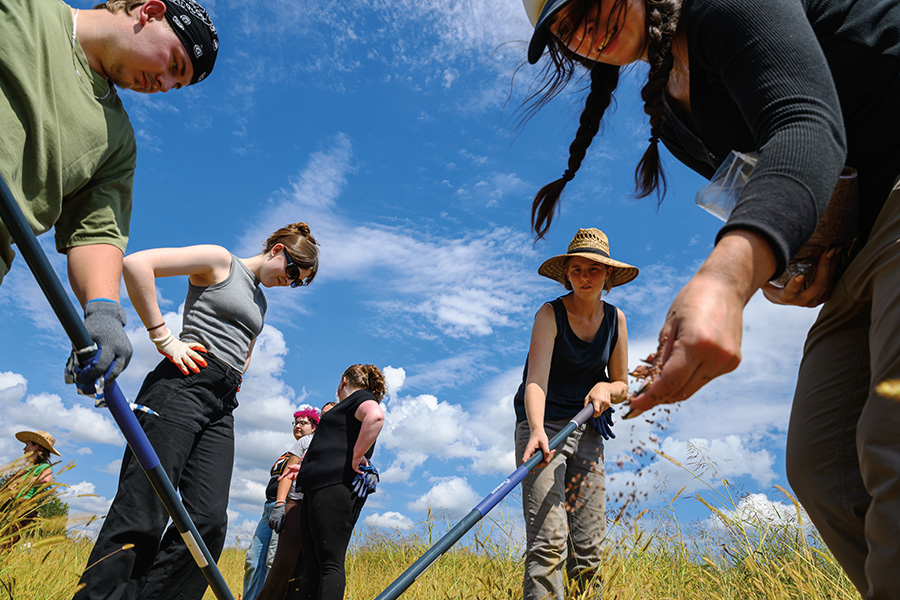
Fiber and Dye Garden. Photo by Ben Wirtz Siegel, BSVC '02
A living laboratory
Located in Appalachia—one of the most biodiverse regions in the temperate world—Ohio University is home to literal on-the-ground opportunities that support R1 research right alongside education and outreach. The Ridges Land Lab is home to a number of research projects, including the Fiber and Dye Garden (see the “From Field to Studio,” feature) and deer exclosures, which allow researchers to study how deer browsing inhibits biodiversity.
Across the Hocking River from the Ridges Land Lab, on and near the main campus, are the OHIO Student Farm, the Ohio University Greenhouse, the Forest Soil Ecology Lab and the Floyd Bartley Herbarium, where you can find a specimen of Viola shenandoah, Anagnostidinema visiae and other algae species Vis has described, and 55,000 other vascular plant specimens.
“It’s rare to have all of these integrated into teaching and research the way they are at OHIO,” DeForest says. “It’s a huge advantage for experiential learning and for embedding environmental research into coursework.”
DeForest considers PBIO’s classic botany research as the deep roots of the program, while highlighting where the department is branching out into environmentally focused, interdisciplinary collaboration.
“Rather than being ‘fully ripened,’ I’d describe PBIO as resilient and responsive,” he notes, “drawing on its history while actively evolving in response to scientific and societal needs.”
Nurture the Next Generation
Gifts to OHIO’s Environmental and Plant Biology department support hands-on research, fieldwork opportunities, student travel, laboratory training, and innovative experiential learning initiatives. Your gift helps ensure that every student can fully participate in the transformative academic and research experiences that define the department.
“If there’s one place where additional support would make an immediate and lasting difference, it’s ensuring that every PBIO undergraduate and graduate student who conducts research can present their work at a national scientific conference,” DeForest says. “The funding currently available for travel is a fraction of what it costs to fully immerse themselves in a conference.”
Want to show your support and become a champion of student success? Make your gift to to Environmental and Plant Biology today at ohio.edu/donate-pbio.
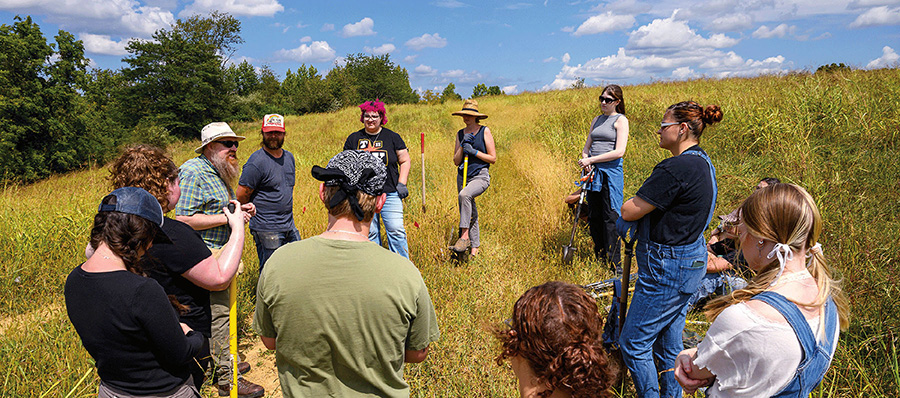
In the fall, Professor Jared DeForest, chair of the Environmental and Plant Biology Department, spoke to students alongside Assistant Professor of Printmaking Matthew Presutti, BFA ’05, at the Fiber and Dye Garden. Photo by Ben Wirtz Siegel, BSVC ’02
Field to Studio
Plant biology at OHIO doesn’t flourish in isolation—it thrives on cross-pollination with other departments and colleges. One of the newest examples is the Fiber and Dye Garden, planted at The Ridges Land Lab in fall 2025 by students and faculty in plant biology programs. Students in Chaddock + Morrow College of Fine Arts’ School of Art + Design will harvest the plants—hemp and flax for fiber and indigo for dye—to use in papermaking projects, which in turn will fuel research by plant biology students and faculty on how soil conditions affect dye and fiber qualities.
“This isn’t just for us; it’s knowledge we hope to share,” says Assistant Professor of Printmaking Matthew Presutti, BFA ’05, who launched the collaboration. “I want to make a paper that’s as good as any European paper, but made entirely from materials grown within a 30-mile radius.”