Urban geography students take field trip to central Ohio
Urban planning students visited a data center, suburban downtown, and gentrifying neighborhoods in central Ohio.
Katie Callahan, B.A. '28 | March 28, 2026
Share:
The following is a first-person account written by Katie Callahan, B.A. in HTC geography, '28, who traveled to Central Ohio on March 21 to meet with urban planning professionals as part of Dr. Yeong Kim's Urban Geography course.
On Saturday, March 21, 38 students in Dr. Yeong Kim’s Urban Geography classes met four urban planners in Central Ohio. The class visited the Google Data Center in Lancaster, the historic district in Dublin, and gentrifying neighborhoods in Columbus. We were excited to learn about urban planning from professionals in both public and private sectors and see examples of the concepts we have been discussing in class. To top it off, two of the planners, Kyle May, B.S. ’09, and Hannah Wynn, B.S. ’22, are Ohio University alumni, and showed us where our degrees might take us!
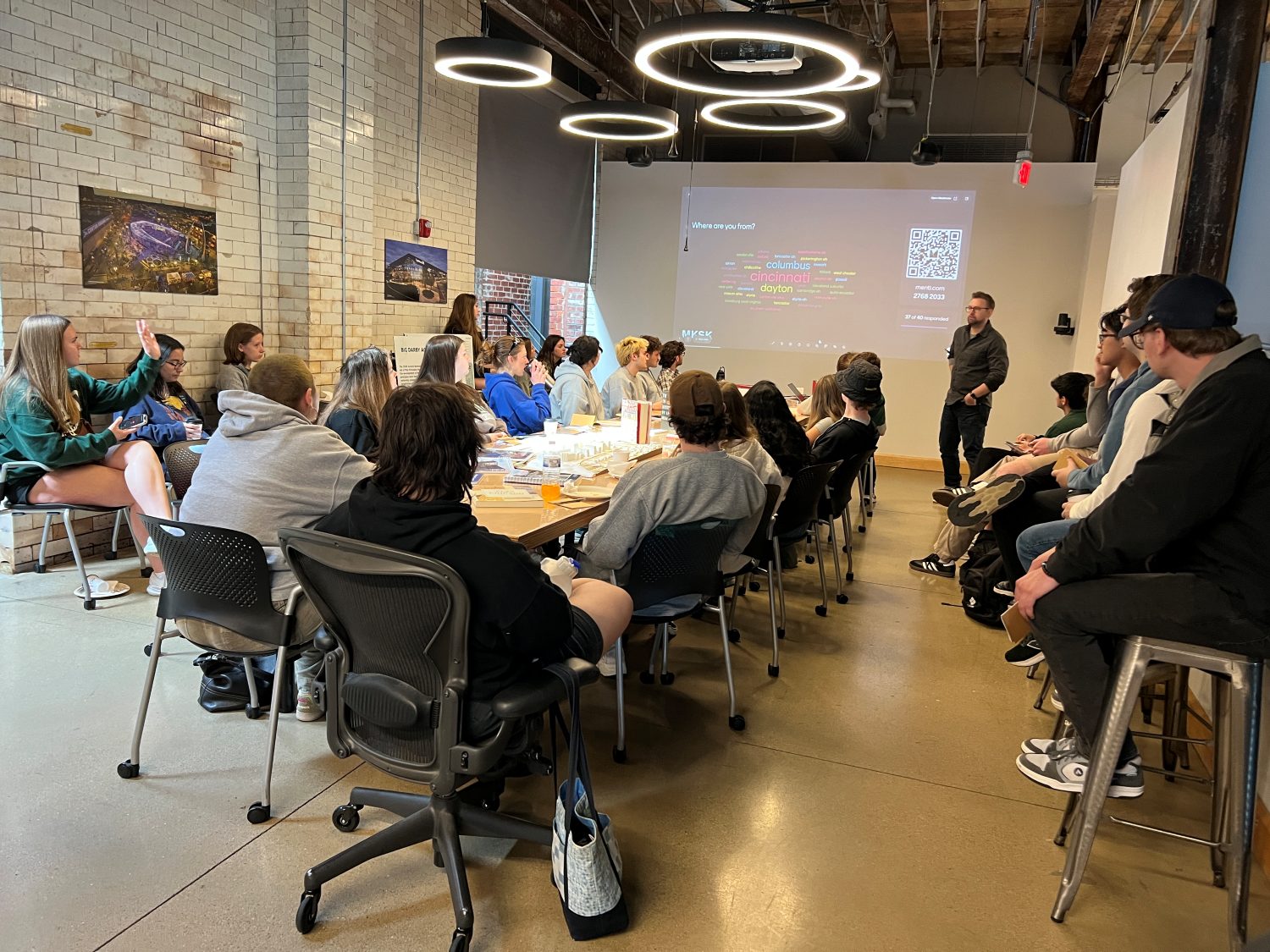
At the MKSK offices in downtown Columbus, Kyle May, B.S., '08), warmed up the discussion about urban planning.
Over coffee and pastries, May challenged us to think critically about the work urban planners do. Beyond designing streets and other public spaces, May said, planners have the unique opportunity to be at the center of diverse, and often conflicting, interests and perspectives on the “best uses” of space in a city. Conservation groups may want to place a park, for example, in a potential prime business location, while housing advocates may have identified a need for more affordable rentals in the same area. Urban planners are the people who mediate debates about the use of space, and–one compromise, design and decision at a time–shape the cities we know and love. When done well, urban planning helps ensure that people in all socioeconomic groups have more equitable access to urban resources like housing, good schools, parks, grocery stores and health services.
Creating these well-balanced cities isn’t easy, however. As May explained, cities are constantly going through transitions due to changing economic conditions, political decisions, citizen values and shifting populations. On the drive from Athens to Columbus, we witnessed one major transition in action: Google’s multi-billion-dollar new data center in Lancaster. Attracted by generous tax breaks, the Lancaster data center is one of many being constructed on former farmland in Central Ohio. Data centers indicate a transition in land use from agriculture to industry and signal shifts in the global and regional economy.
Gracie Vaughn, a junior in geography-urban planning and sustainability and a Lancaster native, expressed concern that needs of data centers may be prioritized over the health and well-being of residents and their surrounding environments. Data centers have high water and energy consumption, driving up utility costs for residents in the region, while providing few permanent jobs. AI technology and data centers are just one example of an unpredictable transition urban planners need to respond to.
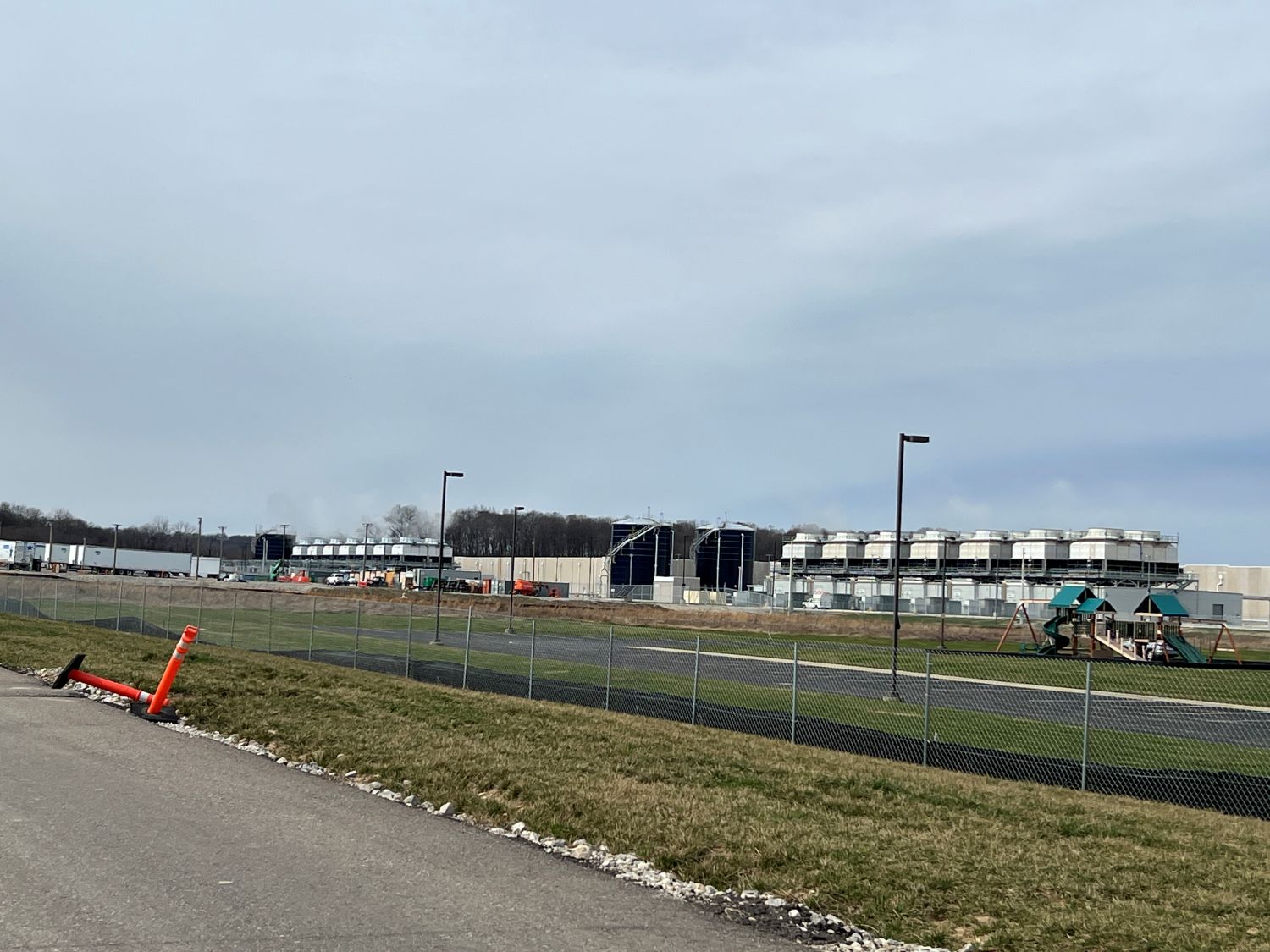
Google data center in Lancaster, OH.
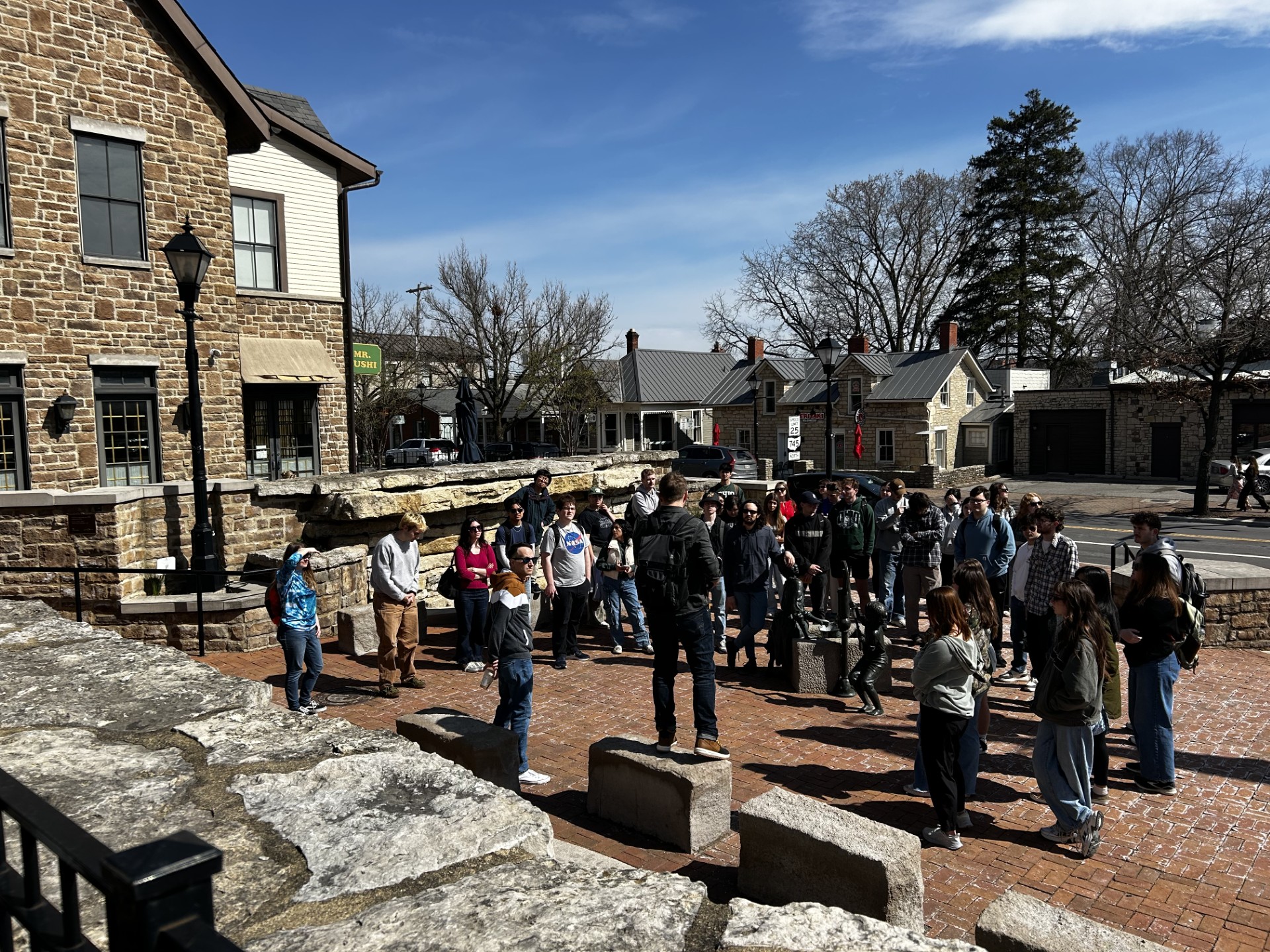
Urban planners don't just respond to transitions, however. An important part of a planner’s job is creating spaces suitable for specific businesses and industries. Dublin, Ohio recently decided to initiate a transition of its own. Thirteen miles from downtown Columbus, Dublin has been transitioning from a bedroom community to a self-sufficient suburban city with luxury apartments, high-end retail spaces, high-tech smart business parks, green parks, and a historical district, all connected by a gleaming new pedestrian bridge.
While the students admired Dublin’s mixed-use, walkable downtown, we had some questions as well. To help design more equitable cities, urban planners and geographers are taught to think critically about the use of space. "Who is this space designed for, and what groups can access it? Why are certain resources located in this space, and not in others?" are some of the questions we asked throughout the field trip.
J.M. Rayburn, a transportation and mobility planner in the city of Dublin, explained that most of the apartments are designed for empty nesters who want rooms for their kids to stay in when they come to visit.
Who is this space designed for, and what groups can access it? Why are certain resources located in this space, and not in others?
While Dublin seems to be thriving today, the students’ questions about affordability and urban sprawl showed that they are prepared to challenge the status quo and try to design cities that balance a variety of competing needs and priorities. Affordability is often a lesser concern in city plans, as city governments and planners are motivated to attract businesses, real estate investors, and tourists as well as high-income residents.
A major issue in urban planning is gentrification, which occurs when city governments and planning agencies redesign, update, or “improve” neighborhoods in a way that makes property and rent too expensive for long-term residents. In class, we have been looking at Franklinton, a previously redlined Columbus neighborhood, as a case study of gentrification, and we drove through the area. The area was underinvested for decades due to its location in a floodplain, but a new floodwall has prepared the area for a storm of development. While the park space may be an asset to Columbus as a whole, it is a form of gentrification, and long-time Franklinton residents are forced to move elsewhere, including to low-income neighborhoods further west.
Like May explained to start the full-day field trip, planners face a challenge to balance all needs and interests in the city, especially when some groups are louder than others. But in the end, planners are trying to make their cities better places for the long term. The students left Columbus with a better idea of the work that urban planners do day-to-day, as well the challenges and uncertainties they face while making decisions.
“The trip to Columbus made me think a lot more about what a career in planning could look like,” said Mollie Kawakami, a senior majoring in geography-urban planning and sustainability. “I am left thinking about how the average citizen gets to be involved in the planning process as it becomes a more private decision process.”
Kawakami wasn’t alone in this question, and it’s a good one to ask. Experiences like this field trip will remind the next generation of urban planners to include the voices of all citizens as they begin to write – or plan – the stories of cities.