Al-Majali leads innovative research, mentors next generation of OHIO engineers
Assistant Professor Yahya Al-Majali leads impactful, industry-focused research at Ohio University, demonstrating impressive productivity while securing major funding. He simultaneously empowers his students through providing them with foundational mentorship, hands-on learning and direct access to industry partners.
Alex Semancik | March 25, 2026
Share:
Mechanical engineers are designers and problem solvers. Using the powerful tools of math, science and technology, they touch our lives every day through creating machines, building manufacturing robots, designing energy systems and fabricating artificial organs.
At Ohio University, mechanical engineering students receive faculty mentorship and hands-on experience that helps them develop confidence to take initiative and lead projects. OHIO Assistant Professor Yahya Al-Majali, Ph.D., is a key figure in guiding students through this process of growth, and while doing so, he has managed to demonstrate impressive research productivity.
Al-Majali first came to Ohio University in 2015 to pursue graduate studies, earning his master’s degree and Ph.D. from the Department of Mechanical Engineering within the Russ College of Engineering and Technology. While earning his Ph.D., he received U.S. Department of Energy (DOE) funding for a project and became a full-time researcher with OHIO’s Institute for Sustainable Energy and the Environment (ISEE). He now serves as an assistant professor of mechanical engineering and continues to work with ISEE, innovating in a way that uniquely bridges mechanical engineering and sustainability.
Research powered by industry experience
A multidisciplinary perspective, combined with a deep understanding of how the industry operates, has helped Al-Majali thrive in pursuing research opportunities at Ohio University. Before coming to OHIO, Al-Majali worked as an aeronautical and structural design engineer—experience which he credits as making him a better researcher and teacher.
“I came from the industry, and that applied perspective continues to shape how I approach both research and teaching,” he said. “My philosophy is that impactful materials research must be designed for scalability and industry relevance from the beginning. That principle guides all of my work on carbon-enhanced composite materials. If you cannot convince an industry partner that your research addresses a real need, then you should ask whether you are solving the right problem.”
This research philosophy has led Al-Majali to continued success and innovation, giving him the insight to help solve the industry’s most critical problems. He has secured $8.9 million in external research funding for Ohio University as the principal investigator (PI) and has established strong collaborations with leading global companies, national laboratories, and academic institutions.
Image
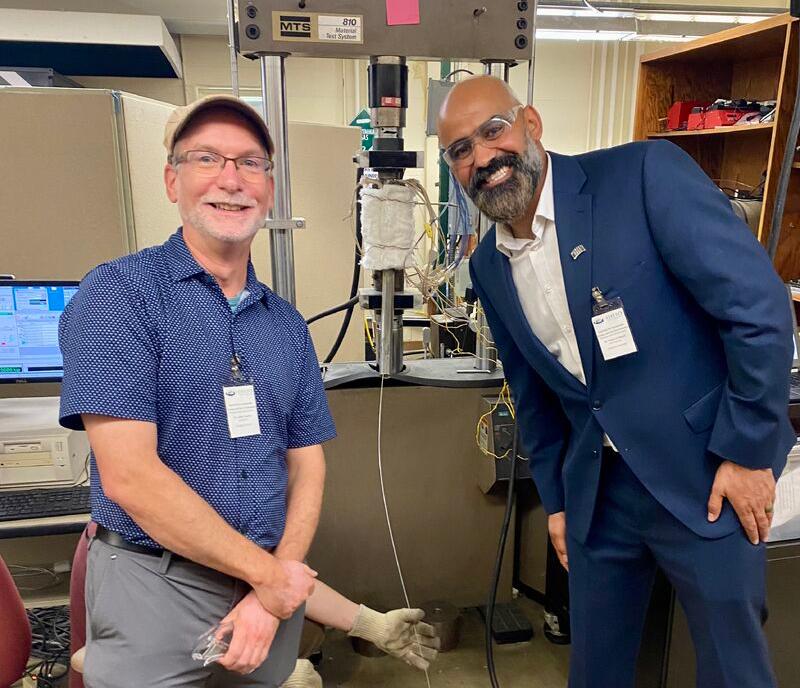
His latest research is supported by the U.S. Department of Energy’s Advanced Research Projects Agency-Energy (ARPA-E), where he is leading the development of next-generation power lines. As principal investigator, Al-Majali is overseeing more than $3 million in DOE funding to develop ultra-conductive carbon aluminum composite cables designed to strengthen power transmission and distribution infrastructure, meet growing energy demands and do so at a cost comparable to existing commercial conductors.
“We expect this technology to double power lines' capacity and improve transmission efficiency by more than 30%, while significantly reducing CO2 emissions. We are working to make aluminum and copper more conductive, and that creates opportunities far beyond power lines—wherever electricity is generated, transmitted or used.”
This is only his most recent project. Other external project awards from Al-Majali include:
- $2,000,000 from the U.S. DOE to develop carbon building materials from carbon ore.
- $1,250,000 from the U.S. DOE to develop ultra-conductive carbon metal composite wire for electric motors.
- $1,250,000 from the U.S. DOE to develop carbon-enhanced polymer composites that are compatible with commercially available 3D printers for producing structures used in tooling and building applications.
- $1,125,000 from the Ohio Department of Development (ODOD) to develop ultra-lightweight and ultra-conductive carbon aluminum composites for electric vehicles.
In addition to these awards, Dr. Al-Majali also serves as co-principal investigator on multiple externally funded projects focused on carbon-enhanced composite materials.
OHIO research infrastructure fuels success
Balancing several high-profile research projects, teaching courses and mentoring students is no easy feat, but Al-Majali has some tactics for making it possible. For him, planning is mandatory for staying productive and maintaining research efficiency.
“I spend a great deal of time planning my week, my day and even my hour so that I can stay focused and use my time effectively,” Al-Majali said with a chuckle. “I always think about increasing the signal-to-noise ratio. I try to reduce the noise, increase the signal and stay focused on what matters most.”
This is also one of many lessons that he passes on to his students.
“I always tell my students that planning is one of the most important parts of doing great work,” he said. “It may seem like time away from the lab, but it actually gives you focus and momentum. When you begin the day with a clear plan, you do not just work harder—you work smarter, move faster and make more meaningful progress.”
Image
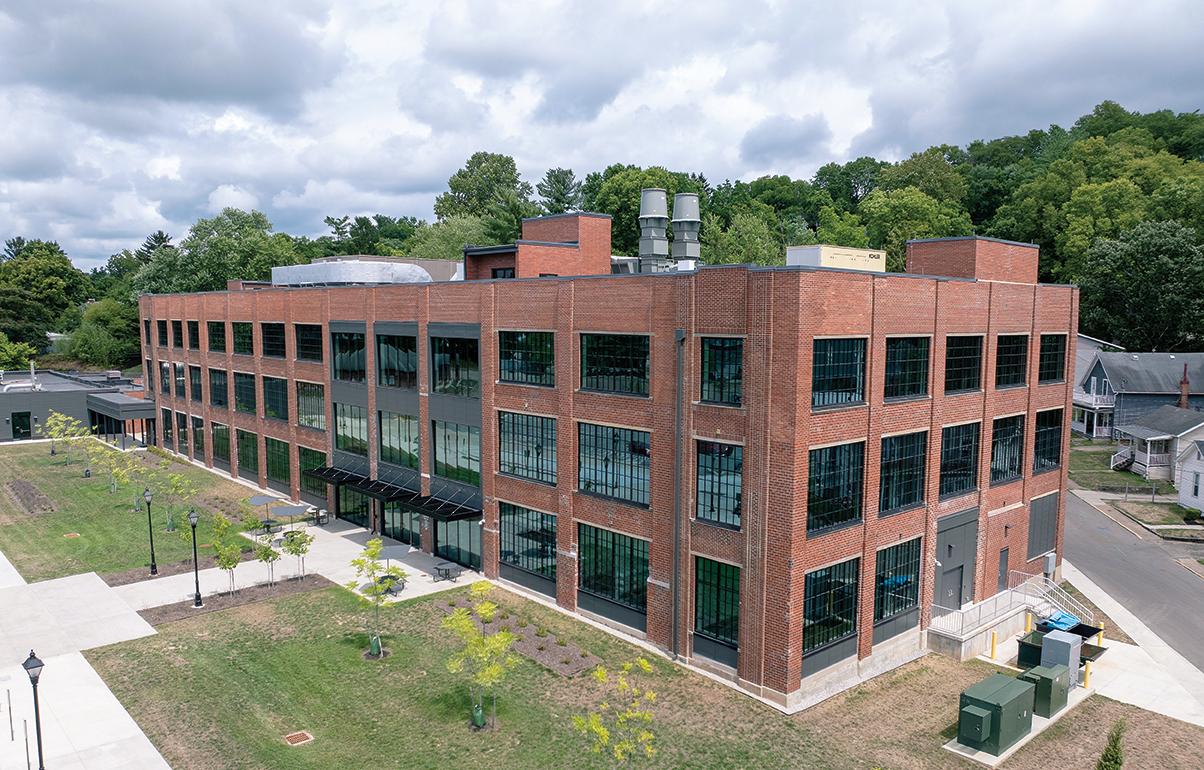
Beyond his own strong work ethic and organizational skills, Al-Majali gives a lot of credit to his department’s unwavering support and commitment to research. He feels that Ohio University leadership, from top to bottom, has given him phenomenal support to pursue those large opportunities—especially the Department of Mechanical Engineering and the Institute for Sustainable Energy and the Environment (ISEE), both led by fellow OHIO professor and researcher Jason Trembly, Ph.D.
“These projects are a heavy lift, but I have tremendous support,” said Al-Majali. “University leadership understands the importance of research and the value of sustaining Ohio University’s R1 status. When we pursue large opportunities, the infrastructure and institutional support are there, and that allows us to compete and succeed.”
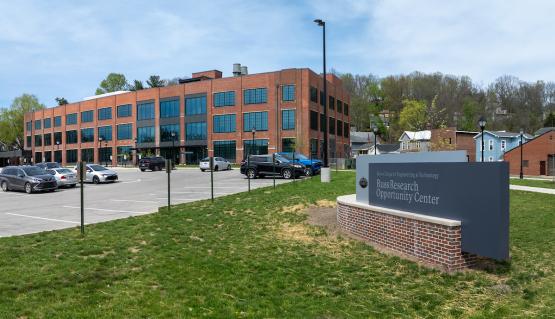
The recently constructed, 60,000 square-foot Russ Research Opportunity Center (RROC) has added to OHIO’s already robust research infrastructure and has provided researchers like Al-Majali with a noticeable advantage when pursuing grants and projects.
“The RROC has significantly expanded our ability to grow research and pursue larger funding opportunities at Ohio University,” Al-Majali said. “We have the facilities, the space and the equipment needed to partner with highly respected organizations and carry out ambitious projects at a high level.”
Empowering OHIO engineering students
Al-Majali has been able to make waves through his research, but he also relishes working with students. The assistant professor of mechanical engineering teaches a wide variety of courses from applied engineering math to advanced composite materials, to unmanned aerial systems, to heat transfer and beyond.
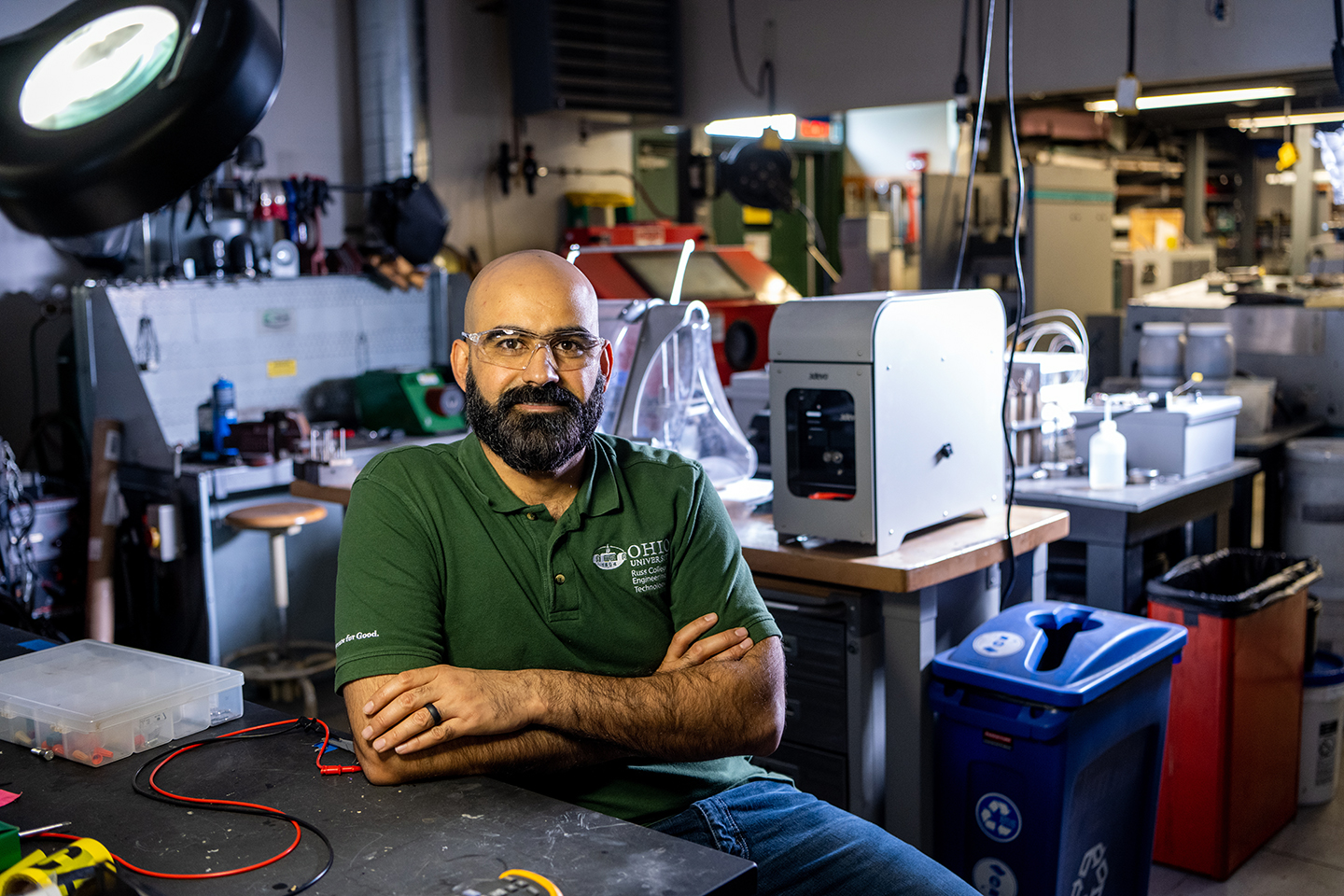
The thing that really gives Al-Majali joy is involving students directly in his research. He says his core focus is always on the students, so he has a large team of both graduate and undergraduate students working in his lab. Graduate students are empowered to lead project tasks, mentor their own teams of undergraduate researchers and communicate directly with industry partners. Through that experience, they grow into independent researchers while developing independent thinking, leadership, communication and project management skills that prepare them for success in both academia and industry.
“I do not put layers between myself and my students, and I do not put layers between my students and my professional contacts,” Al-Majali said. “That is intentional. I want my graduate students to develop as leaders. I want them to build confidence, take ownership and rise to that responsibility—and many of them have done an outstanding job leading teams of undergraduate students.”
Image
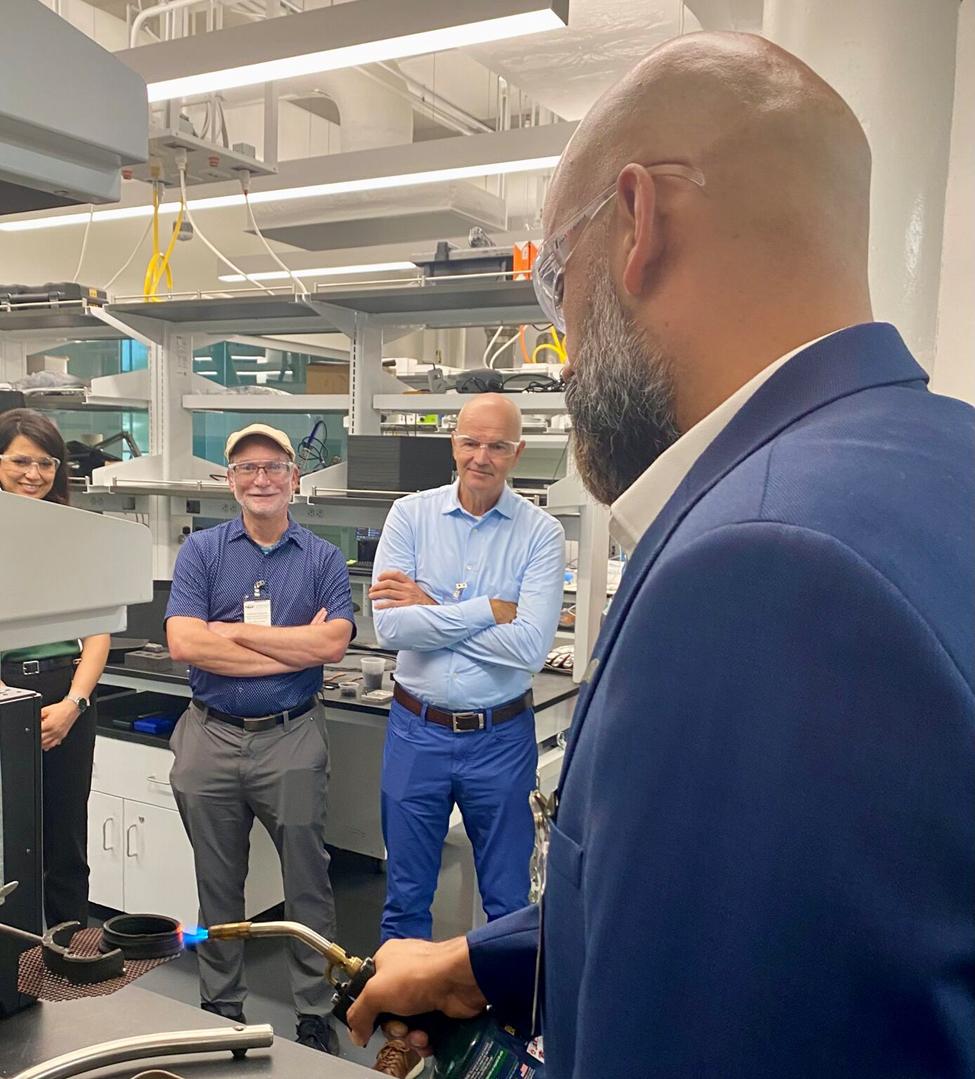
The extensive involvement of undergraduate students is something Al-Majali believes is unique to his lab. As a result, students at every level gain valuable hands-on experience working directly in their field before they even graduate.
“The research funding I bring in is not only used to support graduate students and research staff, but also to create meaningful experiential learning opportunities for undergraduate students,” said Al-Majali. “Our undergraduates work side-by-side with graduate students and ISEE staff in the lab. They have presented to industry partners and external sponsors, and they have received direct feedback from those groups. I do not stand in the middle of those interactions—I want them to engage directly, and they have done an exceptional job.”
As someone with a holistic background, Al-Majali goes out of his way to ensure his students are well rounded not only as engineers but as communicators. He says one of the most gratifying feelings is seeing students recognize their own growth as they progress through their education at OHIO.
Image
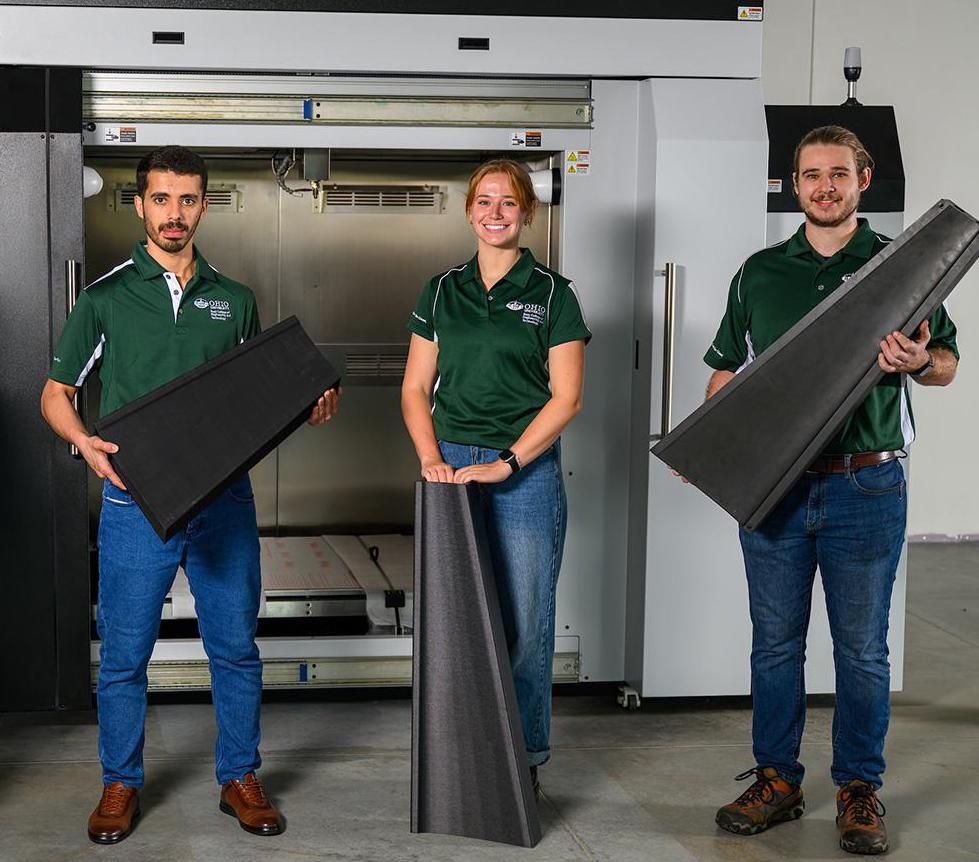
“I have had students tell me, ‘We can see ourselves learning and improving every week,’ and that is one of the most rewarding parts of my work,” he said. “That is why I place such a strong emphasis on communication skills. Strong communication builds trust, strengthens teamwork and ensures that important insights are not lost. In many ways, learning to communicate well is just as important as developing technical expertise.”
For Al-Majali, mentoring students goes beyond a duty as a professor. As a passionate Bobcat himself, he says he’s always trying to give back.
“Ohio University is where I found the support, mentorship and opportunities that helped shape who I am today,” he said. “That is why I feel such a strong responsibility to give back by creating those same opportunities for others. To me, that is what makes Ohio University truly special. It does not simply train you to become an engineer or prepare you for a career, it helps you grow as a person, believe in your potential and develop into someone who can create a lasting impact.”