Image
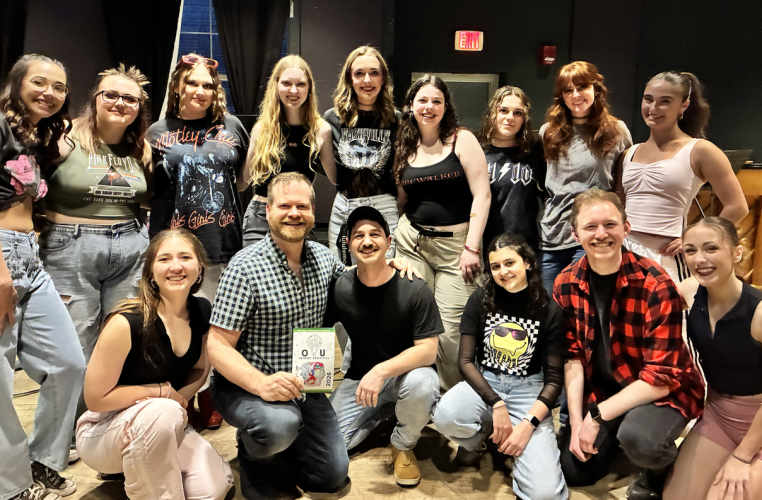
In less than 30 hours, Ohio University students did what many theater professionals spend years working toward: workshopping a brand-new jukebox musical as part of the OU Fringe Festival. Made possible through the experiential learning fund, the project immersed students in the fast-paced, collaborative process of developing original work for the stage.
Led by Associate Professor of Instruction for Dance and Musical Theater Anthony Alterio, the musical was originally created by him years ago, however, through this grant, he was able to take that work and design it as an educational experience that allows students directly inside the creative process and working with music and a story that is inspiring and familiar.
“The grant opened the door to get the musical off the page,” Alterio said. “Students learned what it’s like to create a new musical, something many professionals spend years doing. And even though projects like this typically never make it to full production, they are still a meaningful opportunity to allow students to learn an important process.”
Rehearsals began April 15, giving students just 29 hours to learn music, choreography and staging before presenting the workshop performances the weekend of April 25. The limited timeline mirrored real-world industry demands, requiring adaptability, collaboration and quick problem-solving.
“Students don’t always believe what we teach in the classroom until they experience it for themselves,” Alterio added. “This is the moment where everything we teach comes to life.”
Originally developed during COVID by Alterio and Virginia Raffaele, a former student of Alterio who is now the Production Associate at Cleveland Play House, the project grew out of a shared love of music, nostalgia and a desire to create a more inclusive story on stage. Their connection was sparked in part by their shared loved for Machine Gun Kelly, whose music became the backbone of the show.
Set to his music, the original jukebox musical follows nine characters, including one portrayed entirely as an inner monologue, as they navigate love, loss and chosen family. The work emphasizes a wide range of identities and lived experiences, intentionally expanding representation across gender, sexuality and disability.
“We noticed there was a lack of representation in queer identity in musical theater, and when there was representation, it often relied on stereotypes,” Alterio explained. “We wanted to create something where there was a full spectrum of identities, a rainbow of people if you will, where no single story was centered above the others.”
According to Alterio, all of the characters have gender-neutral names, allowing any actor to play them. The script also includes a name bank from which actors can choose their character’s name, emphasizing that each character’s journey is not tied to a specific identity.
The experience extended across disciplines, bringing together students from musical theater, acting and dance, along with faculty collaborators, guest artists and community musicians. The grant allowed Alterio to bring in Broadway actor and queer guest director J. Austin Eyer who is head of Musical Theater at the University of Texas Arlington and assemble a live rock band made of community musicians.
“Part of my pedagogy is that we shouldn’t be siloed,” Alterio said. “One of the most exciting parts of this project has been bringing students from different schools together. That’s the industry, they have to learn how to collaborate across disciplines.”
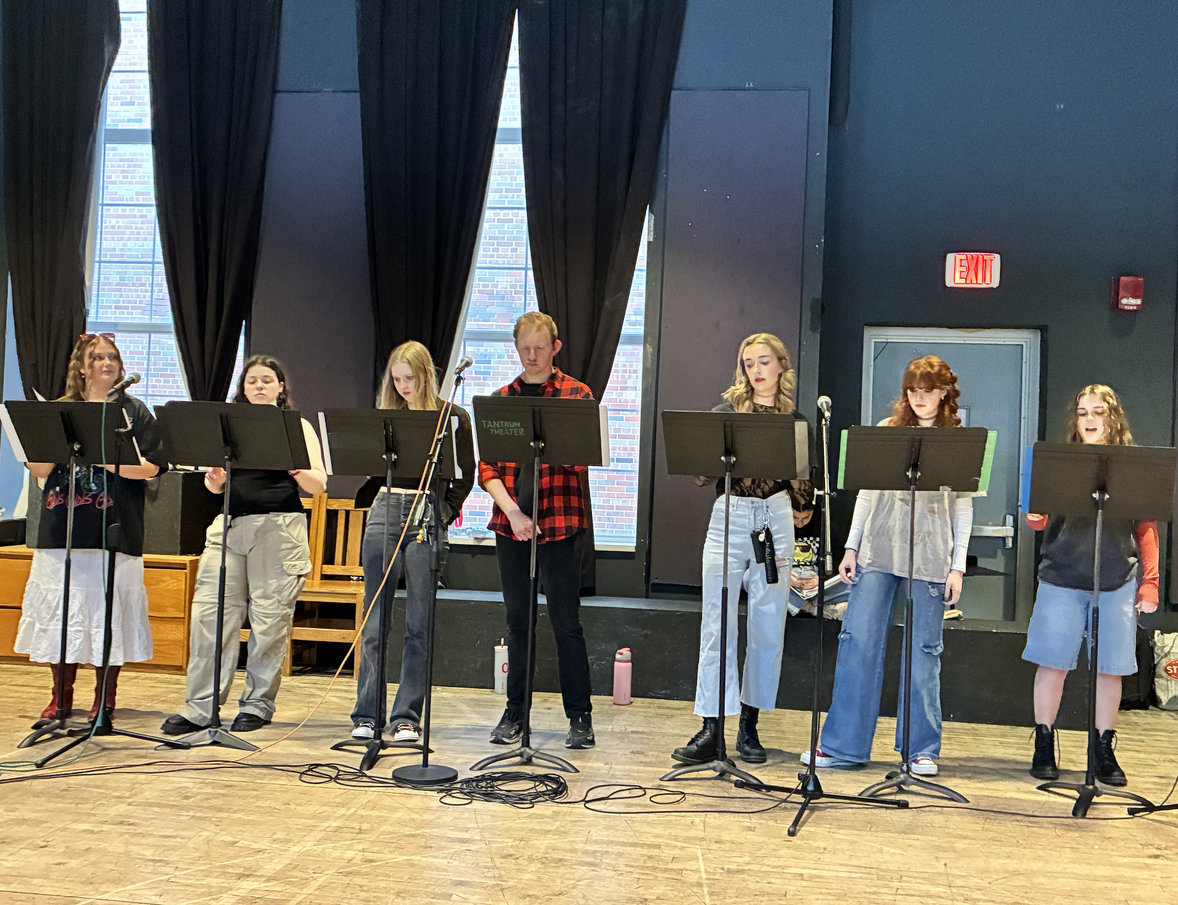
For dance major Chanelle Casteel, the fast-paced environment pushed her beyond her comfort zone.
“I feel as though it is important to workshop new work because not only does it challenge you to do something new, but it also provides a new feel and environment for the audience,” Casteel said.
She said the most difficult part was the speed of the process.
“This opportunity strengthened me as an individual and my skills as a dancer due to this being my first time learning four new dances in the total of 29 hours,” she said. “On top of that, it was a completely new experience because I had never been in any sort of musical before.”
Despite the intensity, Casteel said the experience built confidence she will carry forward.
“I hope to take this experience into my future for any audition opportunity and hope to take this experience into being a better performer by always staying positive even when learning new things becomes difficult,” Casteel added. “The experiences I have gathered during my time here have been remarkable. They do nothing but help me for the future.”
Regardless of discipline, this sentiment was shared across the students who participated.
“Workshopping new work is essential because it brings new perspectives to the production. Being able to hear the text and music off the page allows the creative team to make edits and changes that further enhance the story,” said Katie Spence, a rising second-year BFA Musical Theater major. “With only 29 hours of rehearsal, the constantly evolving material challenged me to stay adaptable and collaborative throughout the process. I grew more comfortable learning material in a fast-paced, evolving process. Also, I had never sung this style of music before, so it pushed me to become a more versatile performer."
Spence also noted how grateful she was for the opportunity to have learned from the guest director, Austin Eyer.
"Beyond the skills I gained, this experience gave me a hands-on understanding of how new work is developed in the industry," Spence added. "I am excited to continue seeking opportunities to be involved in the early stages of creating new shows in the future.”
Libby Shoemaker, a rising sophomore double majoring in Strategic Communication and Dance, emphasized the adaptability the process required.
“I think it is so important to workshop new work,” Shoemaker said. “From a performer’s perspective, it gives time and space to understand the intention behind the pieces being workshopped and the opportunity to collaborate with others, especially when working with a show that’s never been performed yet. The process of bringing work to life allows creators and performers to build adaptability. Pieces change; choreography may not work, but we find a way around it, making the work stronger overall. I know for myself, learning this work in a short amount of time has helped me grow stronger as a performer! As a new student here at OU, getting the chance to be in new workshops such as this one breaks the ice and allows me to build confidence as a performer and overall person."
For Alterio, the project represented a deeper evolution of experiential learning for students, moving from observing professional work to actively creating it.
“Through a mini experiential learning grant, we took students to the Ohio theater and took them to see the Broadway tour of ‘Company’ in 2024. Those experiences were great because some students had never seen a professional production like that before. It was super beneficial to see them connecting things they learn in class to what’s on stage professionally. This grant just added another level to allow us to be the ones to create the art together. I was so elated and felt honored to receive this grant because a lot of people apply and I was excited for students to be a part of something that didn’t exist that does now because of them.”