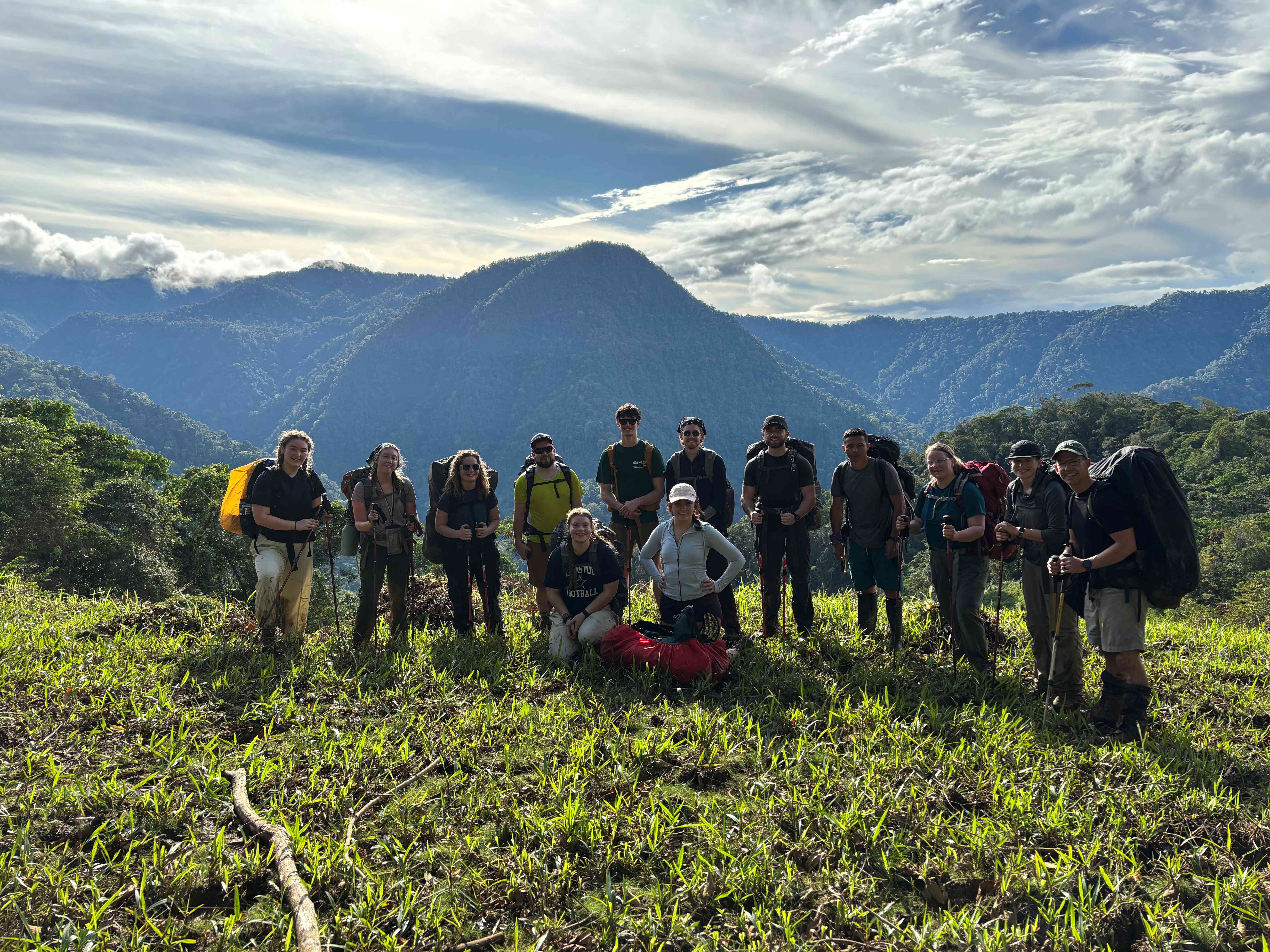
Learning to be 'comfortably uncomfortable': How pedagogy trips transform students
The most impactful lessons aren’t always learned in a lecture hall. Two hands-on study away programs in OHIO’s Patton College of Education teach leadership, empathy and a sense of self in the real-world classrooms of North Carolina and Costa Rica.
Henry Gorsuch, BSJ '26 | February 10, 2026
Share:
For many college students, the most impactful lessons are not learned in a classroom. They are learned while navigating a river, sharing a meal with a new family or huddled under a backpack in a thunderstorm, laughing at the ridiculousness of the situation.
This is the philosophy behind the intensive study away programs in OHIO’s Recreation, Sport Pedagogy and Consumer Sciences department. Two keystone trips, a 28-day outdoor leadership expedition and a 10-day ecotourism experience in Costa Rica, are designed to push students beyond their limits, fostering a kind of growth that can only come from real-world immersion.
The ultimate goal, according to Assistant Professor of Instruction Joe Crowley, is to teach students to develop a “sense of comfort being uncomfortable.”
“Many of us live a life where we experience inordinate amounts of comfort all day, every day,” Crowley says. “On this trip, students learn to kind of embrace those moments of discomfort, especially when we know they're being shared with other people.”
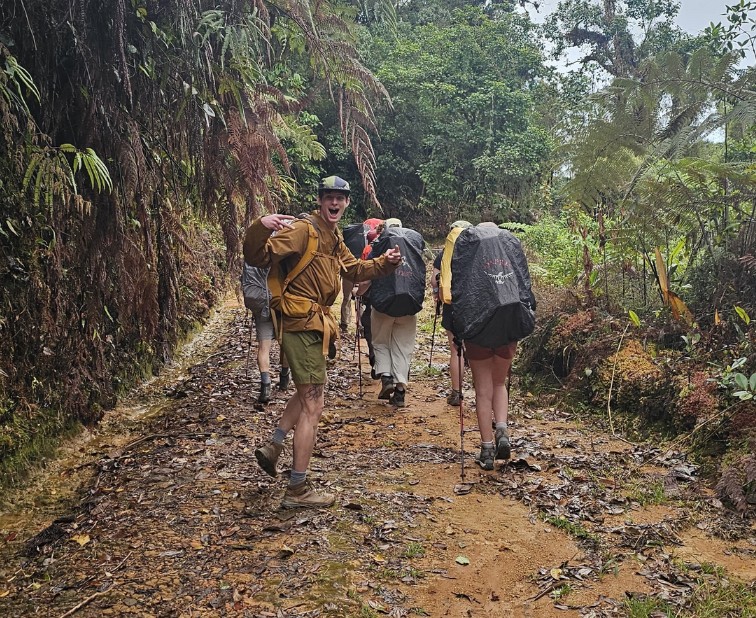
A group hikes along a trail in Costa Rica as part of their immersive study away experience.
Leadership in the backcountry
The 28-day outdoor leadership course is, in Crowley’s words, “one of the most authentic, leadership-focused opportunities that students could have a chance to engage in while they're here at Ohio University.”
The trip is structured in three distinct, week-long phases: backpacking in North Carolina’s Pisgah National Forest, canoeing on the James River in Virginia, and bikepacking along the Greenbrier River in West Virginia. The progression is designed to build systems, forcing students to repeatedly break down and rebuild their methods of travel.
“You think you've got it dialed in and after mile two, you're kind of like, ooh, this isn't quite as comfortable as I thought,” Crowley explains. “And so you're going to pack things different over day one, two or three and then you finally get it dialed and things are going smooth, just in time to change venues… and have to learn a new system.”
The format is intentionally student-driven. Students are broken into daily leadership teams of two to five, responsible for everything from wakeup times to delegating tasks. The instructors, Crowley says, serve as resources but take a backseat once the group is functioning at a high level. This structure creates opportunities for students to develop their personal leadership styles and problem-solving skills in the face of real challenges, like downed trees on a trail or a flat tire on a bike.
“No student leaves the trip the same student that they were,” Crowley states. “While they grow in their technical skills, it's really the sense of confidence and sense of self that you see grow within these students… these tangible outcomes that the students experience are 100% transferable to any other environment they're going to interact with.”
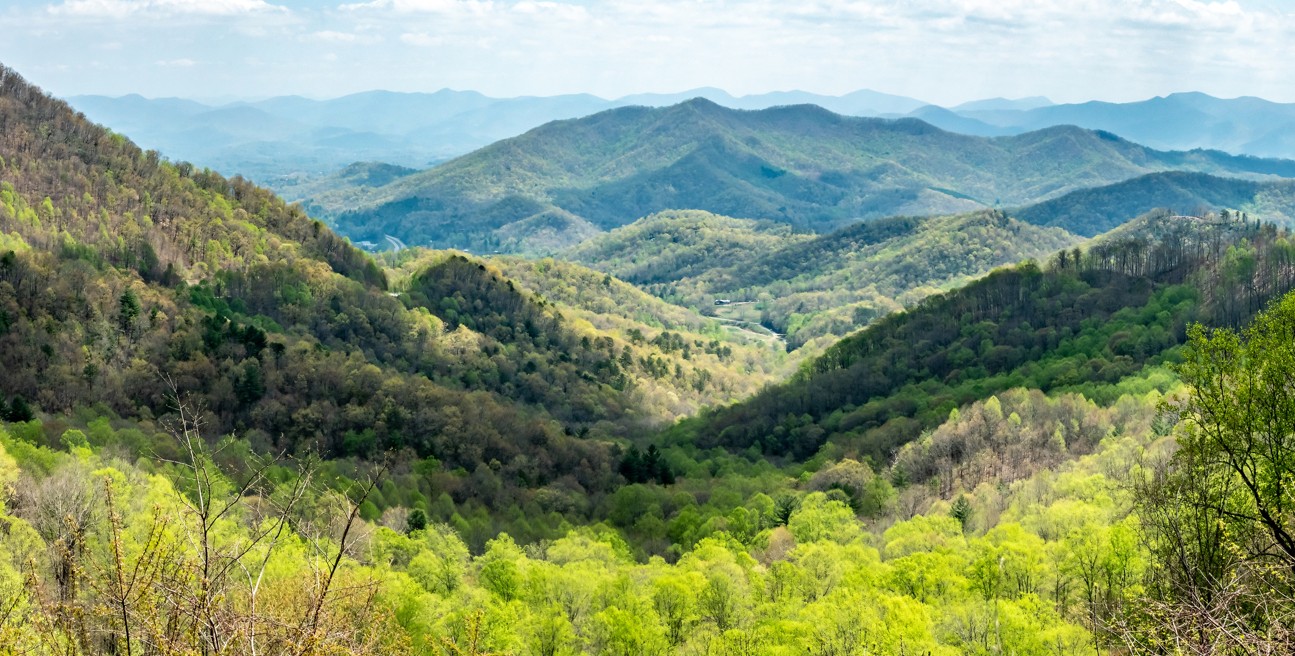
A scenic view of Pisgah National Forest, where students spend over a week learning backcountry skills.
Ecotourism in Costa Rica
While the domestic trip focuses on internal leadership, the 10-day trip to Costa Rica focuses on developing a global perspective through what Dr. Andy Szolosi, department chair and associate professor, calls "authentic learning."
“We talk a lot about different theories and different abstract concepts across all of our classes, and students can get the general idea,” Szolosi says. “But when they go out on a study away experience… a lot of these things that we talk about in the classroom really start to make meaningful sense to them.”
The program’s core focus is on the principles of sustainable ecotourism, a concept that becomes real when students are immersed in the local culture. The group works with Authentico Adventures, a tour provider run by local Costa Ricans. Students reside in a series of homestays with different members of the same extended family.
“That idea of like the local support that ecotourism can have for communities takes on a different level of meaning for the students,” Szolosi explains. “They invite us in as if we're one of the family members, but then we'll have real conversations like, ‘What are the advantages and disadvantages of ecotourism from your perspective, as a member of the host community?’”
The experience is profoundly immersive. Students might find themselves rappelling down a waterfall, learning to make sugar cane or even helping prepare dinner, a process that, for one group, involved chasing down a chicken in the yard.
“The students absolutely enjoyed that experience just from the perspective of understanding where food comes from, right?” Szolosi recalls. “It was also a cultural learning experience. It provided some really good humor and a nice memory for everybody.”
Ultimately, the goal is to create more informed global citizens.
“My goal is to help you become a more informed tourist, and then when we go on these trips, students really leave with that,” Szolosi says.
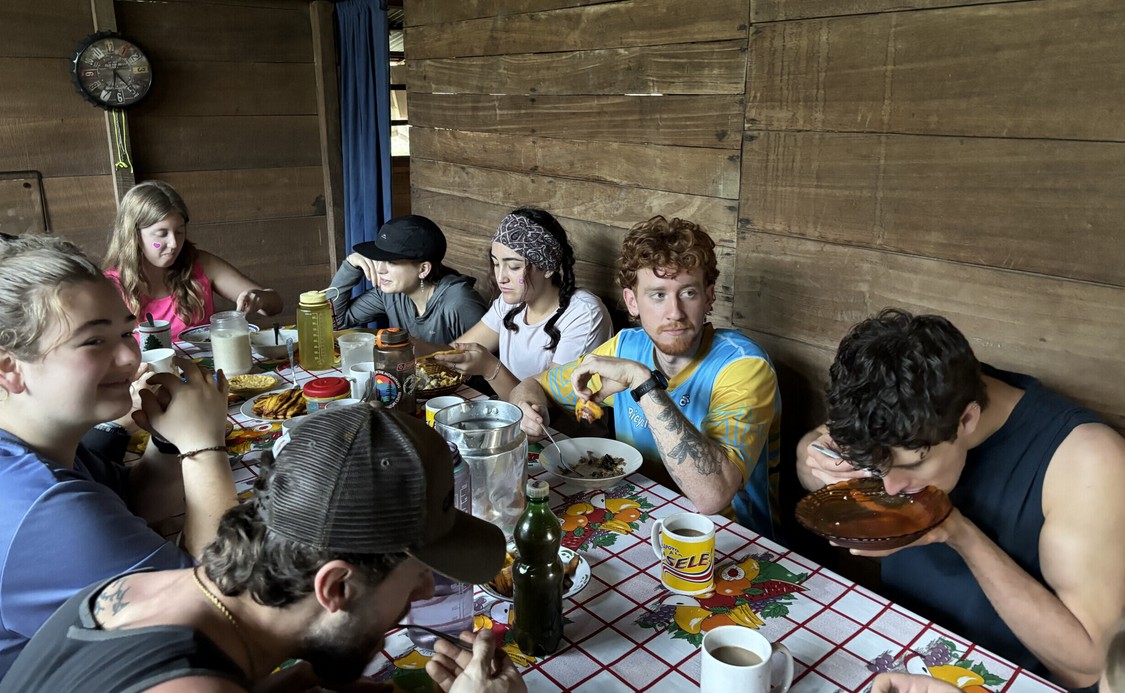
Participants enjoy an authentic dinner at a local homestay in Costa Rica.
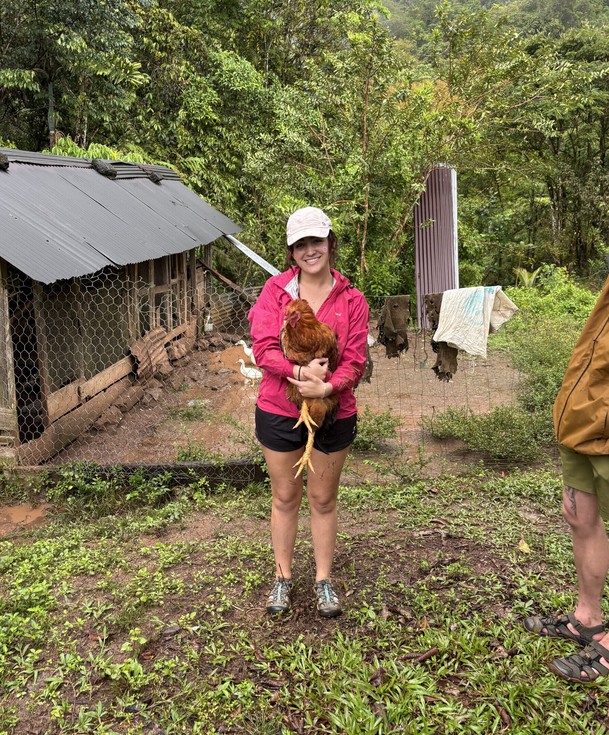
Students learned about local food systems by participating in the full process of preparing a meal at their homestay.
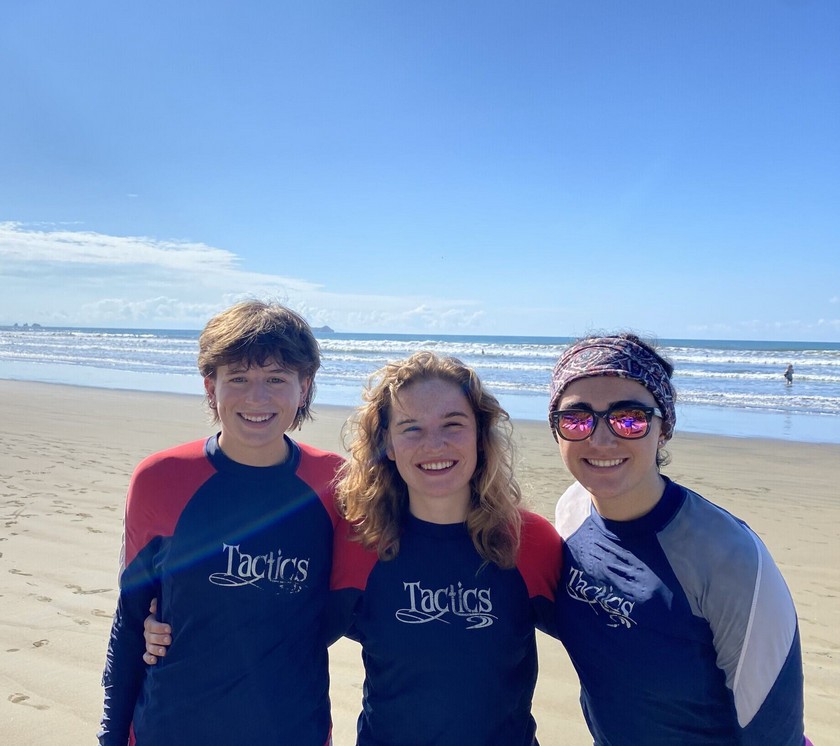
Activities such as surfing are a key component of the ecotourism experience.
An investment in yourself
Whether it’s the rugged backcountry of North Carolina or the cloud forests of Costa Rica, the core takeaway of these programs is the same: the deepest learning happens when students are challenged.
“Cultural exchange makes people better humans and I think that embracing discomfort makes us more effective humans,” Crowley says.
For students on the fence about such an intensive experience, his advice is direct.
“Milk the university experience for everything it's worth,” Crowley advises. “If you're waffling, just say yes, you're not going to regret it. But if you don't engage in these types of opportunities, they're going to be very hard to come by once you've graduated, for sure.”