
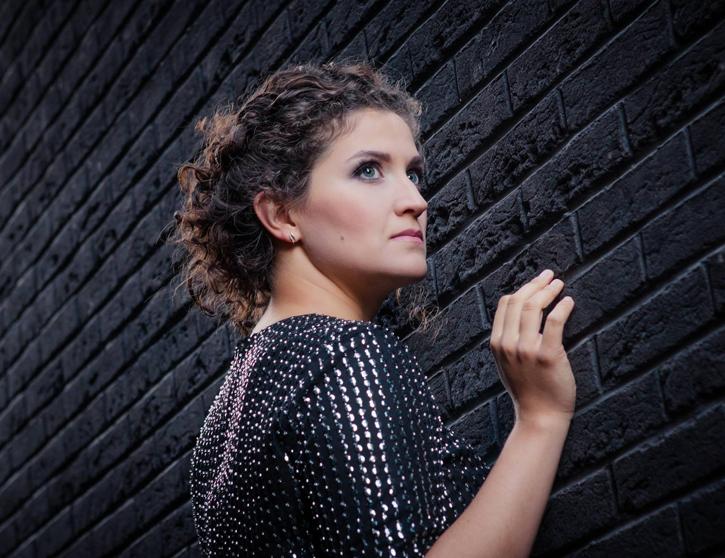
Dominika Glapiak (sponsored event)
Start Time
March 5 at 6:00pm
Event Location
Ohio University Keyboard Artist Recital Series 25-26
Dominika Glapiak, piano
March 5, 2026, 6:00 PM
Glidden Recital Hall
My name is Dominika Glapiak and I’m a Polish pianist, educator and cultural projects’ creator living and working in Gdansk. I would like to introduce you to my work and passion. Enjoy!
Pianist
As a classically trained musician I had an opportunity to perform across the continents. I've experienced that music can touch one's heart no matter where it is performed. I deeply understand the moment of connection between the listener and performer, and how it can make a difference.
Educator
In my work as an educator, I try to motivate and encourage my students by sharing my own passion and energy. I hope to spark and boost their creativity and so I am always looking to equip them with tools to explore and fulfill their own potential.
Creator
I create events that bring chamber music experience to the wider community. I believe that classical music is a journey, and all you need is a passionate guide to learn all about it and truly cherish it.
Program:
Robert Schumann - Carnaval op.9
PRÉAMBULE
PIERROT
ARLEQUIN
EUSEBIUS
____________
Schumann - Violin Sonata in A minor, Op. 105 (for violin and piano)
I. Ziemlich langsam – Lebhaft
II. Sehr lebhaft
______________
FLORESTAN
COQUETTE
CHIARINA
_____________
Clara Schumann - “Ich stand in dunkeln Träumen” (arranged for violin and piano)
_____________
CHOPIN
_____________
Chopin - Valse in E-flat Major op.18
_____________
ESTRELLA
PANTALON ET COLOMBINE
VALSE ALLEMANDE
PAGANINI
_____________
Johannes Brahms - Intermezzo in A major, Op. 118 (for piano solo)
_____________
AVEU
PROMENADE
PAUSE
MARCHE DES DAVIDSBÜNDLER CONTRE LES PHILISTINS
____________
William Grant Still
Suite for violin and piano
Violin: Nathan Southwick
Piano: Dominika Glapiak
Robert Schumann’s Carnaval, Op. 9, is not merely a piano cycle but a gallery of musical portraits — a world of masks, alter egos, friends, ideals, and imagined figures. In this recital, Carnaval becomes the structural and conceptual axis around which other works revolve, expanding its intimate miniature forms into broader instrumental and expressive spaces.
Selected movements from Carnaval appear throughout the program as sharply etched character pieces: the introverted dreamer (Eusebius), the impetuous spirit (Florestan), the vibrant portrait of Clara (Chiarina), poetic homages (Chopin, Paganini), and finally the collective, idealistic gesture of the Marche des Davidsbündler contre les Philistins. Heard in this sequence, the cycle unfolds not as a closed whole, but as an open narrative of musical identities.
The Violin Sonata in A minor, Op. 105, deepens this psychological landscape. Its first two movements act as a dramatic enlargement of Schumann’s inner contrasts, translating the tension between lyricism and agitation into a full-scale chamber dialogue for violin and piano.
At the emotional center of the recital stands Clara Schumann’s Ich stand in dunkeln Träumen, performed here in an instrumental arrangement for violin and piano. Placed immediately after Chiarina, the piece offers a striking shift in perspective: the portrayed figure acquires her own voice, transforming musical portrait into personal reflection.
The idea of musical homage is further explored through Frédéric Chopin’s Waltz in E-flat major, Op. 18, and Johannes Brahms’s Intermezzo in A major, Op. 118, enriching the biographical and artistic constellation surrounding Robert and Clara Schumann.
The recital concludes with the Suite for violin and piano by William Grant Still. As one of the leading figures of twentieth-century American music, Still expands the concept of musical portraiture beyond the European Romantic tradition. His Suite blends classical forms with elements drawn from African American musical idioms, offering a vivid, rhythmically alive epilogue that reframes the recital’s central idea of character, identity, and voice in a broader cultural context.