Image
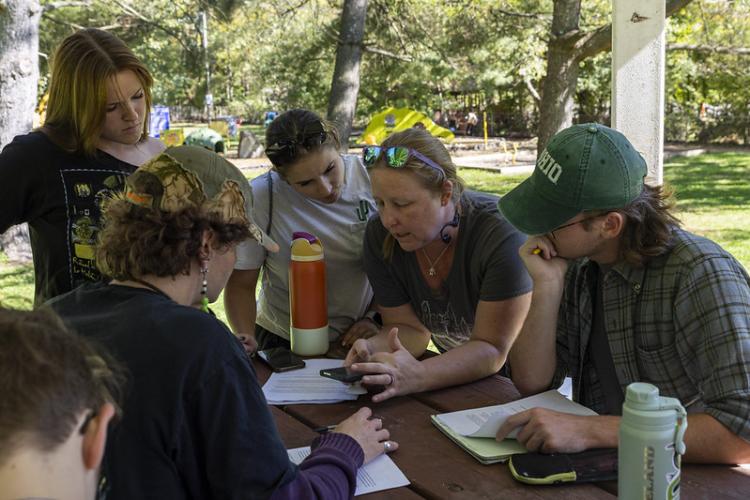
Natalie Kruse Daniels is the director of Ohio University’s Master of Science in Environmental Studies program and the Master of Science in Sustainability, Security and Resilience program at the Voinovich School of Leadership and Public Service.
In this role, she supports students as they pursue their degrees and provides overall leadership and direction.
Recently, her expertise in watershed management, wetland restoration, flood mitigation and community resilience has made big waves in Appalachia as the region faces flooding issues.
“We are seeing more extreme weather, whether that be extreme cold, droughts or rainfall events,” Kruse Daniels said.
Appalachia’s landscape is distinctly home to dendritic stream systems, which she described as being similar to veins on a leaf. Rain runs through these systems into nearby streams, increasing the chances of flash flooding. This vulnerability becomes even riskier when compounded with other issues the region faces.
“Underinvestment in infrastructure across the region as a whole and our settlement patterns that have been driven both by economic development patterns and by the availability of flat land mean that our stormwater infrastructure is often old and outdated and that the floodplains that could function to ameliorate flooding are developed into commercial and residential use,” she said.
Kruse Daniels advocates for streamgages in these affected regions. Streamgages are important tools that provide communities with flash flood warnings.
Currently, most United States Geological Survey streamgages are on large bodies of water and are not actively collecting data on potential flash flooding.
While these tools are becoming less expensive, they can still be inaccessible for many communities with limited resources.
“Unfortunately, that cost is still often too high for our small Appalachian communities, although the potential for local early warning would be great,” she said.
In response to their lack of resources, Kruse Daniels works alongside local policymakers to aid communities and advocate for resources that best serve them. Through her work, she has found that these officials work tirelessly to ensure their communities can thrive, but they may lack the skills or expertise to adequately plan and respond to natural disasters. This is where she can bridge the gap between a community’s needs and available resources.
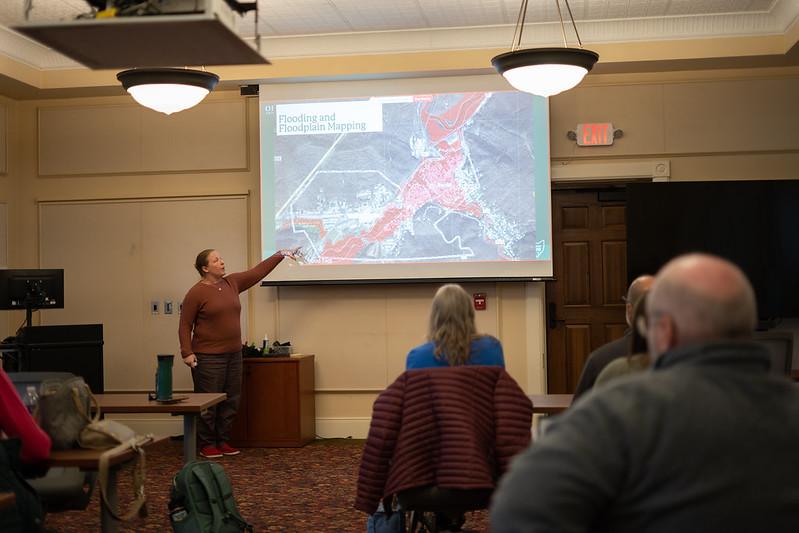
Together, Kruse Daniels and local officials use environmental skills, unique local knowledge and community understanding. This collaboration enables policymakers to adopt approaches suitable to their specific communities while working within limitations like funding and community resources.
“Together, we can work to find solutions that meet the community's needs and also goals for development, for example, places where flood mitigation and recreational opportunities can be co-developed,” she said.
Beyond working with policymakers to tackle current flooding issues, Kruse Daniels also works on a variety of projects with local policymakers, including stream and wetland restoration and nature-based solutions to issues like nutrient pollution. Her work and research help create stable, functioning ecosystems that reduce flooding effects and improve a community’s ability to handle a natural disaster.
Kruse Daniels sees the reality of future climate events as yielding both challenges and opportunities. She anticipates more flooding, storms, droughts and heat as we move forward, but she feels hopeful about community togetherness in the face of past events. Communities have come together to organize response and recovery and plan for future resilience.
“Since the widespread investment in infrastructure that would be needed to truly reduce risk is unlikely, we need to invest in the ways that we support vulnerable people in the region and reduce the impacts of future floods. In many ways, this means investing in existing organizations and efforts that support community development as a whole and will also serve during disasters,” she said.