Image
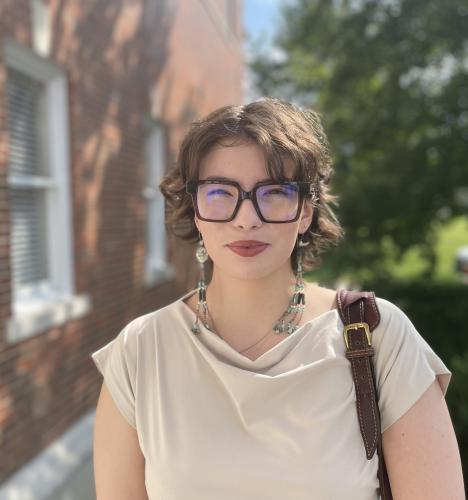
Ana Frease had never heard her ancestral language spoken by an ancestor until she sat in an archive at the University of California, Berkeley, and listened to a wax cylinder recording made generations ago.
“It was my first time actually hearing it spoken as it used to be spoken,” said Frease, a junior history major at Ohio University Chillicothe.
Frease, who is Coast Miwok on her father's side, traveled to Berkeley this summer for the Breath of Life Archival Institute for Indigenous California Languages, a program held in partnership with UC Berkeley's linguistics department and the Advocates for Indigenous California Language Survival. The Coast Miwok are Indigenous to southern Sonoma and Marin counties, north of the San Francisco Bay Area.
The biennial Breath of Life gives Indigenous Californians the chance to search the university's archives for records of their ancestral languages, many of which are endangered or classified by linguists as extinct, a term Frease said doesn't tell the whole story.
“A big part of my research focus is reconnecting to that part of myself and learning more about that part of myself, not just for me, but for other Coast Miwok people and my family,” she said.
More than 80 participants attended this summer’s institute, organized into research groups by language. Frease worked alongside another Coast Miwok researcher, splitting time across UC Berkeley's Bancroft Library and Ethnic Studies Library, where they examined archived documents, field notes and recordings.
At the end of the week, each research team presented a project to share their findings. Frease and her research partner chose to demonstrate a traditional grass game song, tied to a Coast Miwok gambling game involving hidden bones, that had gone unsung for years.
“Not many people have ever heard it,” she said. “It had been a very long time since that had been sung so we decided to sing that song for everybody."
Frease said the trip built on ethnographic research she had already begun using historical texts, including work by early 20th-century ethnographer Isabel Kelly. But working alongside another Coast Miwok researcher, she said, added something the books could not provide.
“That fosters a lot more of a learning environment and retention environment," she said.
Frease said her coursework at Ohio University, including classes on the history of modern Asia and cultural anthropology, sharpened the research and ethnographic skills she brought to Berkeley. She credits professors John O’Keefe, Joshua Hill and Michael Koop with helping her learn and grow as a scholar and researcher.
O’Keefe, an associate professor of history at OHIO Chillicothe, said Frease demonstrated her interest in indigenous history and the history of languages in his classes.
"At OHIO Chillicothe, our classes on North American history are designed to show that history from a Native perspective,” O’Keefe said. “Coast Miwok people have a long history of survivance, negotiating European encounters and colonization on their lands since the arrival of Francis Drake in the 1500s. There has been growing movement to hold on to and revive indigenous languages, one that is increasingly coming directly from Native communities both in North America and throughout the world."
After her summer research trip, Frease wrote a reflection piece about her experience for a Coast Miwok non-profit newsletter She hopes to eventually write a full research paper on the Coast Miwok language, and one day teach the language to others in Marin and Sonoma counties.
Frease chose Ohio University Chillicothe for its accessibility and its proximity to home and her job at the Chillicothe and Ross County Public Library.