Image
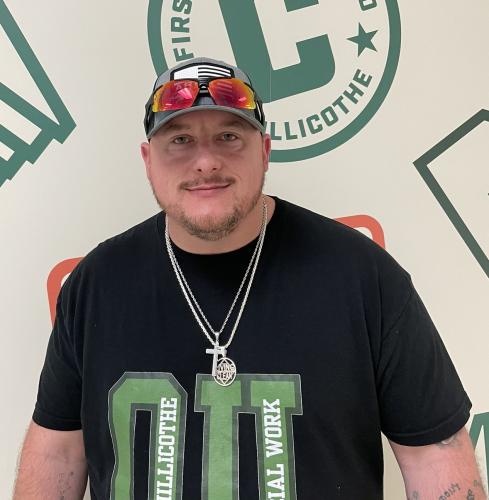
As Sean Cawood prepares to celebrate eight years of sobriety, the Ohio University Chillicothe senior looks forward to earning his social work degree and continuing to build a career focused on helping others.
A native of Bainbridge, Ohio, Cawood is pursuing a bachelor’s degree in social work, balancing full-time work, fatherhood and his own recovery journey. He started college after graduating from high school in 2003, but addiction derailed his life, leading to incarceration, homelessness and personal loss.
“My story is proof that recovery and change are possible,” he said. “I went from struggling with addiction to rebuilding my life through recovery, education, faith and service to other people.”
Cawood’s turning point came in 2018, while incarcerated, when a recovery counselor challenged his perspective as a father.
“She said, ‘How can you say you’ll die for someone you won’t even live for?’” he recalled. “For the first time in my life, I thought of someone other than myself.”
That moment helped him set his sights on a new path. Through family drug court and treatment at a recovery program, Cawood began what he calls “re-engineering” his life, leaning into recovery and discovering a passion for helping others facing addiction.
Today, Cawood serves as director of operations at the Rulon Center, a Scioto Paint Valley Mental Health residential treatment center in Chillicothe, where he has worked for more than six years. He started as a residential assistant and worked his way up while pursuing his education.
“I get to wake up and go do the thing I love to do…help people,” he said.
Cawood’s journey back to the classroom also presented challenges. As a non-traditional student in his late 30s when he returned, he initially struggled to find his footing.
“It was a little intimidating in the beginning,” he said. “I remember my first in-person class. There were students from 16 to 20, and here I am,” he said. “I just felt out of place.”
He quickly discovered that though his lived experience might be vastly different from that of his younger classmates, they also shared commonalities and he appreciated the opportunity to share his experiences with others. Support from faculty and staff at OHIO Chillicothe helped him navigate both academic and technological challenges.
“They are compassionate,” he said. “They took extra time to sit down with me and help me.”
Cawood graduated from his recovery program alongside his sponsor Matthew Chaffin, who later encouraged him to pursue a degree at OHIO Chillicothe. Next year, Chaffin and Cawood will graduate from Ohio University together with their social work degrees, having already earned associate degrees in human services technology. Cawood credits those who have supported his recovery journey, including mentors, colleagues, professors, and Chaffin, with encouraging him to pursue higher education and believe in his potential.
Chaffin said he has been honored to witness Cawood’s strength, tenacity and perseverance.
“There is something deeply meaningful about watching someone who has walked through struggles with me decide that their story will not end there but instead be used as a bridge for someone else’s healing,” Chaffin said. “We have both seen difficult days in recovery, and I’ve watched him keep showing up through it all, even when it would have been easier to shut down or walk away.”
Cawood is already planning his next steps after graduation. He plans to pursue a master’s degree in social work. His long-term goal is to expand his impact and continue supporting individuals and families affected by addiction.
“My goal is to use both my personal experience and my education to help others find hope, healing and a new way of life,” he said.
Cawood said his lived experience often helps him connect with clients and fellow students alike, offering a perspective rooted in empathy and understanding.
“It’s one thing to help someone, but to understand how to help them makes a big difference,” he said.
As a father of four, Cawood said his children remain his greatest motivation.
“I’ve learned how to show up as a dad, as an employee, as a member of society,” he said.
He also continues to stay active in recovery, approaching each day with intentionality and gratitude.
“I’ve actually grown up in the last eight years,” he said. “I love my life today.”
For others struggling with addiction or mental health challenges, Cawood emphasizes the importance of honesty, perseverance and reaching out for help.
“You’ve got to put in the work,” he said. “It’s not easy, but nothing worth having ever comes easy.”
Cawood hopes his story will inspire others to believe change is possible.
“It’s never too late to be what you might have been,” he said.