Image
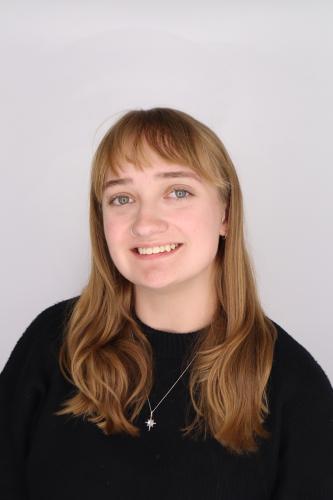
Chloe Partlow
In Eastern Kentucky, where steep hillsides frame narrow valleys and small towns sit close to winding creeks, flooding is a familiar part of life.
As the environment brings more frequent and intense storms to Central Appalachia, Floyd County officials are working to better understand that risk, and the Voinovich School of Leadership and Public Service is helping them do it.
Through a partnership with the county, the Voinovich School is supporting a flood mitigation planning process that incorporates community-based data and local knowledge. At the center of this work is Chloe Partlow, an Honors Tutorial College (HTC) environmental studies senior and Voinovich Undergraduate Research Scholar. Since fall 2023, Partlow has worked on a National Oceanic and Atmospheric Administration (NOAA)-funded project led by Voinovich School faculty member Dr. Natalie Kruse Daniels examining climate resilience across Central Appalachia.
Partlow’s role focuses on participatory GIS, a mapping approach that allows residents to document flooding in the places they know best. She created an online mapping survey that invites people to pinpoint flooded roads, low bridges, damaged infrastructure and vulnerable areas that may not appear on official flood maps. In the coming months, she will help lead in-person workshops where residents can mark printed maps and share their experiences directly with the project team.
“Traditional flood maps rely heavily on historical data,” Partlow said. “But the baseline is shifting. Residents see flooding that never shows up on those maps, and that information is critical for planning.”
These community observations will support a Climate Smart Communities Initiative grant that Floyd County is using to explore housing, infrastructure and mitigation strategies. Local leaders hope to use the data to strengthen future grant applications, prioritize public works projects and evaluate potential sites for higher-ground housing.
Floyd County’s flood risk stems from more than its topography. Like many parts of Central Appalachia, the region has been shaped by coal mining and logging, which altered slopes, vegetation and soils and reduced the land’s ability to absorb water. Major floods in 2022 and 2025 brought renewed urgency to the county’s planning efforts and highlighted the ways traditional flood maps, built from older climate patterns, can underestimate risk.
During a recent site visit with Kruse-Daniel’s, Partlow toured neighborhoods where homes had been removed through FEMA buyout programs after repeated flooding. Residents shared stories about how water has changed their community and their hopes for how newly vacant land could be repurposed, from flood-resilient parks to bike trails and safe recreational spaces for children.
“People aren’t just talking about the damage,” Partlow said. “They’re imagining what their community could look like in the future. Solutions work best when they come from those local priorities.”
Partlow’s work in Floyd County also shapes her HTC senior thesis, which focuses on environmental justice and disaster preparedness. She plans to pursue a Master of Public Health after graduation, with goals of working in environmental health and disaster management. She credits the Voinovich Scholars Program with giving her the opportunity to complete research that is both academically rigorous and immediately relevant to communities.
“This experience has shown me how to work alongside people, not above them,” she said. “It’s rewarding to know the data I collect can help a county make decisions that keep residents safer.”
Partlow will share her research at the Ohio University Regional Science Day on March 21 in Heritage Hall, where participants will present their projects to faculty, staff and regional partners.
As Eastern Kentucky continues to navigate today's realities, the partnership between Floyd County and the Voinovich School demonstrates how students, researchers and communities can work together to build resilience and plan for a safer future.