
Spotlight on Cheyenne Fenstemaker: Advancing Research on Access to Opioid Use Disorder Treatment
Spotlight on Cheyenne Fenstemaker: Advancing Research on Access to Opioid Use Disorder Treatment
By Zoya Bessler
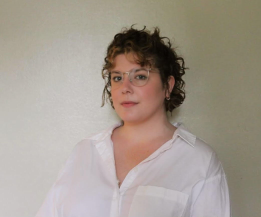
Cheyenne Fenstemaker is a staff research assistant at Ohio University dedicated to expanding access to evidence-based services for opioid use disorder (OUD). She was hired to support ADVANCE co-director Dr. Berkeley Franz on two National Institute on Drug Abuse (NIDA)-funded clinical trial planning studies focused on improving access to these services. In addition to this role, Fenstemaker works closely with Dr. Franz’s research group, training medical and graduate students in qualitative methods, co-leading team meetings, and collaborating on publications. Since coming to the university in 2012 as a student, her work has evolved toward addressing place-based disparities that shape access to care. Fenstemaker also supports the administrative functions of ADVANCE, taking the lead on communication efforts.
Fenstemaker brings a unique combination of leadership, coordination, and specialized research skills, formed from professional experience in higher education and the nonprofit sector. “My previous roles taught me how to manage multiple projects, communicate across teams, and keep projects running smoothly,” she explained. She also brings masters-level training in qualitative methods and a background in geography and legal sociology, all of which shape how she approaches population health research and team science. Fenstemaker went on to share that her skills have allowed her to support research in each stage: “A recent skill I am proud of is my ability to support research from design and analysis to dissemination, after helping to bring two large NIDA-funded studies to completion. I have really benefited from the opportunity to support and receive mentorship from a skilled PI [Franz] while helping to carry out our study activities. I think it is a unique opportunity to get to support a clinical trial early in your research career.” Fenstemaker has co-authored studies with Franz, as well as health professions and graduate students from Ohio University, Ohio State University, and the University of Southern California, and other faculty collaborators from Ohio University, Ohio State University, Rutgers University, New York University, and University of North Carolina Chapel Hill. Fenstemaker said that the Franz research group recently published several papers exploring what helps or hinders the integration of buprenorphine, a highly effective medication for opioid use disorder, in rural primary care: “I led a paper published in the Journal of General Internal Medicine that explored the implementation climate for buprenorphine in rural primary care, in other words, how ready this setting is to support and adopt buprenorphine prescribing. We found that primary care providers had mixed views about whether rural clinics are equipped to support buprenorphine prescribing right now.” The team also recently published a paper, led by Katherine King, a PhD student at the University of Southern California, that explored how primary care providers seek support from other prescribers when learning to prescribe buprenorphine. Fenstemaker also co-authored an upcoming paper led by Elizabeth Abrams, that examines how provider concerns about diversion can be addressed through targeted education and support.
Following her discussion of professional achievements, Fenstemaker reflected on potential improvements to the research assistant roles at Ohio University, emphasizing that sustained institutional support is essential to maintaining high-quality research. “I would love to see more opportunities for research assistants to connect across departments, perhaps through an internal network or professional development group,” she elaborated. Fenstemaker also shared that competitive salaries, within the constraints of grant funding, would help to recognize research assistants as skilled professionals while improving workforce retention.
Fenstemaker hopes to see her career evolve as she builds skills in her current position. She shared her broad research interests in how place, law, and health systems shape access to health services, especially in mental health and substance use disorder treatment, and her desire to continue her research in this area. “I hope to work on more studies that uncover barriers to treatment for opioid use disorder in underserved communities, and test strategies to overcome these barriers,” she shared. In closing, Fenstemaker described her long-term goal as staying engaged in work that makes a difference in communities. Her dedication to community-based research reflects the mission of Ohio University’s ADVANCE institute – to create more equitable and responsive healthcare systems across Appalachia and beyond.