U.S. Declaration of Independence
Central Region Humanities Center Biennial Conference
2026 Biennial Conference | Sept. 10-13, 2026

Central Region Humanities Center Biennial Conference

The CRHC Biennial Conference 250 Years: The Promises and Legacy of the Declaration of Independence is made possible by a major grant from the National Endowment for the Humanities and the generous support of the Kennedy Lecture Series, College of Arts and Sciences, Honors Tutorial College, and College of Fine Arts.

National Endowment for the Humanities

250 Years: The Promises and Legacy of the Declaration of Independence

Sept. 10-13, 2026 | Baker Center Theater

In 2026, we commemorate the 250th anniversary of the Declaration of Independence. With this document, members of the revolutionary generation set in motion the struggle against political tyranny and in defense of “life, liberty, and the pursuit of happiness.” In the years following independence, generations of Americans, inspired by the Declaration, strove to cement the “self-evident truth that all men are created equal” and endowed with certain unalienable rights. The story of that pursuit shaped regions and communities like ours and informed the trajectory of our country and broader world.

The Central Region Humanities Center 2026 biennial conference, “250 Years: The Promises and Legacy of the Declaration of Independence,” will facilitate an exploration of the history, meaning, and legacy of the Declaration of Independence. It will also highlight the many ways people and communities in the Ohio Valley and Northwest Territory helped to realize the lofty sentiments articulated in the Declaration of Independence in the 250 years since 1776.

Conference events include:

  • Concert on the Green and Choral Reading of the Declaration of Independence on Thursday, Sept. 10, 6 p.m., College Green
  • A Conversation with Dr. Colleen Shogan, the 17th archivist of the United States, about the importance of the Declaration of Independence as a historical artifact and foundational American text on Friday, Sept. 11, 5pm, Baker University Theater
  • Conference presentations and student research posters on Friday, Sept. 11, and Saturday, Sept. 12, Baker University center
  • Public Exhibitions and other cultural activities on Sunday, Sept. 13, Richland Park, Southeast Ohio History Center, Alden Library, and other locations.

All conference events are free and open to the public. Event parking details will be announced soon.

Schedule of Events

Thursday, Sept. 10

Concert on the Green and Choral Reading of the Declaration of Independence

6 to 7 p.m. – College Green – Thursday, Sept. 10

Friday, Sept. 11

Welcome and Opening Remarks

9 to 10 a.m. – Baker Center Theater – Friday, Sept. 11

Director
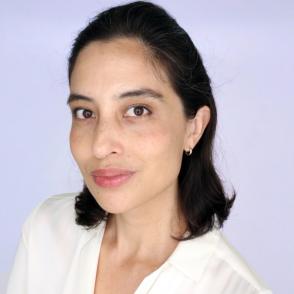
Mariana Dantas

Mariana Dantas

Dr. Dantas is director of the Central Region Humanities Center and Associate Professor of History at Ohio University.

Dean
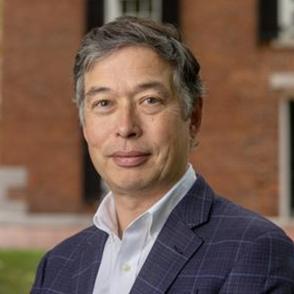
Matthew Ando

Matthew Ando

Dr. Ando is Dean of the College of Arts and Sciences at Ohio University.

Self-Evident Truths: Intellectual Traditions and Pursuits in the Age of Revolution

10 to 11:40 a.m. – Baker Center Theater – Friday, Sept. 11

Chair and Discussant
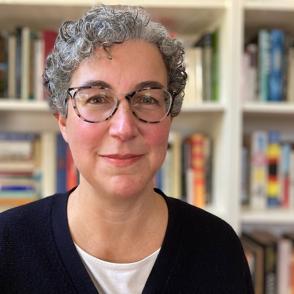
Myrna Perez

Dr. Myrna Perez

Associate Professor of Classics and Religious Studies, Ohio University

Panelist
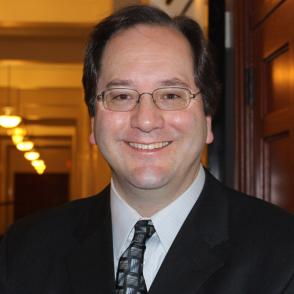
Fred Drogula

Dr. Fred Drogula

Dr. Drogula is the Charles J. Ping Professor of Humanities and Professor of Classics at Ohio University and director of the Charles J. Ping Institute for the Teaching of the Humanities. He is the author of three books that explore the origins, development, and collapse of the government of the Roman Republic.

Ancient Greek Influences on Thomas Jefferson’s Thoughts on Revolution

Abstract: Thomas Jefferson was familiar with Aristotle’s theory of the cycle of governments, which suggests that different types of government rise and fall in a regular cycle based on the predictability of human nature. In drafting the Declaration of Independence, where did Jefferson imagine that the American colonies fell within that cycle?

Panelist
Iris De Rode

Dr. Iris De Rode

Dr. De Rode is a historian of the Franco-American alliance during the American Revolution. A Gibson Postdoctoral Fellow at the Karsh Institute of Democracy (University of Virginia), she is the author of an award-winning biography on Chastellux and a forthcoming trade book on transatlantic revolutionary friendship. 

“Public Happiness” and Revolutionary Knowledge: Chastellux and Transatlantic Intellectual Exchange 

Abstract: Drawing on the recently rediscovered archive of François-Jean de Chastellux, this presentation explores how transatlantic intellectual and scientific networks shaped the American Revolution. Situating figures such as Manasseh Cutler within these exchanges, it highlights how knowledge, correspondence, and Enlightenment ideals reinforced political transformation across the Atlantic.

Panelist
Jessica Cyders

Jessica Cyders is the Executive Director of the Southeast Ohio History Center. Prior to stepping into this role, she served as the Curator from 2011 to 2019. In addition to her work in public history, she served as a Peace Corps Volunteer in Cameroon from 2006-2008. 

The Pursuit of Virtue: Education, Liberty, and the Northwest Territory 

Abstract: This presentation will discuss the founding ideals of liberty and virtue as they were lived out through the examples of two of our region's most important founding figures: Rufus Putnam and Ephraim Cutler. Though both of these men were largely self-educated, their commitment to learning and liberty influenced the establishment of Ohio University and the state as a whole.

Lunch Break

11:40 a.m. to 1 p.m.

“To Effect Safety and Public Happiness”: Territorial Organization and Colonization

1 to 2:40 p.m. – Baker Center Theater – Friday, Sept. 11

Chair and Discussant
Paul Milazzo

Dr. Paul Milazzo

Dr. Milazzo is Associate Professor of History at Ohio University.

Panelist
Brandon Downing

Dr. Brandon Downing

Dr. Downing is an Associate Professor of Early American history at Marietta College. He teaches courses on Colonial America, the American Revolution, Native America, and Public History. His current book manuscript, A Memorial to the Start Westward of America: A Conversation about Commemoration, Preservation, and Legacy, explores how monuments shape ideas about nation and citizenship through memory.

The Founding Fathers of the Northwest Territory: How Their Declaration of Independence Shaped the Ohio Country

Abstract: This paper investigates the complicated decisions made by the founding fathers of the Northwest Territory during the initial stages of westward settlement in the Ohio Country. Their actions determined who could and could not claim the ideals espoused in the founding documents of the United States.

Panelist
Edward Watts

Dr. Edward Watts

Dr. Watts is professor emeritus of English at Michigan State University. He has authored or edited 11 books, many of which address the early West. His most recent is Racial Vengeance, Berserk Violence, and Settler Colonialism in American Writing from Franklin to Melville (Oxford, 2025).

No Inveterate Systems to Overturn?: Yankee, French, and Indigenous Wests After the Declaration 

Abstract: When Manasseh Cutler looked “West,” he imagined “no inveterate systems to overturn.” But there were. Both indigenous and French settlements were well entrenched, as were white squatters. This talk will address how the Declaration’s ideology was tested by the ethic, religious, and racial complexities of the early Ohio Valley.

Panelist
Timothy Anderson

Dr. Timothy G. Anderson

Dr. Anderson is Associate Professor in the Department of Geography at Ohio University, where he teaches courses in cultural and historical geography. His research focuses on the historical settlement geographies of the United States, regional landscapes and identities, and the production of space in Germanic diasporic cultural landscapes.

(De)constructing the Grid: The Public Land Survey System and the Production of Abstract Space in the Early Republic

Abstract: This paper offers an alternative interpretation of the meanings encoded in the design and implementation of the U.S. Public Land Survey System (PLSS). Framed within the paradigms of settler colonialism and Lefebvre’s spatialization theory, the PLSS is contextualized as a peculiarly American response to specific historical conditions regarding the commodification of land in the trans-Appalachian West and as a material manifestation of Enlightenment ideal(s).

Coffee Break

2:40 to 3 p.m.

“To Assume Equal Station”: Sovereignty, Autonomy and Citizenship

3 to 4:40 p.m. – Baker Center Theater – Friday, Sept. 11

Chair and Discussant
Talinn Phillips

Dr. Talinn Phillips

Dr. Phillips is Professor of English at Ohio University. 


Panelist
Andrew Washburn

Andrew Washburn

Washburn is a Ph.D. student in the Department of History at the University of Cincinnati. His broader research focuses on the pre-steam power history of the Ohio Valley region. He holds M.A.s from San Francisco State University and the University of Tennessee in Museum Studies and History respectively.

Independent Indigenous Ohio: Kukwethakextun and the 14th State

Abstract: Kukwèthakèxtun, often referred to as Captain White Eyes, was a Lenape leader who negotiated the first treaty between the United States and an Indigenous Nation. Signed in 1778 but never implemented, this treaty invited the Ohio Lenape to join the U.S. as a sovereign state. The diplomatic and constitutional process that Kukwèthakèxtun drove to ensure its success was far older and more significant than is acknowledged.

Panelist
Warren Milteer, Jr.

Dr. Warren Milteer, Jr.

Dr. Milteer is an associate professor of history at the George Washington University. He received his Ph.D. from the University of North Carolina at Chapel Hill. His publications include five books and multiple articles. Milteer received the Southern Historical Association’s Sydnor Award for the best book in Southern history in 2022.

The Evolution of Freedom: Free People of Color in the Age of Revolution

Abstract: This paper explores the changes in the social and political situation of free people of color in the U.S. during the age of Revolution. It explains how revolutionary ideas about liberty and human rights led to an explosion in the number of free people of color and reshaped freedom’s meaning.

Panelist
John O’Keefe

Dr. John O’Keefe

Dr. O’Keefe is an associate professor of history at Ohio University-Chillicothe, and the author of Stranger Citizens: Migrant Influence and National Power in the Early American Republic. His work examines how migrants in the U.S. used their understandings of citizenship to shape immigration policy and law from 1783 to 1830.

Immigrants and the Building of Citizenship and Community in Ohio, 1776-2026

Abstract: In the past 250 years, many people have migrated to Ohio, building lives and communities and forging citizenships. This paper will examine the choices of people who migrated to Ohio, and investigate how migrants formed differing kinds of citizenship as both local and national conditions changed.

Keynote: Fireside Chat with Dr. Colleen Shogan

5 to 6:15 p.m. – Baker Center Theater – Friday, Sept. 11

Keynote Speaker
Colleen Shogan

Dr. Colleen Shogan

The 17th archivist of the United States. Dr. Shogan will have a conversation with Honors Tutorial College Dean Kris Bross about her role as keeper of the Declaration of Independence at the National Archives and the importance of this document as a historical artifact and foundational American text.

Discussant
Kristina Bross

Dr. Kristina Bross

Dr. Bross is Dean of the Honors Tutorial College at Ohio University.

Saturday, Sept. 12

Life and the Pursuit of Autonomy Among Black Communities of Appalachia

9 to 10:40 a.m. – Baker Center Theater – Saturday, Sept. 12

Chair and Discussant
Uzoma Miller

Dr. Uzoma Miller

Dr. Miller is Assistant Professor of African America Studies at Ohio University. 

Panelist
Avery Richardson

Richardson is currently a Ph.D. student in the School of Interdisciplinary Arts at Ohio University. Her primary research interests focus on ancient Rome and Italian Renaissance visual culture. She is also interested in the cultural history of Point Pleasant, West Virginia, where she grew up.

Black Perseverance, Migration, and Historical Erasure along the Ohio River and Point Pleasant, West Virginia

Abstract: Focusing on Point Pleasant, West Virginia, situated directly across the river from Gallipolis, Ohio, this paper examines the often-invisible history of Black Appalachian communities striving for life, liberty, and the pursuit of happiness in the face of enslavement, systematic oppression, and beyond. This paper focuses on the examination of cemeteries, migration routes, and historic landmarks.

Panelist
Amanda Flowers

Dr. Amanda Flowers

With a vision of advancing social justice in marginalized communities, Dr. Flowers has spent her clinical career “in the trenches” combating the social determinants of health and mental health. Her research focuses on the experiences of Black Americans, with a special interest in Black Appalachians who have historically been overlooked, underserved, and abandoned.

From Coal Mines to a Museum: The Tablertown Story

Abstract: Michael Tabler became infatuated with a girl enslaved on his family’s plantation. Fathering six children to Hannah, they moved to what would be known as Tablertown and grew through their booming coal mining and iron ore industries. The Tablertown People of Color Museum showcases artifacts that chronicle the history of the Tablers and Tablertown.

Panelist
Trevellya Ford

Dr. Trevellya"Tee" Ford

Dr. Ford is a Professor Emerita of the College of Arts & Humanities at West Virginia State University (WVSU) and an award‑winning media scholar dedicated to cultural preservation and community storytelling. Her work is a testament to the power of education, media, and cultural preservation in fostering vibrant and resilient communities. She serves as Communication and Media Director for the Mount Zion Black Cultural Center.

Reclaiming Independence: Continuing Legacy Through Media

Abstract: This presentation examines the role of documentary film in preserving and elevating local history through the Black Wall Street Athens series. It links the founding ideals of the Declaration of Independence to contemporary efforts toward equity, demonstrating that independence is an active, evolving pursuit. By highlighting untold community stories, the session underscores how media can inspire future generations and reinforce a shared commitment to justice.

Coffee Break

10:40 to 11 a.m.

Liberty Won, Pursued and Constructed

11 a.m. to 12:40 p.m. – Baker Center Theater – Saturday, Sept. 12

Chair and Discussant
Heather Sinclair

Dr. Heather Sinclair

Dr. Sinclair is Visiting Assistant Professor of History at Ohio University.

Panelist
Michael Blaakman

Michael Blaakman

A historian of revolutionary and early national America, Michael A. Blaakman is Associate Professor of History at Princeton University. He is the author of Speculation Nation: Land Mania in the Revolutionary American Republic, which won the Organization of American Historians’ Frederick Jackson Turner Award for best first book in American history and was a finalist for the George Washington Prize.

Liberty’s IOUs: How the War for Independence Sparked the United States’ First Real-Estate Boom

Abstract: During the Revolutionary War, cash-strapped patriot governments paid Continental soldiers in part through military land bounties — promises of future land grants. This talk explores how those IOUs both reflected the political principles of the Declaration and helped cause a mania for land speculation that swept the new republic during its first quarter-century.

Panelist
Andrew Feight

Dr. Andrew "Drew" Feight

Dr. Feight is Professor of History and Director of the Center for Public History at Shawnee State University in Portsmouth, Ohio. He directs the Appalachian Freedom Heritage Tourism Initiative, an Appalachian Regional Commission POWER Grant, focusing on Underground Railroad networks in Ohio, Kentucky, and West Virginia.

Life, Liberty, and the Pursuit of Freedom: The Escape of Dave and Pleasant and the Underground Railroad in Appalachian Ohio

Abstract: This paper examines the 1845 escape of Pleasant and Dave through the Appalachian foothills of Ohio, including their passage through Athens County. Their newly recovered story demonstrates how freedom seekers and local residents enacted the Declaration’s principles of liberty and equality. Underground Railroad networks in southeast Ohio formed part of a “geography of resistance,” where antislavery ideals were transformed into lived action.

Panelist
Andrea Frohne

Dr. Andrea Frohne

Dr. Frohne is Professor and art historian of arts of the African world at Ohio University. She is the Director of the School of Interdisciplinary Arts, and the Director of AARSI, the African American Research and Service Institute. She is the author of The African Burial Ground in New York City: Memory, Spirituality and Space (2015), and the forthcoming book Contemporary Artists from the Horn of Africa: Encounters Beyond Borders through Conflict, Colonialism, and Modernity.

Benjamin Banneker Assists in Configuring the Capital; Jemima Banneker’s Children Construct the Lett Settlement: Black Pioneers in the Legacy of a New Nation

Abstract: This presentation considers the Banneker family involvement in the formation of the nation following the Declaration of Independence. Benjamin Banneker (1731-1806) was a free person of color who worked on the survey team to lay out the new capital. His sister Jemima Banneker (1733-1799) had several free born children who co-founded the Lett Settlement and pioneered the new Northwest Territory.

Lunch Break

12:40 to 2 p.m.

Pursuit of Happiness: Private Ambitions, Equal Opportunities, Public Welfare

2 to 3:40 p.m. – Baker Center Theater – Saturday, Sept. 12

Chair and Discussant
Cory Crawford

Dr. Cory Crawford

Dr. Crawford is Associate Professor of Classics and Religious Studies at Ohio University.

Panelist
Ana Schwartz

Dr. Ana Schwartz

Dr. Schwartz is an associate professor of English at the University of Texas at Austin. She is the author of Unmoored: The Search for Sincerity in Colonial America, and is at work on a second book, The Eyes of the Beholders, a social history of art appreciation in early America.


Happiness, Self-evident

Abstract: In 1771, Benjamin Franklin sat down to compose the story of his life. Before he was interrupted by the task of founding a nation-state, he managed to produce a charismatic autobiography with profound wisdom on the challenges not just of pursuing happiness, but, with any luck, achieving it, too.

Panelist
Anna-Lisa Cox

Dr. Anna-Lisa Cox

Dr. Anna-Lisa Cox, is an award-winning public historian and non-resident Fellow at Harvard’s Hutchins Center. Her book, The Bone and Sinew of the Land, was honored in the Smithsonian Magazine’s “Best History Books of 2018.” Her writing has been featured in numerous publications, and her research underpins two exhibits at the Smithsonian’s NMAAHC.

A Revolutionary Revolution: The Radicals of 1776 and the Founding of Our Nation

Abstract: There have long been revolutions, but creating a nation is a different story. Dr. Cox will reveal how the Declaration of Independence inspired many diverse founding citizens to create opportunities for equality, before backlash erased those rights and the memory of them.

Panelist
Thomas Scanlan

Dr. Thomas Scanlan

Dr. Scanlan is Associate Professor of English at Ohio University. He is the author of Colonial Writing and the New World: Allegories of Desire (Cambridge University Press, 1999). He is currently working on a book on happiness in late 18th-century America.

The Strange Death of Public Happiness

Abstract: My paper traces the history of the idea of public happiness and its eventual decline. By looking at numerous primary sources extant during the final decades of the 18th century, I show that this notion of public happiness began before the formation of the United States, before the ratification of the constitution, and indeed before the signing of the Declaration of Independence.

Coffee Break

3:40 to 4 p.m.

The Declaration of Independence: Promises, Meaning, and Legacy

4 to 5:40 p.m. – Baker Center Theater – Saturday, Sept. 12

Chair and Discussant
Shalon Van Tyne

Dr. Shalon van Tine

Dr. van Tine is Assistant Professor of Instruction in History at Ohio University.

Panelist
Sara Fisher

Sara Fisher

Sara Fisher earned a B.A. in History from Ohio University and an M.A. in History concentrating in Public History from Wright State University. She has over 10 years of experience working in local and state history organizations and serves as the Executive Director of the Ashland County Historical Society.

Connecting America 250 at the Local Level: How Engaging the Legacy of the American  Revolution Can Create a Sense of Place for Local Communities

Abstract: Through an examination of partnership opportunities, events, and public programs, this presentation explores ways in which Public Historians engage their local partners to examine how the legacy of 1776 manifested and continues to evolve at the local level to create a sense of place.

Panelist
Brian Koscho

Brian Koscho

Brian Koscho, director of Invisible Ground, is a media artist living in Athens, Ohio. His project, Invisible Ground, stems from his MFA thesis at Ohio University and centers on place-based storytelling in public history, including a podcast and a series of Immersive Historic Sites that use augmented reality.

The Legacies of the Declaration of Independence in Early Ohio: From the Northwest Territory to Statehood

Abstract: Examining the legacies of the Declaration of Independence in early Ohio from the Northwest Territory to statehood through the lens of local history in Athens and Marietta. Discussion will include conflict, education, and life, liberty, and the pursuit of happiness as they unfold in a new country’s frontier.

Panelist
Johann Neem

Dr. Johann Neem

Dr. Neem, Professor of History at Western Washington University, the is author of three books: Creating a Nation of Joiners, Democracy’s Schools: The Rise of Public Education in America; and What’s the Point of College? His writing has appeared in the New Republic, the Hedgehog Review, and other public venues. He is a professor of history at Western Washington University.

The Revolution We Need Today

[Abstract: In this talk, Prof. Neem will examine how Americans at the founding understood the promise and limits of the American Revolution, why we are so divided over the Revolution today, and how we might find our way back to a Revolution that belongs to all Americans.

Concluding Remarks

5:40 to 6 p.m. – Baker Center Theater – Saturday, Sept. 12 

Sunday, Sept. 13

Exhibitions

Sunday, Sept. 13