|
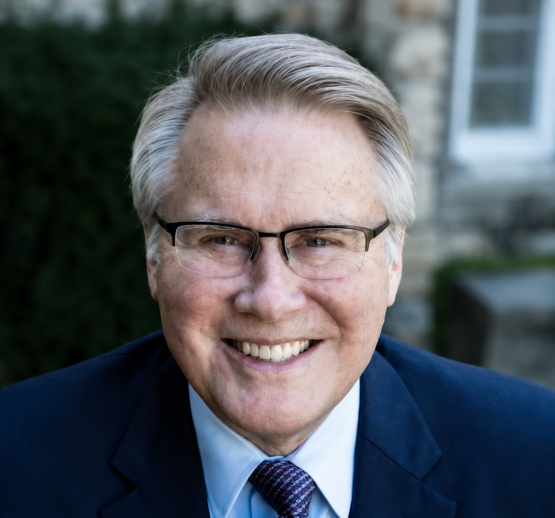
Barry Tadlock is Associate Professor in Ohio University’s
Department of Political Science. He received his Ph.D. from
the University of Kentucky (1995), his M.A. from the University
of Virginia (1987), and his B.A. from Emory & Henry
College (1984). Currently at OU he teaches undergraduate
courses in
American national government, legislative processes, and
the presidency, and a graduate seminar on executive and
legislative
politics.
One
research interest concerns
the impact of welfare reform
in Appalachian Ohio. He has
worked on this topic in conjunction
with Dr. Tickamyer and Dr.
Henderson of OU’s Sociology
Department and his Political
Science colleague Dr. White.
With funding from the Joyce
Foundation, the U.S. Department
of Agriculture, the Ohio State
Legal Services Association,
the Legal Aid Society of Greater
Cincinnati, and OU’s
Voinovich Center, this research
group assessed the impact
of changes in the welfare
system that began in 1996.
Their research has appeared
in the journal Affilia and
in edited volumes published
by the W.E. Upjohn Institute
and by Ohio University Press.
As
part of his work in the area
of welfare policy, he spent
four years as project manager
of the Rural Welfare Reform
Project, headquartered at
OU's Voinovich Center. As
part of his duties he served
as the lead researcher with
respect to the role played
by county commissioners in
Ohio’s system of welfare.
Dr.
Tadlock’s other research
interest is in the area of
identity politics. Along with
Ellen Riggle of the University
of Kentucky, he co-edited
Gays and Lesbians in the Democratic
Process: Public Policy, Public
Opinion, and Political Representation
(Columbia University Press,
1999).
He
has worked with his OU Political
Science former colleague Dr. Ann
Gordon on additional research
in this area. Specifically
they have researched the stereotypes
invoked by media portrayals
of lesbian and gay candidates,
and the effect those stereotypes
have on candidate choice.
Also, they have researched
how interest groups frame
the issue of same-sex marriage,
the extent to which the media
utilize those frames, and
the impact of the frames on
public opinion.
Political
Science Home| Ohio University Front Door | For Faculty
 |