Want to major in civil engineering with an emphasis on environmental engineering and begin building your future? You’ll benefit from declaring your major freshman year, when the civil and environmental engineering curriculum begins to differ from other engineering programs.
Civil and Environmental Engineering
Department of
Civil and Environmental Engineering Department
Civil engineers work to improve modern civilization starting from the ground up, transforming society by developing, designing, maintaining and upgrading infrastructure such as roads, bridges, buildings and water supply and waste treatment systems.
Our Civil and Environmental Engineering students develop the creativity and expertise to meet the world's needs in smarter, safer, more energy-efficient ways. Alumni from our programs can be found in all sectors of professional practice, from some of Ohio’s largest private building firms to state and national transportation and environmental agencies.
New
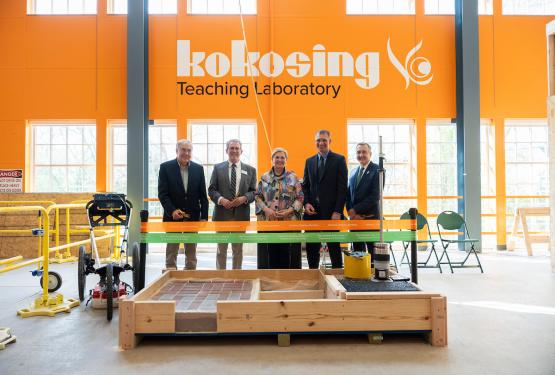
Kokosing Lab Elevates Construction Management
National
Pipeline Research Leadership & Grants
Multimillion Dollar
Transportation Research Portfolio
-
Graduate Civil Engineering
Graduate-level study in civil engineering with an emphasis on environmental engineering prepares you to explore more closely the challenges of building infrastructure and systems for the future. Both on-campus and online degree options are available.
Researchers Lead National Effort to Revolutionize Pipe Rehabilitation
Faculty are leading national research investigating a low-cost alternative to excavating and replacing corroded piping through using Cured-in-place pipe liners.
Pollution-to-Pigment Project Featured in TIME Magazine
Dr. Guy Riefler Plant develops a way to transform iron from acid mine drainage into marketable paint pigments.
Hands-On Student Experiences
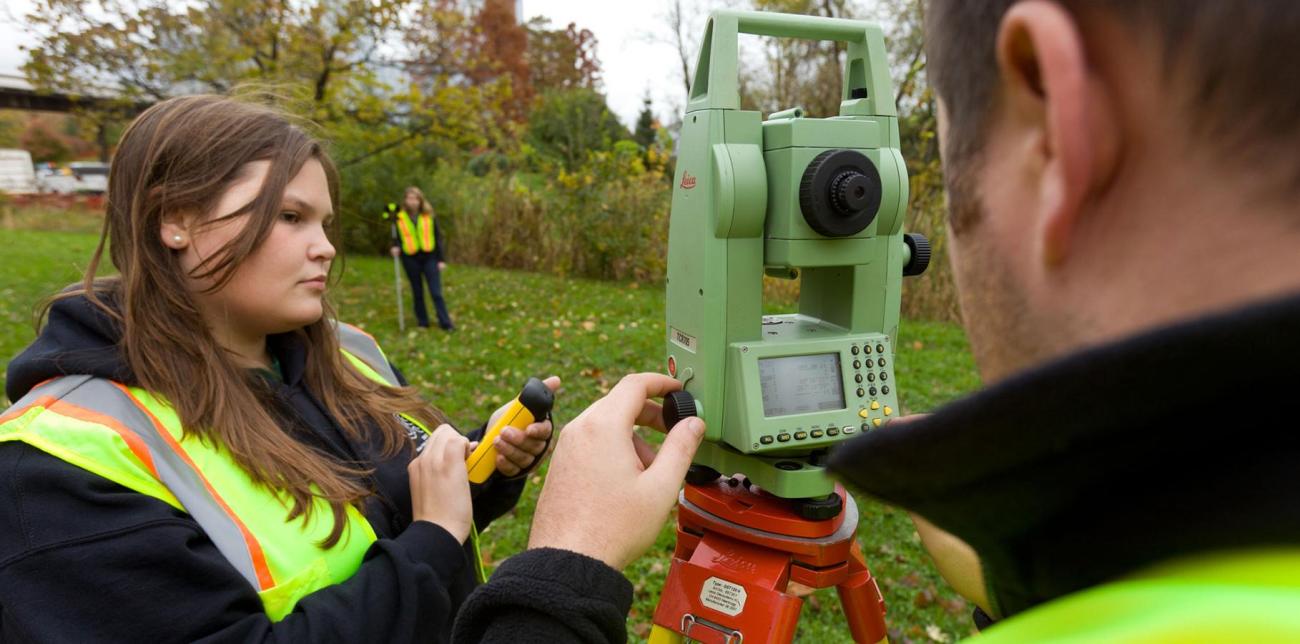
Conduct your own research in a professor's lab. Intern in several industries to sample possible career fields. And more.
-
Design a Capstone Project
For your capstone senior design course, choose from land development, environmental or water resources, structures and foundations, or a special project incorporating technical, team problem-solving and communication skills.
-
Get Involved in Engineering Student Organizations
Get to know engineering students from across the college, tackle challenges design challenges, and pursue your passions outside of the classroom with a student organization or competition team.
-
Explore Internships in Your Career Planning
Don’t wait until after graduation to develop your career. With an engineering internship, you’ll get hands-on experience in real-world work environments.
-
Elevate Your Future with the Robe Leadership Institute
The Robe Leadership Institute in the Russ College of Engineering and Technology offers an exclusive, transformative seminar each fall designed specifically for junior and senior engineering students.
-
Become an Engineering Ambassador
Develop your leadership experience in one of the Russ College's most visible programs, the Karol A. and Jo Ondick Engineering Ambassadors Program.