Image
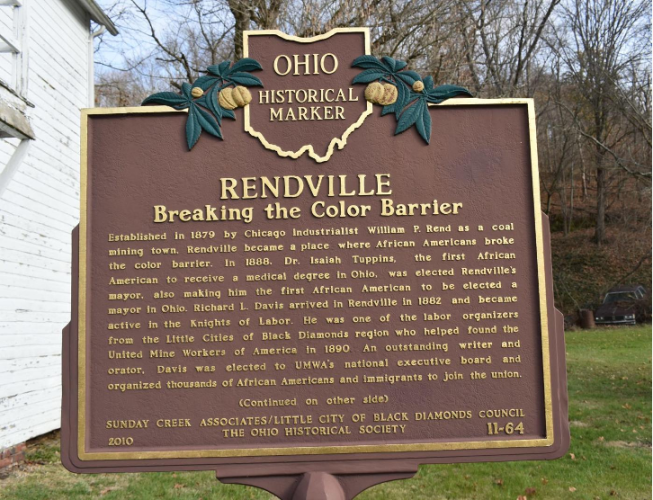
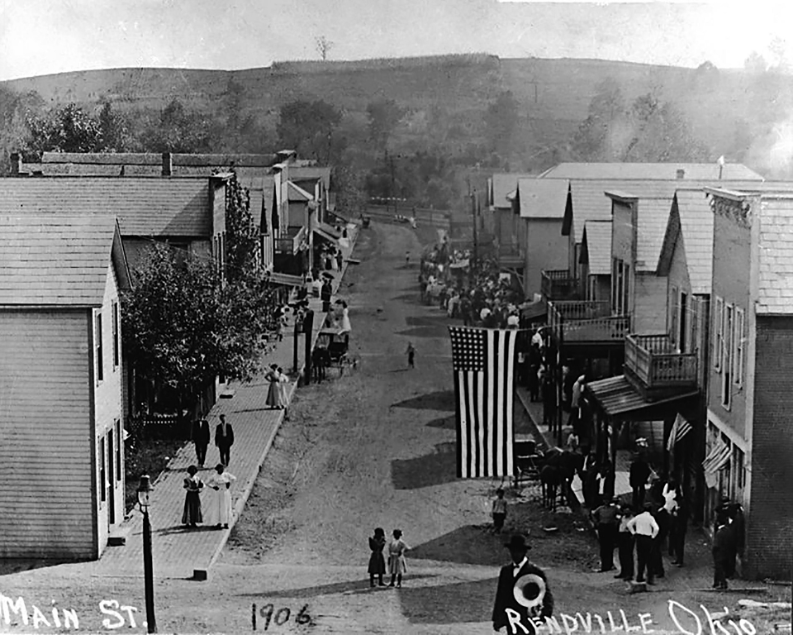
Located in Wayne National Forest in southern Perry County, Rendville is Ohio’s smallest incorporated town and is rich in African American history. As one of the nation’s early integrated communities, Rendville offers an important example of how diversity helped shape a community. Ohio University Professor Emeritus Frans H. Doppen, Ph.D., came to OHIO in 2003 to teach social studies methods courses and made it his mission to help students connect with local history.
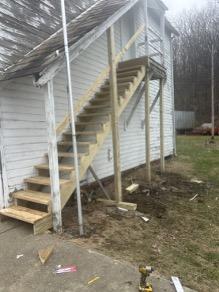
When Doppen first began bringing students to the Little White House in Rendville, it was “literally an abandoned house,” with rotting food in the refrigerator, clothing still in the closets and even an animal carcass hidden in a cupboard. This Little White House is exactly as it sounds and is a historic building currently being restored to serve as a community museum, learning space and visitor center. In addition, the Town Hall’s exterior stairs were so unsafe that, for nearly two decades, Doppen avoided going upstairs. Despite the powerful history of this racially integrated mining community, the buildings that held its story were at risk of being lost.
Through a connection made during a preservation effort, Doppen was introduced to Ohio University’s Impact Enterprise Team, part of the Voinovich School of Leadership and Public Service. The team provides no-cost consulting and guidance to nonprofits and other mission-driven organizations, helping them strengthen their operations, pursue funding and build capacity.
With the team’s support, the Rendville Historic Preservation Society formally established itself as a nonprofit organization, opening the door to additional funding opportunities. The team helped Doppen navigate the grant application process, moving from an initial request for funding to replace windows to a successful application for the full $10,000 Appalachian Impact Initiative Grant.
The funding allowed the society to complete drywall and ceilings in the Little White House and rebuild the Town Hall’s hazardous exterior stairs. For the first time in roughly 20 years, Doppen could safely explore the Town Hall’s upper floor.
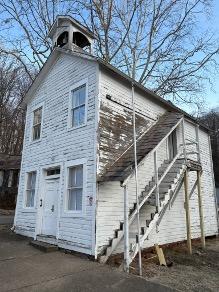
“These changes have transformed how people experience the space,” Doppen said. “Right now, if you walk into the little white house, it actually is starting to look like something again.”
The improvements represent more than progress on the buildings themselves. They also give the society a tangible way to demonstrate its work to community members, visitors and potential funders, helping build momentum for future preservation efforts.
As Doppen explains, the work supported by the grant helps people see that “this is something that is worth saving” and will “help us gain more support.”
The society hopes to eventually establish a historic center where visitors can learn about Rendville’s history at the Little White House.
“We're trying to save some structure, and at the same time, we're trying to tell the story and recover the history because a lot of that history has just been totally forgotten and lost,” Doppen added.
The Impact Enterprise Team played a pivotal role in moving Rendville from a fragile vision of preservation toward a tangible, visitable historic site and learning space. The partnership reflects the Voinovich School’s commitment to strengthening Appalachian Ohio communities and to connecting Ohio University’s people and resources with the places they serve. In Rendville, that connection runs both ways: a retired faculty member who brought students to learn the town’s history is now helping preserve it, with support from the University.