Image
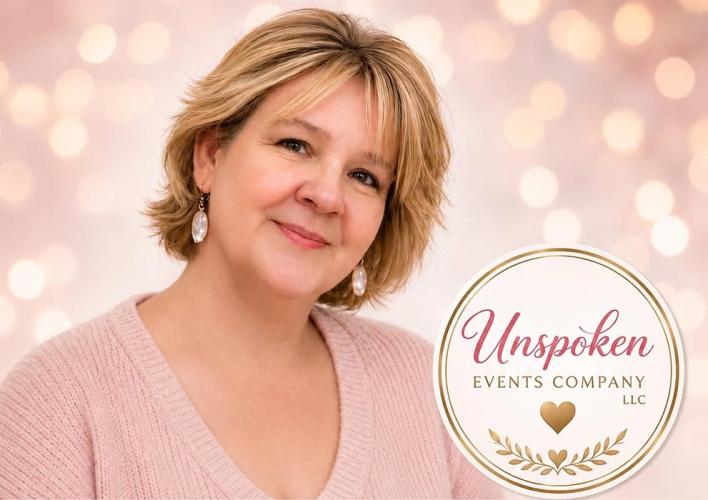
When Heidi DeGrace walks into an event, she notices things most people miss. Where will the interpreter stand, and is the lighting good enough to see their hands? Are there captions?
Those questions are the foundation of Unspoken Events Co., the Deaf-owned company DeGrace started this year while studying communication at Ohio University Lancaster. Event planning is part of what it does, along with accessibility consulting, inclusive event strategies, education and training, community engagement, and partnership development.
Peekwire recently named the company one of its “5 Inclusive Event Planning Experts Worth Knowing in Central Ohio.” Much of what drives DeGrace’s work comes back to one word.
“Here’s the key word: assume,” she said. “Just because I can speak, they assume I have no disability. That’s not true.”
At medical appointments, she said, providers often decide what she needs without asking. Some assume that because she speaks, she doesn’t need anything. Others assume she’d prefer a video remote interpreter, and she doesn’t.
“Did you ask me what I want? No, you didn’t,” she said. “Would you ask a person with no disability? Why is there any difference?”
Before one appointment, she asked directly whether an interpreter would be there. She said she was promised one and had the documentation. But when she arrived, staff asked her to wait, and she took that to mean no interpreter was there. She wasn’t going to sit while they tried to arrange one.
“I went up to the front window and I said, ‘No, thank you. I’m not going to wait,’” she said. “I know that you don’t have an interpreter. So it’s on your end.”
It isn’t only medical offices. When she tried to take a concealed carry class, no interpreter was provided there either.
In June, she made Unspoken Events Co. an official LLC, determined to change that.
“It needs to stop,” she said, “because it can’t just be me.”
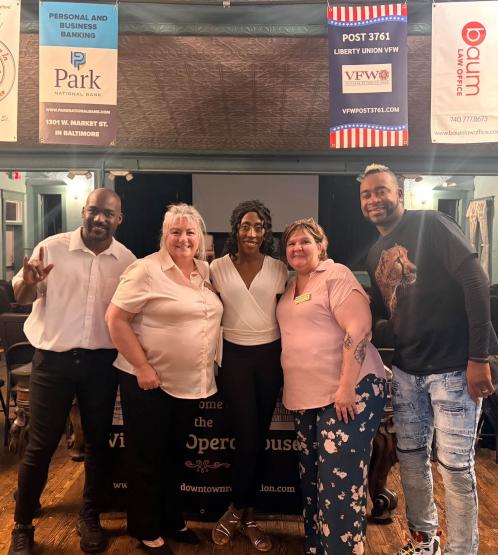
On Sept. 19, she hosted “Hands in Motion, Silent Voices” at the historic Victoria Opera House in Baltimore, Ohio. She planned it in about three months to bring Deaf and hearing communities together for an evening about challenging audism and building a more accessible future. Singer and author Aarron Loggins and performing artist Brandy Mimms traveled from out of state to perform, and Loggins made Baltimore the Ohio stop on his King’s Nation Tour. Brent Borden, who has taught American Sign Language for more than 38 years, spoke about audism and ableism. DeGrace describes audism as hearing people assuming that deaf people can’t do what hearing people can.
She has caught herself assuming, too. At one of her early events, she assumed a participant needed an interpreter without asking, and it wasn’t what that person needed. Now she asks up front exactly what each person needs.
“That really helped me and made me better at my job,” she said.
DeGrace, a mom of three who still works as a substitute teacher, once planned to teach full time and started out in education. When changes to that program would have put her back at freshman status, she met with her adviser, David Morkeh, to look at other options. Communication had never crossed her mind, but her interpreter at the time spoke up. She advocates for herself, the interpreter pointed out, so why not study it?
“I never once thought of communication, not at all,” she said. Then she started taking classes and fell in love with it. Now, she said, she applies everything she’s learning to her business.
When Peekwire’s list came out, she emailed her communication professors to share the news.
“One of the most rewarding things as a professor is seeing a student take what they learn in the classroom and apply it in meaningful, real-time ways,” said Pamela Kaylor, a professor of instruction in communication studies. “Heidi regularly shares how she is using new knowledge and skills to strengthen her business and become a more effective communicator in her professional life.”
Her business has become part of the classroom, too. Hands in Motion was one of several experiential learning opportunities for students in COMS 1100, Communication Between Cultures.
“They’re actually taking everything that I worked hard for and applying it in their own classroom,” DeGrace said of her communication faculty. “I love that.”
Kaylor said Hands in Motion gave students a chance to broaden their perspectives and deepen their understanding of communication across cultures.
“I want students to recognize that intercultural communication isn’t simply something we read about in a textbook,” she said. “It’s something we experience every day.”
At OHIO Lancaster, DeGrace has an interpreter and closed captions for her classes, and she credits accessibility coordinator Heather Cameron with staying on top of her needs. She’s also helping Kaylor with Take Back the Night, a rally against violence at 6 p.m. Oct. 27 at the Bandstand in Lancaster. DeGrace helped line up two speakers, and Kaylor arranged interpreters.
It’s a shift she’s noticed on campus.
“She knew before I even had to say anything,” DeGrace said. “I like the fact that you guys are now
starting to think and making it your first thought instead of your last.”
Connection is at the center of the company’s tagline, “Where Connection Speaks Louder Than Words,” and DeGrace is working to build more of it. In August, she held a women’s self-defense workshop, and she’s now working with a local ranch on the kind of class she couldn’t take herself: an accessible concealed carry course. She also plans to meet with the Fairfield County Sheriff’s Office to explore a possible collaboration on 911 accessibility education and communication with the Deaf community.
She’s direct with hearing organizers who assume deaf people can’t take part.
“We can do anything that you guys can do,” she said.
Studying communications and building a business around accessibility wasn’t the path she planned, but she believes it’s the right one.
“I actually think that I found my passion and my calling,” she said, “and I always thought I was just meant to be a teacher.”