Image
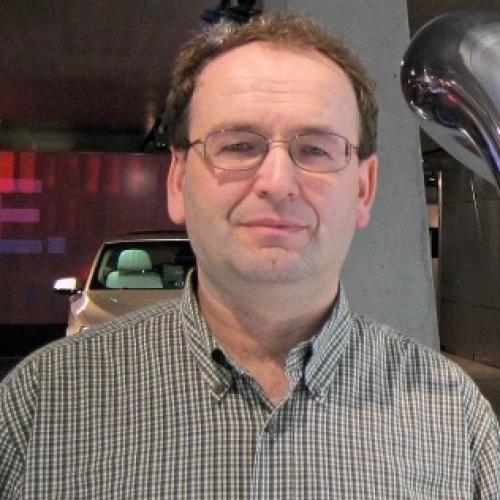
Professor Alexander (Sasha) Govorov, distinguished professor in the Department of Physics and Astronomy at Ohio University and a distinguished member of the Nanoscale and Quantum Phenomena Institute (NQPI), has reached a remarkable milestone in global scientific research: an H-index of 101 according to Google Scholar. This achievement places Govorov among a relatively small group of highly cited and internationally influential scientists worldwide.
The H-index is one of the most widely recognized measures of scientific impact. A researcher has an H-index of h if h of their publications has each been cited at least h times. Reaching an H-index of 101 means 101 papers have over 101 citations each. H=100 is widely regarded as a “gold standard” benchmark in academia, reflecting decades of sustained productivity, influential discoveries, and broad recognition across the international research community.
Govorov is internationally known for his pioneering theoretical research in nanophotonics, plasmonics, and nanoscale materials. His work explores how light interacts with nanostructures such as quantum dots, metallic nanoparticles, and chiral nanomaterials. These studies have helped shape modern understanding of nanoscale light–matter interactions and have guided experimental research programs around the world.
Till now, Govorov has published >400 scientific papers that together have received >40,000 citations. His research has contributed to major advances in plasmon-exciton interactions, hot-electron generation in metallic nanostructures, chiral plasmonic materials, and nanoscale energy transfer. These discoveries now play important roles in emerging technologies related to sensing, photonics, quantum materials, biomedicine, and energy conversion.
“My work tries to understand how light interacts with matter at extremely small scales, sizes comparable to molecules, electrons, or nanostructures,” Govorov said. “At these scales, quantum effects, geometry, and collective electronic motion can produce entirely new optical phenomena.”
Reflecting on the milestone of an H-index of 100, Govorov said he was somewhat surprised by the rapidly growing citation numbers, but pleased that his work resonated strongly within the scientific community. He also emphasized the deeply collaborative nature of scientific discovery.
“This achievement reflects the collective efforts of many talented students, postdoctoral researchers, and collaborators I have worked with over the years,” Govorov said. “Science progresses through collaboration and the exchange of ideas, and I have been fortunate to work with outstanding colleagues across many countries.”
At Ohio University, Govorov has played a central role in building an internationally recognized research program in nanoscience and quantum materials. His work consistently ranks among the most highly cited research produced at the university, and he has been recognized in global citation analyses of leading scientists.
As a long-time member of NQPI, Govorov has also helped foster interdisciplinary collaborations connecting researchers in physics, chemistry, engineering, and materials science.
“Institutes like NQPI provide an important environment where scientists from different disciplines can work together and develop new ideas,” Govorov said. “Interdisciplinary collaboration is essential for addressing many of the most exciting challenges in nanoscience.”
Looking ahead, Govorov remains focused on some of the deepest scientific questions in quantum science and biomolecular systems.
“One problem that greatly interests me is the limits of quantum teleportation of the quantum states of photonic and material particles, together with the long-standing puzzle of quantum measurement using classical devices,” he said. “Another exciting direction is understanding and designing biomolecules and the information encoded within them.”
He also emphasized the importance of Ohio University’s interdisciplinary environment in enabling future discoveries.
“NQPI and Ohio University, together with their interdisciplinary research environment, are great places for such research.”
Beyond his scientific accomplishments, Govorov is widely respected for mentoring graduate students and young researchers who have gone on to successful careers in academia, national laboratories, and industry.