Kissed by the Sun: UC 1900 students explore cyanotype photography
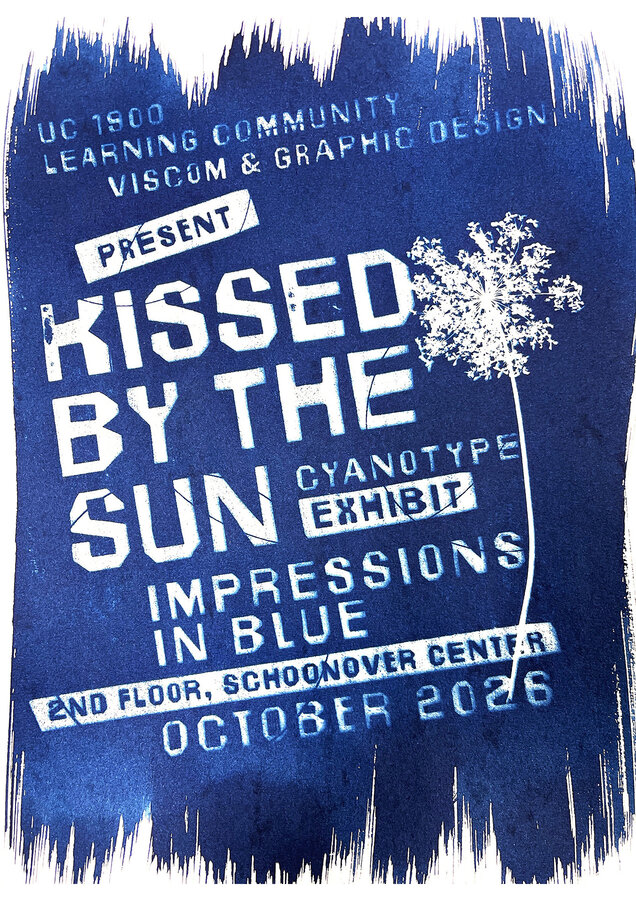
The UC 1900 Visual Communication learning communities showcase the art of cyanotype photography in “Kissed by the Sun,” an exhibition on display throughout October at the VisCom Pop-Up Gallery in Schoonover Center.
October 12, 2026
Share:
The UC 1900 Visual Communication learning communities present “Kissed by the Sun,” a cyanotype exhibition on view throughout October at the VisCom Pop-Up Gallery on the second floor of Schoonover Center, near the School of Visual Communication office suite in Schoonover 250.
The exhibition brings together work from two sections of UC 1900 in Visual Communication and Graphic Design, taught by Josh Birnbaum, professor of Instruction, and Adonis Durado, associate professor in the School of Visual Communication.
Visiting Professor Terrance Reimer also joined the classes as an invited speaker, sharing examples of his own cyanotype work and offering students additional insight into photographic processes and image-making.
“We are helping students in Visual Communication and Graphic Design connect to the history of photography through modern digital processes in order to engage their creativity and deepen their experiences during their first semester,” Birnbaum said.
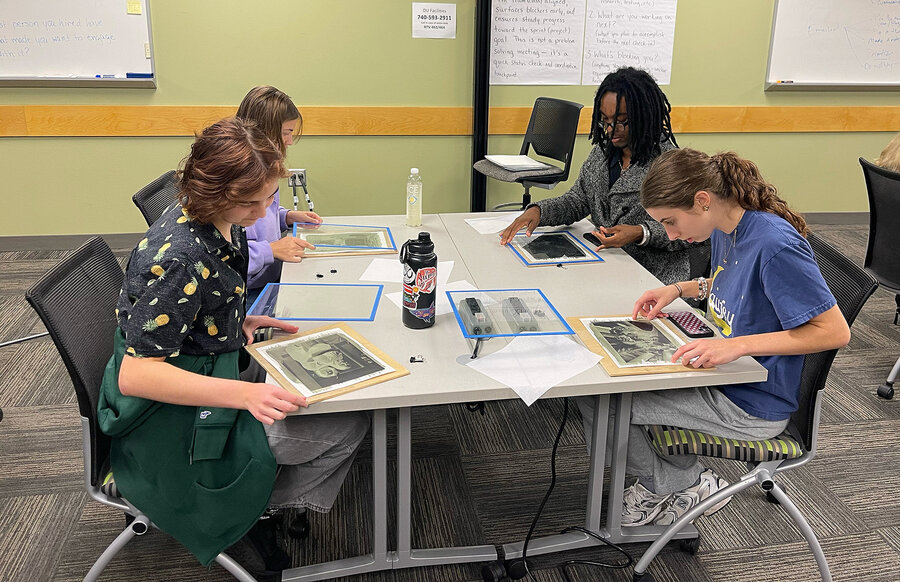
For Durado, the project also offers a valuable counterpoint to increasingly digital and AI-driven creative workflows.
“In the age of AI, it’s important for students to explore the powerof analog processes and experience making images with their own hands,” Durado said. “There is something valuable about stepping away from the screen, working with physical materials, getting your hands wet and dirty, and allowing the process itself to become part of the creative experience.”
Reimer said the project reflects the value of experiential learning by giving students the opportunity to understand photographic processes through direct experimentation.
“This project emphasizes engaged, experiential learning, as students are actively making, experimenting, and learning through the cyanotype process itself,” Reimer said. “It reflects Ohio University’s ‘Learning by Doing’ philosophy, and the experience becomes even more meaningful when that process culminates in a public exhibition. Students are not only learning a technique; they are creating work, making decisions, and ultimately seeing their photographs presented and shared with an audience.”
As part of the project, students explored the history and practice of cyanotype, one of the earliest photographic printing processes. They learned about Sir John Herschel, who developed the process in 1842 and initially used it to reproduce scientific notes and diagrams. Cyanotype, also known as “sun print,” later became widely associated with architectural and engineering blueprints.
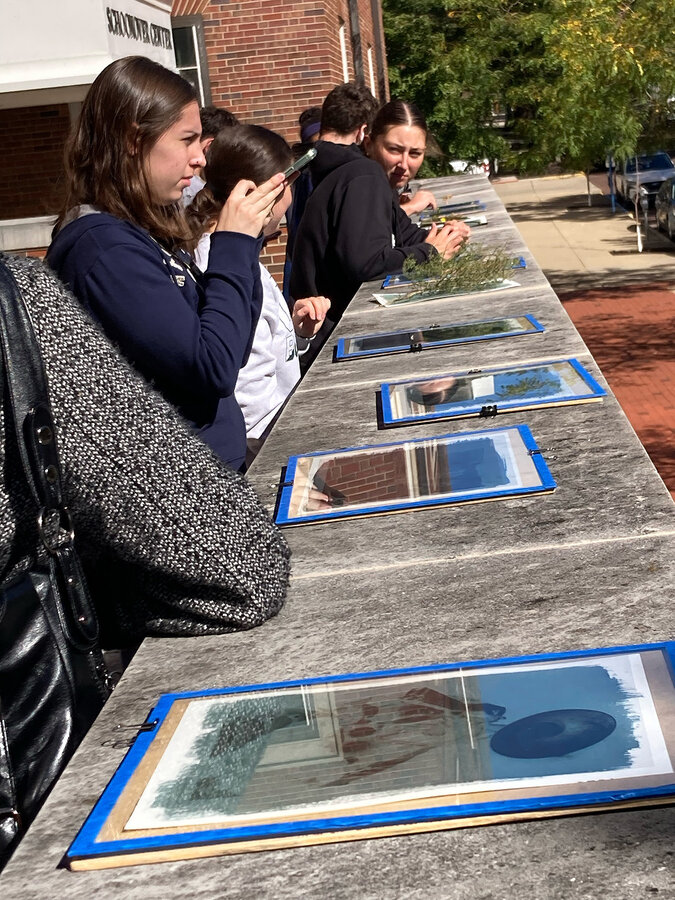
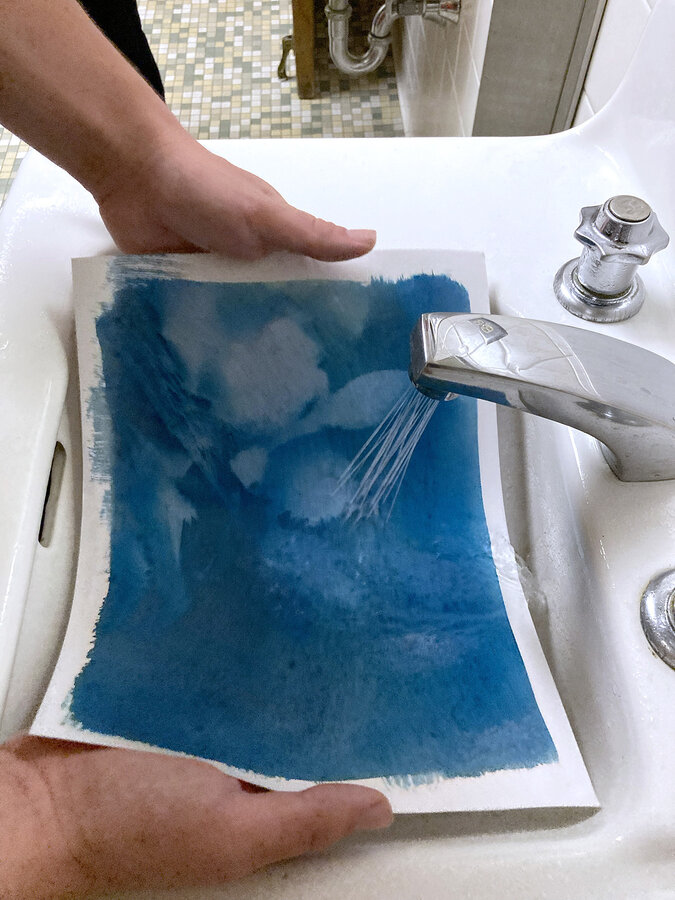
The process uses ferric ammonium citrate and potassium ferricyanide to create a light-sensitive solution that is applied to paper or another absorbent surface. Objects, photographic negatives, or other materials are placed on the prepared surface and exposed to ultraviolet light or sunlight. During exposure, the iron compounds react to form ferric ferrocyanide, commonly known as Prussian blue, which gives cyanotypes their distinctive deep-blue color. The print is then rinsed in water to remove unreacted chemicals and reveal the final image.
For students, the project offered an opportunity to discover photographic techniques beyond contemporary digital workflows.
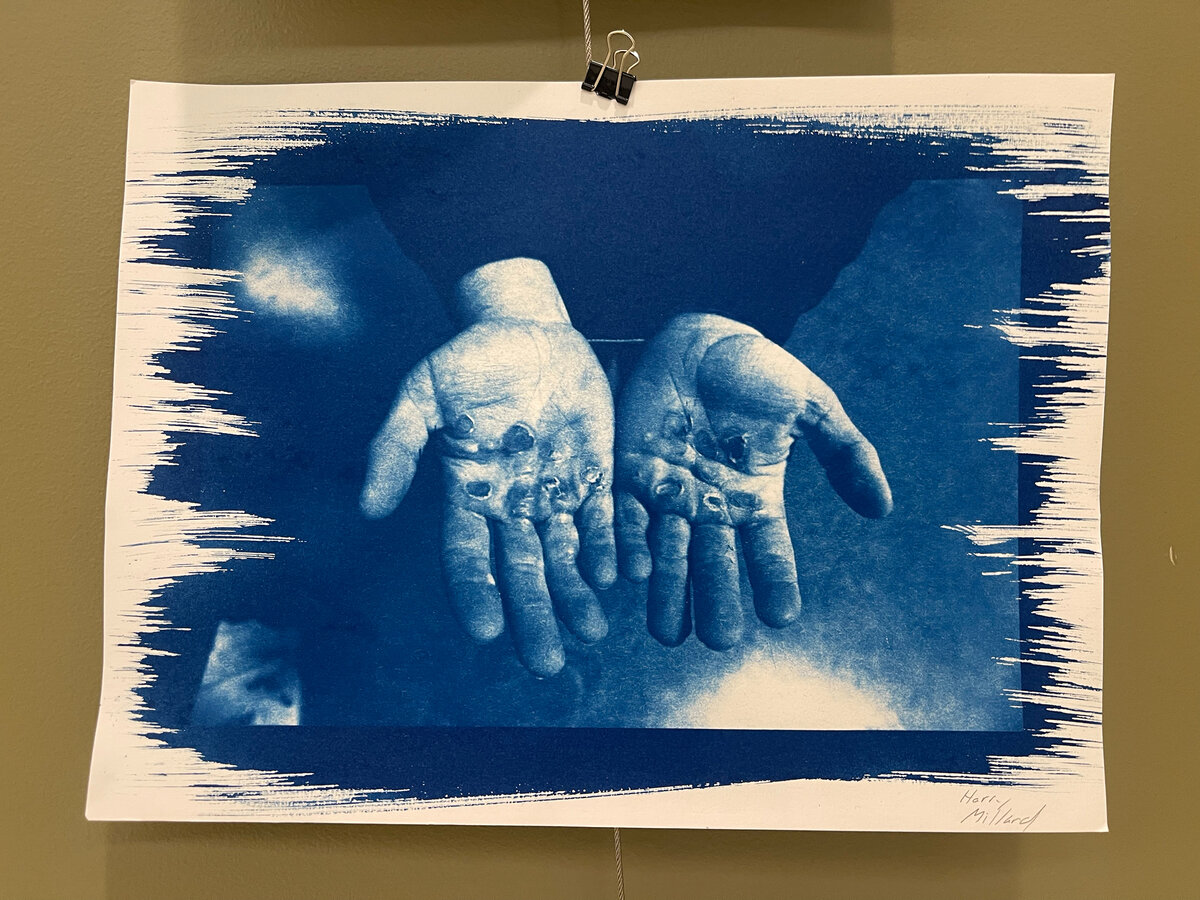
“I really enjoyed the whole experience of making the cyanotypes,” said Harry Millard, a Visual Communication student. “I had seen them online before and was always interested in making one, but I had never looked too deeply into the process. Learning about the history of cyanotypes was really interesting and got me excited to create them with my peers.”
Millard said the hands-on process also encouraged him to explore older forms of photographic production.
“The process itself was simple and really got me interested in older forms of photo development and printing,” Millard said. “I enjoy that our professors are showing us a world beyond digital cameras and teaching us new techniques that we can use in future projects. Overall, the experience was really fun, and I’m glad I was able to take part in it.”
Through “Kissed by the Sun,” students connect a historic photographic process with contemporary approaches to image-making while exploring experimentation, materiality and the relationship between analog and digital techniques.
Students participating in the exhibition include: Lilliana Allen, Rae Alvarado, Ashlynn Bolon, Lucy Bish, Kyra Boyd, Evey Bringolf, Destony Crimm, Olivia Dean, Brenna FyIe, Adeline Gaysunas, Ray Gleadle, Delaney Glynn, Mia Hayes, Avery Hedges, Gentry Heflin, Max Horstmeyer, Bahji Jenkins, Taegan Johnston, Olivia Kenny, Cam Landry, Holden Lerner, Sophia Mathie, Jason Miller, Harry Millard, Devin Requarth, Cameron Siebert, Norah Shoemaker, Kayana Wills, Lola Worley and Caitlin Zeller.