Image
Before Ohio University built anything on Carlisle Hill, the people of Chillicothe had already bought the ground.
Ohio University Chillicothe had been holding classes since 1946, and in 14 years it had never had a building of its own. A group of local citizens purchased 43 acres in 1960 and added more the following year. Then, in 1962, the community raised $200,000, not simply to pay off the land but to send a message to the Ohio General Assembly: this town is serious about higher education, and it has already put its money down.
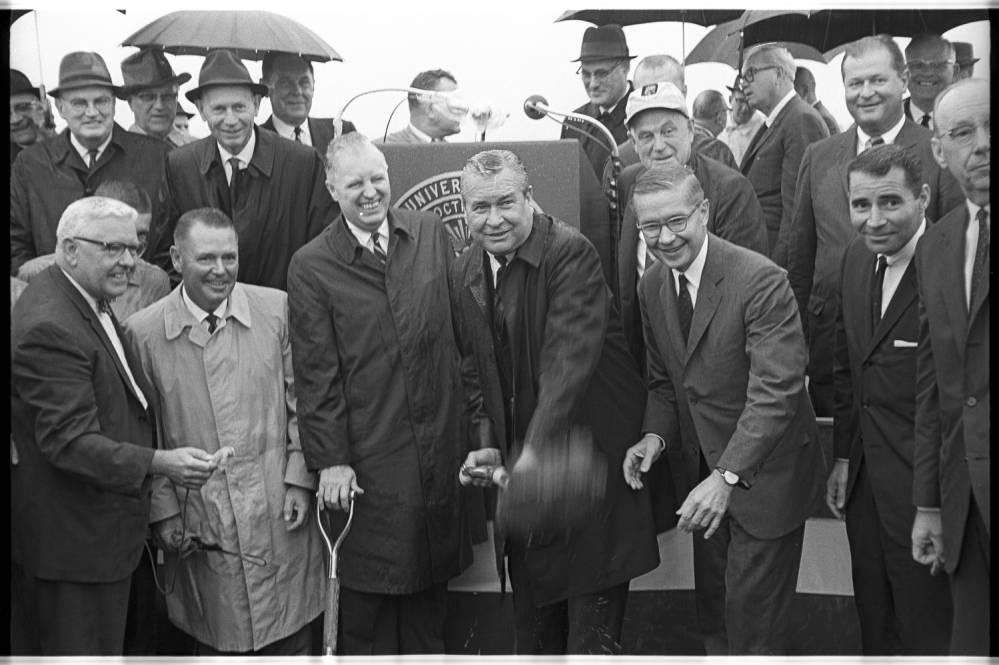
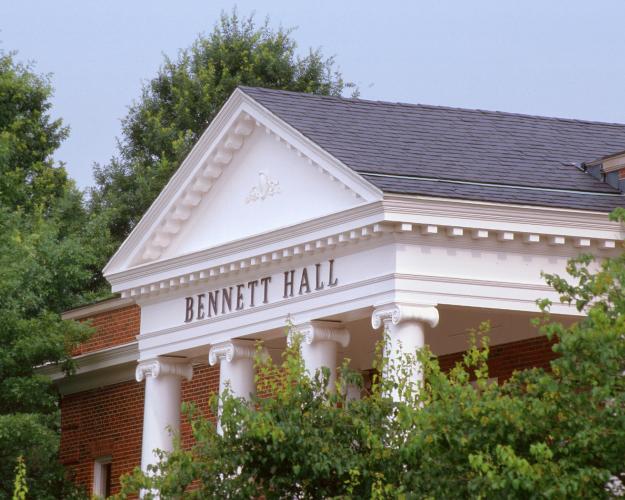
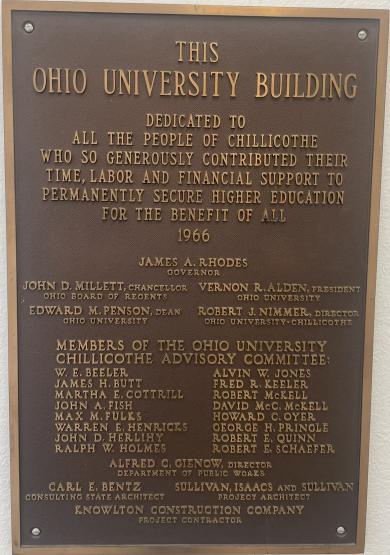
Four years later, Bennett Hall opened as the first permanent building of OHIO Chillicothe. A plaque inside still honors the residents whose time, labor and money made it possible. Eighty years after the first classes, the same spirit of citizen leadership continues through the OHIO Chillicothe Regional Coordinating Council.
The campus began as a wartime response. When the GI Bill sent millions of World War II veterans to college, Ohio University President John C. Baker expanded into high school buildings across the region. He announced the Chillicothe campus, the first regional campus in the state, on May 10, 1946. Classes began that September with 281 students in 41 courses.
What started as a temporary measure quickly became something the community refused to let go. In the 1950s, residents organized a Citizens Advisory Committee and hired a recruiter to spend summers persuading area high school graduates to enroll. There was no campus to show them. Classes met in the evenings in borrowed buildings.
Growth followed. The Burton E. Stevenson Learning Resources Center opened in 1974, the Myrl Shoemaker Convocation Center in 1980 and a Technical Studies building in 1998.
Today the campus spans 96 acres atop Carlisle Hill. Since 1946, thousands of graduates have walked out of its classrooms and into careers across south-central Ohio, many of them the first in their families to earn a degree.
The citizens who bought the land and raised the money never intended to hand the campus off and walk away. Their model of community leadership evolved into the Regional Coordinating Council, made up of residents from across the region the campus serves. Members are appointed to three-year terms, renewable up to three terms, and meet three times a year. The council gives the community a direct line to university officials and a voice in the campus’ direction.
“So much on this campus exists because people in this community decided it should,” said Michael Lafreniere, dean of campus and community engagement at OHIO Chillicothe. “They helped secure the land, they raised money and they persuaded their neighbors’ children to enroll. The families who did that were not thinking about 1966. They were thinking about what their grandchildren would need. Eighty years later, our stewardship means thinking that far ahead.”
That work now falls to a council whose members bring experience in education, health care, manufacturing and public service. Tiffany Baldwin, the council’s chair and program manager for Downtown Chillicothe, leads a group that includes a school superintendent, physicians, manufacturing leaders and a former mayor of the city.
The residents who bought that hilltop in 1960 could not have known what would stand there today. They knew only that their children and grandchildren deserved the chance to earn a degree without leaving home. Every fall, a new class arrives on the hill to do exactly that.