Image
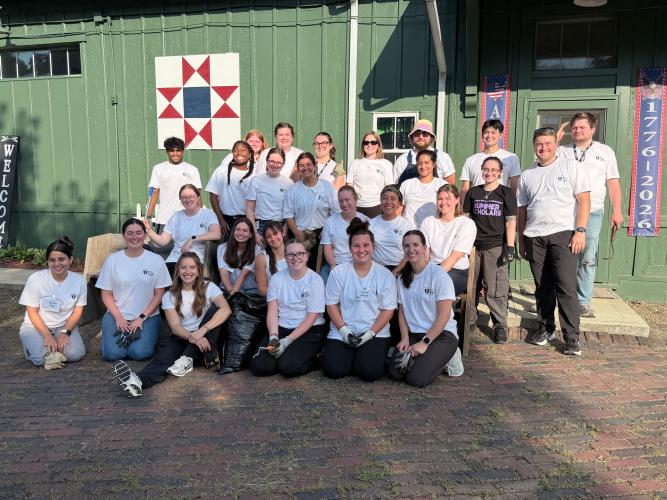
Before anatomy labs, exams and long nights of studying begin, a group of incoming Ohio University Heritage College of Osteopathic Medicine students spends three days on what is essentially a listening tour.
They listen to rural residents talk about the challenges and strengths of their communities. They listen to patients describe their experiences with the health care system. They listen to health care workers, community leaders, faculty mentors and each other.
The experience is part of the Rural and Urban Community Orienting Experience (RUCOE), an immersive program helping to shape the next generation of physicians committed to serving rural and underserved communities.
RUCOE, which is part of the Heritage College’s Rural and Urban Scholars Pathways program, recently received a significant funding boost through a five-year grant that will provide more than $100,000 annually, ensuring future medical students continue to have access to the experience.
“We’re thrilled to receive this funding, because it will ensure that future medical students continue to have access to the experience, which frankly, can alter the career path of students who previously had an interest in rural health but maybe were uncertain about pursuing it,” said Sharon Caspaulla, Ed.D., director of Rural and Underserved Programs.
Learning by listening
Rather than focusing on what communities lack, RUCOE encourages students to recognize community strengths.
"The deficits and challenges in rural and underserved communities are often quite apparent to outsiders," said Casapulla. "In the RUCOE we intentionally invite students to focus on the health of a community, the assets within rural and urban underserved communities."
Students visit a federally qualified health center in Columbus, tour a rural critical access hospital, complete service projects and participate in conversations with community members who share their personal health care experiences.
Those conversations often become the heart of the program. One lesson repeatedly surfaces: the importance of hearing patients' stories.
"As an incoming medical student, I had yet to interact with patients in this new role,” recalled medical student Sydney Lingerak in a reflection published in Teaching and Learning in Medicine as part of a 2025 study that examined the impact of the program. She described patients using conversations “as an opportunity to share their health care experiences in order to teach us what to do, and what not to do in providing patient care. Every one of their stories was incredibly vulnerable. They were difficult to hear, but a privilege to listen to."
"My traditional view of a patient-physician relationship had shifted to one of storyteller and a listener," reflected Sara Kalout, another student participant. "After RUCOE, I made it a point to always try and listen to whatever patients I had encountered afterwards. I think we underestimate the power of listening and the impact it has on our patients."
RUCOE places a strong emphasis on self-reflection. Students in the program receive journals and are encouraged to write throughout the three days, capturing observations, emotions and lessons learned. For the study, participants were also asked to reflect on their experience one year later.
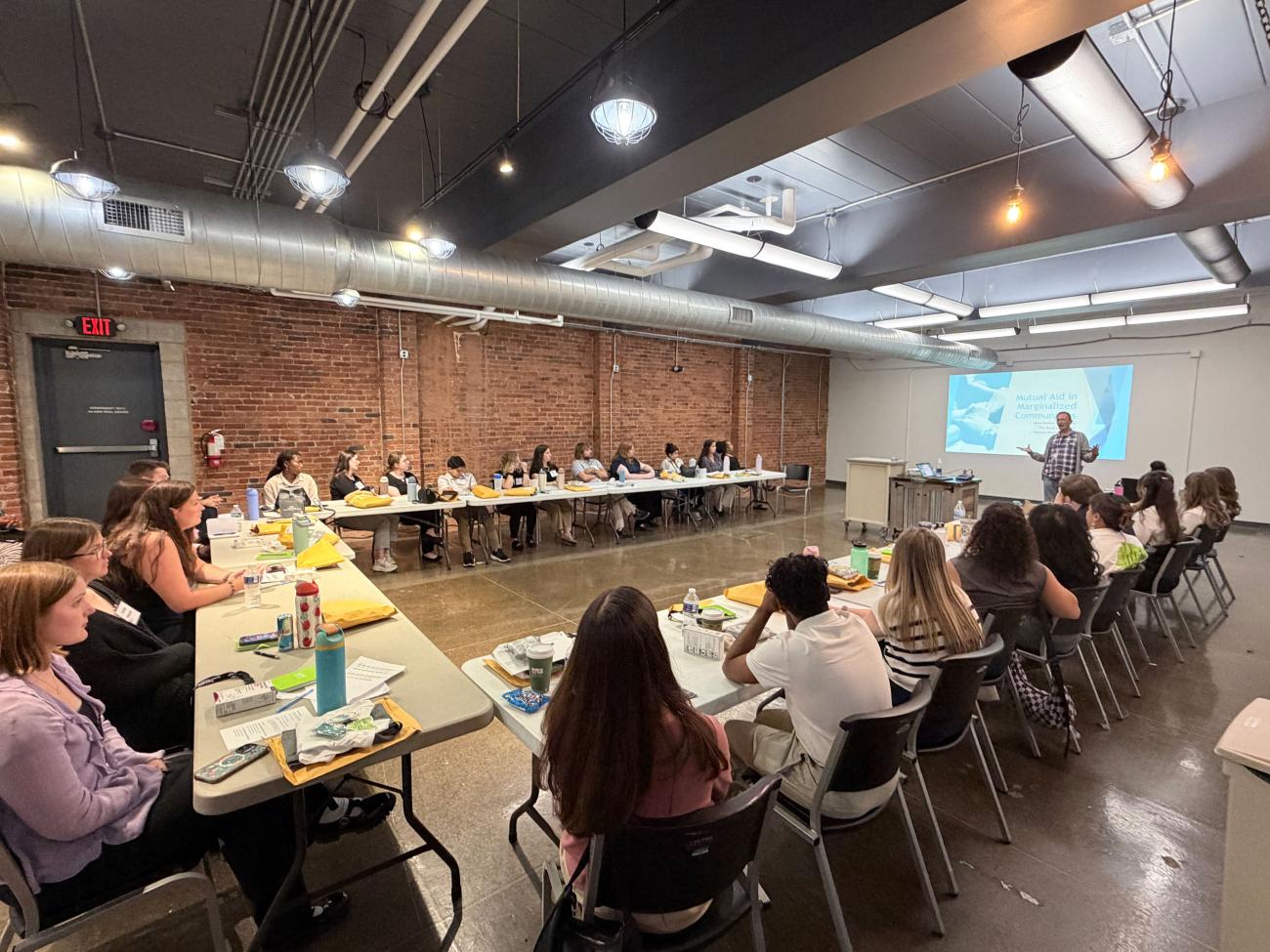
Building connections
The program not only connects students with patients, it helps them build relationships with other incoming students.
"I was welcomed with a sense of ease as I began to realize that I was surrounded by peers who held similar values to my own," Lingerak noted. "We all shared an unyielding passion for underserved medicine."
Kalout wrote in her reflection that the program helped establish a sense of belonging during what can be an intimidating transition.
"Getting to know the other students before starting medical school made me feel more comfortable in who I am," Kalout wrote. "I am extremely grateful to RUSP and RUCOE because of this."
That sense of community extends beyond structured activities. Shared meals, long car rides and evenings spent talking with classmates often turn strangers into friends.
"After only three days, the people I met at RUCOE felt like old friends," Lingerak wrote. "When our medical school orientation began, we already had a community in this new environment."
Faculty members say those connections matter.
Katy Kropf, D.O. (’02), assistant clinical professor of primary care and associate director of the Office of Rural and Underserved Programs, also wrote reflections for the study. She recalled overhearing a student say she was relieved to meet other medical students who cared about working with underserved populations because a shared interest in medicine did not necessarily mean they share the same values.
“I was surprised by this at first but then remembered my own first days of medical school and how the values and desired practice ethics shared by new peers either built connections or emotional distance. A sense of belonging and ‘being seen’ is meaningful and fulfilling in friendship formation and in the budding stages of professional identity formation.”
Finding career inspiration
RUCOE gives students exposure to health care careers in rural and underserved settings. They hear from physicians, visit health care facilities and meet professionals who have dedicated their careers to communities with limited resources.
For some, those encounters open new possibilities.
After visiting a federally qualified health center, Kalout wrote a simple note in her journal: "New goal: to look into working at a FQHC."
For Lingerak, hearing from a physician who was a graduate of the program made a lasting impression.
"To receive a firsthand account of how RUSP prepares medical students to achieve their goals in serving marginalized populations was powerful," she wrote. "I vividly remember thinking to myself, 'This could be me.'"
The impact often lasts well beyond the first few days of medical school.
Looking back a year later, Kalout described RUCOE as one of the most meaningful experiences of her medical education. It became a reminder of why she wanted to be a physician and helped her navigate her first year of medical school.
She added that her journey in medicine is guided by a phrase she heard: "Never lose your humanity."
For Casapulla, the success of RUCOE can be seen in the conversations it creates.
"I am reminded of the healing power of stories, for the storyteller as well as for the listener,” she pointed out. "These are such meaningful and formative conversations for the students, but also for the community members, who eagerly share, proud to be heard and valued in exchanges about health care...On woman shared, with a genuine smile, that this was the first time she had spoken about these personal experiences. And it felt good to be heard."