Image
For Adeel Koshal, summer research offered an opportunity to help answer scientific questions while contributing to work that could one day improve people’s lives.
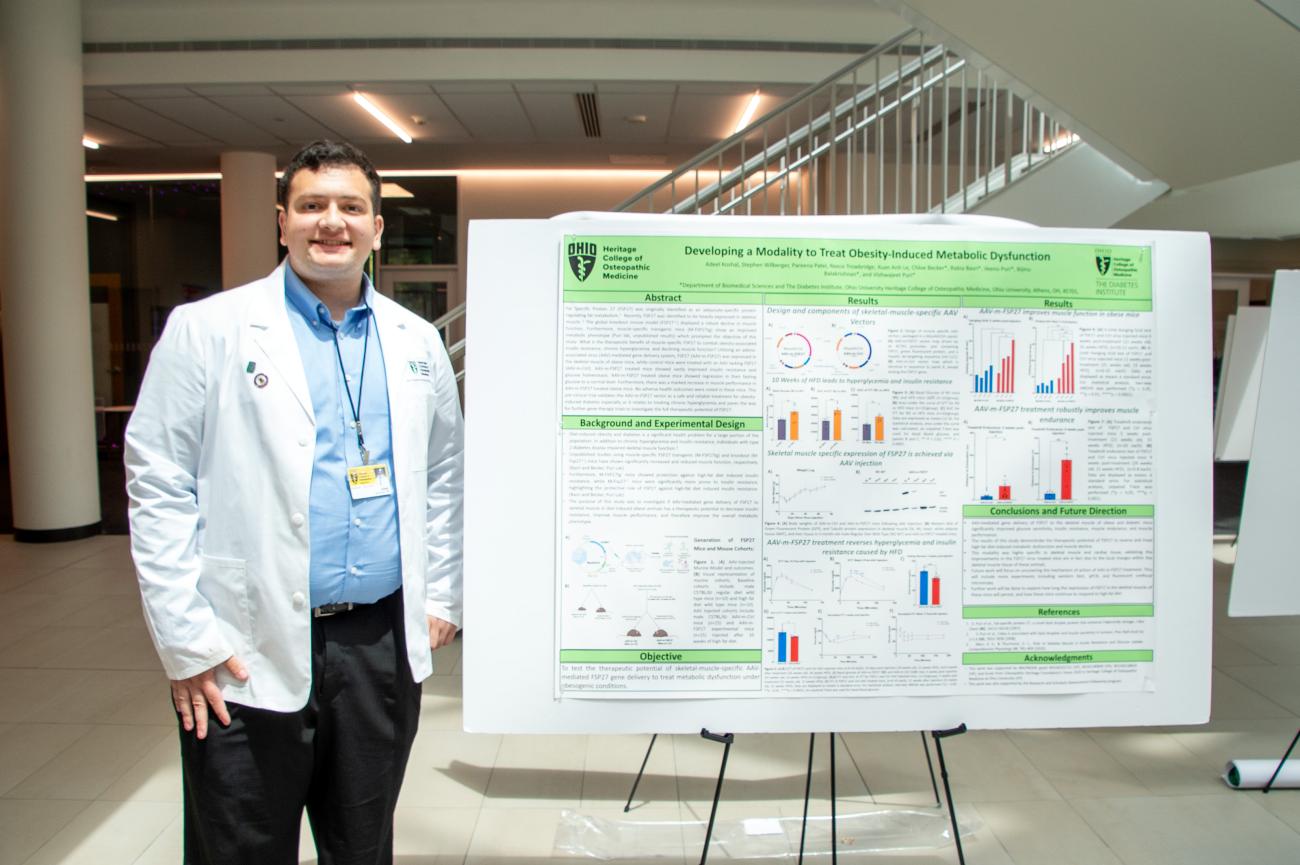
The rising second-year student at Ohio University’s Heritage College of Osteopathic Medicine spent 10 weeks studying a potential genetic therapy for obesity and diabetes through the college’s Research and Scholarly Advancement Fellowship, or RSAF.
He and several other students he recruited worked in the laboratory of Vishwajeet Puri, Ph.D., executive director of the Diabetes Institute and Osteopathic Heritage Foundation Ralph S. Licklider, D.O., Endowed Professor. In the lab, the students examined how increasing expression of a protein in skeletal muscle affects metabolism and physical performance. The research has shown promising results in mice, including improved fasting glucose levels and increased muscle endurance.
“The cool part of the program is you design your project with your mentor,” said Koshal. “You’re working with them on the design, on actually doing the experiments, doing the results, interpreting it with them.”
This summer, Koshal was one of 14 Heritage College rising second-year students who participated in the fellowship, which is supported by the Osteopathic Heritage Foundation. Since the program began at the Heritage College almost 50 years ago, more than 600 student researchers have worked closely with mentors engaging in scholarly discovery.
“The value of RSAF for students is that it provides an early, immersive introduction to the research process and helps them develop skills that are essential for both scientific inquiry and clinical practice,” said Jessica Wingett, director of research administration and student research. “The program also exposes students to the role of research in advancing evidence-based medicine, helping them become more informed consumers of scientific literature and better future physicians.”
Wingett points out that the RSAF experience can shape students’ careers and strengthen their future residencies.
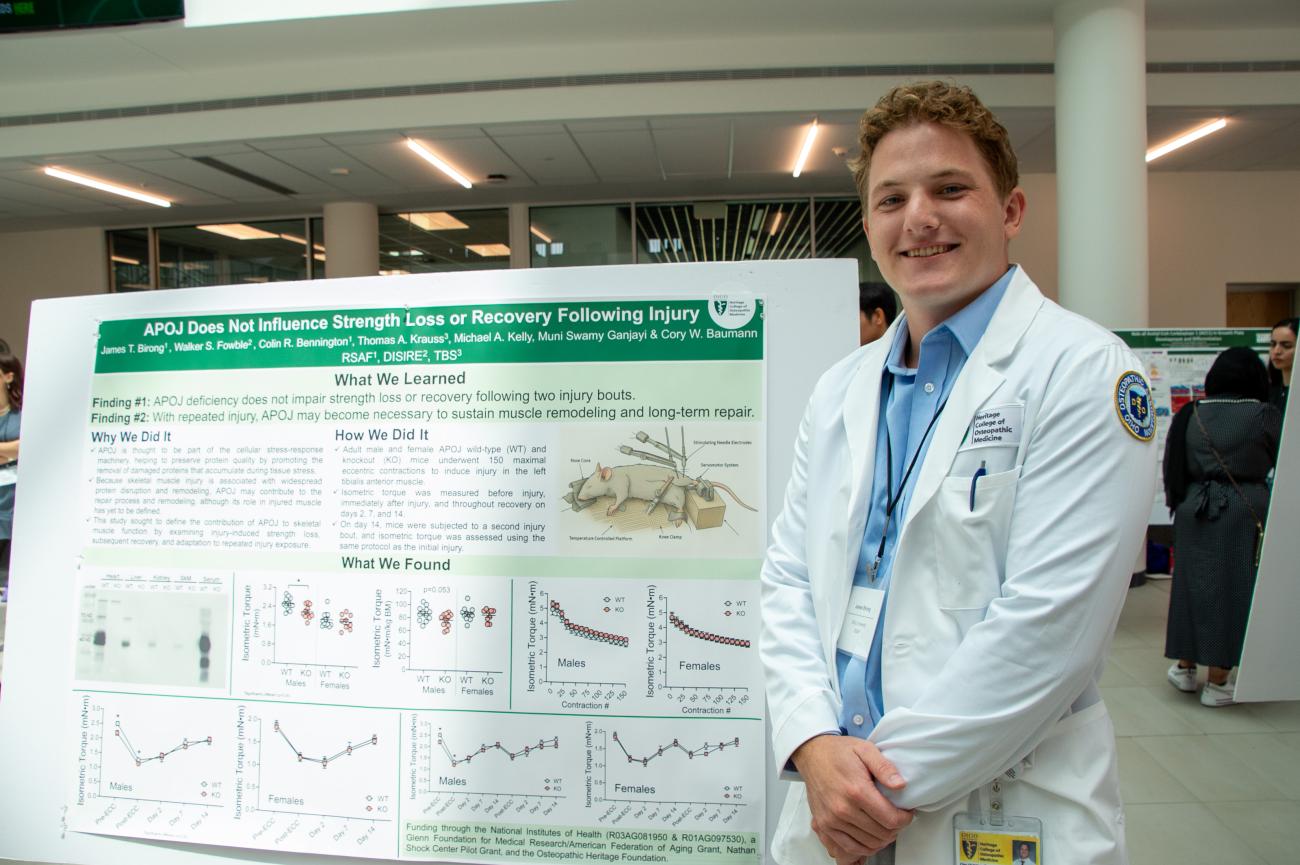
Coming from a smaller university with fewer resources for research, James Birong saw RSAF as an opportunity to explore his interest in sports medicine. He worked in the lab of Cory Baumann, Ph.D., an assistant professor and investigator in the Ohio Musculoskeletal and Neurological Institute, studying muscle physiology and helping collect data for a doctoral student’s research project.
“I wanted to get my foot in the door and maybe boost my resume, maybe improve the field of science, see what I could do. I’m very interested in muscle recovery,” said Birong. “It was a great experience. I got to learn a lot about muscle physiology and recovery of skeletal muscle. I would do it all over again if I could.”
Baumann, the Osteopathic Heritage Foundation Ralph S. Licklider, D.O. Endowed Faculty Fellow in Aging Systems Physiology, said mentoring RSAF students is a “true win-win.” Students develop fundamental research skills, and their contributions help move the work of the laboratory forward. Bauman called his students amazing, adding that they started the summer quiet and shy.
“By the middle and end of the summer, I could walk into the lab and see everyone performing experiments, helping one another and interacting as a real team. I could not help but smile and feel proud of how much they had grown, both individually and as a group,” Baumann said. “That transformation is what comes to mind when I think about the value of RSAF.”
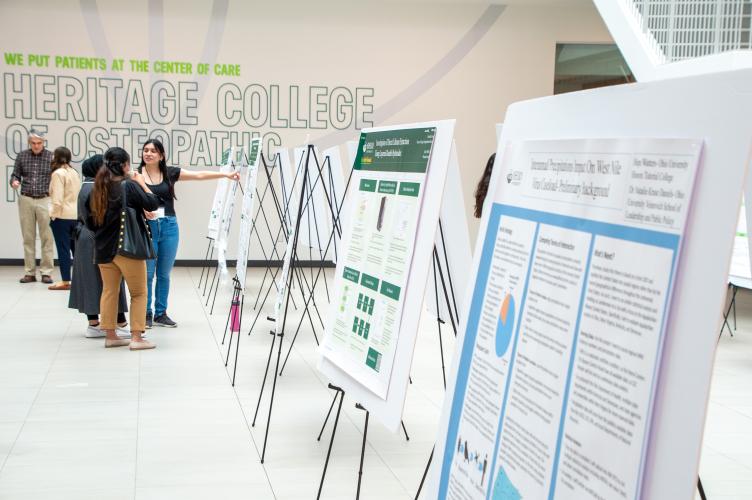
The RSAF fellows presented their research July 22 during the Ohio University Summer Research Symposium in Heritage Hall. The event brought together students from several summer research programs including the NIH-funded Diabetes Institute Summer Interprofessional Research Experience (DISIRE), the Translational Biomedical Sciences (TBS) program, the Summer Undergraduate Research Fellowship (SURF), the Summer Neuroscience Undergraduate Fellowship (SNURF), and for the first time the Honors Tutorial College (HTC) Summer Scholars program. There were 62 posters, 13 student presentations and a keynote address by Deborah Muoio, Ph.D., George Barth Geller Distinguished Professor of Cardiovascular Disease at Duke University School of Medicine, at the symposium.
“RSAF connects students to a broader community of scholars. Through seminars, mentorship and the Summer Research Symposium, participants become part of a network of peers, faculty and researchers who share a commitment to inquiry and lifelong learning. That sense of community is often one of the most meaningful and lasting benefits of the program,” said Wingett.
For Koshal, RSAF reinforced how research can connect scientific discovery with his future career as a physician.
“I’m in medical school for a reason. I love to help people, and this bridges that opportunity, that gap. As a medical student, I’m not a doctor. I can’t do the same things some of the physicians do in clinical trials, but in the project, in this type of research, I can play that central role,” he said. “It’s a great program. I’d recommend it.”