Image
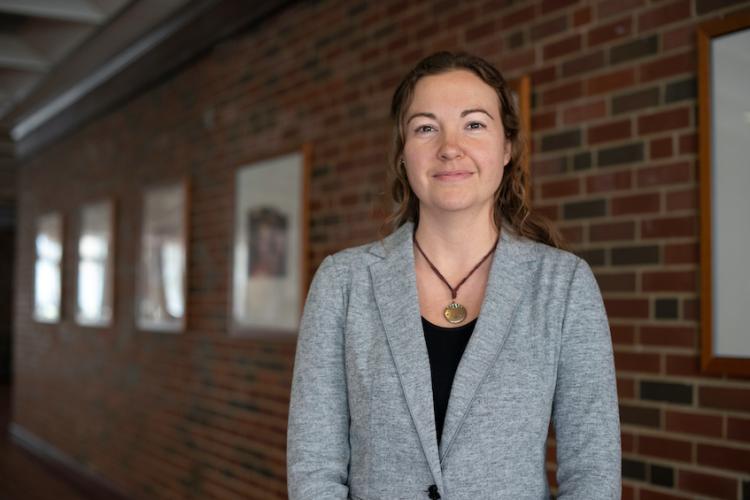
Ohio University researcher Berkeley Franz and her team have been awarded a major new National Institutes of Health (NIH) grant to expand their work improving access to opioid use disorder treatment in primary care settings.
The four-year, nearly $4 million award builds on a successful pilot clinical trial that tested whether primary care providers could be supported to prescribe life-saving medications for opioid use disorder rather than referring patients elsewhere for treatment.
The new project will scale that model across roughly 40 clinics in Ohio and West Virginia, in partnership with regional health systems including West Virginia Primary Care Association, the Ohio Association of Community Health Centers, and Holzer Health. The study will track patient outcomes over time while testing whether a brief, structured prescribing support and mentorship model improves the prescribing of medication and can be sustained in real-world primary care environments.
Franz said the goal is less about proving whether the medication works, which decades of research has already established, and more about closing the gap between evidence and practice.
“It has been decades since we learned how effective this medication is, but it still isn’t widely prescribed in primary care.” Franz, the Osteopathic Heritage Foundation Ralph S. Licklider, D.O., Endowed Professor in Community and Behavioral Health and Co-Director of the Institute to Advance Population Health (ADVANCE), said. “We’re not asking whether it works—we’re asking how we get it into routine primary care in a way that’s sustainable. This is about scaling it, supporting providers and making sure patients can access it where they already receive care.”
The model at the center of the study is designed to be “low touch,” offering streamlined training for clinicians along with ongoing mentorship from experienced prescribers in partnership with Grant Medical Center’s Fellowship in Addiction Medicine. Franz said the approach is intended to reduce barriers for rural providers, many of whom may not have another opioid treatment prescriber in their network.
Alongside Franz, two-time Ohio University alumna Cheyenne Fenstemaker is taking the skills she’s developed over the course of
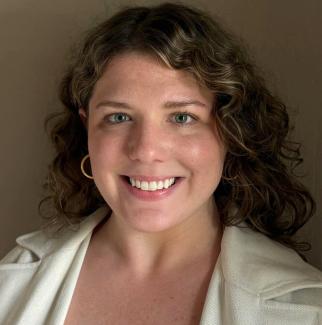
her several years as a student and as Franz’s research assistant to help grow this study and alleviate barriers. Fenstemaker has spent the past four years working closely with Franz, supporting multiple stages of the research program, from early qualitative work to the current implementation trial.
“I’ve been fortunate to be involved from the beginning through the end of the pilot work, and now into the expansion,” Fenstemaker, who is now the program manager on the study, said. “That continuity has allowed me to understand every stage of the research process, which is pretty unique in a project of this scale.”
Her role throughout the process has included coordinating day-to-day research activities, supporting recruitment across clinical partners and conducting qualitative interviews with primary care clinicians, particularly in rural Ohio counties. Those interviews, she said, were essential in shaping the prescribing support intervention now being tested at scale.
“The problem we’re solving is that opioid use disorder is common but still vastly undertreated,” Fenstemaker explained. “We have highly effective, evidence-based treatments, but there’s a gap between evidence and practice. In rural Ohio, clinicians told us they often feel isolated and unsupported after training. They’re asking for mentorship and tools that actually fit their reality.”
Early findings from those interviews showed that many rural providers felt existing training models were too urban-focused and did not reflect the realities of small or resource-limited clinics. That feedback directly informed the design of the prescribing support program now being implemented across the large implementation trial.
Fenstemaker also helped lead coding and qualitative analysis efforts, working with a team of roughly a dozen research assistants and students at Ohio University, Ohio State University, the University of Southern California, and the University of Wisconsin. She has helped train students in qualitative methods, supporting manuscript development and coordinating research workflows across the group.
“We’ve been very intentional about the student experience,” she said. “Students don’t just observe—they help with recruitment, coding, analysis and even manuscript writing. Many of them become co-authors. It’s a really hands-on way to learn how research gets done.”
Franz said that mentorship model extends beyond patients and clinicians to the research team itself.
“Cheyenne has been central to building continuity in this work,” Franz said. “She understands the full arc of the project from the earliest interviews to implementation and that kind of experience is exactly what makes large-scale studies like this possible.”
Fenstemaker, who is now in her ninth year working at Ohio University, said her academic and professional path has directly shaped her ability to take on that role. After beginning as an undergraduate researching mental health access in Appalachia, she later completed a master’s degree in Law, Justice, and Culture, strengthening her qualitative research expertise and preparing her for applied implementation work.
“Being able to grow within OHIO, from student to researcher to program leadership, has shaped how I approach this work,” she said. “I’ve had the chance to see projects through from start to finish, and that’s given me a strong foundation for coordinating something as complex as this trial.”
Over the next four years, the NIH-funded study will continue tracking how the mentorship-based prescribing model performs across dozens of primary care sites, with the goal of identifying whether it can be scaled beyond Ohio and West Virginia.
For Franz, the broader aim is to shift how addiction treatment is delivered in everyday healthcare settings.
“We know what works,” she said. “The challenge now is making sure it actually reaches patients in the places they already go and that providers feel supported enough to do it.”
And for Fenstemaker, the project represents both a professional milestone and a continuation of a long-standing research commitment.
In addition to Franz and Fenstemaker, other researchers on the study include former OHIO professor Lindsay Dhanani, who is now at Rutgers University, as well as researchers from Ohio State University and the University of North Carolina Chapel Hill.