Image
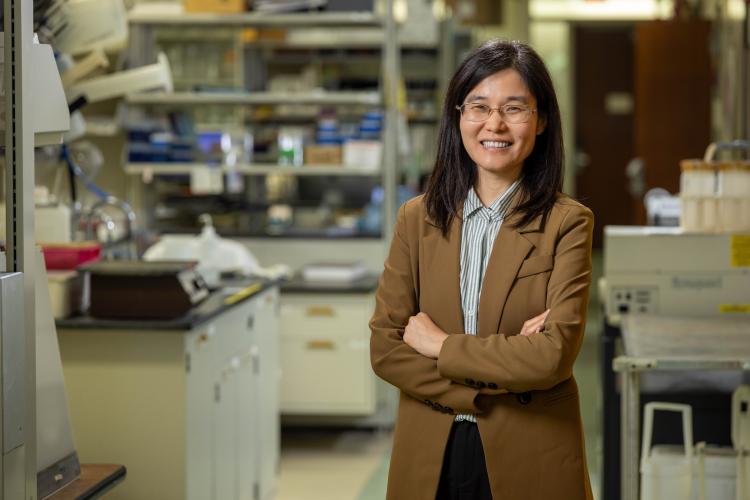
The American Heart Association has awarded a three-year, $230,979 Career Development Award to Shaohua Wang, Ph.D., assistant professor of medical microbiology at the Ohio University Heritage College of Osteopathic Medicine, to investigate a promising new strategy for preventing dangerous and recurrent infections caused by Clostridioides difficile, also known as C. diff, in patients with heart failure.
The project will explore how the widely used diabetes medication metformin may protect vulnerable patients from Clostridioides difficile infection (CDI), a serious health care-associated infection responsible for more than 500,000 cases and approximately 29,000 deaths annually in the United States. CDI is especially dangerous for patients with heart failure, who face higher infection risks, longer hospital stays and significantly greater health care costs.
Wang will lead the multidisciplinary project alongside co-investigators Erin Murphy, Ph.D., professor and chair of the Department of Biomedical Sciences; Vishwajeet Puri, Ph.D., Osteopathic Heritage Foundation Ralph S. Licklider, D.O., Endowed Professor and director of the Diabetes Institute; and Jun Yu, M.D., of Temple University.
“Receiving this award is an exciting opportunity to advance our understanding of how microbiome-targeted therapies can help protect high-risk patients from severe infections,” Wang said. “Our preliminary studies suggest that metformin may offer a safe, non-antibiotic approach to preventing both primary and recurrent Clostridioides difficile infection. We hope this work will ultimately lead to new preventive strategies that improve outcomes for patients with heart failure and other vulnerable populations.”
The study builds upon Wang’s preliminary findings demonstrating that metformin reduced C. difficile colonization, toxin production, gut inflammation and disease severity in mouse models. Researchers also observed that metformin altered the gut microbiome in ways that promoted beneficial bacteria while suppressing harmful organisms associated with infection.
The project will examine both the effectiveness of metformin in preventing CDI and the role of the gut microbiome in mediating its protective effects. Investigators will also conduct fecal microbiota transplantation studies to determine whether microbiome changes caused by metformin directly contribute to protection against infection.
“This project represents an innovative intersection of cardiovascular disease research, microbiome science and infectious disease,” Wang said. “It has the potential to transform how we think about preventing recurrent bacterial infections in medically vulnerable patients while reducing reliance on antibiotics.”
Current treatments for CDI often rely heavily on antibiotics, which can further disrupt the gut microbiome and contribute to recurrent infections. Approximately 20 to 30 percent of patients experience recurrent CDI following initial treatment, with recurrence rates climbing as high as 60 percent after a second infection.
“Heart failure patients are particularly susceptible to complications from infection and antibiotic exposure,” Wang said. “This research could help establish a new therapeutic paradigm that supports both metabolic and cardiovascular health while reducing infection burden.”
Wang’s research program focuses on bacterial infections and microbiome-based therapeutic strategies, particularly for high-risk populations such as older adults and patients with cardiovascular disease. Wang’s laboratory is investigating novel interventions including probiotics, microbiome-modulating therapies and alternative antimicrobial approaches designed to reduce recurrent infection and antibiotic resistance.
“This award highlights the strength of collaborative biomedical research at the Heritage College,” said Darlene Berryman, Ph.D., R.D., associate vice president of research. “By bringing together expertise in microbiology, metabolism, cardiovascular science and the microbiome, this team is well positioned to advance discoveries with meaningful translational potential.”