Image
Heritage College of Osteopathic Medicine
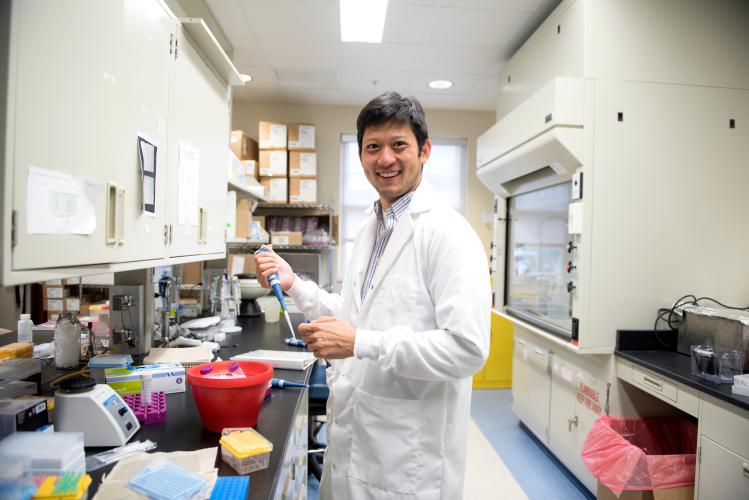
Kevin Lee, Ph.D., associate professor of biomedical sciences at the Ohio University Heritage College of Osteopathic Medicine, has been awarded an American Heart Association Institutional Research Enhancement Award to study how nicotine use may lead to heart damage.
Nicotine use among young adults in the United States has risen in recent years, largely due to e-cigarettes and oral nicotine pouches. About 12–15% of young adults report using these products regularly. Studies in humans have linked nicotine use to higher rates of heart attacks and heart disease. However, scientists are still working to fully understand how nicotine harms the heart.
“Many people mistakenly believe nicotine only affects the lungs, but it has powerful effects throughout the body,” Lee said. “The goal of this newly funded study is to understand exactly how nicotine changes fat cells in ways that can weaken the heart. If we know the mechanism, we can begin to look for new treatments.”
Nicotine is known to cause fat cells to break down stored fat in a process called lipolysis. When this happens, fatty acids are released into the bloodstream. High levels of these fatty acids can damage organs, including the heart.
In earlier studies from the lab of Theodore Friedman, M.D., Ph.D., a key collaborator on this grant, found that nicotine exposure reduced heart function, meaning the heart pumped less blood. Remarkably, when the researchers blocked lipolysis, the nicotine-related heart damage was prevented.
“This key discovery told us that the breakdown of fat plays a major role in nicotine-related heart problems.” Lee explained.
The lab has also identified three different types of fat cells. The lab’s new research shows that one specific group, called Type 2 fat cells, responds more strongly to nicotine. In these cells, nicotine lowers levels of a protective protein called Fat Specific Protein 27 (FSP27), which normally helps prevent fat breakdown. Nicotine also reduces insulin’s ability to slow down lipolysis in these cells.
The research team believes that nicotine causes extra fat breakdown in Type 2 fat cells, which then contributes to heart dysfunction.
“If we can show that protecting these specific fat cells also protects the heart, it could open the door to new drug targets,” Lee said. “That could one day help people who use nicotine products reduce their risk of heart disease.”
In addition to Lee, team members on the two-year study include Vishwajeet Puri, Ph.D., Osteopathic Heritage Foundation Ralph S. Licklider, D.O., Endowed Professor and executive director of the Ohio University Diabetes Institute, Theodore Friedman, M.D., Ph.D., with Friends Research Institute, Inc., Janet Simon, Ph.D., associate dean for research and associate professor, Ohio University College of Health Sciences and Professions, Erin Murphy, Ph.D., chair of the Biomedical Sciences Department and professor at the Heritage College, Thomas Hund, Ph.D., with The Ohio State University, and Rita Sharma, Ph.D., scientist in the Lee laboratory. Ohio University graduate student Sohana Siyar and undergraduate students Taylor Ralston and Braedon Scudder are also involved in the study.
The Ohio University Heritage College of Osteopathic Medicine is recognized as a national leader in training osteopathic primary care physicians and is the top producer of primary care physicians in Ohio. The Ohio legislature created the college in 1975 to address physician shortages in medically underserved parts of the state, Fifty years later, the Heritage College has more than 1,000 students enrolled, 5,000 + graduates and three campuses across the state. Most of the college’s students come from Ohio and stay in Ohio after graduation to practice medicine. The Heritage College is one of the top NIH-funded osteopathic medical school in the country with innovative research taking place at the college’s four research institutes, which are addressing some of today’s most pressing health concerns, such as diabetes and aging-related issues. With a focus on improving the health and wellbeing of communities, the college also delivers quality, free and low-cost medical and health care services to children and adults living in more than 20 Ohio counties. These services generate more than $50 million of social return on investment to those communities. In 2011, the college received a $105 million gift from the Osteopathic Heritage Foundation, which led to the college being renamed the Heritage College of Osteopathic Medicine. The Foundation followed this gift with an additional $70 million in 2025, making the Foundation one of the nation’s largest donors to an osteopathic medical school. For more information visit www.ohio.edu/medicine.