Image

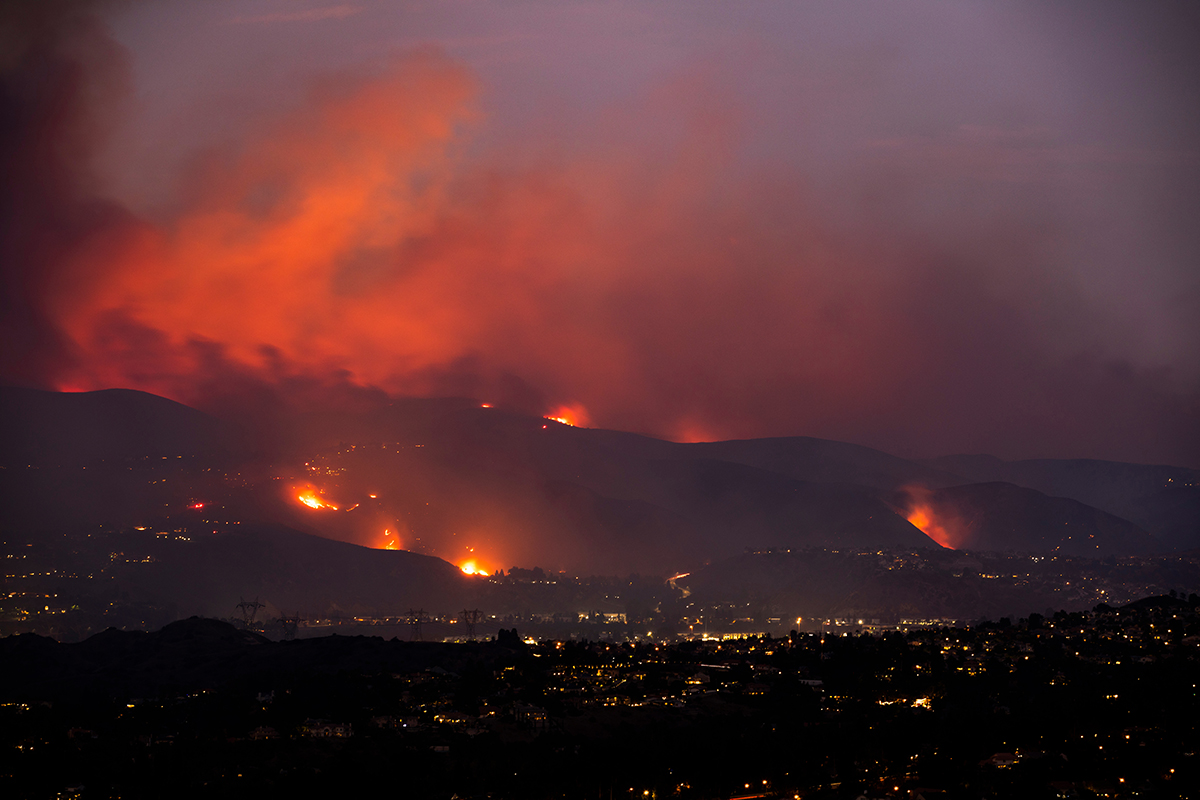
Ohio University Professor and economic expert Roberto Duncan, Ph.D., discusses the Los Angeles region’s post-fire rebuild and the several economic factors that have likely contributed to its delays.
Alex Semancik | February 12, 2026
Share:
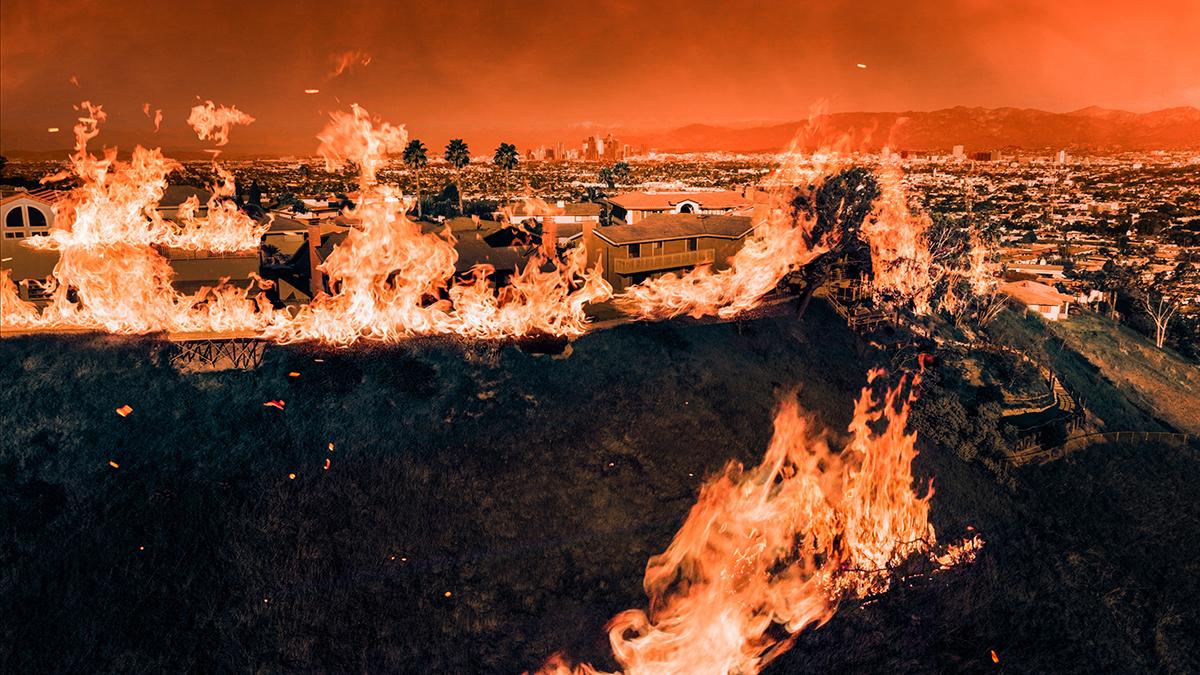
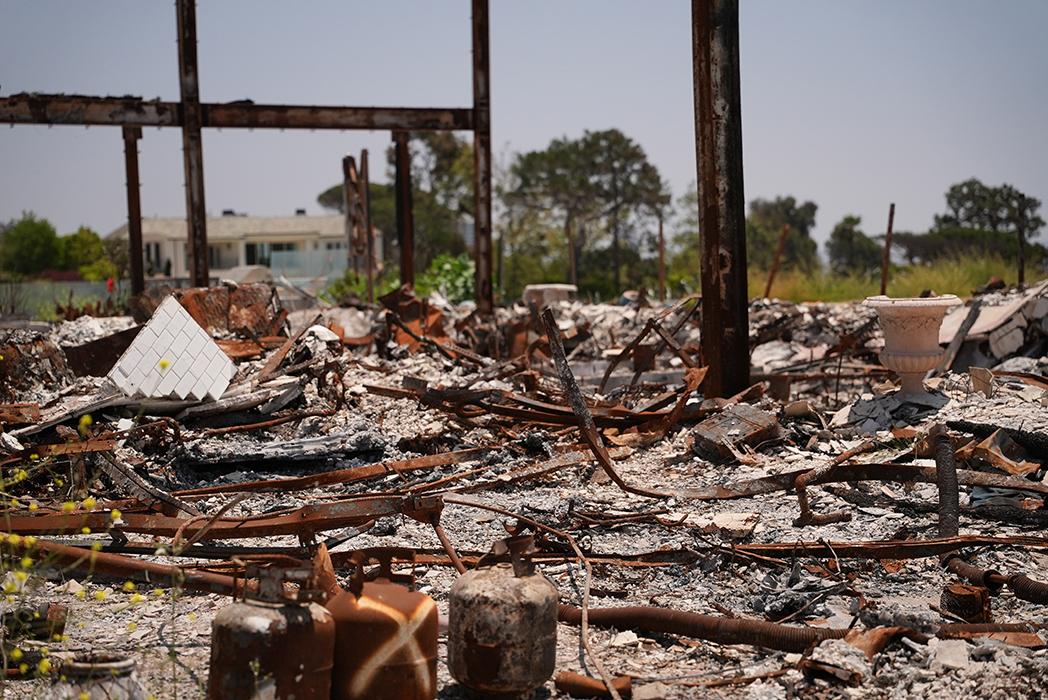
The devastating Los Angeles wildfires were 100% contained on the evening of Jan. 31, 2025, but over a year later, the scale of rebuilding has not come close to the scale of destruction. Delayed insurance reimbursements, government red tape, higher material costs and other funding constraints have generally made recovery very difficult.
The fires ultimately led to at least 31 deaths, the destruction of more than 16,000 structures, and the damage or destruction of over 50,000 acres. On top of that, property and capital losses are estimated at as much as $131 billion, according to researchers at the University of California, Los Angeles.
The majority of Angelinos who lost their homes have not been able to rebuild them. As of January 2026, more than 70% of residents who were displaced remain so, while four out of 10 fire survivors have taken on debt and almost half have wiped out much of their savings, according to survey by the Department of Angels, a nonprofit advocacy group for survivors of the Los Angeles wildfires.
Ohio University Associate Professor of Economics Roberto Duncan, Ph.D., says rebuilding after natural disasters is often a slow process, and that several economic factors have likely contributed to delays in the Los Angeles region’s post-fire rebuild. For many, “full recovery” is unfortunately still years away if attainable at all.
Rebuilding after losing everything in such a devastating way is obviously a trying experience. Constructing a new home from the ground up is no easy feat, especially in one of the most expensive regions in the country. Duncan says that in economic terms, rebuilding homes and infrastructure are effectively investment projects.
“Investment depends on several factors, including access to funding, the cost of financing and construction inputs, and uncertainty about future conditions,” Duncan explained. “When funding is constrained, costs are high, and uncertainty is elevated, investment tends to be delayed or reduced. These factors have likely played a role in California’s post-fire rebuilding process.”
A major source of reconstruction funding for those impacted by the fires is insurance reimbursements. Many policyholders have reported problems such as inadequate payouts and delays in receiving payments from insurers. This has been a key obstacle—without adequate funds, households may be unable to pay required fees, hire contractors or begin construction even if permits are approved.
“Household savings can partially fill financing gaps, but many affected households also experienced a decline in their ability to save,” said Duncan “Losses from the fires extend beyond the home itself. Many households face higher living costs, including expenses for temporary housing, moving and potentially higher utility bills.”
Duncan believes that higher costs for labor and materials have also contributed to the difficulty of rebuilding. He says that large disasters can trigger a surge in demand for both skilled and unskilled construction labor, putting upward pressure on wages, especially when the labor supply is already tight.
“In 2025, labor costs rose due in part to shortages” he said. “Stricter federal immigration policies and enforcement likely amplified these constraints by limiting the available workforce.”
Material costs also increased. Duncan says tariffs and broader trade frictions likely contributed to higher prices for some imported essential housing inputs (such as steel, aluminum, and copper), adding further upward pressure to construction costs. Taken together, higher labor and material costs raise the total cost of rebuilding and can slow the pace of reconstruction.
Uncertainty at both the project and macroeconomic levels has also likely plagued the rebuilding process, according to Duncan.
“When households face volatile or unpredictable rebuilding conditions, they may postpone or abandon reconstruction plans,” Emphasized Duncan. “Delays in permitting and insurance reimbursement create uncertainty about timing and total costs, making it harder to plan and commit to rebuilding.”
At the macro level, uncertainty related to trade policy, financial-market volatility, immigration policy, and political conflict between the federal government and California can further discourage investment in new homes and buildings.
Among all the challenges, there have been some bright spots. Compared to the aftermath of many other natural disasters, residential permits have been issued at a relatively fast pace due to regulatory changes imposed by the state of California and city of Los Angeles. While permits don’t necessarily equate to complete homes, it is a sign of hope and progress.