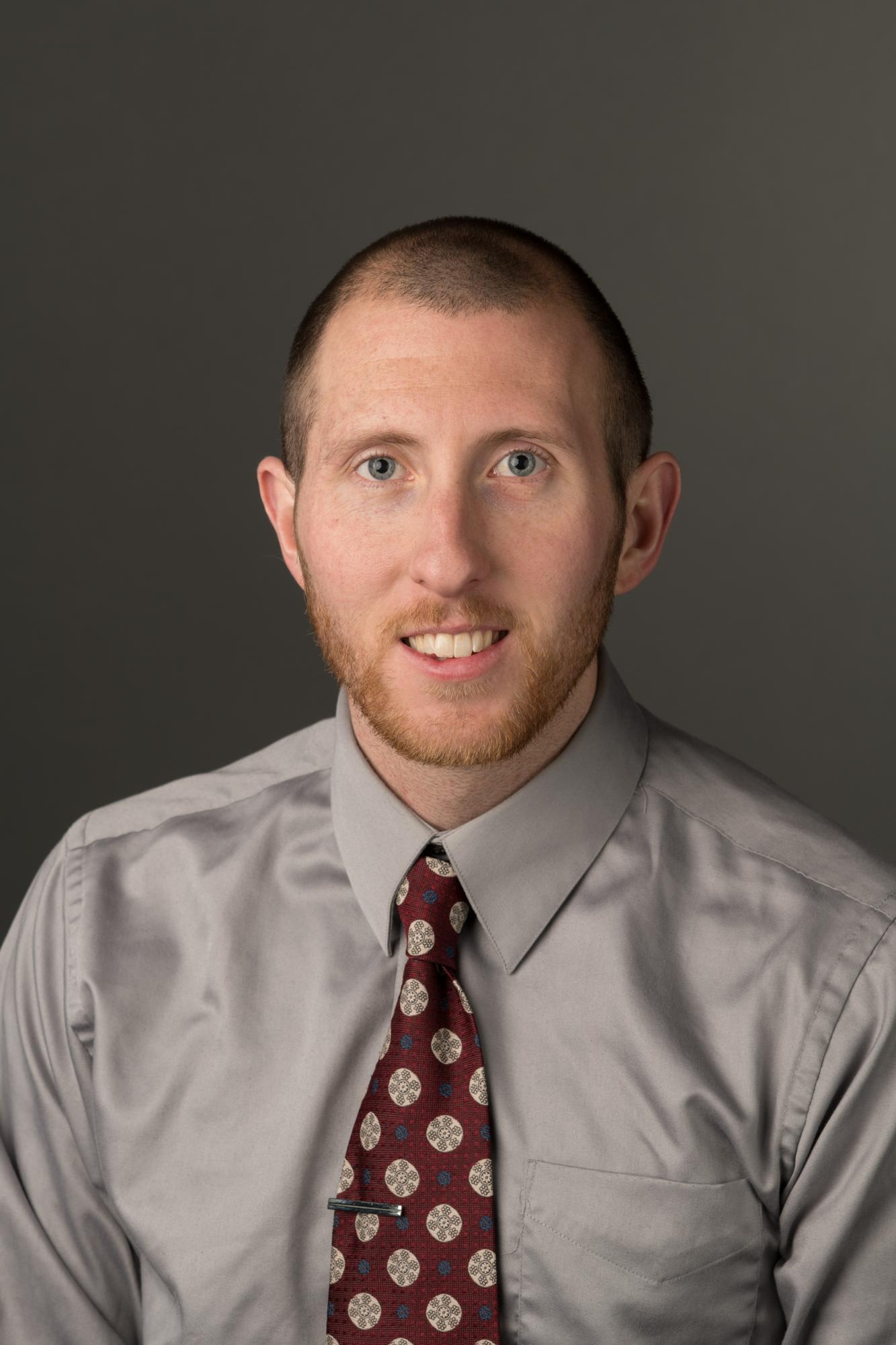
Ian Klein
Klein is an expert in exercise physiology, injury rehabilitation and kinesiology. He focuses on better understanding how to prevent injuries, maximize athletic performance and create better rehabilitation methods.
Read their Expert Bio
For media inquiries, contact: media@ohio.edu
Email is regularly monitored (M-F) by the University Communications and Marketing team.
For emergency after-hours media relations assistance: An on-call media specialist is available at 740.593.2200.
Dan Pittman
Senior Director, Communications Services
Ph: 740-566-0212
Email: pittmand@ohio.edu
Samantha Pelham
Communications and PR Strategist
Ph.: 740-597-1939
Email: pelham@ohio.edu
Alexander Semancik
Communications Specialist III, Media Relations
Email: semancik@ohio.edu
This official Ohio University policy intends to ensure that communication and marketing materials disseminated by Ohio University can be easily identified as official or unofficial University websites, publications or messages.
Ohio University External Communications Policy
Public records requests may be made in person, by phone or in writing. The most expedient method is to submit a public records request in writing via e-mail to the public records compliance coordinator at legalaffairs@ohio.edu.
Requests may also be made to the Office of University Communications and Marketing at media@ohio.edu.
Ohio University Public Records Request Policy
Ohio University recognizes the academic achievements of its students each semester by publishing the President’s, Dean’s and Provost’s Lists.
Additional details about each recognition, along with downloadable lists, are available online.
Ohio University Student Academic Achievement Lists
News media are welcome to arrange a visit to the Athens Campus for purposes of filming, photography, or interviewing a student, staff or faculty member; however, we ask that such visits be prearranged with the Media Relations team. Unannounced visits are discouraged, and the University has the right to impose reasonable restrictions on news media if their visit obstructs business or academic operations or compromises student privacy.
The Media Relations team can help arrange an interview, recommend and secure film or photography sites, and arrange clearance for filming or photography as needed. We require the news media to seek permission or ask the University to sign a release allowing them to film or take photographs.
In certain instances, the Ohio University Office of Legal Affairs may be involved in signing the release as there may be restrictions on what can be photographed or filmed and on how the photos or films can be used.
Visiting the former Athens Mental Hospital and/or The Ridges for the purposes of paranormal research does not conform to the Ohio University or community view of how to protect the property and its heritage. The following are additional guidelines regarding access to The Ridges buildings and green spaces, including the former Athens Mental Hospital:
Ohio University strives to be the best student-centered, transformative learning community in America, where students realize their promise, faculty advance knowledge, staff achieve excellence, and alumni become global leaders. OHIO is committed to fostering, embracing, and celebrating diversity in all its forms. Our Athens Campus offers students a residential learning experience in one of the nation’s most picturesque academic settings. Additional campuses and centers serve students across the state, and online programs further advance the University’s commitment to providing educational access and opportunity. Ohio University is a Carnegie R1-classified research-intensive institution with a record of advancing knowledge through discovery and innovation in the natural and biomedical sciences, humanities and arts, and engineering. Visit www.ohio.edu for more information.
Find out more about Ohio University
Ohio University Communications and Marketing can serve as a resource for students working on a class project. We can help provide background and factual information for articles and papers that are assigned as coursework. Please use this form to submit your student class project request.
NOTE: If you are a working member of the media on deadline, please do not use this form – email media@ohio.edu for assistance.