

From August 2024 to June 2025, CTLA provided 42 open sessions and customized presentations or trainings attended by 339 unique faculty.


The Center for Teaching, Learning, and Assessment (CTLA) advances teaching and learning excellence at OHIO by providing University-wide resources and championing scholarly teaching that is student-centered, evidence-based, innovative and inclusive.
The CTLA serves instructors, departments, programs and colleges across the University. The CTLA's programming brings OHIO community members together to share ideas and expertise, implement evidence-based instructional strategies in various learning contexts and assess the effectiveness of teaching practices.
The CTLA's initiatives align with strategies and actions identified in the President's Dynamic Strategy by transforming the student learning experience through high-impact practices to best support intellectual growth and skill acquisition and promote learner development as individuals and engaged citizens.
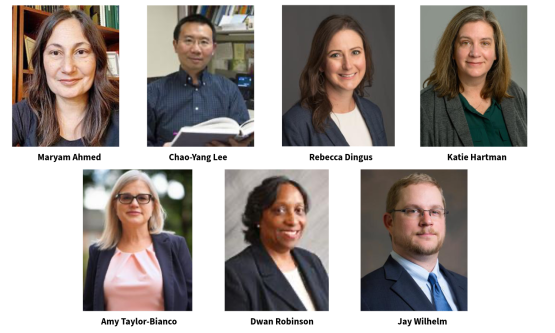
For the past two academic years, GenAI in Teaching and Learning Faculty Fellows have led the way in establishing a position statement and a literacy framework. The role of faculty fellows will expand in 2026-27 through a Human-First AI Initiative led by Associate Professor of Instruction Paul Benedict, College of Business, and Assistant Professor Paul Shovlin, College of Arts and Sciences and Scripps College of Communication.
This initiative seeks to expand impact through comprehensive college representation, critical examination of AI at the university, the addition of student fellows to promote the initiative, staff professional development support and support. Applications are now being accepted with a deadline of noon, Monday, May 18.
Pre-registration is now being accepted for the Faculty as Mentors teaching certification, which will launch in June. Content for this scaled experience was developed by OHIO's 2026-27 Mid-American Conference Academic Leadership Development Program fellows and faculty pedagogical experts focusing on mentorship. They created the course to elevate research on and disciplinary distinction of faculty mentorship.
Faculty as Mentors learning is delivered through a Canvas course in five modules that include: Mentoring as Teaching, Learning Pathway Transparency, Habits of Mind Formation, Integrative Experience Design, Dialogue and Feedback and Mentorship in Content. Featured throughout the course are OHIO faculty exemplars sharing how they mentor students.
Individuals who pre-register will see the Canvas course automatically appear in their Canvas dashboard when it is released. Full-time faculty who complete the knowledge acquisition component and develop an implementation plan receive a $500 stipend. Those who implement, assess and reflect on that plan receive an additional $500 stipend.

From August 2024 to June 2025, CTLA provided 42 open sessions and customized presentations or trainings attended by 339 unique faculty.
Designed, developed, and delivered four Teaching@OHIO faculty development certifications impacting 500+ courses and over 9,000 students.
Affirmed CTLA commitment to programming “by faculty, for faculty, to benefit faculty” and stewardship of resources through provision of stipends to faculty fellows, for program deliverables, and for completion of extended professional development opportunities.
Eight faculty completed the year-long Bruning Academy, and 11 completed the IPA. In collaboration with Graduate College delivered the GSI Teaching Academy. 2024-25 saw a 37% increase in admitted participants and a 50% increase in completion rate over the previous year.
Faculty seeking consultations on evidence-based instructional strategies, pedagogical practices and Scholarship of Teaching and Learning projects are invited to contact staff or visit our offices in McGuffey Hall, first floor.
Consultations can be on an individual, team, department or unit level, and the center is able to design workshops and sessions to meet the development goals of specific groups of faculty, departments or colleges.